Myanmar’s crisis demands real-time analysis. See how AI-enabled intelligence and cyber tools improve situational awareness and track shifting alliances.
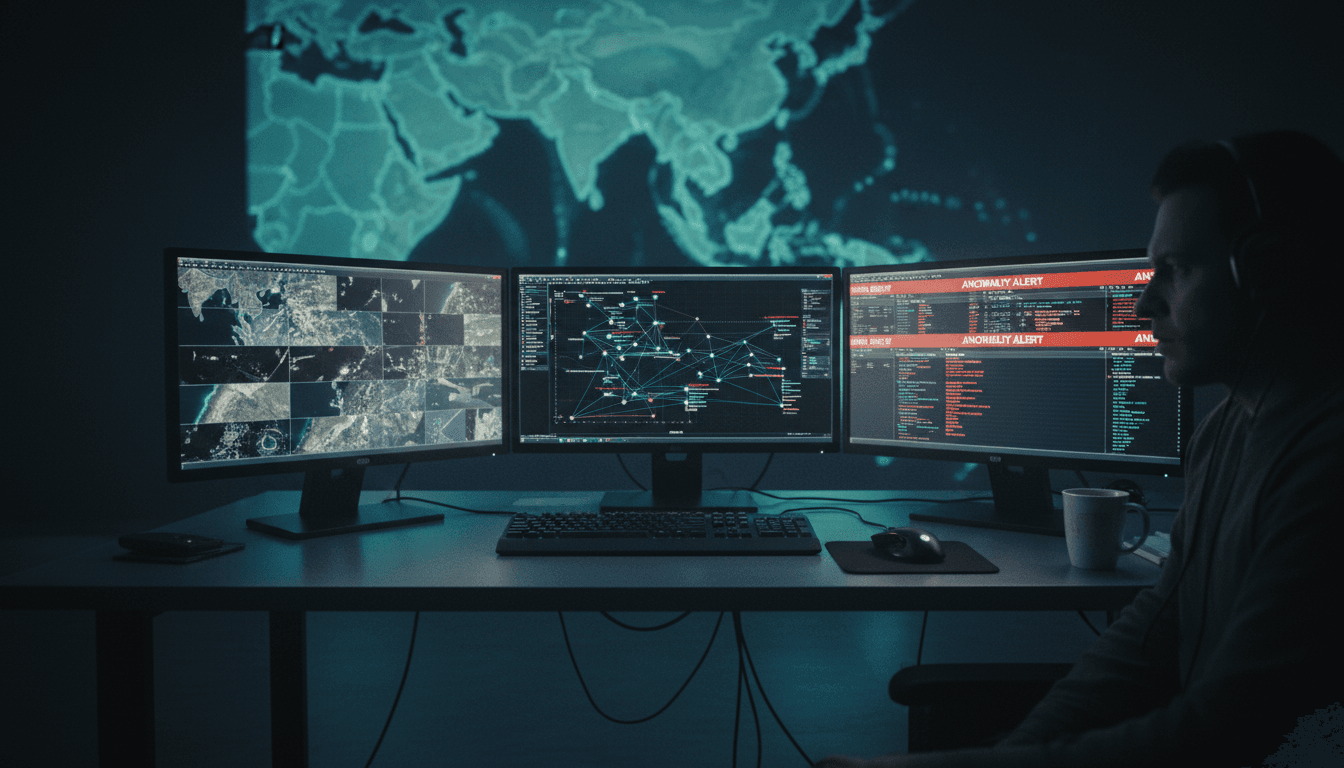
Myanmar’s Crisis: AI Tools for Real-Time Threat Insight
6,000+ civilian deaths, 3.5 million displaced, and a military promising “phased elections” many observers expect to be performative. Those numbers aren’t just a tragedy—they’re a signal problem for defense and national security teams: Myanmar’s conflict is producing fast-moving, multi-source risk indicators that traditional analysis can’t keep up with.
Here’s the uncomfortable truth I’ve seen again and again in security work: most organizations still treat places like Myanmar as “background instability” until it suddenly isn’t. The region sits at the intersection of great-power competition, arms supply chains, sanctions evasion, cross-border displacement, and information operations. When the junta deepens ties with external suppliers and ramps airpower, you don’t get months to react—you get days.
This post reframes Myanmar’s unfolding crisis through the AI in Defense & National Security lens: how AI-enabled intelligence analysis and cybersecurity workflows can improve situational awareness, track geopolitical alignments, and reduce decision latency—without pretending algorithms can solve politics.
What’s happening in Myanmar—and why analysts should treat it as a live threat signal
Myanmar’s core story is straightforward: democratic gains after 2015 elections were reversed by the February 2021 coup, followed by widespread repression and civil conflict. What matters operationally is how the conflict has evolved into a high-velocity, high-noise intelligence environment.
UN reporting cited in the source article indicates:
- Over 6,000 civilians killed since the coup (including 1,000+ women and 695 children)
- 62% of verified civilian deaths attributed to airstrikes and artillery
- 3.5 million+ internally displaced, with additional cross-border displacement
Those figures point to a conflict where air activity, logistics, and targeting tempo matter—a domain where open-source indicators (flight activity patterns, blast signatures, supply chain movements, procurement signals) can be monitored continuously.
Why “elections” in late 2025/early 2026 changes the intelligence problem
The junta’s announced phased elections (December 2025–January 2026) create a predictable spike in:
- information operations (domestic coercion messaging + international legitimacy narratives)
- cyber activity (credential theft, site defacement, influence campaigns, targeted phishing)
- security incidents (pre-election crackdowns, post-election retaliation)
For national security teams, the question isn’t whether the election is “real.” The question is: what actions will key actors take to shape perception, control turnout, and manage external pressure—and how early can you detect those actions?
The geopolitical layer: arms imports, Russia/China ties, and why AI helps map it
The source article describes a critical driver: weapons, dual-use goods, and international backing that sustain the junta despite condemnation.
Key data point: UN reporting cited in the article estimates over $1 billion in weapons, raw materials, and dual-use goods imported since 2021, with Russia and China as leading suppliers. Russia’s state arms exporter is described as facilitating $400+ million in weaponry, including aircraft, missiles, drones, and radar systems.
This is exactly where AI-backed analysis earns its keep—not by “predicting coups,” but by turning fragmented indicators into a coherent, queryable picture.
AI task #1: Supply chain and procurement intelligence from messy data
Procurement and sanctions evasion patterns rarely show up as a single clean dataset. They show up as:
- shipping manifests and port call data
- aviation movements (cargo aircraft patterns)
- tender documents and front-company records
- translated local reporting
- social media images of crates, tail numbers, radar components
AI can help by:
- Entity resolution: matching people, shell companies, addresses, and vessels across formats and languages
- Anomaly detection: flagging unusual routing, transshipment, or changes in cargo/flight cadence
- Computer vision triage: sorting images/video for recognizable equipment categories (airframes, munitions packaging, radar arrays)
The payoff is speed. Instead of analysts spending 70% of time cleaning data, they spend 70% interpreting it.
AI task #2: Relationship mapping that updates as the conflict shifts
Myanmar’s situation isn’t static: resistance groups coordinate unevenly; external partners calibrate support; ASEAN influence fluctuates. You need a living model of relationships.
A practical approach is a graph-based intelligence layer:
- Nodes: individuals, units, companies, ministries, ports, aircraft tail numbers
- Edges: financial ties, co-mentions, shipments, meetings, joint exercises, shared infrastructure
- Time dimension: when edges appear, strengthen, weaken, or disappear
This supports questions decision-makers actually ask:
- “Which suppliers correlate with increased airstrike tempo?”
- “Which logistics nodes are most central to dual-use flow?”
- “What changed in the last 30 days that we didn’t see last quarter?”
AI-driven situational awareness: monitoring violence patterns without fooling yourself
If 62% of verified civilian deaths are linked to airstrikes/artillery, then a serious monitoring program watches air domain and fires indicators continuously. AI can help, but only if you build it to withstand adversarial conditions.
Building blocks that work in volatile regions
Answer first: reliable AI situational awareness comes from fusing multiple weak signals, not trusting one strong-looking metric.
A robust stack often includes:
- Geospatial AI to detect changes (burn scars, new berms, damaged structures)
- Time-series modeling for operational tempo (sorties per week, repeated patterns by region)
- Natural language processing to cluster incident reports (local language + English summaries)
- Confidence scoring that reflects source reliability and corroboration
If you’re supporting defense or national security missions, the operational standard should be: no single source is allowed to “close the case.” AI should accelerate corroboration, not replace it.
The most common failure: confusing “more data” with “more truth”
Conflict zones produce floods of manipulated content. The election window increases incentives to fabricate.
AI helps here too, but in a different way:
- provenance workflows (where did the content originate, how did it spread?)
- deepfake and synthetic media screening as triage—not a courtroom verdict
- narrative clustering to detect coordinated amplification
A sentence worth keeping on your wall: “High volume is not high confidence.”
Cybersecurity and influence operations: what to watch as legitimacy is contested
Myanmar’s internal contest isn’t just kinetic; it’s informational. That matters for regional stability and for any organization with people, assets, or partners in Southeast Asia.
Likely cyber patterns around the election cycle
You don’t need a crystal ball to anticipate the playbook. Pre-election and election-period surges often include:
- spearphishing against civil society, journalists, election-related bodies, diaspora groups
- credential stuffing and account takeovers for influence positioning
- malware campaigns aimed at surveillance and intimidation
- website disruption and “hack-and-leak” operations for narrative shaping
AI-based security operations can reduce dwell time by:
- correlating identity signals (impossible travel, abnormal device fingerprints)
- clustering phishing campaigns by infrastructure reuse
- auto-generating detections from observed TTP patterns (with human review)
A practical “good enough” playbook for security teams
If your organization tracks geopolitical risk or supports government/defense stakeholders, a useful baseline over the next 6–10 weeks would be:
- Stand up an election-focused watchlist (entities, domains, key phrases in Burmese and English)
- Instrument a narrative dashboard that tracks sudden topic shifts and coordinated amplification
- Harden executive and analyst identities (phishing-resistant MFA, conditional access, device posture)
- Pre-brief decision-makers on what AI can and cannot assert (especially on attribution)
This is less glamorous than “AI predictions,” and far more effective.
Where ASEAN pressure, monitoring, and legitimacy meet AI reality
The source article highlights ASEAN’s limited traction since its 2021 “Five-Point Consensus,” while noting Malaysia’s more proactive push in 2025. Regardless of politics, election monitoring and humanitarian protection rely on something concrete: verifiable ground truth.
How AI supports monitoring without replacing monitors
AI can support election monitoring and human rights documentation in three practical ways:
- Coverage: triage thousands of incident reports to identify hotspots that deserve on-the-ground attention
- Consistency: standardize event coding (who/what/where/when) so trends are comparable month to month
- Early warning: detect pattern shifts (e.g., rising detentions in a township preceding violence)
What AI cannot do: certify fairness by itself. It can, however, make it harder for violence and coercion to hide in plain sight.
A useful standard: AI should shorten the time between “something happened” and “leadership can act.”
“People also ask” questions analysts raise about Myanmar and AI
Can AI predict what happens next in Myanmar?
AI can forecast risk ranges (probable hotspots, likelihood of escalation indicators) based on prior patterns and current signals. It can’t reliably predict political decisions by actors facing shifting incentives.
What’s the biggest AI win for intelligence teams covering Myanmar?
Multi-source fusion at speed. The advantage is turning scattered OSINT, GEOINT-adjacent signals, and cyber telemetry into a unified operating picture that updates daily.
What’s the biggest risk of using AI in this context?
Overconfidence. If stakeholders treat model output as certainty—especially around attribution, casualty estimates, or intent—they’ll make brittle decisions.
What to do next: turning Myanmar’s signals into an AI-enabled workflow
Myanmar’s crisis is a case study in modern instability: kinetic operations, great-power alignment, and information warfare layered together. If your team works in defense, intelligence, or security operations, the right response isn’t more dashboards. It’s a repeatable AI-assisted workflow that produces decisions, not just reports.
Here’s what I’d implement first:
- A standing geopolitical monitoring pipeline for Southeast Asia that fuses text, imagery, and cyber signals
- A graph intelligence layer that tracks relationships among suppliers, ministries, and logistics nodes over time
- Model governance that forces confidence scoring and corroboration before escalation to leadership
If you’re building capabilities in the AI in Defense & National Security series, Myanmar is a reminder that “real-time” doesn’t mean “perfect.” It means fast, defensible, and transparent enough to act on.
Where does this go next? The election period will test whether outside pressure changes junta behavior—or just changes the messaging. Either way, teams with AI-enabled situational awareness will see the inflection points earlier. And in national security, earlier is often the only advantage that counts.