Pentagon acquisition reform could speed real-world defense AI fielding. See what changes, what risks remain, and how teams can win in 2026.
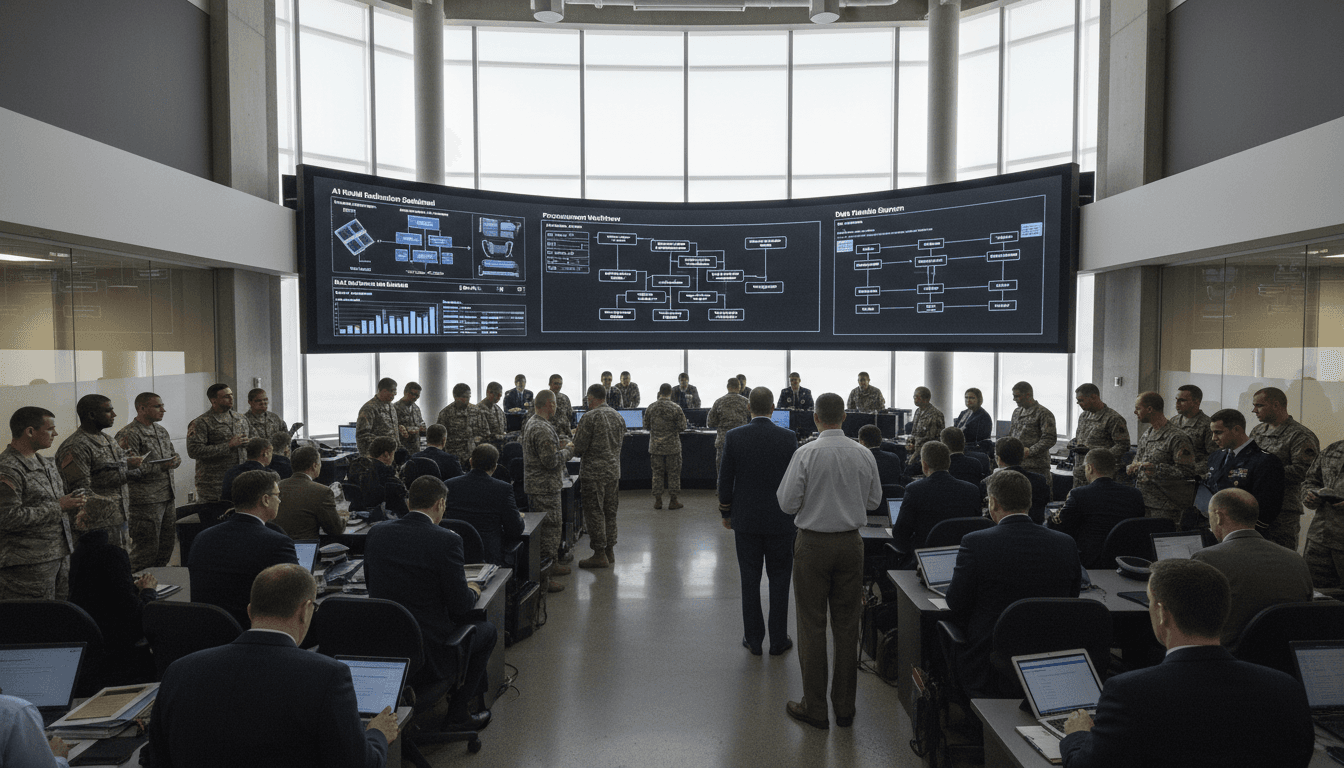
Pentagon Acquisition Reform: Faster Paths for Defense AI
The Pentagon’s biggest AI bottleneck isn’t algorithms. It’s buying.
When acquisition timelines stretch into years, AI in defense becomes stale before it ever reaches operators. Models drift. Data sources change. Adversaries adapt. Meanwhile, the Department of Defense (DoD) keeps paying the “integration tax” of bespoke systems that can’t easily ingest new sensors, new models, or new workflows.
That’s why the Pentagon’s newly announced acquisition overhaul—described as “mind-blowing” by entrepreneur and Stanford professor Steve Blank—matters far beyond contracting mechanics. If the reforms work as intended, they’ll create a more direct path from commercial AI to deployed capability across intelligence analysis, cybersecurity, and mission planning.
Why this acquisition overhaul matters for defense AI
Answer first: AI adoption in national security speeds up when procurement supports iteration, rapid fielding, and scaling proven tools—not when every new model requires a multi-year, requirements-heavy program.
Steve Blank’s reaction is telling because it frames the reform as a cultural shift: the Department wants startup-style delivery—short cycles, incremental releases, and “good enough” deployment that improves fast. That mindset maps cleanly to AI systems, where value comes from continual retraining, red-teaming, monitoring, and updating.
A few parts of the announcement (as described in the interview) are especially relevant to AI:
- A push toward commercial off-the-shelf (COTS) first. That’s how most AI capabilities move fastest: buy, pilot, and operationalize, then customize only where mission demands it.
- Consolidation around portfolios instead of single weapons programs. AI is rarely “a program” by itself; it’s an enabling layer across ISR, cyber, logistics, and command-and-control.
- A new emphasis on rapid fielding and scaling emerging tech. AI needs a “scale lane,” not just a “prototype lane.”
Here’s the stance I’ll take: if DoD doesn’t fix how it buys AI, it will keep funding demos while adversaries field systems.
From PEO silos to portfolios: what changes operationally
Answer first: Shifting from siloed program executive offices (PEOs) to portfolio acquisition executives (PAEs) can reduce handoffs and align funding, testing, contracting, and sustainment around outcomes—exactly what AI delivery needs.
In the interview, Blank describes a structural problem that anyone who has tried to field AI in a large enterprise recognizes: the work is split across requirements, prototyping, acquisition, contracting, and sustainment. Each handoff adds delay and risk. For AI, that’s lethal.
Why AI struggles in siloed acquisition
AI systems don’t behave like traditional platforms:
- Performance depends on data pipelines, not just code. If the pipeline isn’t funded and sustained, the model decays.
- Models require continuous evaluation (bias, drift, adversarial robustness). Testing isn’t a one-time gate.
- Operational needs evolve quickly. The “requirements document” is outdated the moment a new adversary tactic appears.
Portfolios can help because they’re closer to how operators think: mission threads, kill chains, and decision cycles—not just “a system.” If portfolios are organized around warfighting concepts or technology concepts (as discussed), AI becomes a reusable layer across the portfolio.
What good portfolio execution looks like for AI
If PAEs work, they’ll prioritize:
- A shared data fabric across programs in the portfolio
- Common MLOps and model governance (monitoring, retraining, audit trails)
- A repeatable authority-to-operate path for AI updates
- Scale criteria that move tools from pilot to production
That’s the difference between “we built a model” and “we fielded an AI capability.”
Speed vs. safety: the real trade space for AI procurement
Answer first: Faster acquisition only helps if it preserves security, testing rigor, and accountability—especially for AI systems exposed to adversarial manipulation.
Blank predicts “six months to a year of chaos and confusion” during reorganization. That’s believable. Rapid change creates gaps—and AI programs will fall into them unless governance is designed up front.
Here’s what I’d watch closely if your organization sells or deploys AI into defense:
1. Adversarial risk becomes a contract requirement
AI in national security faces threats most commercial buyers don’t price in:
- Data poisoning (training or feedback loops manipulated)
- Model extraction and inversion (sensitive patterns leaked)
- Prompt injection and tool-use compromise in agentic systems
- Supply chain risk in dependencies, weights, and update channels
Procurement reform should not mean “less security.” It should mean security that’s built into faster cycles. That implies contracts that require red-teaming, model cards, incident response playbooks, and continuous monitoring.
2. “Good enough” needs guardrails
Startup delivery works when there are clear boundaries:
- What decisions can AI recommend vs. execute?
- What confidence thresholds trigger human review?
- What is the rollback plan after a bad update?
The Pentagon can move faster and still be disciplined, but only if portfolios adopt standard AI acceptance tests and release criteria.
3. Sustainment is where AI programs die
Traditional sustainment assumes stable software baselines. AI sustainment is different:
- retraining budgets
- dataset refresh cycles
- new sensor integrations
- continuous evaluation
If the reforms bring sustainment into the portfolio construct (as implied by reducing handoffs), AI has a better chance of staying effective after fielding.
What the primes, startups, and investors will do next
Answer first: Acquisition reform will trigger a competitive reshuffle: primes will protect incumbency through lobbying and M&A, while startups and private capital will push for COTS-first pathways and faster scaling.
Blank is blunt about incentives: primes optimize for shareholders, not national priorities. That doesn’t make primes villains; it makes them predictable.
Expect three market moves
- Lobbying intensifies. When policy threatens margin structure, companies spend to rewrite the rules. This is normal.
- Consolidation accelerates. Large primes buying AI startups can be good or bad depending on whether the product survives integration and whether the government preserves competitive pressure.
- Private equity and venture capital get louder. Blank argues “the insurgents” now have enough capital to compete in Washington.
My view: DoD should welcome competition but avoid the trap where “COTS-first” quietly becomes “COTS-first, sold by the same five integrators.” A healthy AI acquisition ecosystem needs room for:
- niche model providers
- data labeling and evaluation vendors
- secure infrastructure providers
- systems integrators that can stitch capabilities together
Practical guidance: how to align AI programs to the new acquisition reality
Answer first: Teams that win in the new environment will package AI as a deployable capability with measurable outcomes, clear security controls, and a credible path from pilot to scale.
Whether you’re in government, a prime, or a startup, the reforms change the playbook. Here are concrete steps that tend to work.
For government AI leaders (PMs, PEO/PAE staff, innovation cells)
- Write requirements as outcomes and constraints. Example: “reduce time-to-triage cyber alerts by 40%” plus constraints (data residency, audit logs), not “build a transformer-based system.”
- Standardize the portfolio’s AI stack. Pick common tooling for evaluation, monitoring, and retraining so every project doesn’t reinvent MLOps.
- Demand evidence, not slide decks. Require performance on representative data, operational latency numbers, and adversarial testing results.
- Plan for updates from day one. Treat model updates like patching, not like a new program.
For startups and commercial AI vendors
- Ship a secure, deployable product. Defense buyers increasingly expect containerized delivery, offline modes, audit logs, and RBAC.
- Bring a “permission to operate” kit. Include documentation for data handling, model behavior limits, evaluation approach, and monitoring.
- Show your scaling plan. Pilots are cheap; production is hard. Explain how you’ll handle support, retraining, and user onboarding at brigade/wing/fleet scale.
- Price sustainment honestly. If your model needs quarterly retraining and continuous evaluation, say so. Hidden sustainment costs kill trust.
For primes and integrators
- Stop treating AI as a bolt-on. The value is in data access, workflow integration, and continuous delivery.
- Build acquisition-friendly modularity. Portfolios will favor components that can be swapped and upgraded without rewriting the whole system.
- Invest in evaluation infrastructure. The “winner” in AI defense acquisition will often be the party that can prove performance and robustness repeatedly.
What “success” looks like in 2026 for AI in defense acquisition
Answer first: Success means more AI systems moving from pilot to fielded capability, with measurable operational impact and safe update pathways—within months, not years.
Because it’s December 2025, this is a good moment to set near-term markers for next year. If the overhaul is real, by late 2026 we should see:
- Portfolio-level AI roadmaps that tie models to mission threads (ISR, cyber defense, targeting support, logistics optimization)
- Faster contracting cycles for production deployments, not just prototypes
- Common evaluation standards (accuracy, latency, robustness, drift monitoring) used across a service portfolio
- A visible shift toward COTS-first with fewer bespoke “science projects”
Blank also points out a major human factor: training. Changing procurement rules without retraining the workforce creates confusion and workarounds. If Defense Acquisition University (or its equivalent under reforms) truly shifts from teaching paperwork compliance toward delivery and iteration, AI programs will benefit immediately.
The bigger point for this "AI in Defense & National Security" series is simple: AI advantage is built as much by acquisition and sustainment as by R&D. Better buying creates better fielding, and better fielding creates better deterrence.
If you’re building, buying, or integrating defense AI, now’s the time to pressure-test your path to production: What portfolio do you fit into? How do you prove performance quickly? How do you update safely? And when the inevitable reorg chaos hits, will your capability still ship?