AI-enabled monitoring and resilience can keep U.S. transportation running under cyberattack. Learn a practical roadmap for 2026 planning.
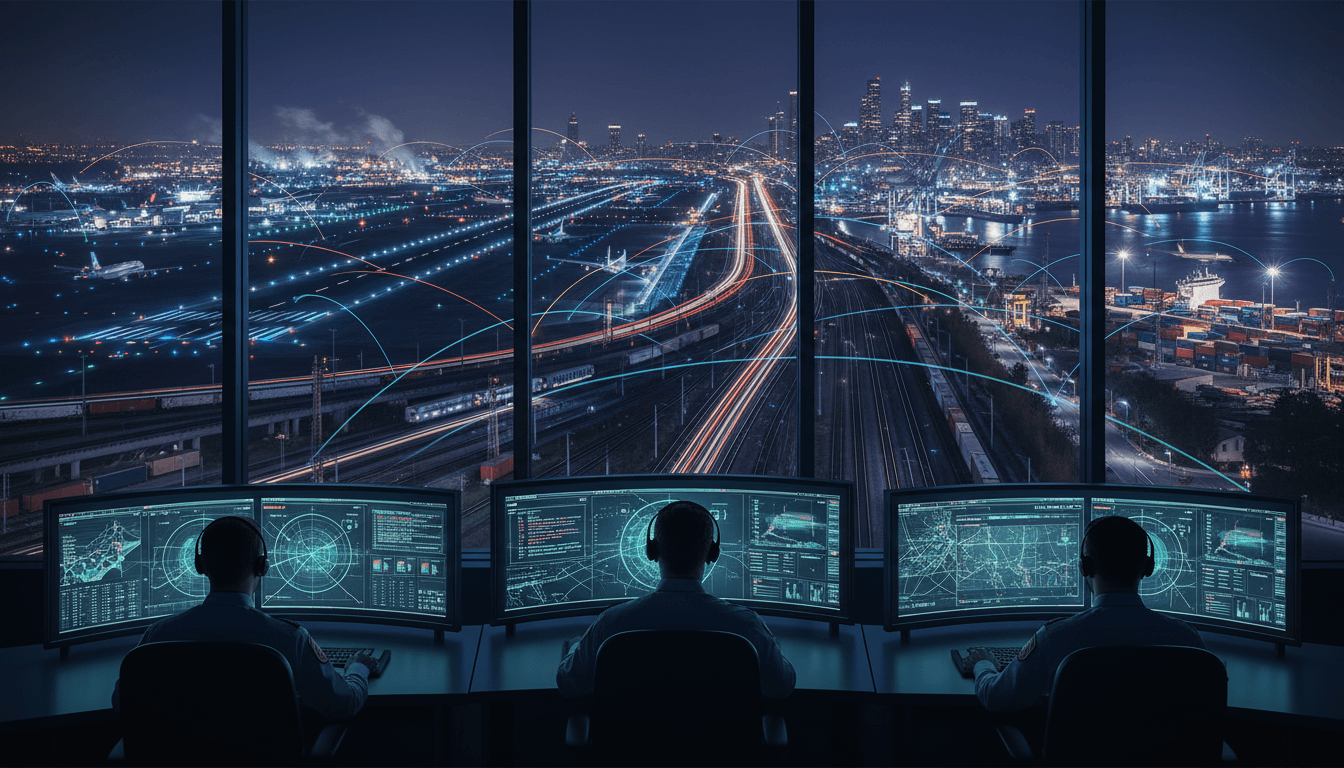
AI to Secure U.S. Transportation Infrastructure
A single successful cyberattack on a major U.S. transportation hub doesn’t just slow commuters—it can delay military mobilization, disrupt fuel distribution, and create cascading failures across ports, rail, and highways. The uncomfortable truth is that our transportation networks are now software ecosystems first, physical systems second.
Andrew Grotto’s recent revisit of his 2018 argument (that cybersecurity must be central to infrastructure modernization) lands at exactly the right moment. In late 2025, the pattern is hard to ignore: more software complexity, more zero-days, and more ransomware—and not enough evidence that defenders are materially catching up. If you work in defense, homeland security, critical infrastructure, or any supplier ecosystem that touches them, this matters because transportation networks are the connective tissue of national power.
Here’s the stance I’ll take: we won’t “audit and patch” our way out of this. The only durable path is building AI-enabled resilience—systems that can detect abnormal behavior early, forecast failure modes, and keep operations running under attack.
Why transportation cyber risk is getting worse (not better)
Transportation cyber risk is rising because incentives reward speed and features, not secure-by-design engineering—and attackers know it.
Grotto points to a worsening prevalence of zero-day vulnerabilities and a year-over-year increase in ransomware as signals that security outcomes aren’t improving. Even if measurement is noisy, these two trends line up with what many security teams experience in practice: the baseline is shifting against defenders.
The real driver: software density in physical systems
The modern transportation environment is packed with:
- Internet-connected operational technology (OT) for traffic management, signaling, and facility controls
- Third-party software and managed services
- Identity systems that connect contractors, vendors, and government users
- Cloud platforms that aggregate data for optimization and analytics
Each integration adds value, but also adds attack surface. And because transportation has to run 24/7, defenders can’t always take downtime for deep hardening.
The “security signal” problem
One of Grotto’s sharper points is market signaling: if vendors don’t face consequences for insecure software, they won’t prioritize fixing root causes.
Most companies get this wrong by treating procurement as a pricing exercise.
If you want fewer zero-days and fewer successful ransomware incidents, procurement has to demand things like:
- Secure development lifecycle evidence
- Vulnerability disclosure processes that work
- Patchability guarantees and support timelines
- Attestable logging and telemetry access
That’s not bureaucracy. It’s how you turn security from a cost center into a requirement for doing business.
Why national security starts with transportation uptime
Transportation resilience is national security resilience because force movement, logistics, and civil stability depend on it.
A transportation network isn’t one system. It’s a mesh:
- Airports, rail, and ports
- Fuel pipelines and refineries feeding mobility
- Traffic management and emergency routing
- Warehousing and last-mile distribution
If any node fails, the pressure moves elsewhere. The more stressed the network is—holiday surge travel, winter storms, peak shipping season—the more damage an attacker can cause with a smaller intervention.
December is a good example. Between holiday travel, seasonal weather, and year-end shipping, the country runs “hot.” A disruption that might be tolerable in April can become a national incident in late December.
Defense dependency is deeper than most people think
Defense and national security organizations rely on civilian transportation in three concrete ways:
- Mobilization and surge: moving people and equipment quickly requires functioning rail, ports, and highways.
- Industrial base logistics: parts and subcomponents move through commercial carriers and warehouses.
- Domestic stability: prolonged transport disruption can trigger shortages, panic buying, and political pressure.
So when transportation cybersecurity is treated as “just IT,” we set ourselves up for strategic failure.
What AI changes: from perimeter defense to operational resilience
AI helps when the goal is early detection, prioritization, and continuity of operations—not when the goal is magical auto-security.
If you’re applying AI in defense & national security contexts, transportation infrastructure is a textbook environment: high volumes of telemetry, complex dependencies, and adversaries who exploit gaps in visibility.
1) AI for anomaly detection in OT and enterprise convergence
Transportation environments often blend legacy OT with modern IT. That’s where attackers hide.
AI-driven detection can flag:
- Abnormal commands to signaling systems
- Unusual authentication paths (contractor accounts used at odd times)
- Lateral movement patterns that don’t match operational baselines
- Data exfiltration behavior masked inside legitimate protocols
Snippet-worthy truth: You can’t defend what you can’t see, and you can’t see modern transport networks without machine-scale analytics.
The practical target isn’t “detect every attack.” It’s:
- Detect meaningful deviations early
- Reduce alert fatigue
- Speed up triage so humans make better decisions faster
2) AI for predictive maintenance—but with an adversary mindset
Predictive maintenance has been sold for years as a cost saver. In critical infrastructure security, it’s also a defensive tool.
If AI models can forecast that a subsystem is drifting toward failure, defenders can ask a second question: is this degradation consistent with normal wear, or could it be induced?
That shift matters because some cyber-physical attacks look like “random equipment issues” until it’s too late.
3) AI to prioritize patching when patching is constrained
In transportation OT, patch windows are limited. Some systems can’t be patched quickly without safety risk or downtime.
AI can support risk-based decisions by correlating:
- Asset criticality (what breaks if this goes down)
- Exposure (is it reachable, directly or indirectly)
- Exploitability signals (active exploitation patterns, exploit chaining likelihood)
- Compensating controls (segmentation, allowlisting, monitoring)
This turns patching from “latest CVE panic” into mission-based vulnerability management.
4) AI-assisted incident response for continuity of operations
Ransomware is still a top-of-mind threat because it targets what organizations value most: uptime and trust.
AI can help incident response teams by:
- Summarizing likely intrusion paths from logs
- Recommending containment actions based on similar prior incidents
- Identifying which systems must be restored first to maintain minimum viable operations
The goal is not automation for its own sake. It’s faster containment and smarter restoration sequencing.
The hard part: making AI defensible, governable, and usable
AI in critical infrastructure security fails when it’s bolted on without governance.
Transportation operators and government partners should design for four constraints from day one.
Data reality: messy, incomplete, and politically sensitive
Critical infrastructure telemetry is fragmented across vendors, contracts, and jurisdictions. Some of it is operationally sensitive; some is law-enforcement sensitive; some is proprietary.
A workable approach I’ve seen succeed is to start with:
- A minimal “must-share” telemetry set (authentication, network flow, OT command logs)
- Clear data handling rules (retention, redaction, access controls)
- Joint exercises to validate that shared data actually improves outcomes
Model risk: attackers adapt
If defenders use AI, attackers will probe it.
That means you need:
- Monitoring for concept drift (normal patterns change over seasons and events)
- Adversarial testing (what happens if logs are manipulated?)
- Human-in-the-loop escalation for high-impact actions
Snippet-worthy truth: An AI model that can’t be audited becomes a new critical dependency—and a new target.
Safety and operations: the system must keep running
Transportation security can’t be “fail closed” in every scenario. Shutting down an airport or rail corridor has real public safety consequences.
So controls should be designed around graceful degradation, such as:
- Segmented network zones that can be isolated without full shutdown
- Manual fallback procedures that are practiced, not just documented
- Minimum viable operations playbooks for cyber incidents
Workforce: AI should make teams sharper, not smaller
Most infrastructure teams are already understaffed. The winning pattern is using AI to reduce low-value work:
- Alert correlation
- Log normalization
- Case summarization
- Triage routing
Then invest the saved human time into engineering fixes: segmentation, identity hardening, backups, and secure procurement.
A practical roadmap for 2026 planning (what to do next)
Transportation cybersecurity programs often fail by trying to “boil the ocean.” A better way is to pick a few outcomes and measure them.
Here’s a roadmap that fits defense-adjacent critical infrastructure environments.
Phase 1: Build visibility and minimum standards (0–90 days)
- Inventory crown-jewel systems (ports, dispatch, signaling, access control)
- Require multi-factor authentication for privileged access, including vendors
- Centralize logs you already have; don’t wait for perfect tooling
- Confirm offline, immutable backups and restoration time objectives
Phase 2: Deploy AI where it actually helps (3–9 months)
- Implement anomaly detection for identity and OT command patterns
- Use AI to prioritize patching based on operational criticality
- Pilot AI-assisted incident response summaries and playbook recommendations
Phase 3: Institutionalize resilience (9–18 months)
- Add secure-by-design requirements to procurement
- Run joint cyber-physical exercises (include manual fallback drills)
- Establish a cross-organization “transportation cyber fusion” cadence for threat intel and lessons learned
If you can’t measure progress, you’re not improving. Three metrics that usually tell the truth:
- Mean time to detect suspicious activity in OT-adjacent networks
- Mean time to contain ransomware-like behaviors (encryption, credential dumping)
- Time to restore minimum viable operations for top three mission services
Where this fits in AI in Defense & National Security
This post sits at the messy intersection of cybersecurity, logistics, and homeland defense—the exact place where AI is most useful when used responsibly. AI isn’t a substitute for segmentation, backups, or secure procurement. It’s the force multiplier that helps you operate those controls at the scale and speed modern transportation requires.
If you’re responsible for critical infrastructure security—whether inside government or in the companies that keep ports, rail, and aviation running—your 2026 plan should answer one question clearly: If we’re hit during peak travel or a national emergency, can we keep moving?
If you want help translating that question into an AI-enabled resilience program (telemetry, model governance, and incident playbooks that work under pressure), that’s the conversation worth having now—before the next disruption picks the date for you.