AI can strengthen transportation cybersecurity with faster detection, tighter containment, and disciplined response. Learn a practical blueprint for critical infrastructure protection.
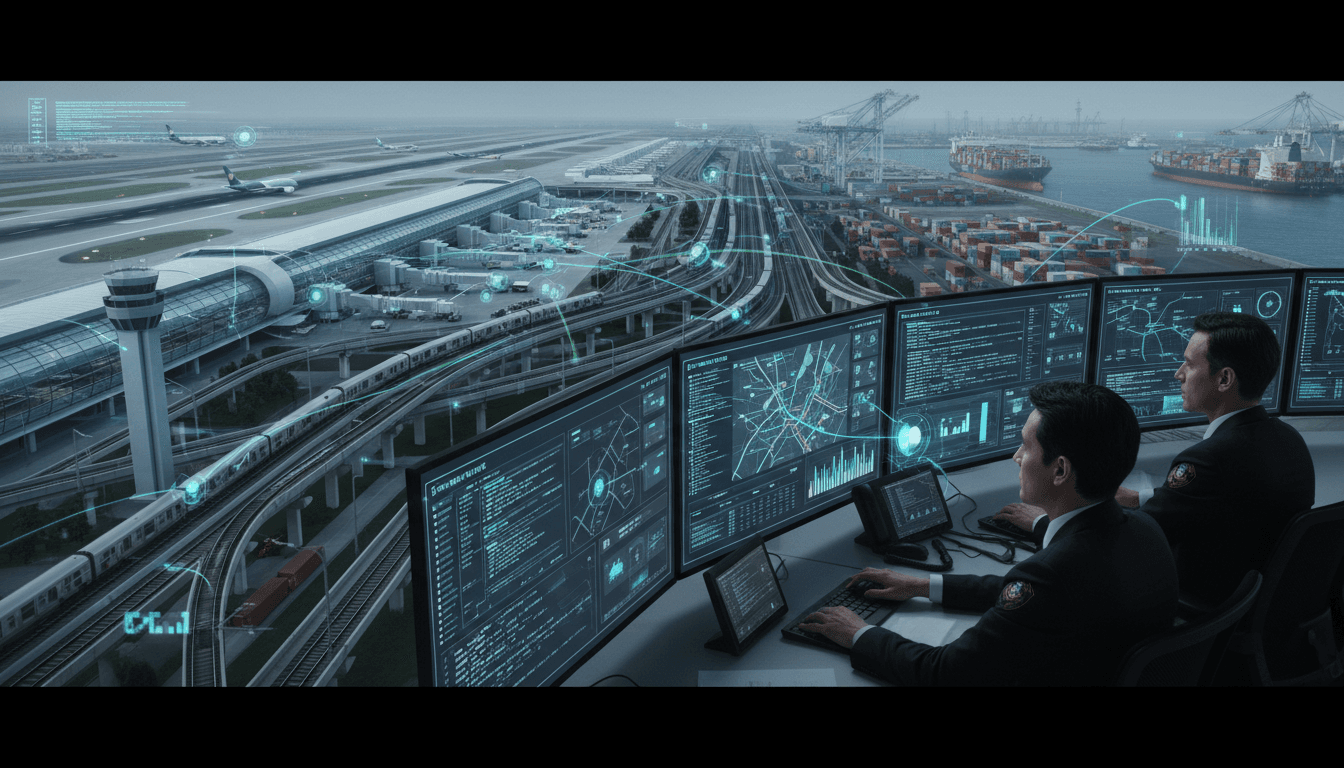
AI to Protect Transportation and Critical Networks
Ransomware has become a steady drumbeat, not an occasional crisis. At the same time, zero-day vulnerabilities keep showing up in the software that runs America’s airports, ports, rail, transit, and logistics systems. That combination—more exploitable flaws plus more motivated attackers—creates a simple truth for 2025: transportation and infrastructure security can’t be treated like an IT problem you patch “when you have time.” It’s a national security problem you design for.
Andrew Grotto’s long-running argument about infrastructure modernization still holds: as we digitize transportation and critical infrastructure, cybersecurity readiness and resilience must be front and center, not an afterthought bolted on at the end. What’s changed since 2018 is scale. More systems are connected, vendor supply chains are more complex, and operational technology (OT) environments now routinely touch cloud services, third-party remote access tools, and AI-enabled monitoring platforms.
Here’s the stance I’ll take: AI won’t “solve” critical infrastructure cyber risk—but it can absolutely shift the odds by improving detection speed, narrowing the blast radius, and making response more disciplined under pressure. The organizations that treat AI as a security capability (not a product) are the ones that will keep trains moving, planes flying, and ports operating during the next wave of disruption.
Why transportation networks are a top-tier national security target
Transportation infrastructure is attractive to adversaries because it’s high-impact and time-sensitive. Disruptions cascade quickly—from missed flights and delayed freight to supply chain knock-on effects that can stress regional economies in days.
Transportation systems also have three characteristics that make cyber defense harder than in typical enterprise IT:
- Safety constraints: You can’t always “take it down to fix it” without creating physical risk.
- Long asset lifecycles: Rail signaling, airport baggage systems, and port cranes can remain in service for decades.
- Mixed environments: Modern cloud-managed tools live beside legacy OT protocols that weren’t designed with authentication, logging, or encryption in mind.
From a defense and national security perspective, this matters because transportation networks are both critical infrastructure and mobilization infrastructure. They support emergency response, defense logistics, continuity of government, and economic resilience. When these networks fail, the strategic cost shows up fast.
The 2025 reality: concern is high, outcomes aren’t improving
Many leaders say they’re worried about cyber risk. That’s been true for years. But two signals indicate we’re not consistently getting better outcomes:
- Zero-days in widely used software are increasing, suggesting market incentives still don’t reward secure-by-design engineering.
- Ransomware incidents continue year-over-year, which is hard to square with the idea that defenses are materially improving across the board.
Measurement in cybersecurity is messy—attack reporting is incomplete, complexity is rising, and defenders don’t control the whole ecosystem. Still, if an industry is improving, you expect at least some downward pressure on attacker success rates. In many critical sectors, we’re not seeing enough of it.
Where AI fits: speed, scale, and discipline under stress
AI’s value in transportation cybersecurity is straightforward: it helps teams see faster, correlate more signals, and respond with fewer unforced errors. This isn’t about replacing analysts. It’s about preventing overwhelm.
A modern transportation operator may have:
- Endpoint security alerts from corporate IT
- Network telemetry from multiple vendors
- OT sensor readings and control system logs
- Identity and access events across contractors
- Physical security feeds (badging, cameras)
- Supplier and third-party connectivity
Humans can’t manually stitch all of that together quickly enough during an incident. AI can.
Here are the most defensible (and practical) AI use cases in 2025 for infrastructure protection.
AI for real-time monitoring and anomaly detection in OT
Answer first: AI is most valuable in OT when it learns “normal” process behavior and flags deviations early—before operators see safety or reliability impacts.
In rail, aviation, ports, and transit, many OT attacks don’t start with dramatic “hacker movie” effects. They start with subtle changes: a new remote session at an odd hour, an unusual command sequence, a configuration drift that doesn’t match maintenance windows.
AI models—especially behavior-based anomaly detection—can identify patterns like:
- New communication paths between devices that rarely talk
- Abnormal frequency of control commands
- Unexpected firmware/config changes
- Deviations in sensor readings that don’t fit operational context
The goal isn’t to generate more alerts. The goal is earlier, higher-confidence detection so responders can isolate affected segments without shutting down an entire facility.
AI-assisted threat hunting across IT/OT boundaries
Answer first: AI makes threat hunting viable in hybrid environments by correlating weak signals that look harmless in isolation.
A common critical infrastructure failure mode is the “two teams, two worlds” problem: IT security sees a suspicious login; OT operations sees a minor system hiccup. Separately, neither looks urgent. Together, they can indicate an intrusion moving from enterprise to operations.
AI can help bridge that gap by:
- Correlating identity events (SSO/VPN) with OT network flows
- Clustering related alerts into a single incident narrative
- Prioritizing investigations based on operational impact (not just CVSS)
That last point matters. Traditional vulnerability scoring often fails in OT because a “medium” CVE on a system that controls real-world movement can carry high consequence.
Generative AI for incident response: playbooks, not autopilot
Answer first: Generative AI is useful during incidents when it standardizes actions, accelerates documentation, and reduces coordination friction.
During a ransomware event at a transportation organization, minutes disappear into status calls, access requests, and “what do we do next?” debates. A well-governed GenAI layer can support responders by:
- Drafting incident timelines from logs and ticketing systems
- Summarizing what’s known vs. unknown for leadership updates
- Generating role-specific checklists (OT ops, comms, legal, vendor mgmt)
- Translating technical findings into operational decisions
The hard boundary: don’t let GenAI execute changes directly in OT. Use it to support humans with clarity and speed, then route actions through strict change control.
A useful rule: GenAI can write the playbook faster than you can—but humans should still call the plays.
The security economics problem (and how procurement can fix it)
A key thread from Grotto’s framing is that vendor incentives still don’t consistently reward secure engineering. If the market truly punished insecurity, chronic zero-days in the same product families would be less common.
Transportation and public-sector buyers have more leverage than they use. Procurement can push the ecosystem toward security-by-design with requirements that are specific and testable.
What to put in transportation cybersecurity RFPs in 2026
Answer first: Use procurement to force measurables—secure development evidence, logging standards, patch commitments, and support for segmentation.
Include language that requires:
- Secure-by-design practices
- Documented secure SDLC
- SBOM availability and update cadence
- Defined vulnerability disclosure process
- Telemetry and logging
- Exportable logs in standard formats
- Time sync support (critical for forensics)
- OT-relevant event coverage (config changes, command execution)
- Patch and lifecycle commitments
- Maximum patch release timelines by severity
- Support windows that match asset lifecycles
- Architecture compatibility
- Support for network segmentation and least privilege
- Strong identity integration for contractors and vendors
This isn’t bureaucracy. It’s how you shift the incentive structure so security isn’t “extra credit.”
A practical AI security blueprint for transportation operators
AI programs fail when they start with tools instead of outcomes. For transportation and infrastructure security, the outcome is clear: detect faster, contain smaller, restore sooner.
Here’s a blueprint that works whether you’re securing an airport authority, a rail operator, a maritime terminal, or a multi-state logistics network.
Step 1: Define what “bad” looks like in operational terms
Answer first: Tie security detections to operational consequences: delays, safety risk, service outages, and recovery time.
Start with a small set of operationally meaningful scenarios:
- Loss of visibility into scheduling/dispatch
- Remote access abuse by a contractor account
- OT configuration drift outside maintenance windows
- Ransomware in corporate IT with potential pivot to OT
Each scenario should map to:
- Required telemetry
- Detection logic (AI + rules)
- Containment actions
- Recovery objectives
Step 2: Build a minimum viable data layer
Answer first: AI is only as good as the logs you can trust, normalize, and retain.
Prioritize:
- Identity (SSO/VPN), privileged access, and remote access tooling
- Network flow data around OT boundaries
- Asset inventory and configuration baselines
- Time-synchronized logs across critical systems
If your asset inventory is incomplete, don’t wait for perfection. Start by covering the most safety- and mission-critical segments.
Step 3: Deploy AI in “assist mode” and measure outcomes
Answer first: Measure AI by response metrics, not model metrics.
The metrics that matter:
- MTTD (mean time to detect)
- MTTC (mean time to contain)
- Percentage of incidents contained within a defined segment
- Analyst time saved per incident (hours, not vibes)
If AI reduces alert fatigue but doesn’t improve containment speed, it’s not doing the job.
Step 4: Stress-test with exercises that include OT and executives
Answer first: The best AI detection won’t save you if decision-making collapses under pressure.
Run tabletop and live-fire exercises that include:
- OT operations leadership
- Legal/comms
- Third-party vendors (because they’ll be on the critical path)
- Executives who can authorize shutdowns or isolations quickly
Holiday travel surges and end-of-year staffing gaps make December a great time to identify brittle processes. Attackers like predictable downtime and distracted teams.
Common questions leaders ask (and straight answers)
“Can AI prevent cyberattacks on critical infrastructure?”
AI reduces attacker dwell time and increases the chance you contain early. Prevention still depends on segmentation, patching, identity controls, backups, and disciplined operations.
“Will AI increase risk by adding another complex system?”
Yes—if it’s bolted on without governance. Treat AI as part of your security architecture: controlled data flows, clear human approval gates, audit logs, and defined failure modes.
“What’s the fastest win for a transportation operator?”
Start with remote access and identity monitoring. Most high-impact intrusions use valid credentials at some stage. AI correlation across identity + network + endpoint signals typically produces immediate improvements.
What resilient transportation security looks like in 2026
Resilience is the real objective. Not “zero incidents.” You’re aiming for:
- Early detection of abnormal behavior in OT
- Containment that preserves safe operations where possible
- Restoration that doesn’t rely on heroics
- Vendor ecosystems that are contractually obligated to meet security standards
This fits squarely within the broader AI in Defense & National Security theme: AI isn’t just for intelligence analysis or mission planning overseas. It’s also a domestic force multiplier for safeguarding the networks that keep the country functioning—and that underpin military mobility and emergency response.
If you’re responsible for transportation cybersecurity, the next step is practical: pick two high-consequence scenarios, instrument the data you need, and deploy AI to shorten detection and containment. Then pressure-test it with real exercises. You’ll learn more in a month than in a year of strategy decks.
What would change in your risk posture if you could reliably contain an intrusion to a single terminal, yard, or facility—before it becomes a national headline?