AI-powered protective intelligence can expose assassination operations early—by fusing cyber, video, OSINT, and access data into actionable alerts.
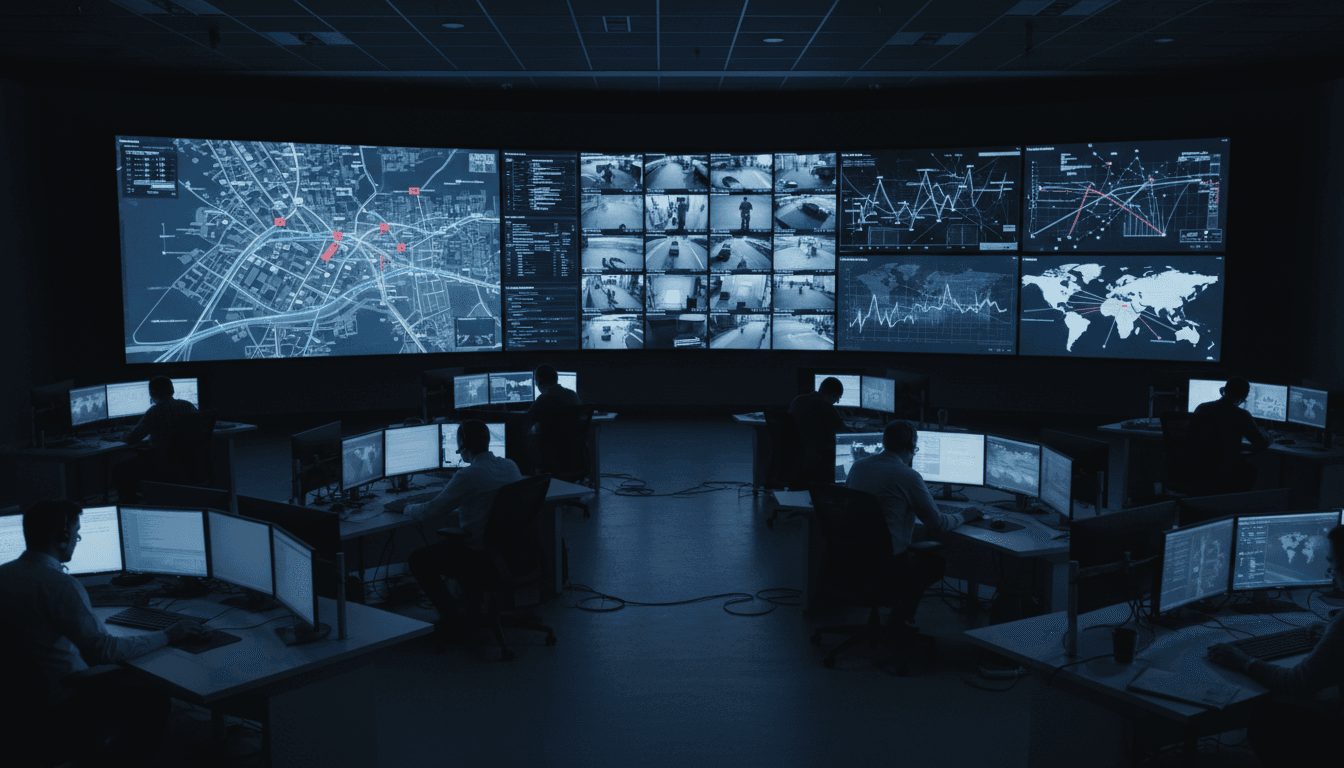
AI vs State Assassins: Detecting Kremlin Kill Ops
A convicted assassin steps off a plane and gets a public embrace from the head of state. That one image tells you more about modern Russian intelligence than a stack of policy memos: violence isn’t a bug in the system—it’s part of the operating model.
The Cipher Brief’s reporting and expert perspective on Russia’s long record of state-sponsored murder lays out the continuity: from the Okhrana to the Cheka to the KGB to today’s FSB/GRU/SVR, targeted killing is treated as a legitimate instrument of policy. What’s changed is the environment around it. The same “wet work” traditions now run through a world saturated with sensors, digital exhaust, travel data, CCTV, biometrics, open-source investigators, and ubiquitous connectivity.
That’s where this post sits in our “AI in Defense & National Security” series: AI won’t “solve” assassination threats, but it can compress detection timelines, connect weak signals across domains, and make it harder for state services to operate with deniability. If you’re responsible for protective security, counterintelligence, or national security technology, the question isn’t whether AI belongs in the stack. It’s whether your stack is built to detect the specific patterns these operations leave behind.
State-sponsored murder is a systems problem, not a single event
State-directed killing isn’t just a trigger-pull moment; it’s a campaign with logistics, surveillance, cover, and messaging. That matters because the best place to stop an assassination is almost never the final act—it’s the preparation phase.
The Russian model described in the source material emphasizes a few recurring themes:
- Deterrence through terror: kill defectors and dissidents to raise the perceived cost of leaving.
- Signaling through attribution: sometimes using distinctive methods (like rare toxic agents) because being known is part of the point.
- Institutional memory: tradecraft persists across generations and organizations, even as tactics modernize.
From an AI and national security perspective, this reframes the challenge: you’re not just hunting a person—you’re detecting an operation. Operations create artifacts across time and space: travel movements, procurement, casing behavior, comms patterns, financial anomalies, OSINT noise, and human networks.
Why the “deniable” myth gets teams hurt
Most organizations still plan as if threats must be proven in court before action is justified. That’s a policy comfort blanket. Protective security runs on risk thresholds, not courtroom thresholds.
AI’s role here isn’t to “accuse.” It’s to support decisions like:
- increase protective posture
- constrain access
- activate surveillance resources
- coordinate with authorities
- disrupt logistics
If your internal process demands certainty before you move, you’ve already ceded tempo.
What AI can actually do against assassination-style operations
AI is strongest when it can fuse many weak signals into a stronger assessment. Against state-sponsored threats, that typically means multi-source intelligence analysis: integrating physical security data, cyber telemetry, open-source information, and human reporting.
Here are the highest-yield AI applications I’ve seen work (or seen fail in predictable ways).
1) AI-powered surveillance: pattern detection, not face matching
Facial recognition grabs headlines, but pattern-of-life anomaly detection is the more useful layer for protective missions.
Examples of detectable pre-attack behaviors:
- repeated presence near a target’s routes or venues
- “handoff” patterns (multiple people rotating surveillance)
- loitering that correlates with schedule changes
- vehicles making redundant loops or stops
- short, repeated visits to access-controlled lobbies
Modern computer vision can classify behaviors (loitering, following, object placement, route mirroring). When you fuse that with schedules and access logs, you get something actionable: an anomaly score tied to specific time and place.
The practical takeaway: if your camera program is only for after-the-fact forensics, you’re leaving value on the table.
2) OSINT at machine speed: triaging “noise” into leads
One reason Russian services have been identified in past operations is that their people and infrastructure leak patterns: reused identities, travel overlaps, phone metadata, photo backgrounds, training pipelines, and social connections.
AI-assisted OSINT helps by:
- clustering identities and aliases across platforms
- flagging travel or lodging overlaps near sensitive events
- detecting coordinated narrative pushes after incidents
- extracting entities (names, places, orgs) from multilingual sources
But OSINT is also a trap: more data doesn’t mean better decisions. Without good triage, teams drown.
A useful operating rule: OSINT models should output “what to check next,” not “what to believe.” That keeps humans in control while still saving hours.
3) Cyber + physical correlation: the missing link in many programs
Targeted killing campaigns increasingly blend physical and digital steps:
- phishing or credential theft to obtain calendars, addresses, travel plans
- doxxing to push targets into predictable behavior
- compromise of surveillance systems to create blind spots
- social engineering against building staff
AI-based cybersecurity tooling (UEBA, EDR analytics, phishing detection, identity anomaly detection) becomes far more valuable when it’s connected to physical security workflows.
A concrete example of correlation logic:
- unusual mailbox access for an executive assistant
- followed by calendar exfiltration
- followed by new faces appearing near a newly scheduled event
Individually, those are “interesting.” Together, they’re a protective action trigger.
4) Threat modeling that learns: predicting likely methods, routes, and staging
The source article points out a key behavioral clue: sometimes Russian operations choose methods that are meant to be attributed. That should influence your model.
AI-enabled threat modeling can help answer:
- Which attack methods are plausible given local constraints?
- What staging locations are optimal (hotels, short-term rentals, storage)?
- What routes minimize detection given camera density and checkpoints?
- What timing aligns with target routines and holidays?
This is where simulation and graph analytics matter. You’re mapping opportunity, not just adversaries.
The hard part: building an AI security stack that doesn’t implode
Most companies get this wrong because they buy tools instead of building an operating model.
Here’s what actually breaks programs.
Data fragmentation is the default—and it kills AI value
If access control logs sit in one system, CCTV in another, travel data in a third, and cyber telemetry in yet another, your AI can’t see the full picture.
Minimum viable integration for counter-assassination detection:
- identity and access management (badges, doors, visitor systems)
- video management system metadata (timestamps, camera IDs, detections)
- endpoint and email security alerts
- executive travel and event calendars (with strict privacy controls)
- incident ticketing (so patterns aren’t lost in inboxes)
If you can’t correlate these, you’re doing expensive, slow investigations manually.
False positives don’t just waste time—they train teams to ignore alerts
An over-sensitive model creates alarm fatigue. A practical target: alerts should be rare enough that every one is reviewed.
Ways to manage this:
- tiered alerting (watch → investigate → act)
- time-bound confidence (confidence increases with repeated signals)
- feedback loops (analysts label outcomes; models learn)
And don’t pretend this is “set and forget.” A live adversary adapts.
Governance is not optional in national security AI
You need clear rules for:
- what data is collected and why
- retention periods
- who can query sensitive datasets
- audit logs for every search and export
- red-team testing for abuse scenarios
If you’re protecting dissidents, journalists, or defectors, privacy failures become security failures. Mishandled data can expose the very people you’re trying to protect.
A field-ready playbook: how to use AI to disrupt “wet work”
If I had to boil this down into an operational checklist for security and national security teams, it would look like this.
Step 1: Define your disruption points
Pick places where operations must pass through:
- target schedule acquisition
- surveillance and casing
- access and approach
- delivery method logistics (weapons/toxins/explosives)
- exfiltration
AI should be mapped to these points—not deployed generically.
Step 2: Stand up a fusion cell workflow (even if it’s small)
You don’t need a massive unit. You need a repeatable rhythm:
- daily triage (cyber + physical + OSINT)
- weekly pattern review
- rapid escalation path to protective actions
AI outputs should land in a shared case management system, not in disconnected dashboards.
Step 3: Build “attribution-aware” detection logic
Because some state actors signal through methods, include detectors for:
- rare agent indicators (medical cluster alerts, unusual symptoms)
- suspicious procurement of dual-use materials
- personnel overlaps with known units or past patterns (where lawful)
You’re not “proving” anything. You’re raising the cost of operating.
Step 4: Test it like an adversary would
Run exercises:
- red-team physical surveillance against a protected person
- phishing attempts aimed at schedule holders
- simulated access attempts using legitimate-looking cover stories
Measure one thing ruthlessly: time-to-detection.
Where this is heading in 2026: faster ops, louder signals
The article’s core warning is escalation: more sabotage, more attempted hits, more willingness to operate abroad. Heading into 2026, two trends make this even more urgent:
- Automation increases tempo. AI helps defenders, but it also helps adversaries plan routes, spoof identities, generate cover communications, and industrialize targeting.
- Hybrid operations blur boundaries. Expect more coordination between influence, cyber intrusion, and physical action—because it compounds confusion and slows response.
The stance I’ll take: the West can’t deter what it refuses to name, and it can’t stop what it can’t see. AI is a visibility engine—if you integrate it into real operational decision-making.
If you’re building in the AI in defense & national security space, the opportunity isn’t “more AI.” It’s AI that reduces detection time across fused data sources while keeping governance tight enough to be trusted.
The organizations that win won’t be the ones with the fanciest models. They’ll be the ones that can act on a weak signal before it becomes a headline.
If you’re evaluating AI for protective intelligence, counterintelligence support, or integrated cyber-physical threat detection, what part of your pipeline is slowest right now: data access, analysis, or decision authority?