AI-driven sanctions strategy helps forecast impacts, spot evasion, and align economic pressure with battlefield outcomes. Learn what to model and deploy.
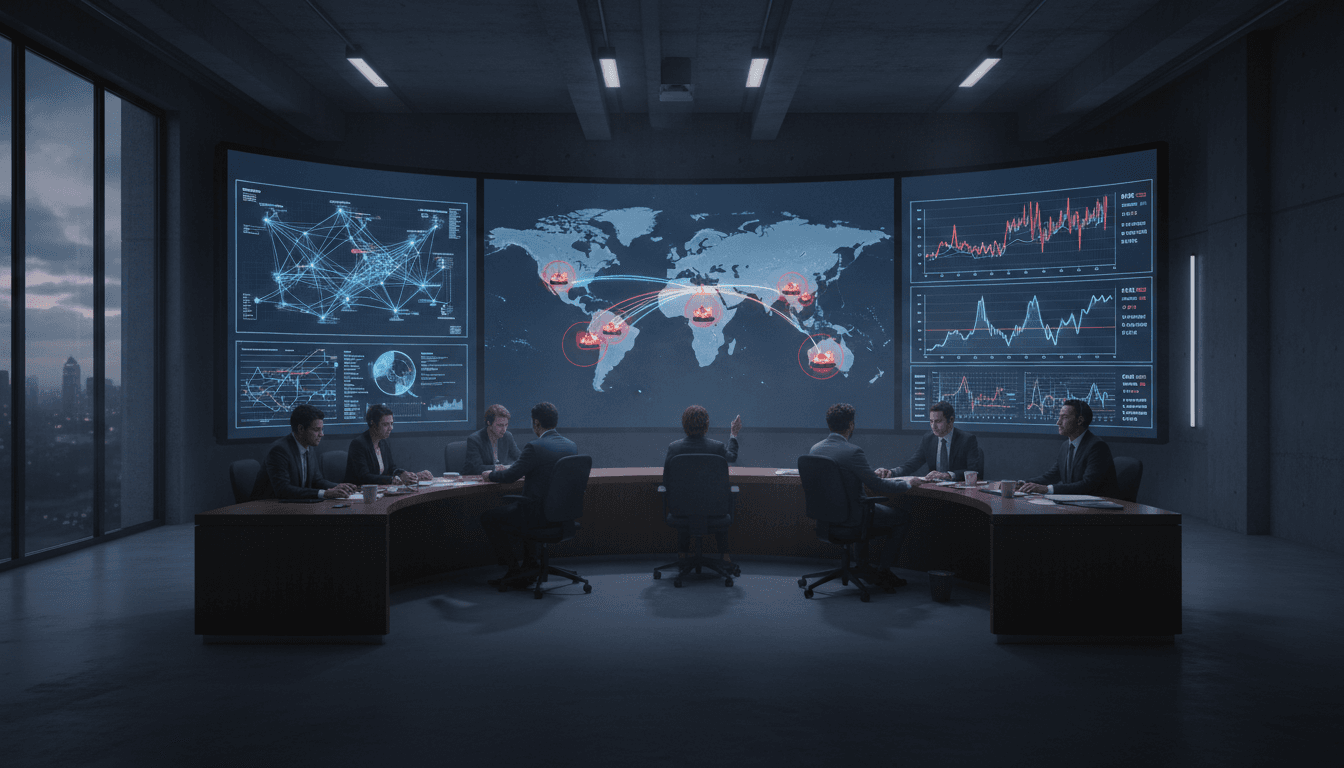
AI-Driven Sanctions Strategy: From Pressure to Precision
Sanctions are often described like a dimmer switch: turn them up, and pressure rises. The problem is that modern sanctions don’t behave like a dimmer. They behave like a network.
When the U.S. and EU targeted Russia’s energy heavyweights (including Rosneft and Lukoil) and expanded restrictions tied to LNG and “shadow fleet” shipping, they weren’t just squeezing one industry. They were tugging on a web of shipping insurers, port services, payment routes, traders, refinery input mixes, and political risk calculations in places far from the front lines.
This is where AI in defense and national security becomes practical—not as a buzzword, but as an operational tool for answering questions decision-makers actually face: Which sanctions create meaningful battlefield constraints? Which create political blowback? Which are trivially bypassed? Pressure works better when it’s measurable, targeted, and continuously adjusted. That’s what AI is good at.
Sanctions pressure is a system problem, not a policy memo
Sanctions succeed when they change an adversary’s feasible options—not when they generate headlines. The recent focus on Russia’s energy sector illustrates why: Russia’s hydrocarbon revenues remain central to financing state capacity, industrial output, and war sustainment. Targeting large producers and restricting logistics (like vessels tied to “shadow fleet” activity) is meant to constrain that engine.
But there’s a catch. The real-world impact depends on second- and third-order reactions:
- Buyers don’t all behave the same way; they reassess risk at different speeds.
- Traders reroute cargoes through new intermediaries.
- Shipping, insurance, and flagging practices shift to reduce traceability.
- Domestic political incentives in sanctioning states affect enforcement intensity.
A useful way to say it: Sanctions are an adversarial contest in logistics and finance. That contest produces enormous data exhaust—AIS vessel signals, customs records, satellite imagery, commodity pricing spreads, corporate registries, and payment indicators. AI systems can convert that exhaust into decision advantage.
What “precision pressure” looks like in practice
A precision approach doesn’t mean “more sanctions.” It means better tuned sanctions, updated as the adversary adapts.
For example, if purchasers (including large refinery ecosystems) pause new contracts due to perceived risk—even while continuing limited non-sanctioned imports—that’s a measurable behavioral shift. The strategic question is whether that shift is temporary caution or a durable reallocation of supply chains.
AI helps by turning qualitative signals (“some buyers are reconsidering”) into quantified metrics:
- Probability of contract renewal by buyer segment
- Estimated reroute time and added cost per barrel
- Likelihood of laundering via intermediaries
- Forecasted revenue loss under different enforcement regimes
AI for sanctions impact modeling: what to predict (and what not to)
The best use of AI here is forecasting under uncertainty, not pretending you can predict politics perfectly. You’re trying to reduce surprise and shorten the cycle time between policy and observable effect.
A solid sanctions impact model usually combines:
- Graph analytics to map entities and relationships (companies, vessels, shell firms, ports, insurers)
- Time-series forecasting to detect demand shifts, pricing anomalies, and shipping cadence changes
- Scenario simulation to test “if-then” policies (e.g., adding secondary sanctions, tightening LNG bans)
- Anomaly detection to surface evasion patterns that don’t match historical baselines
Here’s the stance I’ve come to after watching teams build these: the model that ships is the one that answers a narrow decision question quickly. A sprawling “digital twin of the global economy” is impressive—and often useless when leaders need an answer in 48 hours.
Decision questions worth modeling
If you’re building AI for defense and national security stakeholders, focus on questions that connect policy to outcomes:
- Revenue constraint: Under current enforcement, how much oil revenue is likely to be disrupted over the next 30/60/90 days?
- Evasion elasticity: How quickly can Russia reconstitute logistics through alternative fleets, flags, and intermediaries?
- Buyer behavior: Which refiners or traders are most likely to self-sanction (pause new contracts) when risk rises?
- Operational relevance: Which constraints are likely to impact war sustainment (spares, fuel availability, industrial throughput) rather than just shift margins?
What not to overpromise
AI won’t give you a clean, single number called “sanctions effectiveness.” It will give you a range, with confidence intervals, and it will show you which assumptions drive the range. That’s still a major upgrade over gut feel.
Intelligence fusion: monitoring energy giants and shadow fleets at scale
Sanctions enforcement is partly detective work, partly counter-adaptation. Once restrictions tighten, adversaries try to:
- mask ownership through corporate layering
- spoof or go dark on maritime tracking
- conduct ship-to-ship transfers
- route through permissive jurisdictions
- shift to new payment rails and trade finance mechanisms
This is a textbook use case for AI-enabled intelligence analysis: high-volume data, adversarial behavior, and a need for timely, actionable leads.
Building an AI “sanctions watchfloor”
A modern watchfloor for sanctions and trade controls looks less like a stack of static dashboards and more like a queue of prioritized investigations.
Core capabilities:
- Entity resolution: reconcile whether “Company A (HK)” is effectively the same network as “Company A Trading (UAE)”
- Vessel behavior modeling: flag deviations in route patterns, loitering near transfer hotspots, suspicious draft changes
- Multimodal fusion: combine satellite imagery cues with AIS anomalies and port call histories
- Human-in-the-loop triage: analysts validate high-risk alerts; feedback improves the model
A practical definition: AI-driven sanctions monitoring is the automation of suspicion—at scale, with audit trails.
This matters because enforcement capacity is finite. When the EU blacklists vessels tied to opaque shipping practices, the backlog of “possible evasion” expands immediately. AI doesn’t replace investigators; it keeps investigators focused on the 2% of cases that matter.
A note on trust and auditability
Defense and national security organizations can’t act on black-box outputs. The standard should be:
- clear feature attribution (why the system flagged the entity)
- confidence scoring
- traceable data lineage
- reproducible results for legal and diplomatic scrutiny
Resource optimization in conflict: connecting economic pressure to battlefield outcomes
The geopolitics in the source material highlight a familiar pattern: diplomacy stalls, pressure tools intensify, and both sides posture about escalation (including disputes around long-range strike permissions and retaliatory threats).
When kinetic options are constrained—politically or operationally—economic and informational tools carry more weight. But leaders still need to answer a hard question:
Does this policy reduce the adversary’s capacity to sustain operations, or does it mainly reshuffle trade flows?
AI helps connect macro pressure to operational relevance by integrating:
- fuel availability signals (regional pricing, refinery output proxies)
- defense industrial indicators (import dependencies, constrained components)
- logistics throughput measures (rail, port, pipeline bottlenecks)
- budget stress indicators (currency pressure, sovereign financing costs)
A practical framework: “constraint mapping”
If you only remember one method from this post, make it this one.
- Identify the war-sustaining function (fuel for logistics, lubricants for armor, petrochemicals for industry)
- Map the supply chain (producers, shippers, refiners, storage, distribution)
- Locate choke points (few substitutes, long lead times, hard-to-insure shipping)
- Instrument the choke points with indicators you can track weekly
- Adapt policy when the adversary reroutes
AI accelerates steps 2–4 dramatically. Without it, teams tend to operate on quarterly reports—too slow for an adaptive opponent.
The adversarial AI angle: how sanctions are bypassed (and how to respond)
Sanctions are not a static wall; they’re a moving boundary. Russia and other actors learn quickly, and they use automation too.
Expect evasion ecosystems to adopt:
- automated shell-company generation and nominee director networks
- synthetic documentation and trade-based money laundering patterns
- algorithmic route planning to minimize detection risk
- cyber operations against compliance systems, registries, and logistics firms
So the response can’t be a one-time package. It has to be an iterative competition, where detection and disruption loops run continuously.
Counter-evasion playbook (AI-enabled)
- Graph-based targeting: prioritize nodes that connect multiple evasion paths (brokers, insurers, port agents)
- Secondary sanctions simulation: model who will comply, who will exit, and who will substitute
- Compliance automation: reduce the cost of doing the “right thing” for private-sector actors (banks, shippers, insurers)
- Red-team analytics: simulate how an evader would exploit your thresholds and blind spots
Here’s the uncomfortable truth: if compliance is expensive and slow, evasion wins by default. AI can make compliance cheaper and faster—especially for screening, document verification, and beneficial ownership resolution.
People also ask: what leaders want to know about AI and sanctions
Can AI predict whether sanctions will “work”?
AI can’t guarantee political outcomes, but it can forecast measurable effects—trade diversion, shipping disruptions, revenue impacts, and evasion probabilities—well enough to support faster policy iteration.
What data matters most for AI-driven sanctions monitoring?
Start with what changes quickly and is hard to fake at scale:
- maritime movement patterns
- port call histories
- commodity price spreads and freight rates
- corporate network linkages
- insurance and flagging changes
Where do AI programs fail in national security settings?
Most failures come from three avoidable mistakes: unclear decision owner, poor data governance, and models that don’t produce explanations analysts can defend.
What to do next: build a sanctions analytics capability that holds up under pressure
If your organization works in defense, intelligence, or national security policy, the goal isn’t to “use AI.” It’s to shorten the time from signal to decision while keeping the evidence chain intact.
A practical starting plan for Q1 2026:
- Pick one mission outcome (e.g., detect shadow fleet evasion tied to restricted entities)
- Stand up a minimal fusion pipeline (AIS + corporate registries + a small imagery feed)
- Deploy analyst-in-the-loop triage with clear escalation thresholds
- Measure performance weekly (precision/recall, time-to-investigation, confirmed cases)
- Expand only after you can prove impact
Pressure works when it’s precise. AI is how you keep it precise after the adversary adapts.
If you’re building capabilities in the broader AI in Defense & National Security series—surveillance, intelligence analysis, autonomous systems, and cyber—sanctions analytics deserves a seat at the table. It’s one of the few areas where digital advantage can translate into strategic leverage without firing a shot.
What would change in your organization if you could reliably forecast the second-order effects of a sanctions package before it’s announced—and validate the impact within two weeks after it lands?