Oil sanctions can still work—but enforcement lags evasion. See how AI tracks shadow fleets, pricing, and trade routes to measure impact in real time.
AI Can Tell If Oil Sanctions Will Actually Bite
Brent crude jumped about 6% in a single day after the U.S. sanctioned Russia’s two biggest oil players, Rosneft and Lukoil, in October 2025. That price spike tells you two things at once: sanctions can still rattle the market, and they can also cushion the target’s revenue in the short run.
Here’s what most policy conversations miss: oil sanctions don’t fail because the idea is wrong—they fail because enforcement lags reality. The reality in late 2025 is a world of shadow fleets, opaque intermediaries, non-dollar settlement, and buyers with high tolerance for geopolitical risk. If you’re trying to reduce a belligerent state’s ability to fund a war, the question isn’t “Should we sanction oil?” It’s “Can we measure and enforce the sanction faster than the target can adapt?”
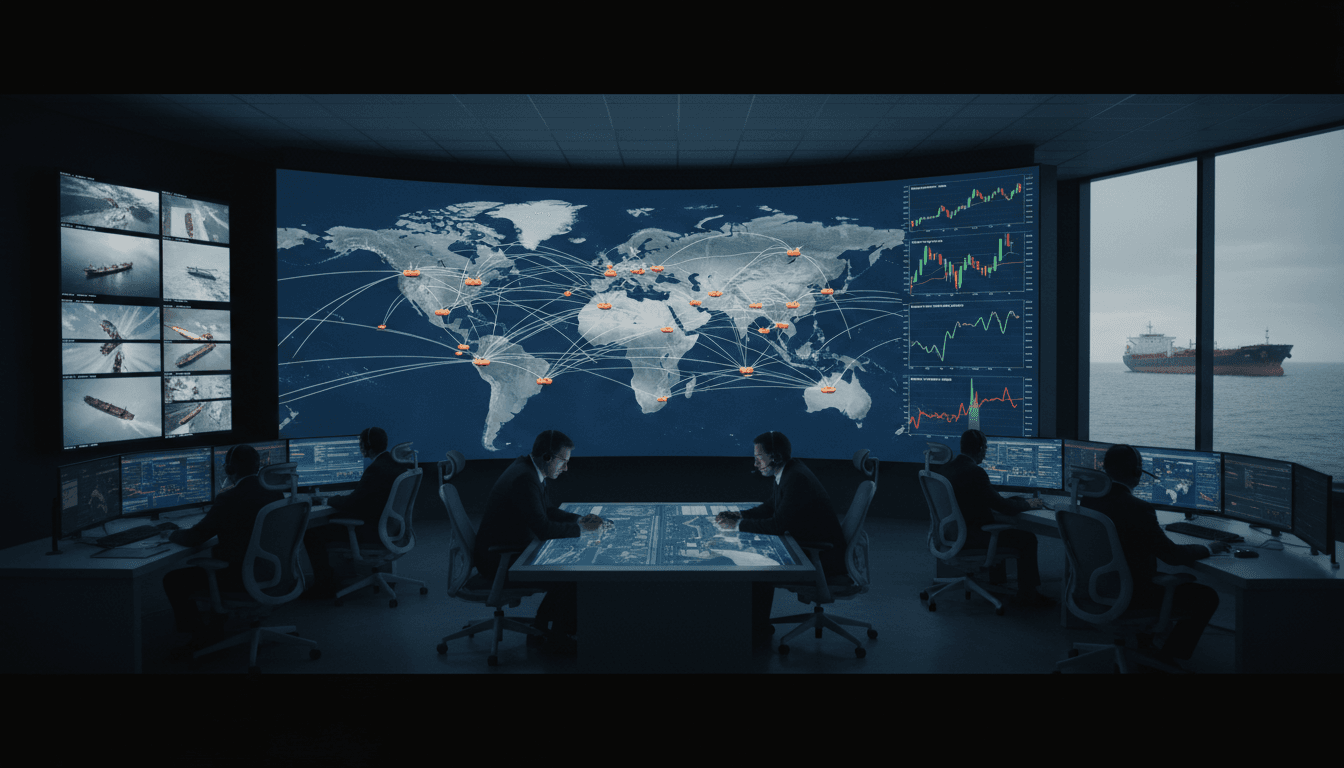
That’s where AI belongs in the toolkit. In the AI in Defense & National Security series, we often focus on sensors, cyber, and autonomous systems. But sanctions enforcement is also a national security problem—one that lives in data: shipping tracks, customs filings, refinery yields, AIS gaps, satellite imagery, trade finance signals, and price differentials. AI can fuse those streams and tell decision-makers whether oil sanctions are producing real pressure or just headlines.
Do oil sanctions still work? Yes—when they change behavior, not just prices
Oil sanctions “work” only when they drive a target toward a defined outcome: reduced warfighting capacity, constrained procurement, degraded fiscal flexibility, or a negotiated concession. Imposing costs isn’t success by itself.
Russia is a hard test case because oil and gas still account for roughly 25–30% of federal budget revenues (a major vulnerability), but Moscow also has three advantages: scale, experience dodging restrictions, and large buyers outside the U.S./EU orbit.
Why the Rosneft/Lukoil move matters
The October 2025 blocking sanctions were designed to be more than symbolic:
- They freeze U.S.-connected assets and prohibit U.S. persons from dealing with the firms.
- They warn banks, traders, refiners, and brokers about secondary sanctions exposure.
- They aim to force a choice on major importers: keep buying discounted Russian crude and risk the U.S. financial system, or pause and look elsewhere.
A month later, the early indicators reported across markets were consistent with “real friction”: Urals trading at roughly a $20 discount to Brent, some Indian and Chinese buying pauses, and more routing through intermediaries.
Still, the historical pattern is stubborn: targets adapt, and sanctions outcomes turn on enforcement discipline.
The modern evasion stack: shadow fleets, reflagging, and non-dollar settlement
If you want oil sanctions to bite, you have to understand how they’re being avoided.
The shipping layer
Evasion often looks mundane until you connect the dots:
- “Shadow fleet” tankers: older vessels, complex ownership chains, and frequent reflagging.
- AIS manipulation: ships going dark near transfer points or spoofing locations.
- Ship-to-ship transfers: blending origin and muddying chain-of-custody.
- Port and insurance arbitrage: routing through jurisdictions with weaker compliance.
This is exactly the kind of environment where humans alone can’t keep up. The data volume is huge, the adversary is adaptive, and the signal is weak unless you fuse sources.
The finance and trade layer
Oil is a physical commodity, but sanctions pressure usually breaks through the financial system:
- Payments shifting to yuan/rupees or alternative clearing channels
- Use of small banks, front companies, and layered invoicing
- Documentation games (origin, grade, shipper, end buyer)
As one experienced sanctions practitioner put it in the source article’s reporting, enforcement—not the announcement—is what changes risk calculations. Banks and traders comply when they believe penalties are inevitable and painful.
What AI adds: real-time sanctions intelligence, not quarterly autopsies
The core AI promise here is simple: shorten the loop from “sanctions imposed” to “sanctions evaluated and adjusted.”
Instead of waiting months for aggregated statistics, an AI-enabled sanctions cell can watch leading indicators daily and recommend concrete actions (new designations, port advisories, insurer pressure, or diplomatic targeting).
A practical AI model: “pressure” as a measurable index
I’ve found sanctions teams are most effective when they stop debating vibes and start tracking a pressure index with clear metrics. AI helps because it can ingest messy data and update the index continuously.
A usable pressure index can include:
- Export volume estimates (by route and buyer)
- Price and discount spreads (Urals vs Brent; delivered vs FOB)
- Shadow fleet utilization (share of exports on high-risk vessels)
- AIS anomaly rates (dark activity near known transfer corridors)
- Port denial events and insurance churn
- Refinery intake signals (inferred via satellite/thermal, shipping, and product outputs)
The goal isn’t a perfect number. The goal is a credible early warning system: “Exports are stable but discounts are widening,” or “Volumes are falling but prices are offsetting revenue loss,” or “Workarounds are concentrating in two jurisdictions—target those next.”
Where AI works best (and where it doesn’t)
AI is strong when the pattern is detectable and repeatable:
- Detecting ownership networks and “same actor, new shell company” behaviors
- Flagging unusual routing and probable ship-to-ship transfers
- Predicting which intermediaries are likely to replace a sanctioned trader
- Classifying vessels by risk using combined features (age, flag history, AIS gaps, insurer changes)
AI is weaker when the problem is fundamentally political:
- If major buyers decide the strategic upside is worth the cost, no model forces compliance.
- If allies aren’t aligned, AI can reveal leak paths—but it can’t close them.
So treat AI as an accelerator for human decision-making, not a substitute for policy.
Three case studies, one lesson: outcomes depend on isolation and enforcement
The source article highlights a useful comparison across Iran, Venezuela, and Russia. The pattern is worth stating plainly.
Iran: measurable export collapse, then adaptation
At peak pressure, Iran’s exports fell from about 2.5 million b/d to under 500,000 b/d. That’s what “biting” looks like.
But Iran also demonstrated the long-run problem: determined targets build evasion capacity, and exports can rebound (often through a dominant buyer) when enforcement focus slips.
AI lesson: build models that track rebound vectors—the routes and counterparties most likely to expand once pressure eases.
Venezuela: sanctions plus internal collapse didn’t equal political change
Venezuela shows a harsher truth: if a regime can survive on coercion and patronage even while society breaks down, sanctions alone may not produce the desired concessions.
AI lesson: combine economic signals with regime stability indicators (security force cohesion, elite fracture signals, and illicit revenue proxies). You’re trying to forecast bargaining behavior, not just barrels.
Russia: scale, buyers, and resilience make “rapid capitulation” unrealistic
Russia entered the sanctions era with meaningful reserves, diversified economic capacity compared to many petro-states, and strong demand from large Asian buyers. Even with widened discounts and added shipping friction, Russia can keep exporting near prior levels if enough counterparts accept the risk.
AI lesson: focus on the cost of evasion (discounts, transit time, insurance premiums, and failed transactions), because the volume line may not fall dramatically—but the net revenue and procurement ability can still degrade.
How to design oil sanctions that AI can help enforce
If you’re in defense, national security, compliance, or strategic intelligence, here are design choices that make sanctions more measurable and enforceable.
1) Define success in operational terms
If the objective is “end the war,” you’re setting yourself up for disappointment. Better objectives are measurable and tied to national security outcomes:
- Keep crude discounts wide for 12–24 months
- Force higher logistics costs and longer delivery cycles
- Reduce hard-currency capture per barrel
- Constrain access to dual-use imports funded by energy revenue
AI can track these without pretending it can read minds.
2) Build an “enforcement queue” powered by risk scoring
Secondary sanctions are only scary if they’re used. AI helps prioritize targets with the highest payoff:
- Top 50 brokers enabling reroutes
- Insurers repeatedly covering high-risk vessels
- Ports with recurring anomalous offloading patterns
- Small banks acting as settlement hubs
Think of it like triage: you don’t need to catch everything—you need to collapse the most valuable pathways.
3) Close allied loopholes with shared data, not just shared statements
The article’s point about allied coordination is decisive. If Europe (or any major bloc) leaves gaps—asset divestment loopholes, lax port screening, uneven enforcement—Russia and other targets will route around them.
The practical fix is shared intelligence:
- A joint vessel risk list
- Shared anomaly detections (AIS + satellite)
- Standardized red flags for trade finance documentation
AI is the glue because it can harmonize messy datasets across agencies and jurisdictions.
4) Prepare for the “price spike paradox”
Sanctions can raise prices enough to offset some volume losses. That’s not theoretical; it showed up immediately with the October 2025 move.
Your monitoring plan should separate:
- Volume impact (barrels)
- Price impact (per-barrel revenue)
- Net revenue after discounts and evasion costs
AI can model the net effect and prevent decision-makers from being fooled by a single headline metric.
What to watch in early 2026: the indicators that tell you if pressure is real
The next few months will reveal whether the Rosneft/Lukoil sanctions are strategic pressure or a temporary shock.
Here are the most “tell me the truth” indicators—good candidates for an AI dashboard:
- Sustained Urals discount relative to Brent (weeks, not days)
- Rising failed transactions (canceled liftings, delayed payments, insurer withdrawals)
- Concentration of reroutes through specific intermediaries (new chokepoints)
- More port denials and documented compliance actions across jurisdictions
- Shadow fleet stress (maintenance failures, accidents, higher premiums, fewer available hulls)
If those trend in the right direction simultaneously, sanctions are imposing durable friction. If only one moves, adaptation is winning.
Where this fits in the AI in Defense & National Security series
AI in national security isn’t only about drones and cyber. It’s also about statecraft at machine speed—detecting illicit networks, measuring pressure, and adapting policy before adversaries rewire their supply chains.
Oil sanctions still matter because energy revenue still buys artillery shells, drones, microelectronics, and political endurance. But the enforcement environment is now a contest between bureaucratic tempo and adversary adaptation. AI is how you raise your tempo.
If you’re building or buying analytics for sanctions enforcement—whether in government, a defense contractor, a bank, or a risk consultancy—start with a simple question: Can you show, week by week, whether exports, discounts, and evasion costs are moving in the direction your policy requires?
That’s the difference between pressure and theater.