AI-powered threat detection helps energy firms verify impact fast, contain attacks precisely, and avoid costly shutdowns during geopolitical cyber incidents.
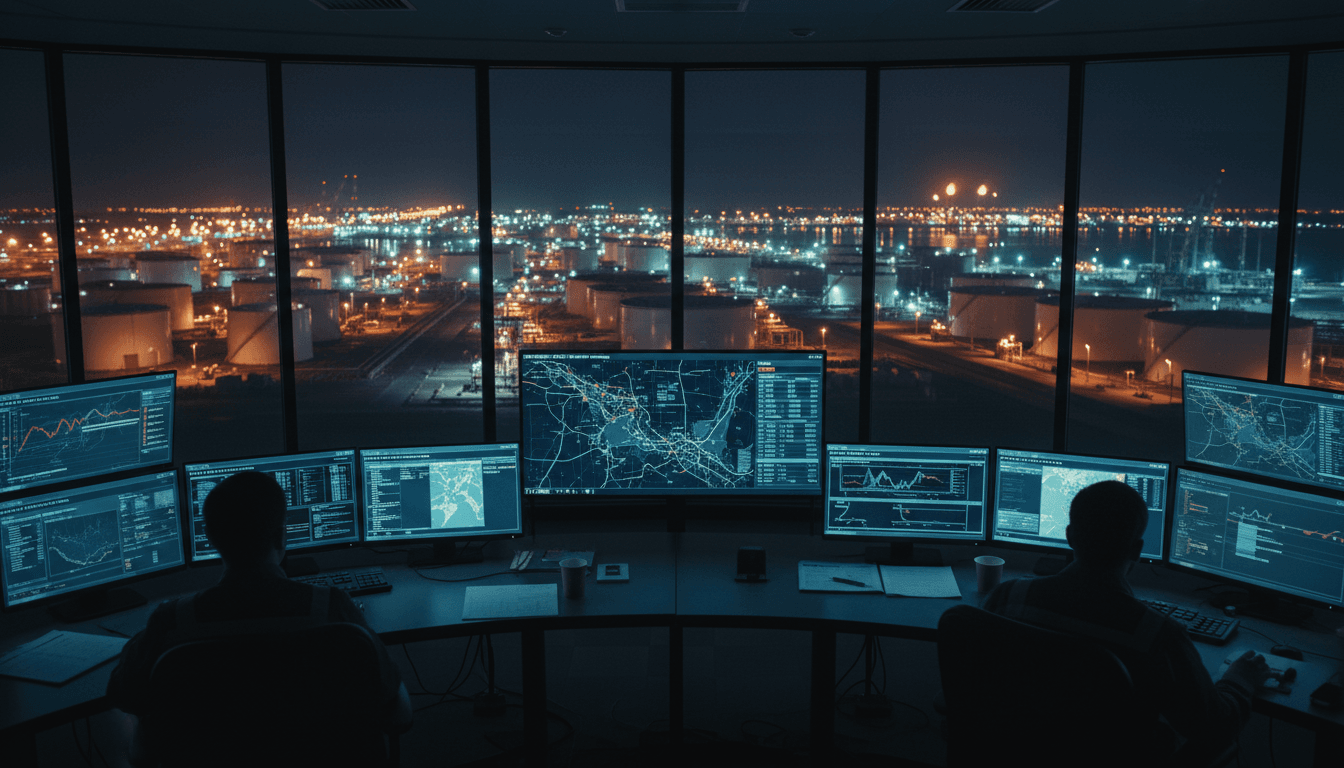
AI-Ready Incident Response for Oil & Gas Cyberattacks
A state-owned oil giant says a cyberattack barely touched operations. Multiple outside accounts say exports stalled, systems were taken offline, and recovery was messy. Both versions can be “true” at the same time—and that’s exactly why this story matters for anyone responsible for security in critical infrastructure.
The recent reports around Venezuela’s PDVSA—paired with escalating geopolitical friction—show a familiar pattern: attack impact becomes a narrative battle before it becomes a technical postmortem. When leadership communication outpaces visibility, security teams end up defending two fronts: the environment and the story.
From an AI in Defense & National Security perspective, the lesson isn’t “who’s right.” The lesson is that critical infrastructure operators need faster detection, higher-confidence triage, and automated containment that holds up under geopolitical pressure. Denial can be a PR move. It’s a terrible security strategy.
Why “minimal disruption” is a risky claim in critical infrastructure
If you can’t measure impact quickly, you’ll either understate it or overreact—and both outcomes increase risk. In the PDVSA reporting, the gap between official statements and external accounts points to a core operational problem: many energy organizations still struggle to produce a reliable, near-real-time answer to basic questions during an incident.
Here’s what tends to happen in oil and gas incidents involving IT and OT-adjacent systems:
- Security teams see suspicious behavior in administrative systems (email, endpoints, identity, finance, logistics).
- Operations leaders worry the problem may “jump the fence” into scheduling, cargo instructions, terminal coordination, or OT management networks.
- The safest short-term move becomes disconnect and shut down—which is also the most expensive move.
Denial often signals a visibility problem, not a confidence problem
When an organization says “operations are unaffected” while also telling staff to disconnect devices, there’s a good chance leadership is trying to balance:
- Market confidence (buyers, shippers, counterparties)
- National stability messaging (especially for state-owned enterprises)
- Incomplete technical facts (no reliable blast radius yet)
I’ve found that the worst moment to discover you lack telemetry is mid-incident. If you don’t have strong endpoint signals, identity logs, and network flow visibility, your “minimal disruption” statement is effectively a guess.
Ransomware + remediation attempts can create the outage
One detail in the reporting is especially believable because it’s common: disruption caused not only by the attacker, but by the defender’s response—especially when antivirus tooling or blanket isolation is used at scale.
In energy and utilities, large-scale remediation can:
- Trigger mass endpoint reboots
- Break brittle legacy apps
- Sever integration paths between ERP, scheduling, terminal, and billing systems
- Create “self-inflicted” denial of service through aggressive blocking
None of that requires the attacker to touch OT. Administrative disruption alone can stall exports, shipments, and compliance processes.
Geopolitics changes attacker goals—and defender constraints
Geopolitical cyberattacks on critical infrastructure are often designed to send signals, not steal data. The PDVSA timing—close to a high-profile maritime seizure and escalating tensions—fits a pattern seen repeatedly across energy markets: cyber operations used to impose cost, sow uncertainty, or test response thresholds.
For defenders, geopolitical context creates three constraints:
- You may not get a clean “claim of responsibility.” Attribution gets weaponized.
- You may not be allowed to disclose details. State entities frequently restrict transparency.
- You still must restore service fast. Economic pressure doesn’t wait for a perfect investigation.
Why oil and gas remains a top-tier target
Attackers target oil and gas because the sector combines three properties:
- High operational leverage: small IT disruptions can stall physical workflows.
- Complex supply chain dependencies: ports, shippers, customs, and counterparties amplify impact.
- Aging, heterogeneous environments: legacy endpoints, segmented networks that aren’t truly segmented, and inconsistent patching.
This isn’t theoretical. The industry has lived through major incidents where business networks and operational continuity collided. When scheduling, billing, and logistics systems go down, it doesn’t matter that valves and PLCs are fine—you still can’t run a modern export operation.
Where AI helps: faster truth, faster containment, fewer shutdowns
AI in cybersecurity is most valuable when it reduces time-to-credible-answer. Not time-to-alert—time-to-answer. During incidents like the one described, leadership needs defensible responses to:
- What systems are affected?
- Is the attacker still active?
- Are credentials compromised?
- Is lateral movement occurring toward sensitive zones?
- What’s the safest containment plan that avoids a full shutdown?
Modern AI-powered threat detection can support these decisions in four practical ways.
1) AI-driven anomaly detection for “administrative systems that run the business”
Oil and gas security programs sometimes over-focus on OT tooling and under-invest in the systems that actually coordinate operations: identity, finance, scheduling, export instructions, terminal access workflows.
AI models trained on environment-specific baselines can flag:
- Unusual login patterns (new geographies, impossible travel, abnormal MFA prompts)
- Service account abuse (rare parent-child process chains, odd token usage)
- New SMB/RDP/WinRM patterns across administrative segments
- Abnormal data staging in file shares used for shipping documentation
The goal is straightforward: spot early-stage intrusion before it becomes a “disconnect everything” crisis.
2) Automated triage that reduces false positives under stress
During high-pressure incidents, analysts burn time chasing alerts that aren’t connected. AI-assisted triage (paired with solid detection engineering) helps by:
- Clustering related signals into a single incident view
- Enriching alerts with identity context, asset criticality, and known behavior
- Prioritizing based on blast radius likelihood, not just severity labels
If you can reliably narrow to “these 27 endpoints and these 4 identities,” you’re far less likely to shut down an entire office network—or suspend port operations unnecessarily.
3) Rapid response playbooks that keep containment proportional
A common failure mode in critical infrastructure incidents is containment by panic:
- Disable broad network segments
- Block entire categories of traffic
- Force password resets without scoping identity compromise
AI-enabled SOAR and response automation can keep actions precise:
- Isolate only endpoints exhibiting confirmed malicious chains
- Revoke tokens for affected identities while preserving operational accounts
- Temporarily enforce conditional access policies (step-up MFA, device compliance)
- Apply deny rules based on verified indicators, not rumor
Proportional response reduces downtime, which reduces pressure, which reduces mistakes.
4) OT-aware monitoring that focuses on pathways, not buzzwords
A mature program treats IT-to-OT risk as a pathway problem:
- Where are the trust relationships?
- Which jump hosts or historians bridge segments?
- Which credentials cross boundaries?
AI can help map relationships and detect unusual traversals, but it only works if you’ve instrumented the pathways: identity, PAM logs, remote access tooling, bastion hosts, and east-west network telemetry.
A useful rule: if you can’t explain your IT-to-OT pathways on one page, your segmentation probably exists only on paper.
A practical checklist: making your incident response “AI-ready” in 60 days
The fastest way to make AI useful is to fix your inputs and your decisions, not chase a perfect model. If you’re leading security for critical infrastructure, these are realistic steps you can take in the next two months.
Step 1: Decide what “operational impact” means (before the incident)
Define 6–10 operational impact signals that security can verify quickly, such as:
- Export instruction generation success rate
- Terminal scheduling queue latency
- Authentication success rate for key business apps
- Volume of shipping documentation processed per hour
- ERP job failure rate
If you can’t measure operational impact, you’ll argue about it.
Step 2: Harden identity telemetry and response
In 2025, most major incidents have an identity component. Prioritize:
- Centralized identity logging (interactive + non-interactive)
- MFA and conditional access visibility
- Service account inventory with owners and normal behavior
- Rapid token revocation and session control procedures
Step 3: Instrument endpoints where “administrative” meets “critical”
Focus EDR coverage on:
- Finance and logistics teams
- Export scheduling and documentation workstations
- Terminal coordination endpoints
- IT admins and jump hosts
Then validate you can:
- Isolate endpoints in minutes
- Pull triage artifacts (process tree, persistence, network connections)
- Confirm ransomware behaviors (mass file writes, shadow copy deletion attempts)
Step 4: Build two containment playbooks—and rehearse them
Create and tabletop these playbooks:
- Ransomware suspected, scope unknown: actions that slow spread while preserving core operations.
- Confirmed lateral movement toward sensitive zones: actions that block pathways decisively.
AI-assisted tooling is only as good as the decisions you’ve already agreed to execute.
Step 5: Prepare a communications model that doesn’t sabotage responders
Public messaging matters, but it should never force responders into corner-cutting. Establish:
- A single source of technical truth (incident commander + logging view)
- A disclosure rubric (what can be said with high confidence)
- Internal comms guidance to avoid rumor-driven shutdowns
What leaders should ask when an energy company “downplays” an incident
The right questions are operational and measurable—not political. If you’re a CISO, CIO, COO, board member, insurer, or counterparty, here are the questions that cut through narratives:
- What was the first confirmed malicious behavior and timestamp?
- Which identities were used after-hours or from new locations?
- How many endpoints were isolated, and why those endpoints?
- Which business processes were degraded (scheduling, documentation, billing)?
- Was OT impacted directly, or were IT-to-OT pathways at risk?
- How long did it take to restore “minimum viable operations”?
If an organization can’t answer these within 24–48 hours, the issue isn’t PR. It’s preparedness.
The bigger lesson for AI in Defense & National Security
Critical infrastructure cyber defense now sits inside national security whether companies like it or not. When an energy operator becomes a geopolitical flashpoint, cyber incidents stop being “IT problems” and become economic and strategic events.
AI won’t solve geopolitics. What it can do is reduce the time between intrusion and certainty—so leaders don’t make irreversible choices (like broad shutdowns) based on incomplete information.
If you’re responsible for energy, utilities, ports, or logistics, treat this PDVSA episode as a case study: the most dangerous moment is when you’re confident publicly but uncertain technically. That gap is where disruption spreads.
If you want to pressure-test your monitoring and response readiness for ransomware and geopolitically motivated attacks, start with a simple exercise: identify the three business workflows that would halt exports or delivery if “administrative systems” went down—then map the identities, endpoints, and integrations that support them. From there, AI-powered detection and automation becomes practical instead of aspirational.