AI-enabled introspection helps intelligence teams improve quality and speed without losing mission focus. Build weekly feedback loops with trusted guardrails.
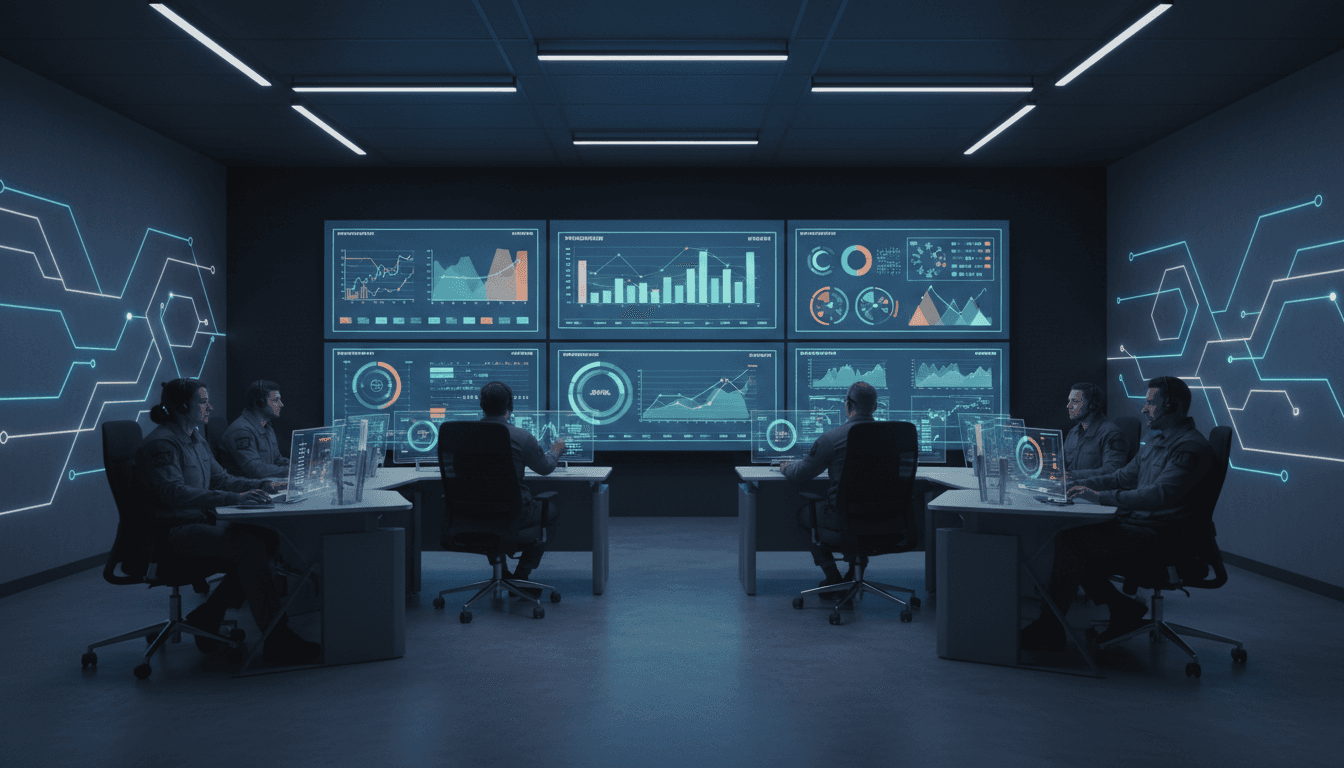
AI for Intelligence Introspection Without Slowing Mission
Mission teams don’t skip introspection because they don’t care. They skip it because it doesn’t fit on the calendar.
That’s the uncomfortable truth behind a line I’ve heard versions of across defense and intelligence: “My read pile is already a mile high—don’t ask me to navel-gaze.” The Cipher Brief recently made the same point about the Intelligence Community (IC): mission focus is a cultural strength that can quietly become a liability when it crowds out routine self-assessment.
Here’s where AI belongs in the “look inward” conversation. Not as another tool analysts must learn on top of everything else, and not as a flashy modernization project. AI should be the force multiplier that makes introspection cheap enough—time-wise and cognitively—to become routine. If national security organizations want better analysis, faster warning, and fewer avoidable mistakes, they need internal feedback loops that run every week, not every scandal.
Mission focus creates blind spots—and they’re predictable
Mission focus narrows attention to the external threat picture, and that can reduce organizational learning. It’s not a character flaw; it’s an operating environment. When you’re tracking a fast-moving target—crisis escalation, a cyber campaign, an influence operation—reflection feels optional.
The downside shows up in repeatable patterns:
- Process calcification: the same briefing format, the same coordination rituals, the same assumptions about what “good” looks like.
- Checklist compliance over real quality: analytic standards get treated as paperwork rather than performance.
- Bias persistence: not just cognitive bias in judgments, but institutional bias in what gets resourced, what gets promoted, and what gets ignored.
- “Blue” avoidance: discomfort analyzing internal U.S.-related issues, especially when they implicate culture, incentives, or leadership decisions.
A healthy intelligence enterprise doesn’t only collect on adversaries. It collects on itself—its workflows, its failure modes, its incentives—and then it changes behavior.
What “introspection” should mean in 2026 IC operations
Introspection isn’t a retreat from mission; it’s mission assurance. In practical terms, it means building a habit of answering three questions inside the line units (not just in tradecraft offices or schools):
- Are we asking the right questions? (collection and analytic priorities)
- Are we producing usable outputs? (timeliness, decision relevance, clarity)
- Are we learning fast enough? (feedback, error correction, adaptation)
The IC already has pieces of an introspective ecosystem—training, methodologists, tradecraft publications, analytic standards. The critique is that these are often peripheral to daily production. They live “next door” to the mission rather than inside the mission.
The fix isn’t a quarterly offsite. It’s a lightweight operating cadence.
The bar: regular, resourced, required
A workable introspection model has three non-negotiables:
- Regular: weekly or biweekly, not “when time permits.”
- Resourced: time is the resource; if leaders don’t protect it, it won’t happen.
- Required: not optional for the motivated few; institutionalized like readiness checks.
The pushback is obvious: “We can’t spare the hours.” That’s exactly why AI matters.
Where AI actually helps: making feedback loops frictionless
AI is most valuable for internal IC introspection when it reduces overhead and increases signal, without creating new bureaucracy. Think of it as an internal sensing layer for analytic work—capturing what’s already happening, summarizing it, and flagging patterns humans don’t have time to tally.
Three high-impact use cases stand out.
1) AI-enabled analytic QA that’s more than a checklist
ICD-style standards are necessary, but they’re blunt instruments. AI can turn standards into continuous quality monitoring by scanning products (at the appropriate classification level) for patterns like:
- unclear key judgments (buried ledes, inconsistent phrasing)
- missing confidence language or inconsistent confidence calibration
- over-reliance on a single source stream
- claims that don’t map cleanly to evidence
- “templated” writing that hides uncertainty
This isn’t about replacing tradecraft reviewers. It’s about giving them dashboards that show where to look.
A practical model I’ve found works: AI flags candidates, humans adjudicate, and the system learns what that team considers “good.” Over time, quality review shifts from random sampling to targeted sampling.
2) Forecasting + after-action learning at machine speed
If you want a measurable introspection habit, start with prediction.
Structured analytic forecasting creates a clean feedback loop: you made a call, time passed, reality happened, and you compare. AI can support that loop by:
- extracting implicit predictions from text (what the product effectively claimed would happen)
- normalizing predictions into trackable statements
- maintaining a “forecast ledger” across teams
- summarizing misses and near-misses by topic, unit, or assumption
Done right, this becomes less about scoring analysts and more about calibrating the organization—finding which assumptions break most often, which indicators were misleading, and where collection didn’t support the questions leadership cared about.
3) Internal operations auditing: the unglamorous win
Most organizations modernize outward-facing capabilities first. The ROI is often higher internally.
AI can audit internal operations for bottlenecks and waste using logs and metadata already generated by normal work:
- coordination timelines (how long products sit in review)
- rework loops (how many times a draft gets rewritten, and why)
- meeting load by unit and role
- duplication of effort across centers
- surge patterns during crises (what breaks first)
This kind of introspection is politically sensitive—because it reveals friction that people have normalized. That’s also why it’s valuable.
A simple rule: if an IC unit can’t describe where its time goes each week, it can’t credibly claim it’s “too busy” to improve.
Guardrails: AI for introspection has to be trusted to be used
If internal AI feels like surveillance, adoption will fail—and it should. The IC can’t build a learning culture by triggering fear.
A workable governance package includes:
- Purpose limitation: tools are for quality and learning, not performance punishment.
- Role-based access controls: analysts see their own feedback; leaders see aggregates unless a formal review is initiated.
- Data minimization: use metadata where possible; only ingest full text when necessary.
- Red teaming for bias: introspection tools can encode bias (for example, penalizing unconventional writing styles that are actually clearer).
- Human-in-the-loop decisions: AI flags; humans decide.
This is where “blue” issues matter. Introspection requires institutional maturity: the ability to see internal problems without treating them as disloyalty.
A field-ready playbook: introduce introspection without adding meetings
The fastest way to make reflective practice real is to attach it to existing rhythms. Don’t invent a new ceremony. Retrofit one.
Here’s a practical cadence that fits mission tempo.
Step 1: Create a 20-minute weekly “quality pulse”
- 10 minutes: AI-generated summary of the week’s products (volume, topics, cycle time, review churn)
- 10 minutes: one focused discussion (one miss, one friction point, one improvement)
The objective isn’t therapy. It’s operational learning.
Step 2: Track three metrics that teams can influence
Choose metrics that don’t incentivize gaming. Good options:
- Cycle time to decision relevance (not just publication)
- Rework rate (number of major rewrites after coordination)
- Forecast calibration (how often confidence matched outcomes)
Even small improvements compound, especially in crisis-heavy portfolios.
Step 3: Build a “two-level” feedback loop
- Team-level: fast learning, local fixes
- Enterprise-level: recurring issues escalate to policy, tooling, or training updates
This prevents the common failure mode where teams learn the same lessons repeatedly because the enterprise never absorbs them.
Step 4: Make introspection part of readiness
Operational readiness isn’t only equipment and staffing. For intelligence, readiness includes:
- analytic clarity under pressure
- coordination speed without quality collapse
- resilience against cognitive warfare and deception
If you treat introspection as readiness, leaders protect time for it.
Why this matters now in the AI in Defense & National Security series
Defense and intelligence organizations are spending serious energy on AI for collection, targeting, and cyber defense. That’s necessary. But the biggest near-term gains may come from AI applied to internal performance—how requirements are set, how products move, how judgments are expressed, and how learning happens.
The paradox is simple: mission focus is supposed to increase effectiveness, yet without introspection it often locks in inefficiencies and repeatable analytic errors.
AI won’t fix culture by itself. But it can make the culture shift easier by removing the two biggest blockers: time cost and attention cost.
Leaders who want better mission outcomes in 2026 should start asking a different kind of modernization question:
If we deployed AI to help the IC look inward every week, what would we stop doing, what would we do faster, and what mistakes would we catch before they hit a decision-maker’s desk?
If you’re exploring AI for intelligence operations—especially internal QA, forecasting, workflow analytics, and governance—this is a good moment to get specific about requirements, data boundaries, and what “success” looks like in the first 90 days.