PDVSA’s alleged cyberattack shows how “admin” outages can disrupt energy exports. Learn where AI improves detection, response, and resilience.
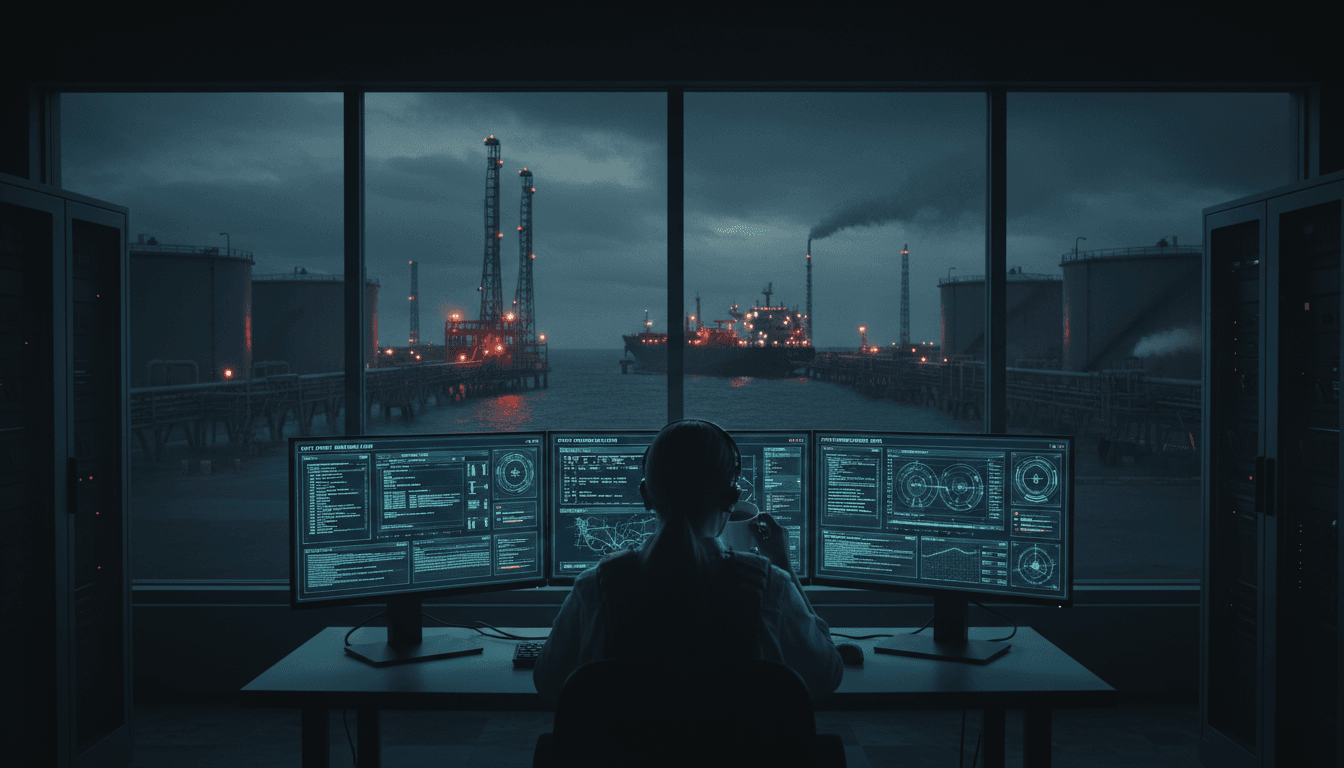
AI Defense for Energy Cyberattacks: Lessons From PDVSA
A critical infrastructure cyber incident doesn’t have to knock out a refinery to create real-world damage. Sometimes the disruption starts in “administrative systems,” and the downstream impact shows up where it hurts: shipping schedules, export instructions, and operational decision-making.
That’s why the recent PDVSA story matters for anyone in the AI in Defense & National Security orbit. Venezuela’s state-owned oil company publicly minimized the impact of an incident it blamed on the US, while multiple media reports—citing unnamed sources—described broader disruption, including employees being told to disconnect machines and export processes pausing. The public narrative and the operational reality may not match. And in geopolitical environments, the truth often arrives late.
Here’s the stance I’ll take: whether PDVSA’s disruption was “major” or “contained,” the playbook is the same—attackers aim for uncertainty. AI-driven detection and response isn’t a nice-to-have in energy. It’s how you reduce ambiguity fast enough to keep commerce, safety, and national stability intact.
What the PDVSA incident really shows (beyond headlines)
Answer first: The PDVSA episode shows how attackers can create outsized impact by hitting enterprise IT and administrative systems that sit upstream of physical operations.
From the reporting, we have two competing pictures:
- PDVSA’s statement: no operational disruption; impact limited to administrative systems; internal teams contained it.
- Media accounts (via sources): broad system outages; cargo/loading instructions suspended; employees told to disconnect/shutdown; possible struggles restoring systems.
Even if we assume the conservative version—“administrative only”—it’s still a serious critical infrastructure event. In energy, admin systems include the digital plumbing for:
- shipping documentation and bills of lading
- export scheduling and customer instructions
- inventory and dispatch workflows
- procurement and contractor access
- identity systems and email (which affects incident coordination)
Attackers know this. They target the systems that force humans into manual workarounds under pressure. That’s where mistakes happen, and where operational risk spikes.
The geopolitics makes attribution harder—and more urgent
Answer first: When incidents occur amid diplomatic and military tension, attribution becomes part of the conflict, not just a technical question.
The timing was described as notable because it followed a US action involving a sanctioned tanker carrying Venezuelan crude. In those circumstances, a cyber incident becomes immediately politicized:
- One side benefits from framing it as foreign sabotage.
- The other side benefits from saying nothing (or denying).
- The organization benefits from minimizing public panic.
This is exactly where security teams can get trapped: leadership wants certainty, but evidence is incomplete. AI won’t “solve” attribution, but it can dramatically improve decision-grade clarity—what was impacted, what’s spreading, what’s safe to restore, and what’s likely next.
Why energy infrastructure is a magnet for cyberattacks
Answer first: Energy is targeted because it’s economically strategic, politically symbolic, and operationally fragile due to complex IT/OT environments.
Energy incidents are different from standard enterprise breaches for three reasons:
- Cascading consequences: A failure in scheduling, billing, or dispatch can halt physical movement of goods even if pumps and valves still run.
- Mixed technology stacks: Energy operators often run modern cloud services alongside legacy Windows hosts, specialized engineering workstations, and long-life OT assets.
- High-payoff disruption: Nation-state operators, proxies, and ransomware crews all get leverage from even short disruptions.
High-profile past events underline the stakes: attacks on power grids, pipeline ransomware, and persistent targeting of oil and petrochemical firms. The common thread isn’t sophistication alone—it’s that defenders have to protect sprawling, interdependent systems.
The “admin systems” trap: IT-to-OT pathways are real
Answer first: Administrative systems frequently share identity, file-sharing, remote access, and reporting pathways with OT-adjacent networks, turning an IT incident into operational risk.
In many energy organizations, the boundaries between IT and OT aren’t clean lines. They’re more like shared hallways:
- Active Directory domains used across business units
- shared jump hosts and vendor remote access
- historian or reporting systems bridging OT data to IT analytics
- file shares used to transfer configs, logs, or engineering artifacts
That’s why defenders can’t treat an “IT-only ransomware event” as harmless. The question isn’t “Is OT down?” It’s:
Can this incident change what operators see, decide, or trust?
AI has a role here because it helps detect subtle lateral movement and unusual cross-zone activity faster than human triage alone.
Where AI helps most: detection, response, and attribution signals
Answer first: AI improves outcomes by shrinking the time between weak signals and decisive action—especially across endpoints, identities, and network traffic.
Most leaders hear “AI in cybersecurity” and think of a chatbot that summarizes alerts. That’s not the high-value use case in critical infrastructure.
In practice, AI-driven security analytics helps most in three lanes:
1) Detecting early-stage intrusion before ransomware
Answer first: AI is strongest at spotting behavior patterns that don’t match normal operations—new persistence, unusual authentication, and low-and-slow lateral movement.
Typical ransomware operations (including those that later get labeled “nation-state backed” or “state tolerated”) follow patterns:
- initial access (phishing, exposed VPN, stolen credentials, supply chain)
- privilege escalation and credential dumping
- lateral movement and discovery
- data staging/exfiltration (sometimes)
- encryption and disruption
AI models trained on your environment’s baseline can highlight anomalies such as:
- a service account authenticating from a new geography or subnet
- unusual
Kerberosticket activity or spikes in failed logons - a workstation suddenly querying many servers (discovery sweep)
- rare admin tool usage at odd hours (living-off-the-land behavior)
The win isn’t “AI finds the bad guy.” The win is you isolate the blast radius before business workflows collapse.
2) Triage at machine speed when humans are overloaded
Answer first: During a crisis, AI helps reduce alert overload by clustering related events into a single incident narrative.
If employees are being told to disconnect machines (as some accounts suggested), you’re already in the expensive part of an incident: communications are degraded, visibility drops, and every step risks breaking something.
AI-assisted incident triage can:
- correlate endpoint, identity, email, and DNS indicators into one timeline
- prioritize the handful of hosts that appear to be “patient zero” or staging nodes
- propose containment actions based on playbooks (disable account, block hash, isolate subnet)
This matters because time-to-containment is what separates “annoying outage” from “weeks of operational paralysis.”
3) Attribution support: not proof, but better signals
Answer first: AI can surface attribution-relevant patterns (infrastructure reuse, tooling fingerprints, TTP matches) while keeping analysts honest about uncertainty.
Attribution is political, legal, and technical. AI can assist technically by comparing:
- malware/tooling traits to known clusters
- command-and-control patterns and domain age/hosting behaviors
- tactic/technique sequences mapped to frameworks like MITRE ATT&CK
But responsible teams treat this as probabilistic. The best operational question is:
- “What actor profile does this resemble, and what do they usually do next?”
That informs defense. Even when you can’t name the actor publicly, you can predict the next move.
A practical AI-ready playbook for energy operators
Answer first: If you want AI to help during an incident, you must prepare your telemetry, playbooks, and governance before the crisis.
Here’s what I’ve found works when organizations try to operationalize AI for critical infrastructure security.
Build the minimum viable visibility (before you buy more tools)
Start with coverage that AI can actually learn from:
- Identity telemetry: sign-ins, MFA events, privileged role changes
- Endpoint telemetry: process creation, PowerShell/script logs, EDR isolation capability
- Network telemetry: DNS, proxy, firewall logs, east-west flow visibility where feasible
- Backup telemetry: immutable backups, restore testing logs, admin access auditing
AI is only as useful as the consistency and completeness of the data feeding it.
Create “containment first” automation—carefully scoped
For energy and other high-availability sectors, automation has to be conservative. The goal is to stop spread without bricking operations.
Good starter automations:
- Auto-disable obviously compromised accounts (impossible travel + high-confidence indicators)
- EDR isolate endpoints that show encryption-like behavior (rapid file rewrites, known ransomware notes)
- Block newly observed malicious domains with tight expiry windows and human review
Keep humans in the loop for anything that impacts OT-adjacent access paths.
Decide now: who can authorize disruption?
Incidents become chaotic when nobody knows who can pull the plug. Define a short list:
- who can segment networks
- who can shut down remote access
- who can pause exports/shipments
- who can communicate externally
This is governance, not technology—but it determines whether AI recommendations turn into action.
Test the scenario you don’t want to admit is possible
A realistic tabletop for this PDVSA-style scenario:
- ransomware hits finance/HR/admin systems
- export scheduling is halted due to loss of instructions/workflows
- leadership wants public assurance within hours
- rumors claim foreign government involvement
Run it with comms, legal, operations, and security at the same table. AI tools only help if the organization is prepared to use them under pressure.
People also ask: “Could AI have prevented this?”
Answer first: AI can’t guarantee prevention, but it can materially reduce impact by catching pre-ransomware behaviors and speeding containment.
Prevention is rarely a single control. It’s layered defense plus fast response. In critical infrastructure, the realistic target is:
- detect intrusion earlier
- limit lateral movement
- keep identity systems trustworthy
- restore confidently without reinfection
If the reporting about antivirus remediation complicating recovery is accurate, that’s another lesson: tooling conflicts and rushed remediation can extend downtime. AI-guided triage and sequencing (what to isolate first, what to restore last, what to validate) can cut that risk.
The bigger national security lesson: resilience beats certainty
Public statements will keep downplaying cyber incidents in geopolitically tense moments. Sometimes that’s strategy. Sometimes it’s incomplete information. Either way, defenders can’t wait for perfect clarity.
AI in cybersecurity is becoming part of national resilience because it helps organizations answer the questions that matter most during an attack:
- What’s actually affected right now?
- Where is the attacker still present?
- What can we restore safely today?
- What’s the next likely move?
If you’re responsible for energy, transportation, telecom, or any critical infrastructure supply chain, treat this as your reminder: “administrative systems” are operational systems when they control the flow of money, instructions, and trust.
Next step: review your current detection and response stack and ask one uncomfortable question—if your export/shipping workflow went dark tonight, would AI help you recover faster, or would it be watching from the sidelines?