Greece’s expected PULS buy shows how AI-ready artillery is becoming a procurement priority. See what it signals for modern kill chains and interoperability.
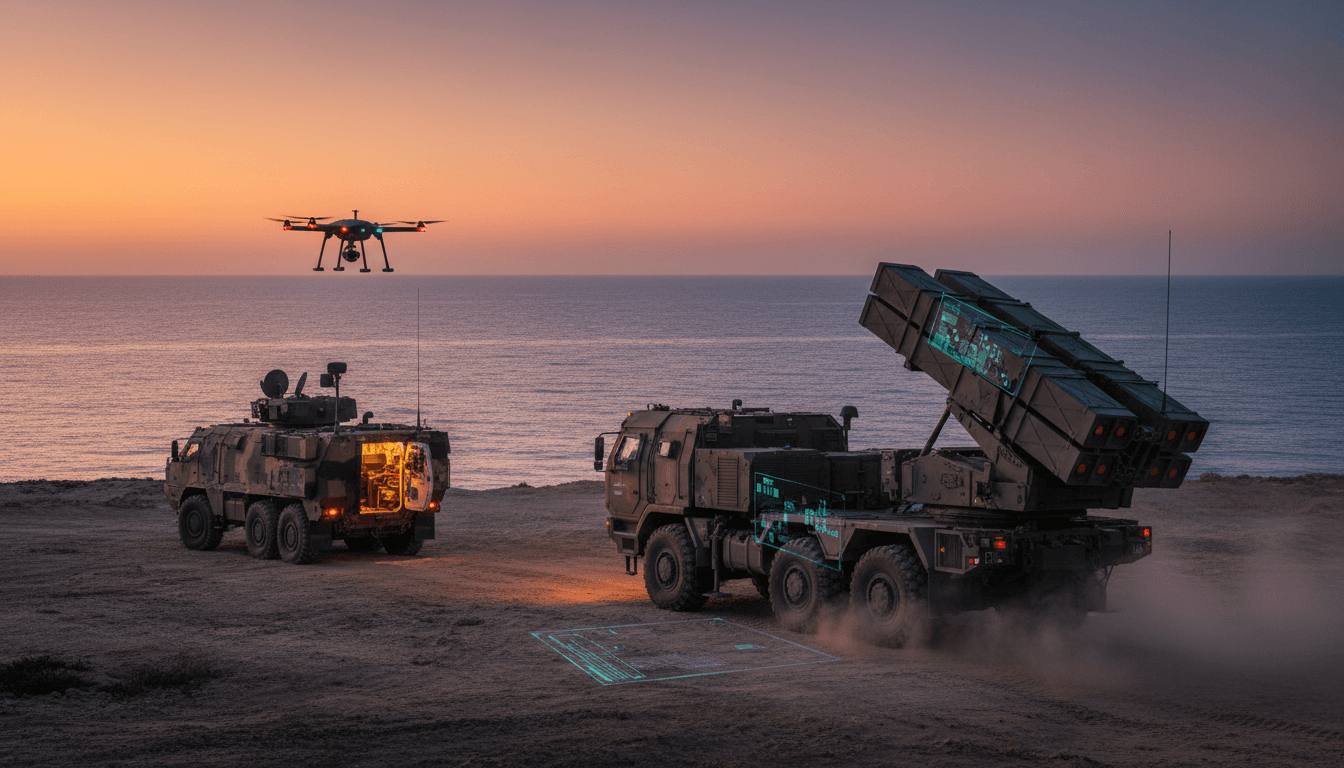
AI-Enabled Artillery: Why Greece Wants Elbit PULS
Greece’s parliament recently cleared the country’s 2026 budget, and within hours the defense industry signal was loud: Elbit Systems says it expects a contract for its PULS rocket artillery system from the Hellenic Ministry of National Defense, pending final commercial negotiations. Greek reporting has put the prospective buy at 36 launchers and roughly $757 million—a number big enough to be “material” for Elbit and big enough to reshape a chunk of Greece’s land fires.
Most people hear “rocket artillery” and think it’s just about range and explosives. That’s outdated. Modern fires are increasingly a software-and-data problem: sensor fusion, targeting workflows, deconfliction, ammunition management, and the kill chain timing that decides whether a target is hit or has already moved. This is where the AI in Defense & National Security conversation stops being abstract and starts being procurement reality.
What’s happening with Greece and PULS isn’t just a shopping list item. It’s a case study in how allied militaries are buying platforms that can absorb AI-enabled targeting, digital fire control, and networked battlefield intelligence—and do it fast.
The Greece–Elbit PULS deal is really about speed, scale, and integration
At the surface level, PULS is attractive because it’s a multi-role rocket and missile launcher family that can fire different munition types across different ranges. The deeper reason it’s winning deals across Europe is simpler: it fits into existing force structures without forcing an army to rebuild everything around it.
Elbit markets PULS as adaptable to wheeled or tracked platforms, with the promise of reduced training and maintenance burden. That matters because artillery modernization fails when sustainment is an afterthought. If a system can’t be kept mission-ready with local maintainers, it becomes a parade asset.
Why Greece is shopping now
Greece is in the middle of a wider defense buildup that includes discussion of an integrated air defense concept sometimes described as “Achilles’ Shield.” The logic is coherent:
- Air and missile defense reduces vulnerability of bases, ports, and critical infrastructure.
- Long-range precision fires create credible deterrence and complicate adversary planning.
- Interoperable systems let Greece coordinate with partners and plug into coalition workflows.
From a national security lens, these programs work best when they share a common backbone: tactical data links, fire-control networks, shared geospatial products, and a doctrine that assumes high-tempo decision cycles.
Why PULS keeps showing up in Europe
PULS has been selected or acquired by multiple European customers in recent years, including:
- Germany (selected in February 2025) in the context of Euro PULS cooperation
- The Netherlands (contract signed May 2023)
- Denmark (eight systems acquired in 2023)
When several countries converge on the same launcher family, it’s not just about unit cost. It’s about:
- shared training pipelines
- pooled ammunition buys
- compatible sustainment and spare parts
- common digital integration patterns
That “ecosystem effect” is a quiet accelerant for AI adoption: if everyone is building similar interfaces into similar fire-control architectures, software improvements propagate faster.
AI’s real role in modern artillery: compressing the kill chain
AI doesn’t replace gunners. It replaces latency.
The defining performance metric for artillery in 2025 isn’t only range; it’s time-to-effects under contested conditions. The kill chain—detect, decide, deliver, assess—gets disrupted by electronic warfare, decoys, mobility, and the simple fact that valuable targets don’t sit still.
AI-enabled artillery concepts focus on three practical layers.
1) AI-assisted targeting and prioritization
Targeting is increasingly a data triage problem. Drones, radar, SIGINT, and ISR feeds produce more detections than human staffs can manually evaluate at speed.
AI methods (including computer vision for drone video, anomaly detection, and pattern-of-life models) can:
- flag likely high-value targets
- reduce false positives (or at least rank confidence)
- recommend prioritization based on commander intent and rules of engagement
One “snippet-worthy” truth: Precision fires depend as much on target confidence as on munition accuracy.
2) Fire control that adapts to contested environments
Counter-battery threats and electronic attack push artillery toward “shoot-and-scoot” behavior. AI can support:
- route planning that minimizes exposure time
- automated deconfliction (friendly air corridors, no-fire areas, civilian infrastructure)
- dynamic fire mission scheduling when comms degrade
Even modest automation here matters. If a battery can execute missions with fewer voice calls and fewer manual steps, it’s harder to disrupt.
3) Predictive logistics and readiness
Artillery is ammo-hungry and maintenance-heavy. AI in logistics isn’t glamorous, but it’s where readiness is won.
Practical applications include:
- forecasting rocket expenditure by operational phase
- predicting component failures (based on usage, vibration, temperature, and maintenance history)
- optimizing resupply routes when ports, roads, or depots are under threat
If Greece is buying 36 systems, the bigger operational question becomes: Can Greece sustain high-rate fires for weeks, not days? AI-supported sustainment planning is one of the few realistic ways to answer “yes” without overspending.
Interoperability and sovereignty: the questions procurement teams should ask
Cross-border defense procurement always creates a tension: you want best capability fast, but you also want operational sovereignty and resilience if politics, supply chains, or wartime conditions shift.
Here are the questions I’d put on the table for any AI-enabled fires acquisition—PULS included.
Who owns the data and the interfaces?
If the fire-control stack generates rich operational data (missions, locations, maintenance, munition performance), that data becomes sensitive national security material.
Procurement teams should push for clarity on:
- data ownership and retention
- encryption and key management
- auditing access (who can see what, and when)
- ability to export data into national analytics environments
AI needs data. But data without governance becomes a vulnerability.
What’s the upgrade path for software?
A launcher can last decades. Software cycles move quarterly.
The practical requirement is a secure, repeatable method to patch, update, validate, and roll back mission software without grounding the unit or introducing cyber risk.
The best contracts specify:
- cadence for updates
- cyber test requirements
- configuration control
- the boundary between vendor code and national code
How will it integrate with drones, radar, and C2?
Artillery effectiveness depends on the sensor-to-shooter network. Greece’s broader modernization suggests a desire for integrated air defense and long-range fires—those programs should not become separate digital islands.
A useful integration checklist:
- Can the system ingest target data from multiple sensor types?
- Can it function when GPS is degraded?
- Is it compatible with coalition data-sharing workflows?
- Can it operate under EMCON or limited-bandwidth conditions?
If the answer to any of these is “not yet,” that’s where AI and autonomy programs should focus next.
What this deal signals about AI-driven defense cooperation in Europe
The Greece–Israel defense relationship has been deepening for years, including prior cooperation in training and other defense acquisitions. The PULS expectation sits alongside broader interest in Israeli air defense solutions and already-completed buys like Rafael Spike missiles.
Strategically, this trend signals three things about AI in national security across Europe and the Eastern Mediterranean.
1) Allied modernization is converging on “network-ready” platforms
European militaries are prioritizing systems that can be integrated into digital C2 environments. AI initiatives thrive in those environments because they can draw from shared data and produce recommendations at the edge.
2) Procurement is shifting from “platform first” to “system-of-systems” thinking
A launcher alone doesn’t deliver deterrence. The value is created when launchers, sensors, and decision tools act as one system. AI is the glue that helps staffs manage complexity without slowing down.
3) Industrial partnerships are becoming AI supply chains
When multiple countries buy similar systems, they also buy into a shared set of software dependencies, update practices, and cybersecurity expectations.
A blunt takeaway: AI readiness isn’t just model quality—it’s supplier resilience, patch discipline, and integration competence.
Practical next steps: how leaders can prepare for AI-enabled fires
If you’re responsible for modernization strategy, capability integration, or mission assurance, the Greece–PULS story offers a clear playbook.
Build an “AI-ready fires” roadmap before the hardware arrives
The mistake is treating AI as a phase-two add-on. The better move is to set requirements now:
- target data standards and metadata requirements
- training data governance (what can be used, what must be excluded)
- operational testing plans under EW and comms loss
Train staffs on decision workflows, not just equipment
The bottleneck is often human process. Fast fires require staffs who can:
- trust confidence scoring without becoming over-reliant
- audit model outputs and detect failure modes
- maintain discipline around deconfliction and escalation control
Make cyber resilience part of fire mission assurance
AI-enabled systems expand the attack surface: data pipelines, update servers, mission planning laptops, tactical radios, and battlefield networks.
Cyber questions to operationalize:
- What happens if the targeting feed is poisoned?
- How do you detect spoofed coordinates?
- Can you operate degraded, with manual fallback procedures?
If the answers aren’t practiced, they won’t exist when needed.
Where this goes next
Greece’s expected PULS deal is a reminder that AI in defense isn’t only about drones or autonomous vehicles. Some of the most consequential AI adoption is happening in the quiet plumbing of warfare: targeting workflows, fire control, sustainment forecasting, and coalition interoperability.
If Greece completes a roughly $757 million acquisition for 36 PULS systems, the next differentiator won’t be the launcher’s brochure stats. It’ll be how well Greece integrates fires into an AI-assisted sensor-to-shooter loop—securely, with clear human control, and with logistics that can sustain tempo.
If you’re building an AI strategy for defense and national security, here’s the forward-looking question worth sitting with: Will your next major acquisition make your kill chain faster—or just more expensive?