Sweden’s NATO-era reforms show how AI-enabled readiness can speed procurement, strengthen cyber resilience, and improve logistics. See a practical roadmap.
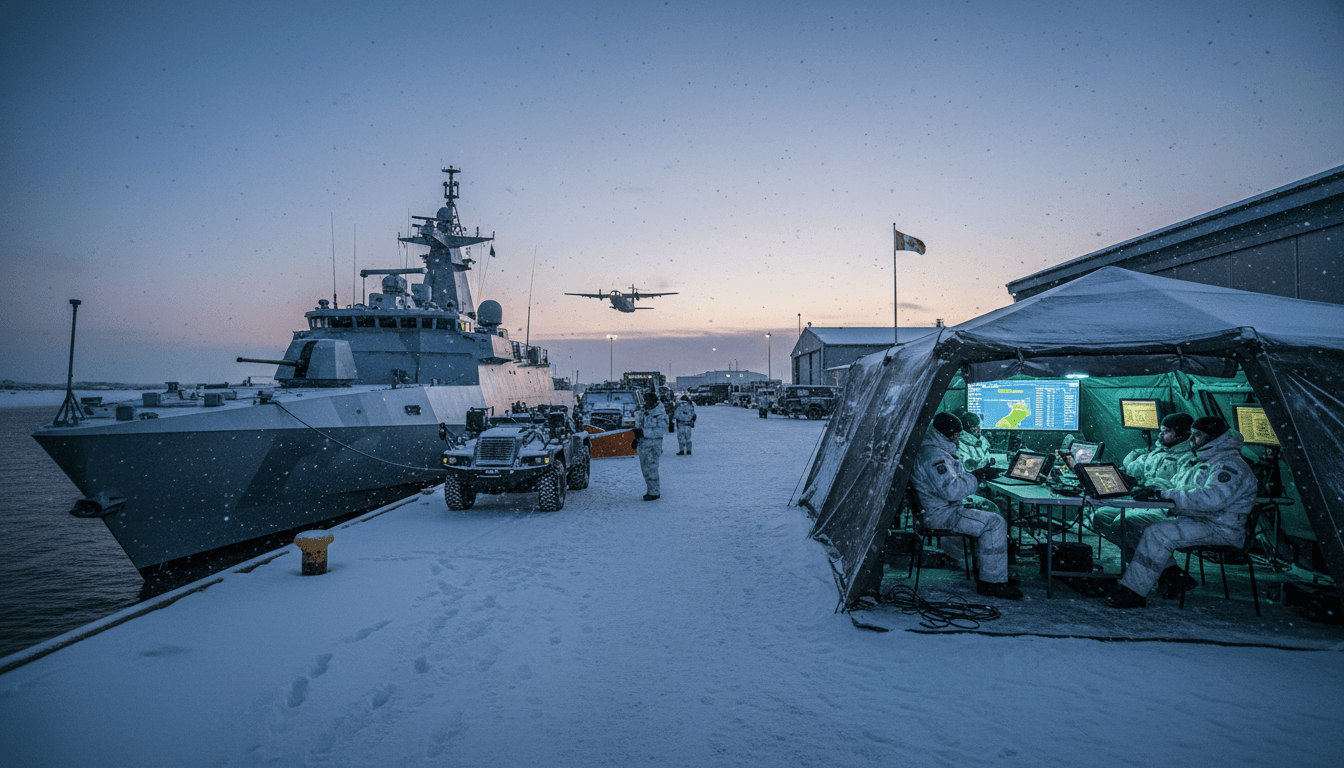
AI-Driven Defense Reform: Sweden’s NATO Readiness Play
Sweden joined NATO in 2024. That single decision changed what “readiness” means in Stockholm—because it’s no longer just about defending Swedish territory. It’s about being a credible contributor to allied deterrence, with forces that can move fast, integrate cleanly, and sustain operations when supply chains and networks are under pressure.
Swedish Defense Minister Pål Jonson recently framed the priority in plain language: get faster, get stronger, get ready. I like that phrasing because it’s measurable. “Faster” is procurement cycle time and mobilization. “Stronger” is capacity, stockpiles, and resilience. “Ready” is trained units, interoperable systems, and decision-making that works under stress.
This post uses Sweden’s reform push as a practical lens for a bigger question in the AI in Defense & National Security series: How do you modernize a defense enterprise quickly without breaking governance, interoperability, or public trust? My view: you can’t do it at NATO speed without putting AI-enabled readiness into the operating model—especially across intelligence, logistics, cybersecurity, and acquisition.
Sweden’s “faster, stronger, ready” goal is really a systems problem
Sweden’s reform agenda isn’t just a budget story or a force-structure story. It’s a systems story: how requirements become programs, how programs become deployable capability, and how capability stays supplied and secure.
For countries on NATO’s northern flank, time is the hard constraint. The problem isn’t knowing what to buy—everyone can list drones, air defense, munitions, ISR, electronic warfare, and secure comms. The problem is fielding those capabilities before the threat environment shifts again.
Where reform usually stalls
Most defense organizations get stuck in the same bottlenecks:
- Requirements inflation: every stakeholder adds “must-have” features until delivery is late and the unit gets a science project instead of equipment.
- Procurement latency: contracting and compliance steps grow over time, even when urgency is clear.
- Fragmented data: logistics, maintenance, readiness reporting, and cyber risk live in separate systems that can’t talk.
- Training mismatch: new tech arrives without a realistic training pipeline, so readiness stays theoretical.
Sweden’s push for a faster and more agile acquisition system is an implicit admission that speed is now a strategic variable. That’s exactly where AI in national security earns its keep: not as a shiny add-on, but as a tool to compress timelines and reduce decision friction.
AI for defense acquisition: shorten cycles without lowering standards
If you want “faster,” you’re really saying: reduce the time from need → contract → fielded capability.
AI won’t magically fix defense procurement. But it can make acquisition teams materially more effective by handling the parts that are slow because they’re text-heavy, repetitive, and cross-referential.
Practical AI use cases for faster procurement
1) Requirements triage and trade-space analysis AI models can compare draft requirements against historical programs and current market offerings to flag when specs are unrealistic for timeline or cost. The value isn’t that the model “decides.” The value is that it surfaces conflicts early.
2) Drafting and redlining procurement documents Large language models can accelerate first drafts of statements of work, evaluation criteria, and compliance checklists—then humans tighten them. That alone can shave weeks off iterative cycles.
3) Supplier risk scoring and production monitoring With Europe re-arming, industrial bottlenecks are real. AI can fuse signals like delivery performance, sub-tier dependencies, and financial indicators to highlight which components are most likely to slip.
A useful rule: AI should speed up documentation and pattern-finding, while humans own approvals and accountability.
The governance trap (and how to avoid it)
Defense buyers can’t treat generative AI like a normal office tool. Procurement touches classified requirements, export controls, and sensitive vendor data.
If you’re building an AI-enabled acquisition workflow, bake in controls from day one:
- Air-gapped or sovereign environments for sensitive drafting
- Audit logs for every generated change and every approval
- Model and prompt guardrails to prevent leaking supplier info
- Human-in-the-loop gates at requirements freeze and contract award
That’s how you move faster without inviting scandal or litigation.
AI-powered readiness: logistics, maintenance, and mobilization that actually work
“Ready” sounds like a training issue, but it’s mostly a sustainment issue. Units are “ready” when they have the people, parts, fuel, ammunition, and uptime to deploy.
Sweden’s renewed focus on rebuilding its military with more resources should be paired with a less glamorous question: Can the force sustain high-tempo operations for weeks, not days?
Predictive maintenance that raises real readiness rates
Modern platforms generate massive telemetry. AI can turn that into actionable maintenance planning:
- Predict component failures before they ground aircraft or sideline vehicles
- Optimize spare parts positioning across bases
- Reduce “no fault found” maintenance churn
The payoff isn’t a slide deck. It’s more operational hours and fewer surprises.
Logistics optimization under disruption
The northern European operating environment is unforgiving—winter conditions, contested seas, cyber pressure, and the possibility of infrastructure disruption.
AI-enabled logistics helps by:
- Simulating multiple supply routes and re-supply plans
- Stress-testing stockpile assumptions (fuel, munitions, medical)
- Prioritizing scarce transport capacity against mission objectives
If you’re trying to integrate into NATO operations, this also becomes an interoperability issue: logistics data needs to be shareable across allies without exposing sensitive details. That’s a design problem, not a paperwork problem.
AI in intelligence analysis: faster fusion, clearer decisions
Sweden’s NATO role elevates the demand for timely, high-quality intelligence—particularly in maritime and air domains around the Baltic region.
AI can speed up intelligence workflows in ways that directly support deterrence:
Multi-source fusion that reduces analyst overload
Analysts don’t need more data. They need less noise.
AI systems can:
- Correlate radar, AIS, satellite imagery, open-source reporting, and SIGINT-derived indicators
- Flag anomalies and pattern shifts (e.g., unusual maritime behavior)
- Create confidence-scored alerts that guide human review
The analyst’s job doesn’t disappear—it becomes sharper
A mature approach treats AI as a triage layer:
- AI proposes what matters
- Humans validate, contextualize, and brief
- Leadership makes decisions with clearer options and explicit uncertainty
That’s a more honest intelligence cycle than pretending every dataset can be read end-to-end by humans.
Cybersecurity and resilience: the quiet foundation of “stronger”
“Stronger” isn’t only brigades and ships. It’s also whether your networks stay reliable when adversaries apply pressure.
AI-driven cybersecurity is now table stakes for national defense readiness because attacks are automated, persistent, and scaled.
Where AI helps most in defense cyber operations
- Anomaly detection on mission networks and identity systems
- Phishing and social engineering defense tuned to military and contractor environments
- Automated triage so human defenders focus on the few alerts that matter
- Supply chain cyber risk monitoring for vendors and sub-vendors
The hard part is balancing detection with operational continuity. Overly aggressive automated containment can break mission systems. The fix is policy: pre-approved playbooks, tiered response authority, and constant exercises.
What Sweden’s approach signals to other NATO partners
Sweden’s reform push is a reminder that NATO accession isn’t the finish line. It’s the beginning of a new operating reality: common standards, shared planning, and faster expectations.
Here’s the stance I’d take if I were advising a defense modernization team right now: don’t start with “AI projects.” Start with readiness bottlenecks, then apply AI where it compresses time or increases resilience.
A simple readiness-first AI roadmap (90 days to traction)
- Pick one readiness KPI you can measure weekly (e.g., mission-capable rate, parts fill rate, procurement cycle time).
- Unify the data path (even if it’s ugly at first): establish a governed pipeline from source systems to an analytic layer.
- Deploy one narrow AI use case with clear boundaries (maintenance prediction, document drafting, anomaly detection).
- Run a red-team review for data leakage, model abuse, and operational failure modes.
- Scale only after exercises prove the tool helps under realistic tempo.
That’s how you keep modernization from becoming theater.
Snippet-worthy truth: Readiness is a data problem before it’s a hardware problem.
People also ask: “Can AI really make militaries faster without adding risk?”
Yes—if you treat AI as decision support, not decision replacement.
The risk comes from two common mistakes:
- Deploying AI without clear authority, auditability, and escalation paths
- Using AI outputs as a substitute for accountability
If you design AI into workflows where humans remain responsible (especially for lethal force, contracting awards, and intelligence judgments), you can gain speed while staying aligned with democratic oversight and NATO norms.
Next steps: make “faster, stronger, ready” measurable
Sweden’s message lands because it’s operational. Other nations should copy that clarity. If your modernization plan can’t be expressed as a few metrics—time to contract, time to field, mission-capable rate, days of stockpile endurance—it’s not a plan. It’s a wish.
For leaders building AI in defense and national security programs, the near-term opportunity is straightforward: connect AI investment to readiness outcomes, then prove it in exercises and real sustainment cycles. That’s where credibility is won.
If you’re trying to modernize acquisition, intelligence analysis, cybersecurity, or logistics and want an AI roadmap that survives real oversight and real operations, what’s the one readiness bottleneck you’d remove first—and what data would you need to prove it?