AI-driven cybersecurity helps detect covert communications and front-org risks tied to MSS-linked toolchains. Learn practical steps to harden detection and due diligence.
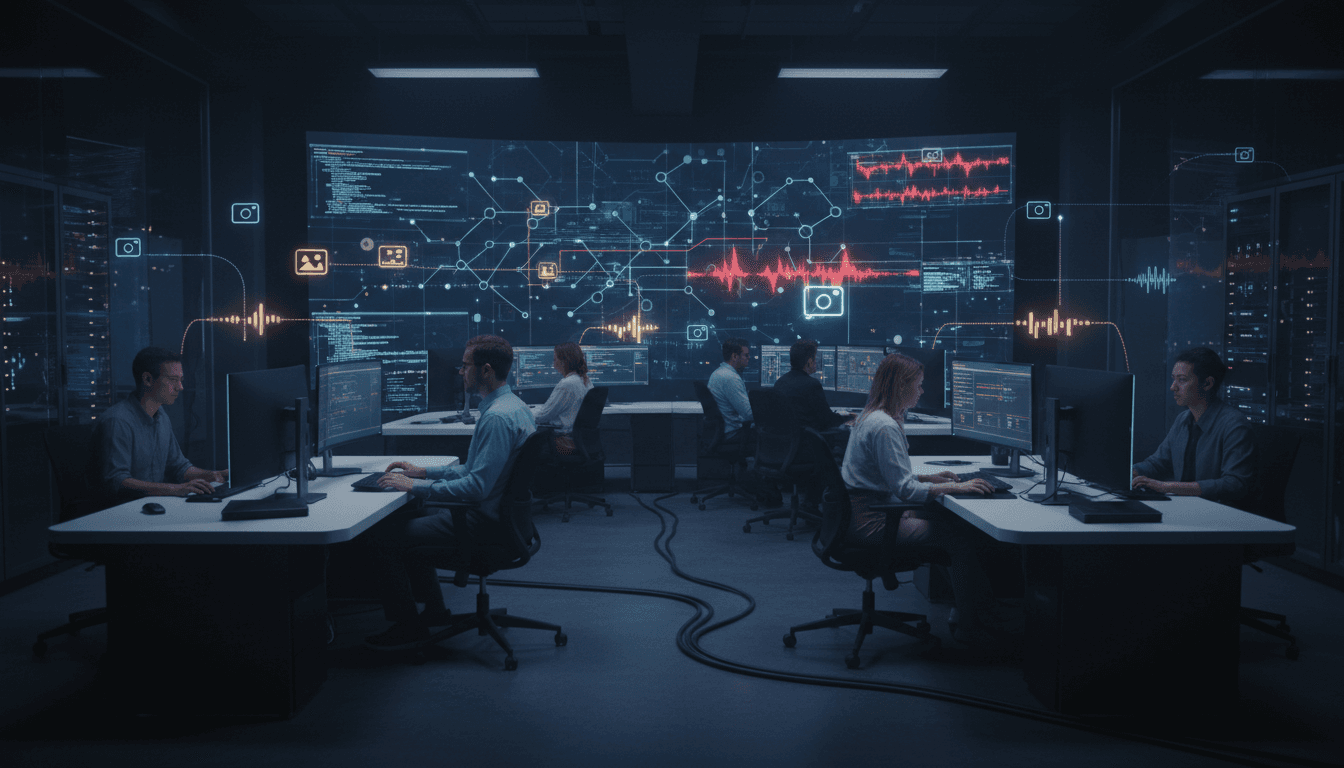
AI Detection for MSS-Linked Covert Cyber Toolchains
Most security teams still treat “state actor tooling” like it’s a rare edge case. The BIETA story argues the opposite: capability-building is industrialized, and it’s happening behind ordinary-looking research institutes and vendors.
A recent investigation into the Beijing Institute of Electronics Technology and Application (BIETA) describes an organization that’s almost certainly tied to China’s Ministry of State Security (MSS). BIETA and its subsidiary Beijing Sanxin Times Technology (CIII) appear to research and distribute technologies that support intelligence missions—especially steganography (covert communications), forensics/counterintelligence equipment, and imports of foreign security and simulation software.
For enterprise defenders, this isn’t just geopolitics. It’s a practical warning: front organizations reduce your ability to rely on “trusted” commercial labels, and covert techniques like steganography reduce the usefulness of traditional signature-based defenses. This is exactly where AI-driven cybersecurity earns its keep—by spotting patterns, behaviors, and anomalies that don’t look malicious until you connect the dots.
BIETA is a reminder: toolmaking is part of cyber operations
Answer first: State-backed cyber operations don’t start with phishing—they start with capability development, procurement, and distribution.
Public reporting portrays BIETA as a communications technology and information security research institute, established no later than 1990 (and likely existing in some form since the early 1980s). The research scope is broad—communications tech, multimedia security, vulnerability research, signal positioning and jamming, forensics, cryptography, and miniaturization. The key detail is context: BIETA’s location is adjacent to (or within) what’s assessed to be the MSS headquarters compound, and multiple BIETA-linked personnel appear tied to MSS organizations.
Why this matters in the AI in Defense & National Security series: the national-security ecosystem isn’t only building missiles and satellites. It’s building the quieter pieces—covert comms, digital forensics, cyber ranges, and operator toolkits—and those capabilities flow into real-world intrusions against governments and companies.
Front organizations change the risk model
Answer first: If an intelligence service can operate through “normal” institutions, your vendor and research risk moves from exceptional to routine.
BIETA and CIII are portrayed as a likely part of a larger, under-mapped network of state-security enablement entities. Even if you never do business in China, the risk still shows up through:
- joint research projects or conference co-authorships
- resellers and distributors in your supply chain
- imported tooling and “testing” software that can also train offensive teams
- academic partnerships where the real customer is downstream
Most companies don’t have a clean process for this. Procurement checks sanctions lists. Legal checks export rules. Security checks technical requirements. But no one owns “front-org exposure” end-to-end.
Why steganography is the tactic defenders keep underestimating
Answer first: Steganography makes malicious activity look like ordinary media traffic, which forces defenders to rely on behavioral detection—not file signatures.
BIETA’s research focus on steganography is unusually prominent. The report describes that a large portion of BIETA’s publications relate to hiding information in text, images (JPEG), audio (MP3), and video (HEVC). Steganography supports two high-impact outcomes:
- Covert communications (COVCOM): moving tasking, data, and instructions without obvious command-and-control signals.
- Malware delivery: hiding payloads or staging instructions inside innocuous-looking files.
The report also notes that multiple Chinese APT groups have used steganography, including operations where images carried hidden content and cases where images served as stealthy delivery vehicles.
The security trap: “It’s just an image”
Answer first: Treating media as low-risk content is a modern blind spot, especially with encrypted traffic and content delivery networks.
Security stacks that rely on static inspection struggle when:
- TLS prevents inline content inspection
- media files are huge and common (high noise)
- malicious content is embedded subtly (low signal)
- adversaries rotate encoders and hiding schemes
AI helps here because it can model “normal” media flows and spot deviations at scale—without claiming to magically “read” every hidden message.
What AI can realistically do against COVCOM
Answer first: AI can’t promise perfect steganography detection, but it can reliably raise the cost for attackers by exposing suspicious patterns.
In practice, the best results come from combining ML-based anomaly detection with targeted inspection:
- Network behavior modeling: unusual image fetch patterns, odd timing, repeated access to specific media objects, suspicious beacon-like periodicity
- Content feature analytics at scale: entropy shifts, compression artifacts, unexpected metadata patterns, inconsistent file structure vs. claimed format
- Entity and session correlation: the same user/device repeatedly interacting with a narrow set of media assets across days/weeks
- Post-compromise signals: new scheduled tasks, unusual child processes, rare DLL loads, suspicious PowerShell/Python usage after media downloads
A sentence I use internally when advising teams: You don’t need to “solve steganography.” You need to catch the operational mistakes around it. AI is good at surfacing those mistakes.
The overlooked battlefield: forensics and counterintelligence tooling
Answer first: The same ecosystem that builds intrusion capabilities also builds the tools used to investigate, suppress, and operationally secure intelligence services.
CIII is described as selling a wide range of security and forensic products—covering venue sweeps, electronics exclusion, signal interception/jamming (2G–5G), and investigation equipment. Even when these are “defensive” products, they matter to enterprise security because they signal maturity in:
- device discovery and RF monitoring
- evidence collection and chain-of-custody tooling
- operational security (OPSEC) for handlers and operators
Those competencies show up indirectly in cyber operations: cleaner tradecraft, fewer detectable errors, and stronger ability to investigate targets or internal threats.
AI takeaway: assume faster feedback loops for adversaries
Answer first: When an adversary improves their internal forensics, they iterate on intrusion tradecraft faster—so your detection needs to adapt faster too.
If a state security apparatus can instrument its own operations with strong investigative tools, it can:
- test malware against security products more efficiently
- tune delivery methods to avoid detection
- train operators using cyber ranges and penetration testing platforms
That pushes defenders toward continuous detection engineering—where AI-driven alerting is paired with human-led tuning and rapid playbook updates.
Technology transfer risks: procurement is now a security control
Answer first: You can’t treat procurement and partnerships as separate from cybersecurity when adversaries build capability through legal purchases and academic access.
The report describes CIII advertising access to foreign tools used for steganography detection, network testing, cyber ranges, and military modeling/simulation software. Even if everything is “legal,” it still creates a practical outcome: accelerated capability building.
For private companies and universities, this reshapes due diligence. A basic checklist (“Are they a real company?”) doesn’t cover the actual risk (“Who benefits from the work?”).
A due-diligence playbook that actually works
Answer first: Add a security-led “end-use and downstream beneficiary” review for high-risk tech collaborations.
If you sell, teach, or collaborate in areas like covert comms, offensive testing, network simulation, digital forensics, or advanced modeling, implement these controls:
-
Red-flag the domain, not just the name
- steganography/steganalysis
- cyber ranges and offensive training environments
- RF/signal tools, jamming, interception
- vulnerability research and exploit development adjacent skills
-
Institutional relationship mapping
- shared personnel with sensitive agencies
- joint labs, “intern bases,” training programs
- unusual proximity to government compounds or security universities
-
Contract language for end-use
- prohibited downstream use for military/intelligence
- audit rights and reporting obligations
- restrictions on re-export or sublicensing
-
Conference and publication hygiene
- review co-authorship and data-sharing
- avoid sharing reproducible offensive methods without guardrails
-
Security review for “normal” sales
- reseller channels
- “trial licenses” for testing tools
- professional services for simulation or penetration testing
If you do only one thing: treat high-risk technical collaboration like you treat privileged access. Because functionally, it is.
Practical detection steps: how AI fits into your SOC
Answer first: AI is most valuable when it narrows the search space for analysts and forces consistent triage on subtle signals.
Here’s a pragmatic approach I’ve seen work in enterprise SOCs dealing with advanced threats:
1) Build a “covert channel” detection lane
Create a dedicated set of detections and dashboards that look for:
- repeated media downloads from low-diversity sources
- new or rare domains serving high volumes of images/audio
- periodic traffic patterns that resemble check-ins
- media downloads closely followed by scripting/interpreter execution
AI/ML supports this by clustering similar sessions and ranking outliers for review.
2) Correlate identity, endpoint, and network signals
Steganography detection in isolation is noisy. Correlation makes it usable.
- Identity: new sign-ins, impossible travel, suspicious OAuth consent
- Endpoint: new persistence, LOLBins, odd process trees
- Network: media-heavy traffic anomalies, suspicious DNS patterns
If you’re only doing one-plane detection (endpoint only or network only), state-backed tradecraft will slip through.
3) Use AI for alert quality, not just alert volume
A good AI-driven cybersecurity program improves:
- precision: fewer false positives on anomalous-but-legitimate media use
- context: “why this is weird” explanations an analyst can validate
- prioritization: surfacing hosts with multiple weak signals that add up
That’s the difference between “we have ML” and “we reduce dwell time.”
What to do next if you’re responsible for security
Answer first: Treat MSS-linked enablement ecosystems as a planning assumption, and use AI to connect weak signals into defensible decisions.
If you’re building your 2026 security roadmap right now, make these decisions explicit:
- Assume some adversaries can hide comms in ordinary content. Invest in anomaly detection and correlation, not just file scanning.
- Assume capability building happens through legitimate channels. Bring security into vendor management, research partnerships, and tool procurement.
- Assume faster adversary iteration. Operationalize detection engineering and use AI to shorten the feedback loop.
If you want a concrete starting point for leads and program planning: run a tabletop where an attacker uses only “normal” traffic (images, cloud storage, collaboration tools) for staging and comms. Then ask your team one question: Which parts would we only catch if we correlated weak signals across tools? That answer usually justifies the AI investment on its own.
The bigger theme for the AI in Defense & National Security series is simple: modern cyber defense isn’t a single sensor or a single model. It’s the ability to connect behavior, identity, and infrastructure into a coherent story faster than the adversary can adapt.
So here’s the forward-looking question to end on: as state security services professionalize covert cyber toolchains through institutes like BIETA, will your detection program still work when nothing “looks” malicious in isolation?