AI-enabled ISR can turn counter-narcotics strikes from spectacle into strategy—by targeting networks, finances, and logistics, not just boats at sea.
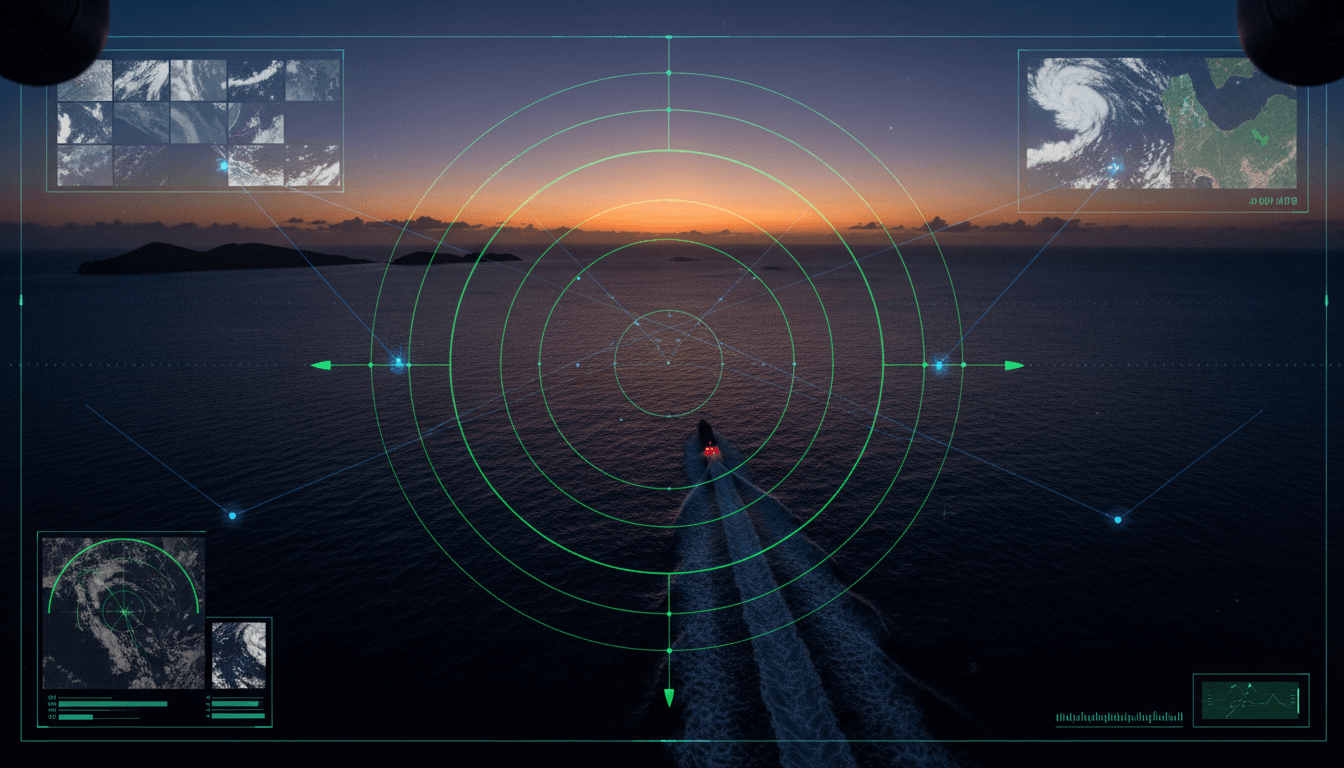
AI-Powered Counter-Narcotics: Strategy, Not Spectacle
A drone feed shows a “go-fast” skiff streaking across dark water—then erupting into flame. The clip is made for TV and social media: crisp, visceral, decisive. It’s also a perfect example of a modern defense problem that most people underestimate.
Kinetic action is easy to count and hard to translate into strategic outcomes. When airstrikes on suspected “narco-terrorist” boats become the headline metric, policymakers start confusing activity with progress. J. William DeMarco’s critique of recent U.S. strikes near Venezuela lands on a simple point: destroying boats may signal resolve, but it doesn’t meaningfully reduce drug flows—and it can create legal, diplomatic, and escalation risks that outlast any tactical win.
For leaders working at the intersection of AI in defense and national security, this is more than a South America story. It’s a case study in how AI-enabled ISR (intelligence, surveillance, reconnaissance) and analytics can either (1) become a high-tech way to produce spectacle, or (2) help design—and measure—strategy against adaptive networks.
“Boats destroyed” is a metric. It’s not a strategy.
Answer first: If your success metric is “targets hit,” you’re already drifting toward an open-ended campaign.
The core warning from the source article echoes the Global War on Terror: tactical strikes can feel like momentum, but they often produce short-term disruption rather than long-term advantage. Drug trafficking networks behave less like a single hierarchy and more like a market: routes change, methods mutate, corruption adapts, and lost assets get replaced.
That matters because counter-narcotics is an ecosystem problem, not a “remove the bad guys” problem. Go-fast boats are one delivery mode among many:
- semi-submersibles and mother ships for larger loads
- containerized shipping that hides volume in global trade
- light aircraft using clandestine airstrips
- warehousing, fuel depots, and consolidation nodes that function as throughput chokepoints
A strike campaign that focuses on the most visible artifact—the skiff—tends to miss the high-leverage components: money movement, logistics hubs, corrupt facilitators, and the corporate front structures that make trafficking scalable.
And when fentanyl enters the conversation, the mismatch gets worse. Fentanyl’s potency means micro-quantities can be moved through parcels, air freight, and containerized cargo. Trying to sell “boats at sea” as the primary fentanyl vector strains credibility—and credibility is a strategic asset you don’t get back easily.
The real danger: tactical strikes become the policy
Here’s what I’ve seen repeatedly in defense organizations: once a strike campaign becomes routine, it builds its own gravity.
- Commanders get evaluated on outputs they can control.
- Messaging teams build narratives around vivid footage.
- Domestic politics rewards “decisive action.”
Then the mission expands. The author calls this out directly: the United States has a track record of limited missions metastasizing into longer campaigns without a clear political end state. When you treat disruption as success, you create a system optimized to keep disrupting.
Why this matters strategically: signaling, gray-zone coercion, and escalation risk
Answer first: These strikes aren’t only about drugs; they’re also geopolitical messaging—especially toward Venezuela, China, and Russia.
The RSS piece argues that counter-narcotics is functioning as window dressing for a broader posture: shoring up friendly governments (with Argentina highlighted) while pressuring adversaries (Venezuela) through gray-zone coercion and narrative generation.
That’s plausible—and it’s exactly why the legal and diplomatic dimensions matter.
Legitimacy isn’t a slogan; it’s operational capacity
Drug interdiction doesn’t work if regional partners stop cooperating. Joint operations rely on:
- shared intelligence and cueing
- access and basing
- maritime coordination and deconfliction
- political permission to operate near sensitive boundaries
If partners see U.S. actions as stretching international law—especially lethal strikes in or near international waters—cooperation becomes politically expensive. Even when intelligence still flows behind the scenes, public friction limits what partner governments can authorize.
Escalation pathways are real—even when nobody “wants war”
A strike that kills civilians, hits the wrong vessel, or is interpreted as regime pressure can trigger responses that planners didn’t model honestly. Add in bomber flights, naval deployments, covert authorities, and domestic rhetoric, and the line between interdiction and confrontation gets blurry.
One-liner worth keeping: When the story becomes bigger than the operation, the operation starts serving the story.
Where AI actually helps: turning ISR into strategic advantage
Answer first: AI improves counter-narcotics outcomes when it shifts attention from “targets to hit” toward “networks to constrain.”
AI is often discussed as if autonomy automatically equals advantage. It doesn’t. AI becomes useful when paired with the right strategy and governance.
1) AI-enabled ISR that prioritizes networks, not clips
Modern ISR generates oceans of data: full-motion video, maritime radar, AIS signals, satellite imagery, comms metadata, and financial anomalies. AI can fuse these streams to produce something commanders and interagency teams rarely get consistently: a living model of the trafficking system.
Practical AI applications that beat spectacle:
- Maritime anomaly detection: spotting vessel behaviors that suggest rendezvous activity, spoofing, or illicit transshipment rather than chasing the fastest skiff.
- Multi-source entity resolution: linking a boat, a phone number, a shell company, a warehouse lease, and a payment pattern into one operational picture.
- Route adaptation modeling: forecasting how networks reroute after interdiction, so decision-makers can pre-position sensors and legal authorities.
The shift is subtle but decisive: use AI to predict the next move, not to produce a better highlight reel.
2) AI for long-term planning: measuring effects, not just outputs
The article warns about seductive metrics like “boats destroyed,” reminiscent of body counts. AI can help counter that institutional temptation by enabling effects-based measurement:
- changes in shipment size distribution (big loads vs. small loads)
- price/purity signals downstream (where accessible)
- disruption of financing nodes and laundering throughput
- time-to-reconstitution after takedowns (how fast the network regenerates)
- partner-nation cooperation indicators (permissions, intelligence sharing cadence)
This is the unglamorous work. It’s also where strategies either mature or fail.
3) AI-driven targeting support that reduces civilian harm and legal exposure
If strikes happen, the decision chain should be built to minimize error and maximize defensibility.
AI can assist with:
- improved positive identification through multi-sensor correlation
- probabilistic reasoning that forces explicit confidence thresholds
- audit trails that preserve how a conclusion was reached (crucial for accountability)
But this only works if leadership enforces strict discipline:
- AI recommendations don’t equal authorization.
- Confidence scores must be understood, not ignored.
- Human decision-makers remain responsible—legally and morally.
AI should narrow ambiguity, not provide cover for risky choices.
A better counter-narcotics playbook: hit high-leverage nodes
Answer first: Sustainable counter-narcotics pressure comes from finances, logistics chokepoints, and prosecutions—supported by AI-enabled intelligence.
The source article points to the less cinematic, more effective toolkit: financial sanctions, container interdiction, consolidation-node targeting, and prosecution of facilitators. That’s the right direction.
Here’s how I’d translate that into an operationally realistic framework—one that fits an AI in defense and national security program portfolio.
Build a “chokepoint map” and resource it like a campaign
Start by identifying nodes where the network can’t easily substitute capacity:
- Money movement: laundering services, trade-based schemes, front companies
- Bulk logistics: container routes, ports, mother ships, corrupt freight handlers
- Consolidation infrastructure: warehouses, fuel depots, clandestine airstrips
- Human facilitators: brokers, document forgers, port fixers, logistics managers
Then align sensors, analysts, and authorities to those nodes—not to the most visible edge activity.
Use AI to synchronize interagency “find-fix-finish” with “freeze-seize-prosecute”
Most counter-narcotics strategies fail at the handoffs:
- DoD sees a target pattern.
- Law enforcement needs evidentiary standards.
- Treasury needs attribution and legal hooks.
- Partners need plausible public justification.
AI can help manage these seams by:
- flagging which leads are prosecution-ready vs. disruption-only
- generating structured intelligence packages faster
- highlighting the minimal additional collection needed to make a case
That’s how you convert intelligence into outcomes that persist.
Treat narrative as part of the battlespace—without lying to yourself
The article is right that narrative generation is central. The mistake is when narrative becomes the goal.
A disciplined approach looks like this:
- Define the political objective (deterrence, coercion, interdiction, partner support).
- Define what “success” changes in the real system (finance constrained, logistics degraded, partners strengthened).
- Communicate actions consistent with law and reality.
If the story requires exaggerating fentanyl vectors or pretending skiffs are decisive, the strategy is already broken.
What defense and security leaders should do next
Answer first: If you’re investing in AI for ISR or autonomous systems, demand strategy-linked metrics and governance from day one.
If this South America episode becomes a template—militarized interdiction framed as armed conflict—it will influence norms well beyond the hemisphere. Other states will copy what works politically, not what works operationally.
Three practical next steps I recommend for decision-makers and program leads:
- Replace output metrics with effect metrics. “Boats destroyed” should never outrank “network capacity reduced” or “finance throughput constrained.”
- Invest in AI that connects dots across domains. Video analytics alone is a trap. You need maritime + finance + logistics + human networks.
- Institutionalize legal and partner constraints as design requirements. If the operation can’t be defended publicly and legally, it will eventually cost more than it gains.
The broader theme of this series—AI in Defense & National Security—is that data advantage only matters when it supports coherent policy. AI can absolutely improve the precision and strategic value of surveillance and drone operations. But it can’t supply strategy when leaders substitute spectacle for a plan.
The next time a strike video goes viral, the useful question isn’t “Did we hit the target?” It’s this: Did we change the system in a way that lasts?