AI chip export controls now shape defense readiness. Here’s what the GAIN AI Act gets right—and why fumbling it could hand rivals a compute advantage.
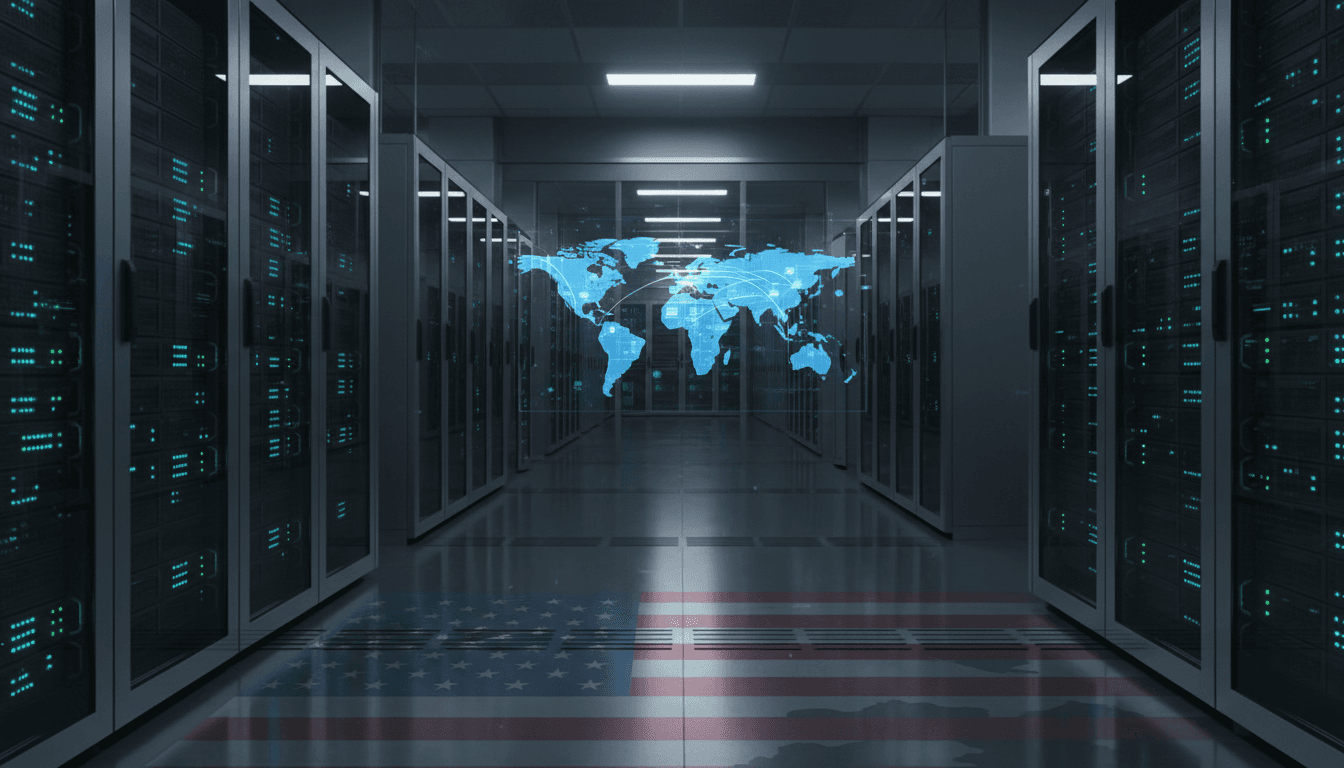
AI Chip Export Controls: Don’t Fumble U.S. Advantage
A single procurement decision can determine whether an AI model trains in weeks or in months. In defense and national security, that time gap isn’t a rounding error—it’s operational tempo. That’s why the current fight over U.S. AI chip export controls isn’t “tech policy.” It’s a question of whose infrastructure becomes the default for intelligence analysis, cyber defense, autonomous systems, and mission planning over the next decade.
Right now, Washington is flirting with a self-inflicted setback: reportedly pushing Congress to drop the GAIN AI Act. I’m with the people calling that a mistake. Not because the bill is perfect, but because it’s a rare attempt to do two hard things at once: deny advanced compute to adversaries while making it easier for trusted U.S. companies to deploy AI infrastructure in allied markets.
If you care about AI in Defense & National Security, here’s the practical way to read this debate: compute is the new logistics. Policies that shape where advanced GPUs and data centers land will shape what militaries and intelligence services can do—at scale, under pressure, and with resilient supply chains.
What the GAIN AI Act really changes (and what it doesn’t)
Direct answer: The GAIN AI Act prioritizes U.S. access to scarce advanced chips ahead of “countries of concern,” while creating a fast lane for U.S.-owned data centers operating in allied markets.
The loudest criticism you’ll hear is that the bill is “protectionist” and will starve partners of compute. That’s not what’s written. The bill targets exports to a defined set of “countries of concern” (including China and other embargoed or terrorism-designated states) and adds a mechanism that amounts to a right of first refusal for domestic U.S. buyers.
Two clarifications matter:
It’s not a blanket export ban
Direct answer: GAIN AI doesn’t try to keep every chip on U.S. soil; it tries to keep the most strategically risky buyers last in line.
The bill doesn’t aim to halt allied deployments. It tries to prevent a scenario where U.S. firms ship scarce advanced accelerators to adversaries while domestic and defense-adjacent demand is still backlogged. If advanced AI accelerators remain constrained—which many in industry still expect—then allocation policy becomes national power policy.
The overlooked “trusted U.S. person” lane is the real story
Direct answer: The bill’s biggest strategic benefit is a licensing exemption for “trusted United States persons,” meant to streamline U.S. cloud and data center deployments abroad.
For national security, where allied data centers sit matters. It affects:
- Latency and sovereignty for intelligence fusion and targeting support
- Resilience against supply chain shocks and cyber sabotage
- Interoperability across coalitions (think shared operational pictures and shared model baselines)
GAIN AI proposes a carve-out: if a U.S. firm meets security and ownership conditions, it can deploy chips into its own overseas data centers with far less licensing friction.
The requirements are notable but not wild for major operators:
- Strong physical and cybersecurity controls in operated data centers
- Limits on ownership by entities tied to countries of concern (e.g., >10% ownership restrictions)
- Keeping a majority of total compute in the United States
- Annual audits
That package is basically a trade: “Prove you can secure the supply chain and the facility, and you get speed.”
Why AI chip exports are a defense issue (not just an economic one)
Direct answer: Advanced AI chips determine the pace and scale of military AI—from ISR processing to electronic warfare modeling—so export rules shape battlefield capability.
In this topic series, we often talk about AI models. But the models don’t exist without training runs, fine-tuning cycles, evaluation harnesses, red-teaming, and continuous updates. All of that consumes compute.
Here’s how AI chip export policy lands directly in defense and national security work:
1) Compute becomes the limiting reagent for modern ISR
Direct answer: Even with strong sensors, you can’t exploit data faster than you can process it.
Modern ISR is less about collecting and more about exploiting: filtering, correlating, summarizing, and cueing humans. The same applies to cyber telemetry and signals intelligence. If an adversary can scale compute faster, they can:
- Train better multilingual and domain-specific models
- Run more persistent surveillance analytics
- Iterate faster on deception detection and countermeasures
2) “AI infrastructure dominance” beats “model dominance” in coalitions
Direct answer: Allies tend to standardize on the infrastructure that arrives first, performs reliably, and meets compliance needs.
Coalitions don’t just share intelligence—they share platforms, processes, and constraints. If U.S. cloud providers build secure, audited data centers in strategic partner countries, those facilities become the gravity well for:
- Joint training pipelines
- Shared mission planning tools
- Common evaluation standards for autonomous systems
That’s sticky. Once operational workflows and data governance are built on a platform, switching costs explode.
3) Smuggling and diversion aren’t side issues—they’re the threat model
Direct answer: If chips leak through gray networks, export controls become theater.
One reason the “trusted” construct matters is that it pushes the system toward verifiable operators and auditable facilities. In national security, you don’t win by writing the strictest rules. You win by writing rules that can be enforced and monitored.
A practical enforcement mindset looks like:
- Tracking chain-of-custody and facility-level inventory
- Auditing power draw and cluster configuration (because compute leaves footprints)
- Requiring incident reporting for suspected diversion attempts
The strategic tradeoff: short-term revenue vs. long-term advantage
Direct answer: Opposing GAIN AI reads like prioritizing near-term semiconductor revenue over long-term denial and allied infrastructure positioning.
The policy tension isn’t mysterious. Different players make money in different ways:
- Chip designers benefit when any high-paying buyer can access product, including premium-priced demand in restricted markets.
- Cloud and data center operators benefit when they can deploy hardware quickly into controlled environments globally.
From a national security standpoint, I’m firmly in the second camp. You can’t treat advanced compute like ordinary exports. If you believe great-power competition is real, then selling scarce accelerators into an adversary ecosystem is the wrong habit.
A clean way to express the tradeoff:
If compute is scarce, every exported top-tier accelerator is either strengthening an allied stack or subsidizing a competitor’s.
That doesn’t mean allies should be left behind. It means allied access should be structured around trusted deployment models, not open-ended resale risk.
Why killing GAIN AI could backfire: the “blunt instrument” problem
Direct answer: If Congress doesn’t get a workable compromise, it’s likely to reach for a harsher one that blocks allied deployments too.
Policy debates don’t pause just because one bill fails. The political appetite for restricting China’s access to advanced AI chips is durable and bipartisan. If lawmakers conclude the executive branch is dragging its feet, they tend to respond with mandates that remove flexibility.
In the reporting around this fight, the alternative being discussed is a stricter approach (often described as a more sweeping denial regime) that could:
- Deny licenses broadly above a technical threshold
- Offer no carve-outs for trusted U.S. operators
- Treat allied markets the same as untrusted ones for months at a time
From a defense perspective, that’s how you lose time and influence in places where you actually want U.S. infrastructure to land first.
What leaders in defense, intelligence, and security should do now
Direct answer: Treat AI chip export policy as a capability dependency, then build plans around trusted compute, enforceable controls, and allied deployment paths.
If you’re in government, a prime, a systems integrator, or a security team supporting mission AI, here are moves that hold up regardless of how this specific bill ends.
1) Map “compute criticality” the same way you map munitions and fuel
Most orgs still treat compute as an IT budget line. That’s outdated. Build a compute dependency map:
- Which missions require large-scale training vs. inference-only?
- Which workflows degrade gracefully if compute is constrained?
- Where are the single points of failure (specific chips, specific regions, specific providers)?
2) Push for verifiable trust, not vague partner lists
The best export control frameworks are enforceable. Advocate for standards that are measurable:
- Facility security baselines (physical + cyber)
- Ownership and control thresholds
- Auditability and telemetry expectations
- Incident reporting obligations
“Trusted” needs to mean something you can inspect.
3) Build allied deployment playbooks around secure U.S.-operated data centers
For partners with the power capacity and connectivity to host serious clusters, the model that scales is: U.S.-owned and operated data centers with strict controls, providing compute services to allied customers under defined governance.
That approach can support coalition operations without normalizing uncontrolled chip diffusion.
4) Prepare for policy volatility as a normal operating condition
Export control thresholds, licensing posture, and enforcement intensity will keep changing. Reduce fragility:
- Design systems to be hardware-portable where possible
- Maintain evaluation suites that detect performance regressions across accelerators
- Invest in model efficiency (distillation, quantization, retrieval augmentation) to reduce compute demand at the margin
Efficiency won’t replace strategic compute, but it buys time when policy shifts mid-program.
People also ask: quick answers
Does restricting AI chip exports actually slow an adversary?
Yes, if enforcement is credible and diversion is contained. Chips aren’t the only input to AI progress, but they’re the bottleneck that determines scale and iteration speed.
Won’t allies just buy non-U.S. alternatives?
Some will, especially if U.S. processes are slow or unpredictable. That’s why streamlined, trusted deployment paths matter as much as denial.
Is “America First” compatible with exporting AI infrastructure?
It can be—if the infrastructure is American-controlled and auditably secure. Dominance comes from who runs the stack, not only where the chips sit.
Where this goes next for AI in defense and national security
The argument over the GAIN AI Act is really an argument over strategy discipline. You can’t claim you’re building AI leadership for national security while treating the world’s most strategic compute as a normal commercial commodity. That contradiction catches up fast—usually in the form of a worse law, written in anger, that makes allies collateral damage.
If you’re building AI capabilities for surveillance, intelligence analysis, cybersecurity, autonomous systems, or mission planning, this is the moment to get loud internally about dependencies. Export controls are now part of your technical roadmap.
If you want help pressure-testing a “trusted compute” approach—governance, auditing, security architecture, and coalition-ready deployment models—reach out. The organizations that plan for compute constraints now will be the ones that ship reliable mission AI when policy and supply chains get messy.
Where do you think the real choke point will be in 2026: chips, power, data rights, or security accreditation?