China’s homeland defense is becoming joint, multi-domain, and data-driven. Here’s how AI supports integrated air defense, maritime surveillance, and mission planning.
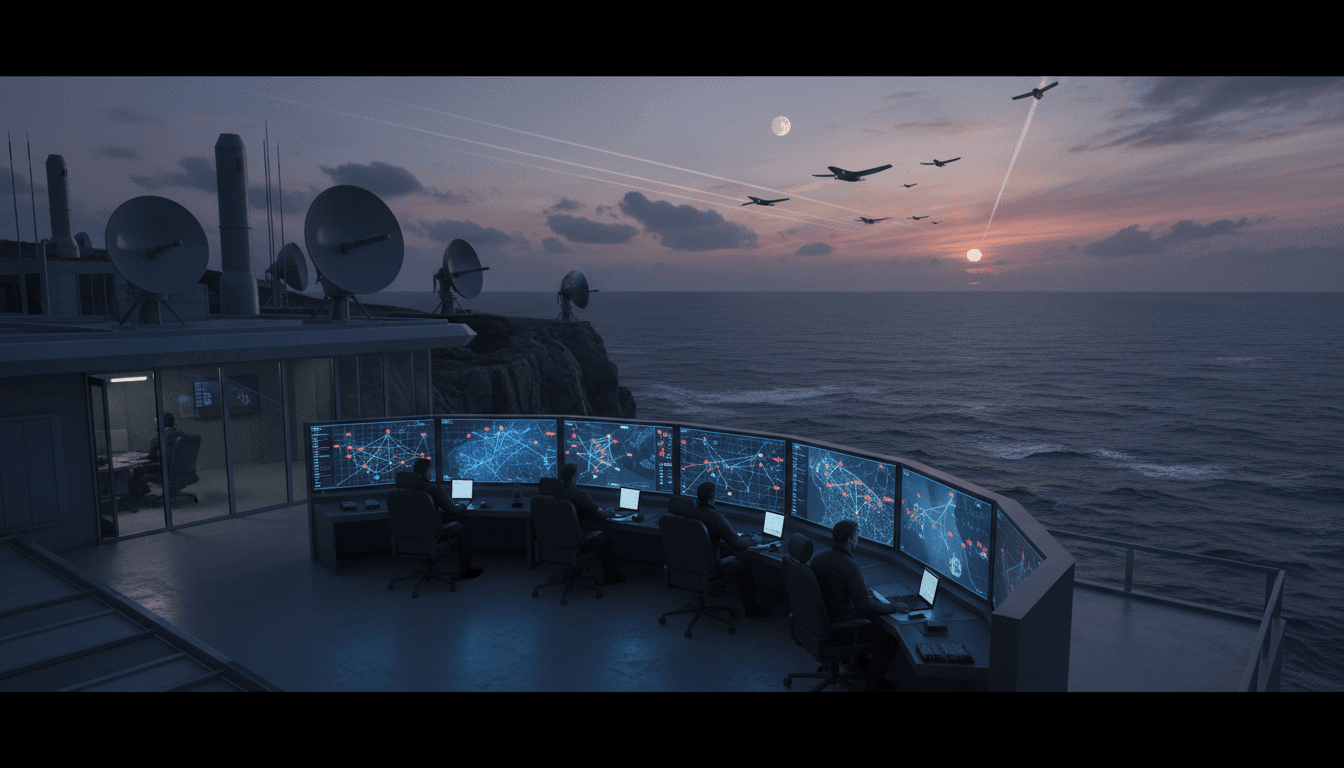
AI and China’s Homeland Defense: What’s Changing
China’s People’s Liberation Army (PLA) keeps sending a clear signal: it wants to be hard to hit, hard to penetrate, and hard to surprise. Even as Beijing invests in power projection, the core mission hasn’t shifted much—protect the mainland and China’s near seas. What has shifted is the method: homeland defense is becoming a multi-domain, joint, data-driven enterprise.
That shift is where AI in defense and national security stops being a buzzword and starts being a practical advantage. When your air defense network is stitched together across services, when maritime-strike aviation is reorganized under different commands, and when surveillance spans radar, space, cyber, and undersea sensors, you don’t just need more hardware. You need better decision speed, better target discrimination, and better battle management—the kind of problems AI is built to help solve.
The PLA’s recent organizational and training adjustments, including reported transfers of roughly 300 land-based naval aircraft to the air force and closer bomber-maritime coordination, read like a case study in what modern homeland defense is turning into: a sensor-and-shooter system that lives or dies by how well it fuses information.
Homeland defense is still the prime directive—now it’s joint and multi-domain
China’s homeland defense priority hasn’t dropped in rank; it has expanded in scope. The practical point: defending the homeland no longer means “army on borders, navy on coasts, air force in the sky” operating in parallel. It means a joint mission that’s coordinated across:
- Air and missile defense (fighters, surface-to-air missiles, radars)
- Maritime approaches (coastal defense, anti-ship strike, ASW)
- Space support (ISR, communications, timing)
- Cyber and electromagnetic warfare (disrupting sensors, protecting networks)
If you’ve worked in defense planning, you’ve seen this pattern before: once the threat set includes long-range precision strike, hypersonic glide vehicles, drones, and cyber sabotage, “homeland defense” becomes an integration problem.
What the recent aircraft restructuring suggests
One tangible indicator highlighted in reporting on PLA reforms is the transfer of many land-based naval aircraft to the PLA Air Force—described as including H-6J bombers and JH-7 maritime strike aircraft, along with a total of roughly 300 fighters moving from naval aviation to air force control.
This isn’t just an org chart detail. It implies a push toward:
- More centralized command and control (C2) for national air defense
- Cleaner integration between fighters, bombers, and ground-based radar sites
- Faster tasking across air and maritime missions when threats blur domains
In other words: build a single air picture, decide quickly, and assign the best shooter.
Integrated air defense is an AI problem before it’s a hardware problem
Integrated air defense (IAD) is often described in platforms—radars, interceptors, fighters, command posts. But the decisive advantage comes from how the system thinks:
“The side that classifies correctly and assigns weapons fastest wins the first critical minutes.”
That statement isn’t theoretical. Modern air defense faces volume (more tracks), variety (drones, cruise missiles, ballistic trajectories), and velocity (shorter timelines). Humans can supervise, but they can’t manually correlate every sensor feed at scale.
Where AI fits in integrated air defense networks
AI applications that matter in a homeland defense context are usually unglamorous—and exactly because they’re unglamorous, they’re high-leverage:
-
Sensor fusion and track correlation
- Combine radar, EO/IR, passive RF, and space-based detections into a single track.
- Reduce duplicate tracks and false correlations.
-
Anomaly detection for early warning
- Flag unusual flight profiles, formation behavior, or emissions patterns.
- Detect spoofing or deception attempts (including “noisy” decoys).
-
Decision support for weapons assignment
- Recommend interceptors based on probability of kill, magazine depth, and defended asset priority.
- Provide “explainable” rationale so commanders can trust the recommendation.
-
Battle damage assessment and re-attack planning
- Use multi-source imagery and signals to estimate whether a threat was neutralized.
If you’re selling or deploying AI in defense, this is the reality check: the value isn’t in a single model. It’s in the pipeline—data quality, latency, cybersecurity, human-machine interfaces, and governance.
The hard part: managing false alarms without going blind
Homeland defense systems have a brutal trade-off: be too sensitive and you burn readiness with false alerts; be too conservative and you get surprised. AI can help, but only if it’s designed for operational trust:
- Calibrated confidence (don’t pretend a model is more certain than it is)
- Human override by design (especially for escalation decisions)
- Red-team testing against deception, jamming, and adversarial inputs
Most companies get this wrong by optimizing offline accuracy while ignoring operational conditions like clutter, weather, jamming, and sensor outages.
Maritime strike training and near-seas defense: why autonomy matters
Recent developments described in the source include PLA Air Force H-6K bombers beginning maritime-strike training, signaling closer air-naval cooperation. This fits a bigger homeland defense logic: near-seas defense isn’t just a navy job—it’s a joint campaign to control approaches, deny access, and protect key coastal infrastructure.
AI-enabled ISR changes the pacing of coastal defense
Near-seas defense lives on surveillance: surface contacts, submarine cues, air tracks, and patterns of behavior. AI contributes in three concrete ways:
- Persistent maritime domain awareness via automated detection on EO/IR and SAR imagery
- Pattern-of-life analytics that identify when commercial-looking traffic behaves like military support
- Cueing and cross-cueing so a weak signal from one sensor triggers focused collection by another
This matters because homeland defense is often a search problem before it becomes a shoot problem.
Autonomous systems are best used as “capacity,” not “initiative”
Autonomy is attractive in near-seas defense because it increases coverage and reduces risk to crewed platforms. But I’m skeptical of “fully autonomous kill chains” as a near-term goal for serious militaries. The more realistic trajectory is:
- Autonomous sensors (uncrewed surface/undersea vehicles, distributed sonobuoy networks)
- Autonomous logistics and resupply for dispersed coastal units
- Semi-autonomous engagement support (tracking, identification, fire control assistance)
The winning approach is to treat autonomy as capacity expansion under human intent and policy constraints.
Cyber and information integrity: the invisible center of homeland defense
A joint homeland defense posture is only as strong as the networks connecting it. Consolidating air defense C2 and integrating sensors across services increases performance—but it also increases the blast radius of cyber compromise.
AI helps defenders, but it also helps attackers
For cyber defense, AI is useful for:
- Detecting lateral movement and suspicious authentication patterns
- Identifying abnormal traffic between sensor nodes and command posts
- Prioritizing vulnerability remediation based on operational criticality
But attackers can use AI for faster phishing, malware variation, and reconnaissance. The operational takeaway for homeland defense programs is straightforward:
“If your AI pipeline can be poisoned, your air picture can be distorted.”
Practical safeguards for AI in national air defense
If you’re implementing AI-enabled battle management or ISR analytics, a few safeguards should be non-negotiable:
- Data provenance and integrity checks (signed feeds, tamper detection)
- Model monitoring in production (drift detection, performance under jamming)
- Fallback modes that degrade gracefully to procedural control
- Role-based access and segmented networks (assume compromise, limit spread)
These aren’t nice-to-haves. They’re the difference between “AI-assisted” and “AI-compromised.”
What China’s approach signals for the future of AI in defense
China’s homeland defense priority offers a useful lens for defense leaders outside China: the future isn’t only about headline platforms. It’s about systems that sense, decide, and coordinate under stress.
Three signals stand out:
1) Joint integration is becoming the main modernization path
Transferring aircraft between services and aligning training for maritime strike are consistent with a bigger trend: reduce seams in command and control. AI accelerates that—if data standards and interoperability exist.
2) The “first 10 minutes” problem is driving AI adoption
Air and missile defense timelines are compressing. That pushes militaries toward:
- Automated track management
- Faster threat classification
- AI-supported weapons assignment
Even cautious organizations adopt automation when the alternative is missing the window.
3) Homeland defense is turning into a national data architecture project
When defense becomes multi-domain, the bottleneck is often data sharing, not sensors. The countries that win this era will treat homeland defense like a resilient data architecture with:
- Shared operational pictures
- Secure low-latency communications
- AI governance that supports trust and auditability
Practical “people also ask” answers for defense teams
How is AI used in homeland defense?
AI is used for sensor fusion, early warning anomaly detection, target classification, decision support, and cyber defense monitoring. The highest ROI is usually in reducing operator workload and accelerating decisions.
What’s the biggest risk of AI in air defense?
The biggest risk is information integrity—data poisoning, deception, spoofing, or model drift that creates false confidence. Resilience requires monitoring, red-teaming, and fallback procedures.
Where should teams start if they want AI-enabled mission planning?
Start with a narrow workflow: prioritize one defended asset set, integrate two to three sensor feeds, and build a human-in-the-loop decision aid. Then scale to additional regions, sensors, and shooter types.
What to do next if you’re building AI for defense and national security
If this post feels uncomfortably “systems engineering-heavy,” good. That’s where homeland defense programs succeed or fail.
Here’s what works in practice when deploying AI in defense environments:
- Pick the operational bottleneck (track overload, slow correlation, false alarms).
- Define success in minutes and outcomes, not model accuracy.
- Design for degraded operations (jamming, denied comms, sensor loss).
- Ship a decision aid first, not an autonomous engagement function.
- Measure trust (how often operators follow recommendations and why).
China’s homeland defense focus is a reminder: modernization isn’t only about new missiles or aircraft. It’s about building an integrated, resilient “sense-decide-act” loop across domains—and AI increasingly sits in the middle of that loop.
If you’re responsible for national security AI—whether in government, a prime, or a specialized vendor—ask yourself one forward-looking question: when the air picture gets messy, will your AI make the right call fast, and will commanders trust it enough to act?