AI-assisted peace talks can reduce deception, test clauses, and design verification so Ukraine negotiations don’t trade short-term calm for long-term war.
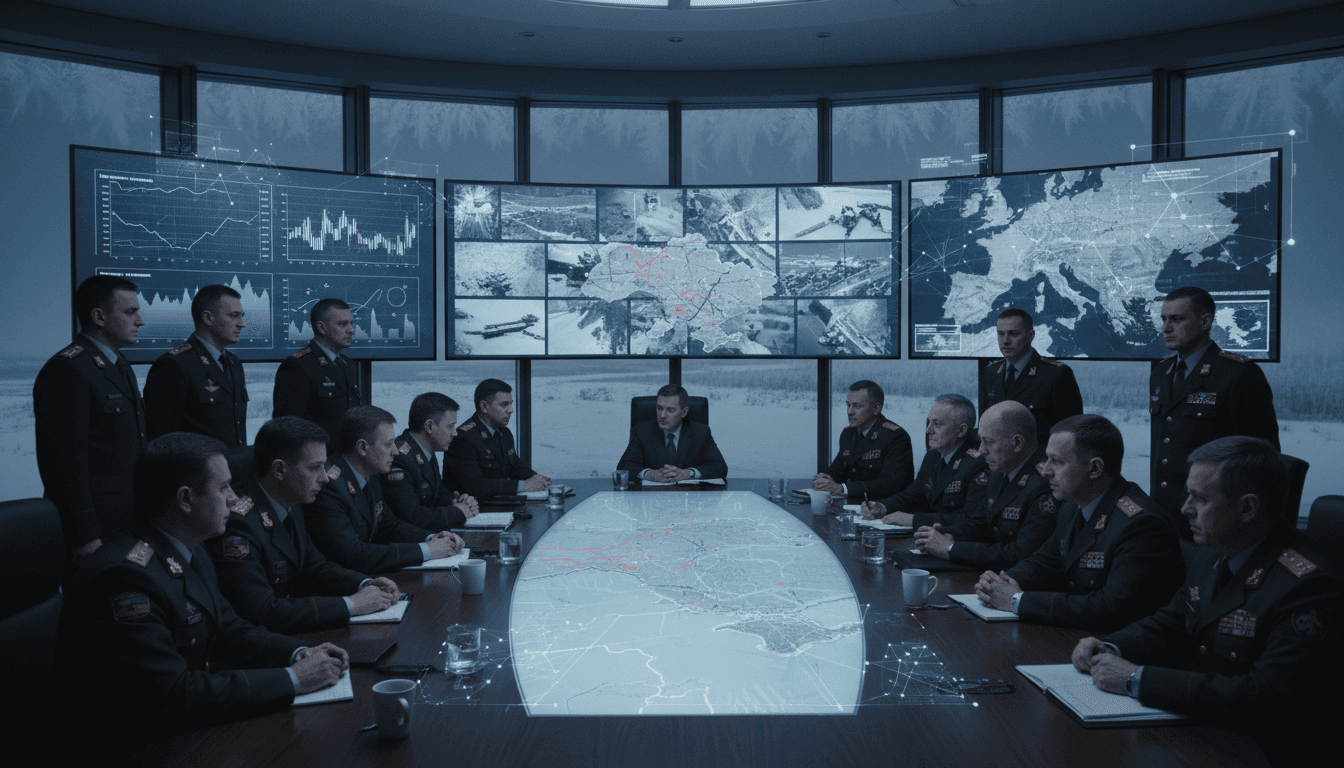
AI-Assisted Peace Talks: Avoiding Ukraine Deal Failure
A leaked “28-point” Ukraine peace plan sparked a familiar fear in national security circles: ending a war badly can be worse than not ending it at all. Not because diplomacy is naive—because agreements that ignore leverage, enforcement, and information realities tend to reward the aggressor and preload the next conflict.
Here’s the uncomfortable part. When policymakers negotiate under time pressure, with contested facts, and with active deception from an adversary, they often overpay for the illusion of certainty. They concede on issues they don’t fully understand, or they accept “guarantees” they can’t verify. This is exactly where AI in defense and national security can help—not by “making decisions,” but by tightening the loop between intel, mission planning, and negotiation strategy.
Rob Dannenberg’s critique of the draft deal (framing it as appeasement, culturally coercive, and strategically shortsighted) lands because it highlights a core truth: peace talks are a form of operational planning. The battlefield doesn’t pause; it just moves into conference rooms, legal clauses, and verification regimes.
The real failure mode: negotiating without a shared picture
Peace deals fail when the parties don’t share reality—and when one side benefits from that gap. In Ukraine, the information environment is a battlefield: strike assessments, economic resilience, manpower trends, sanctions impact, energy infrastructure damage, and political will all shift weekly.
Dannenberg points to indicators suggesting Russia’s economic strain (low GDP growth, layoffs, tapping reserves) and argues the “free world” is in danger of conceding at a moment when pressure on Moscow is compounding. Whether you accept every detail or not, the strategic logic is solid: if an adversary’s constraints are tightening, concessions should become more expensive—not cheaper.
Why humans get cornered in negotiations
Most negotiation teams face three problems that AI can mitigate:
- Information overload: thousands of reports, feeds, satellite products, intercepted signals, and battlefield updates—often inconsistent.
- Deception and narrative warfare: the adversary is actively shaping what you believe about their strength, red lines, and willingness to comply.
- Time-compressed tradeoffs: negotiators must decide which concession “buys” stability without having a reliable model for second-order effects.
AI-enabled intelligence analysis can’t remove politics, but it can reduce avoidable blindness by producing a continuously updated, testable “common operating picture” for negotiators.
What AI can do in peace negotiations (and what it shouldn’t)
AI should be treated like a staff function: fast synthesis, scenario testing, and anomaly detection—not a policy oracle. The goal is to help decision-makers see what they’re trading away.
AI for intelligence fusion: turning chaos into a negotiation dashboard
In practical terms, AI can help build a “negotiation readiness layer” across multiple intelligence and open-source streams:
- Economic resilience models that track sanctions effects, commodity revenue shifts, reserve drawdowns, labor force signals, and procurement stress
- Battlefield trend detection from satellite imagery, drone video, and logistics patterns (e.g., depot activity, rail throughput, repair cycles)
- Energy infrastructure impact mapping to estimate grid fragility, winterization risk, and recovery timelines—highly relevant in December
- Narrative and influence monitoring to flag coordinated propaganda bursts aimed at pressuring negotiators domestically
This matters because the “best” peace clause is meaningless if it’s negotiated on a wrong assumption—like overstating Russian staying power, understating Ukraine’s capacity to hold lines, or misjudging alliance cohesion.
AI for deception detection: spotting the tells
Dannenberg’s warning about being “manipulated” isn’t melodrama; it’s a pattern. Adversarial states use:
- selective disclosures
- staged ceasefire “tests”
- humanitarian bargaining
- manufactured internal political signals
Modern AI systems can help by detecting inconsistencies across channels—for example, public statements claiming readiness to compromise while logistics indicators show stockpiling for renewed offensives. You’re not proving intent; you’re raising the cost of being fooled.
What AI should not do
AI should not be used to:
- auto-generate diplomatic positions without human accountability
- “score” moral questions (e.g., justice, sovereignty) as if they’re optimization problems
- replace legal review of enforceability and compliance mechanisms
If your process becomes “the model recommended it,” you’ve built a blame-shifting machine. That’s operationally dangerous and politically corrosive.
Mission planning AI: treating a peace deal like an operation plan
A peace agreement is an operational environment with adversaries, incentives, and failure points. Mission planning AI—already used for routing, resource allocation, and contingency evaluation—maps cleanly onto negotiating and enforcing a settlement.
Clause-by-clause: how to pretest a deal before signing
One of the most useful applications is simulation of compliance and violation pathways. For each major clause, planners can ask:
- How would Russia cheat?
- How fast could we detect it?
- What is the response option set (diplomatic, economic, cyber, military)?
- What’s the decision time needed to prevent fait accompli tactics?
AI-supported “red teaming” can generate structured adversary playbooks based on historical patterns (Georgia, Crimea, Donbas, Syria) and current force posture indicators.
Verification design is where most deals break
Dannenberg’s critique emphasizes cultural and political coercion (language, church influence, repression risk). Those issues become real through control of institutions, not just troop lines.
Verification, then, isn’t just observers counting tanks. It’s monitoring:
- civil administration takeovers
- coercive policing patterns
- forced conscription signals
- population movement and detention indicators
AI can help surface early warnings by correlating administrative decrees, telecom changes, movement patterns, and detention facility expansion—especially when the adversary bets that the West won’t notice until it’s “too late to reverse.”
Autonomous systems and cyber: the overlooked negotiation variables
If negotiators treat drones, cyber operations, and EW as “background,” they’ll sign an agreement that collapses on contact with reality. The Ukraine war has proven that autonomous and semi-autonomous systems aren’t niche—they’re central.
Autonomous systems: the ceasefire that gets violated by machines
Even a sincere ceasefire can unravel if:
- autonomous ISR keeps pushing units into contact
- loitering munitions remain in supply chains
- misattribution occurs after a strike
A modern peace plan needs technical protocols:
- clear rules for drone flight corridors
- shared incident reporting formats
- mechanisms to attribute strikes quickly
AI can support near-real-time attribution by fusing sensor data (acoustic, radar, imagery) with known signatures and flight patterns. The point isn’t courtroom certainty; it’s preventing escalation through confusion.
Cyber: the war that continues after the signing ceremony
Most ceasefire language is built around kinetic activity. Russia’s doctrine treats cyber and information operations as continuous. If the deal doesn’t address:
- critical infrastructure cyberattacks
- disinformation targeting elections and mobilization
- sabotage and grey-zone operations
…then the agreement may “end” the war on paper while the coercion continues.
AI-enabled cybersecurity can help by:
- prioritizing defense of the most politically destabilizing systems (grid, telecom, banking)
- detecting coordinated intrusion campaigns
- automating incident triage so humans focus on attribution and response decisions
A practical framework: “AI negotiation support” that leaders can trust
Trust comes from process, not marketing. If you want AI in national security to be adopted in negotiations, it needs governance that survives scrutiny.
Here’s what I’ve found works when organizations attempt this seriously:
1) Build a negotiation intelligence baseline (before talks)
Create a shared, versioned dataset of:
- force posture estimates
- economic indicators
- energy infrastructure status
- political stability and alliance support signals
Then define what would change your negotiating stance (e.g., if attrition rates shift, if reserve sales accelerate, if air defense stockpiles drop).
2) Require “explainable outputs” for high-stakes judgments
If an AI system flags “Russia is weakening,” it must show:
- which signals drove the conclusion
- what alternative explanations exist
- confidence ranges and known blind spots
Opaque outputs will be ignored by experienced operators—or worse, misused by political actors.
3) Pair AI with a standing red team
Run a continuous adversary simulation cell that tries to:
- spoof the model’s inputs
- flood it with manipulated open-source narratives
- induce false confidence via selective data
If your AI stack can’t handle an adversary who wants to mislead it, it’s not ready for peace talks.
4) Treat enforcement as a product requirement
A deal without enforcement is theater. Negotiation support tools should ship with:
- compliance monitoring plans
- detection thresholds
- response playbooks
- escalation ladders tied to specific violations
“People also ask” questions leaders raise in these talks
Can AI prevent appeasement in a peace deal?
AI can’t stop political choices, but it can make tradeoffs explicit—showing what concessions buy, what they cost, and how an adversary is likely to exploit them.
Is AI reliable enough for wartime diplomacy?
Only if it’s constrained, auditable, and fed high-quality inputs. The standard shouldn’t be perfection; it should be: better than fragmented human-only analysis under pressure.
What’s the fastest AI win for negotiation teams?
A fused “negotiation COP” that updates daily: battlefield trends, economic stress signals, energy infrastructure risk, and influence operations—plus anomaly alerts when data contradicts official narratives.
What this means for the AI in Defense & National Security series
Dannenberg’s central warning is about strategic self-harm: conceding when you don’t need to, and trusting promises you can’t verify. That’s the same failure mode we see in operations that underinvest in ISR, ignore deception, or skip contingency planning.
AI—used correctly—pushes against that failure mode. It helps leaders negotiate from an informed position, design verification that matches modern conflict, and anticipate how cyber and autonomous systems keep coercion alive after signatures are inked.
If you’re building or buying AI for defense, here’s the blunt test: does it help decision-makers avoid being rushed into a bad trade? If not, it’s a demo, not a capability.
The next question isn’t whether peace talks will happen. It’s whether democracies will show up with the analytical and operational discipline to keep “peace” from becoming a reload period for the aggressor.
If you’re evaluating AI for intelligence analysis, mission planning, or cyber defense, the most valuable deliverable isn’t a model—it’s a decision process that stays coherent under pressure.