Germany’s $6.5B Arrow 3 expansion shows why AI-enabled air defense and interoperability are becoming core to European national security planning.
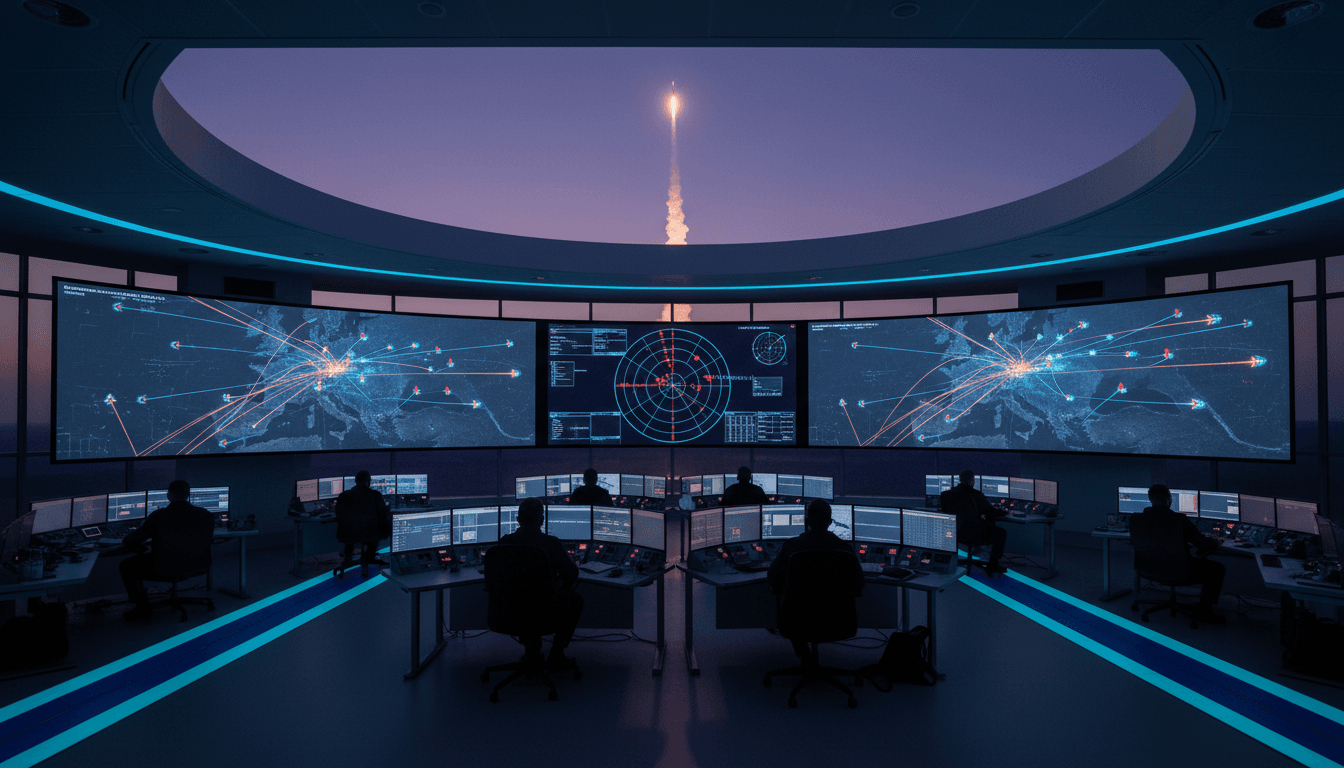
Arrow-3 Deal Signals AI-Driven Air Defense in Europe
A $6.5 billion air-and-missile defense deal doesn’t get expanded by accident. Germany’s decision this week to add roughly $3.1B on top of its earlier ~$3.5B Arrow 3 purchase makes the combined agreement the largest Israeli defense export deal ever—and it’s a clear marker of where European security planning is heading.
Europe isn’t just buying interceptors. It’s buying decision speed: sensors fused across domains, fire-control logic that can keep up with salvo tactics, and operational workflows that compress minutes into seconds. That’s where AI in defense and national security becomes less of a buzzword and more of a procurement requirement.
The Arrow 3 expansion is a useful case study because it combines three things that tend to drive modern defense buying: credible ballistic missile threats, interoperability with allies, and software-led performance improvements that can continue after delivery.
What the $6.5B Arrow 3 expansion really says
Germany’s Arrow 3 expansion says one main thing: strategic air defense is now treated like national infrastructure—built for scale, resilience, and long-term upgrades. The Bundestag’s approval of the added funding turns a “major buy” into a sustained program.
The timeline matters too. Israel Aerospace Industries (IAI) highlighted that Arrow 3 was delivered about two years from contract signing, a pace that stands out in large defense programs. Speed to field isn’t just political optics; it’s a deterrence signal.
This deal also lands in a wider pattern. Israel’s defense exports hit record levels in 2024, and momentum continued through 2025 with multiple multi-billion-dollar announcements across the sector. The through-line is demand for systems that are proven, integrated, and upgradeable.
Why Germany is prioritizing top-tier missile defense now
The answer is straightforward: ballistic missiles change the math for national risk. They compress warning time, stress civil defense, and can be paired with misinformation campaigns to create public panic even when shots miss.
Arrow 3 sits at the top of a layered architecture, designed for exo-atmospheric interception—meeting threats before they can descend into the most densely populated parts of the battlespace. Even for nations with strong air forces, the reality is that fighter aircraft can’t reliably solve the ballistic missile problem alone.
Where AI fits inside modern missile defense (and why it’s the real story)
AI’s role in advanced missile defense isn’t a single “AI module.” It’s a set of capabilities embedded across the kill chain that help humans and systems keep pace with high-velocity threats.
Here’s the clean way to think about it: missile defense is a race against time, uncertainty, and saturation. AI is used to reduce uncertainty and accelerate decisionmaking.
AI-enabled sensor fusion: turning many feeds into one track
The first AI problem is perception. Modern air defense stacks up radar, electro-optical, infrared, SIGINT, space-based cues, and allied tracks. The challenge isn’t collecting data—it’s making it coherent.
AI methods (including probabilistic filtering, multi-sensor fusion techniques, and learned classification) help:
- Correlate detections into a single “best track” faster
- Reduce false alarms during clutter or electronic interference
- Classify objects (threat vs. debris vs. decoy) with higher confidence
A practical point procurement teams often miss: fusion performance is a software problem as much as a radar problem. That’s why the “AI readiness” of a missile defense program shows up in data pipelines, labeling processes, and test instrumentation—not just interceptor specs.
Battle management: recommending actions under extreme time pressure
The second AI problem is decision support. When multiple threats arrive, commanders have to answer:
- Which threats are real?
- Which defended assets are at risk?
- Which interceptor has the best probability of kill?
- When do we hold fire because it’s a decoy?
Modern battle management and command-and-control (BMC2) increasingly uses algorithmic decision aids to propose engagement sequences and manage scarce interceptors. The value isn’t “full autonomy.” The value is consistent, explainable recommendations that reduce cognitive overload during saturation.
Here’s the stance I’ll take: most air defense modernization programs underinvest in the human factors side of AI. If operators can’t understand why the system is recommending a shot—or can’t override it cleanly—you get either paralysis or blind trust. Both are dangerous.
Post-deployment improvement: why software is the long-term advantage
The third AI story is what happens after fielding. Threats evolve. Tactics shift. Electronic warfare adapts. A system that can’t learn (in a controlled, validated way) becomes stale.
That’s why large strategic partnerships increasingly behave like long-term software relationships:
- Continuous updates to classification models
- New discrimination logic for countermeasures
- Improved engagement planning for novel raid profiles
The Arrow program’s decades-long Israel–US cooperation also hints at something else: validation culture. AI in safety- and mission-critical defense systems lives or dies on test rigor. The “best model” in a lab isn’t the best model in the field unless it’s instrumented, audited, and stress-tested.
Interoperability is the new headline: AI has to work across allies
The most important operational implication of the Arrow 3 expansion is that it reinforces the idea that air defense is coalition defense. Germany’s architecture doesn’t exist in isolation; it has to coordinate with NATO sensors, national radars, and adjacent layers of defense.
AI makes interoperability harder and easier at the same time:
- Easier, because good fusion and track management can ingest more heterogeneous feeds.
- Harder, because model behavior depends on data formats, latency, labeling standards, and cybersecurity controls.
The hidden requirement: shared data, shared confidence
A missile defense network is only as good as the trust in its data. For AI-enabled systems, trust has two parts:
- Data trust: Is the track accurate? Is the feed spoofed? Are timestamps aligned?
- Model trust: Why did the classifier label it as a threat? How sure is it?
This is where strategic deals increasingly include work on:
- Cross-domain data-sharing agreements
- Standardized track formats and metadata
- Joint exercises that generate realistic training and test data
A simple quotable line that holds up operationally: Interoperability isn’t a cable problem; it’s a confidence problem.
Cybersecurity and AI assurance: missile defense is a high-value target
If a nation fields strategic missile defense, adversaries will try to defeat it without firing a missile first.
Two attack surfaces matter most for AI-enabled defense systems:
- The network and data layer (spoofing, jamming, latency attacks, corrupted track data)
- The model and software supply chain (poisoned updates, compromised components, degraded performance over time)
What “AI assurance” looks like in procurement language
If you’re advising acquisition teams—or selling into them—translate “responsible AI” into requirements that can be tested.
Strong AI assurance programs typically include:
- Defined operating envelopes (when the model is valid vs. out of scope)
- Continuous evaluation against red-team scenarios
- Audit logs that capture model inputs, outputs, and confidence
- Rollback procedures for software/model updates
- Clear human override rules and training
This is especially relevant in Europe heading into 2026 budgets: strategic air defense will compete with readiness, artillery stocks, and ISR modernization. Programs that can show measurable assurance and upgrade paths win funding.
Practical takeaways for defense leaders and industry teams
Germany’s Arrow 3 expansion isn’t just a headline about money. It’s a checklist for what buyers now expect from AI-enabled defense capabilities.
If you’re a defense decision-maker
Focus on three questions that cut through vendor messaging:
- How does the system behave under saturation? Ask for engagement logic performance when tracks multiply and comms degrade.
- What’s the upgrade and validation pipeline? You want a repeatable process for software updates, model updates, and regression testing.
- How is interoperability proven, not promised? Demand evidence from exercises, integration tests, and cross-system track correlation.
If you’re building or selling AI for air and missile defense
The winners will be teams that treat AI as an operational product, not a demo:
- Design for explainability under stress, not just in a briefing
- Instrument everything: latency, confidence, error modes, operator overrides
- Package cybersecurity with AI: secure data pipelines, signed updates, anomaly detection
One more opinionated point: “Autonomous” is a distraction term in missile defense. Customers are buying faster, safer decisions with clear accountability.
What to watch next in Europe’s AI-enabled air defense push
The Arrow 3 expansion sits inside a broader European trend: building a layered air defense architecture that connects interceptors, sensors, and command systems across borders. Strategic partnerships will increasingly be judged by two metrics: time to field and time to upgrade.
For anyone following the AI in Defense & National Security series, this is a concrete example of the new normal: AI isn’t being added to defense systems because it’s fashionable. It’s being added because the threat environment forces shorter timelines, higher confidence decisions, and tighter coalition integration.
If you’re planning for 2026, the right question isn’t “Will AI be used in missile defense?” It already is. The question is: who controls the data, who validates the models, and how quickly can the coalition adapt when adversaries change tactics?
If your organization is evaluating AI-enabled command-and-control, sensor fusion, or air defense analytics, map your current architecture against the three pressure points above: saturation, interoperability, and AI assurance. That gap analysis tends to surface the real requirements fast.