AI-powered threat intelligence reveals hidden vendor assets, subsidiaries, and locations so you can reduce third-party risk before it becomes an incident.
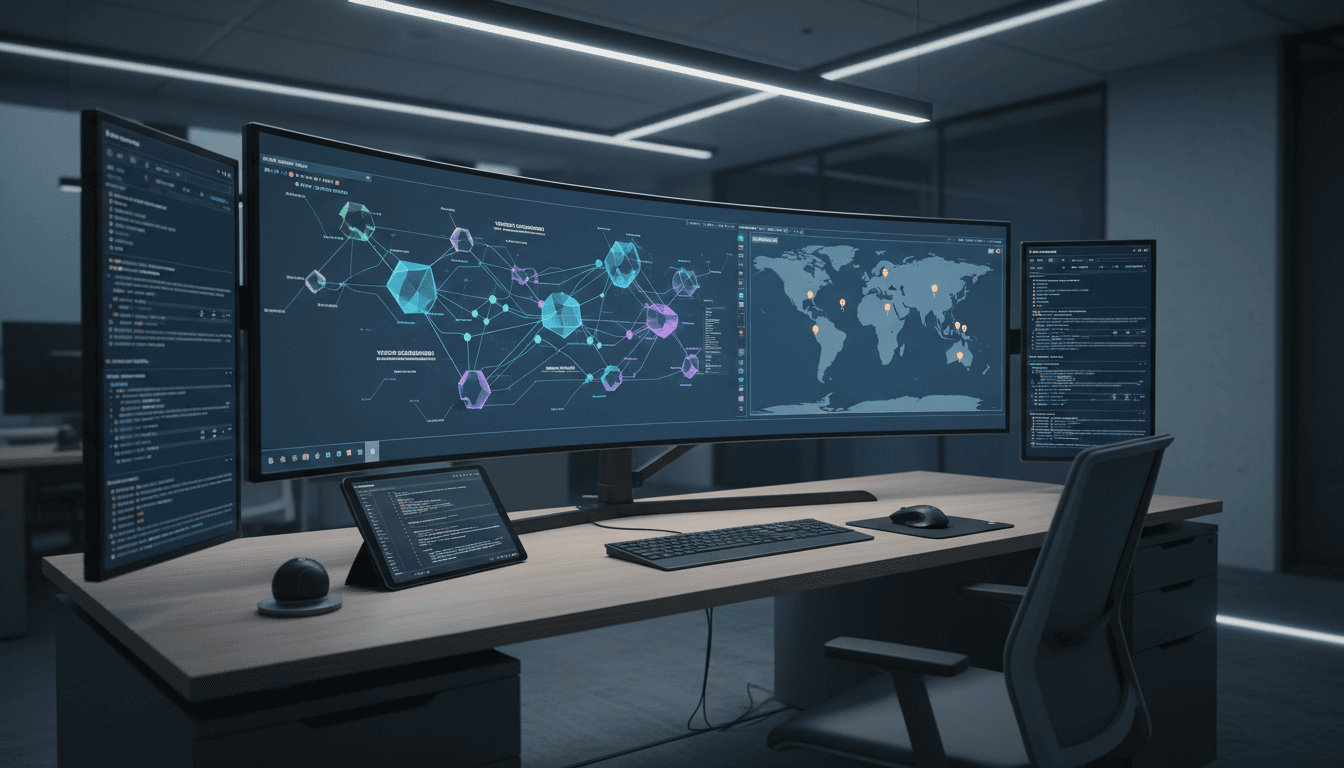
Expose Hidden Vendor Infrastructure With AI Visibility
A vendor can pass every checkbox you throw at them—and still be the weakest link in your security program.
I’ve seen organizations spend weeks collecting questionnaires, audits, and certifications, then get blindsided by something basic: an overlooked subsidiary hosting customer data in a risky jurisdiction, a “temporary” cloud environment that became permanent, or an IP range that quietly shows up in threat intel as supporting phishing or command-and-control traffic.
This post is part of our AI in Cybersecurity series, and the point is simple: AI-powered threat intelligence is one of the fastest ways to expose the infrastructure your vendors don’t put on forms. Not because they’re always hiding it on purpose—mostly because modern vendor ecosystems are messy.
The hidden vendor infrastructure problem (and why it keeps winning)
Third-party risk fails when it relies on what vendors disclose instead of what they operate. Questionnaires are snapshots. Certifications are periodic. Your vendor’s real environment changes weekly.
Here’s what “hidden infrastructure” usually looks like in practice:
- Untracked domains created for marketing campaigns, regional portals, or acquisitions that never got folded into the main security program
- IP space tied to old hosting providers or legacy VPN gateways that still accept connections
- Subsidiaries with different controls than the parent organization (sometimes in different countries with different rules)
- Cloud workloads spun up by product teams under separate accounts or resold managed services
- Facilities and operations in locations that introduce legal, geopolitical, or physical security exposure
This matters because attackers don’t care about your procurement process. They care about reachable assets, weak controls, and confusion.
December 2025 reality check: vendor change is constant
Late Q4 is a perfect time for vendor risk surprises:
- Year-end acquisitions close, and inherited systems come online before anyone’s rationalized identity, patching, or monitoring.
- Holiday staffing gaps slow down vendor response times and incident handling.
- New SaaS tools get approved “just to ship,” then stay.
If you’re only reassessing vendors annually, you’re effectively running third-party security with last year’s map.
Why AI-powered threat intelligence fits vendor risk better than questionnaires
AI helps because the problem is scale and correlation. Vendor ecosystems produce too many signals for humans to connect quickly: DNS changes, certificate issuance, IP hosting shifts, newly observed phishing infrastructure, malware callbacks, and corporate structure updates.
A threat intelligence platform with AI-assisted analysis can continuously:
- Discover assets (domains, IPs, certificates, hosting footprints) associated with an organization
- Connect relationships (parent/subsidiary hierarchies, acquisitions, shared infrastructure)
- Score and explain risk using observed evidence (not just policy statements)
- Alert on changes that matter (new exposed services, suspicious infrastructure associations, risky geographies)
The real value isn’t “more data.” It’s faster clarity:
“Show me what this vendor actually owns, runs, and depends on—then tell me what’s risky right now.”
What to look for: assets, relationships, and locations
Vendor infrastructure risk is usually a combination of three things: what exists, how it’s connected, and where it sits. If your process doesn’t cover all three, you’ll miss the stuff that turns into incidents.
1) Assets: domains, IPs, and certificates you didn’t know to ask about
Start by building a vendor asset inventory that doesn’t depend on self-reporting.
Practical examples of “silent” risk signals:
- A vendor domain with a valid TLS certificate but no business owner
- IP addresses that appear in reports tied to phishing hosting or command-and-control activity
- Old subdomains (
vpn.,mail.,dev.,sso.) that still resolve and expose services
AI improves this step by clustering noisy indicators (like certificate transparency logs, DNS patterns, hosting fingerprints) into a coherent asset list you can act on.
2) Relationships: subsidiaries, acquisitions, and resellers
Modern vendors aren’t single entities. They’re ecosystems—subsidiaries, acquired companies, offshore dev shops, and “partners” who touch production systems.
This is where vendor assessments often get it wrong:
- The contract is with the parent company, but data processing happens in a subsidiary.
- Your vendor uses a subcontractor for support, but that subcontractor has network access.
- An acquisition brings in a product line that’s profitable, so it’s kept running… on infrastructure no one wants to modernize.
A relationship map turns “Vendor A” into what it actually is: a network of entities with different exposures and controls.
3) Locations: facilities and hosting jurisdictions
Geography is part of cybersecurity. Not in an abstract way—in a “who can legally access data and what happens during disruption” way.
Location-based risk often includes:
- Data residency and surveillance exposure
- Sanctions and restricted trade implications
- Physical security and business continuity risks
- Conflict-zone proximity and travel/security advisories
A vendor can be headquartered somewhere “safe” while hosting workloads or running operations elsewhere. If your program doesn’t track that, you’ll get surprised when a regional outage, political disruption, or regulatory enforcement hits.
A practical model: the three views you need for continuous vendor monitoring
The fastest way to operationalize third-party visibility is to use three complementary views: structure, risk triggers, and geographic context. This mirrors how strong third-party intelligence tooling is evolving.
Structure view: build the asset hierarchy first
Answer first: Structure view tells you what belongs to whom.
You want a hierarchy that connects:
- Parent organization → subsidiaries
- Subsidiary → domains
- Domains → IPs, certificates, and related infrastructure
Operationally, this structure helps you do two things quickly:
- Validate scope: Are you monitoring the vendor you contracted with—or only a slice of it?
- Assign accountability: When an asset is risky, which business entity owns the fix?
Risk rules view: focus on evidence, not vibes
Answer first: Risk rules view shows what’s risky and why.
Examples of triggered risk that should change your posture:
- An IP validated as command-and-control
- Infrastructure reported hosting active phishing URLs
- A domain associated with recent malware distribution
- Indicators tied to repeated suspicious activity over time (recurrence matters)
This is where AI earns its keep: it helps reduce false urgency by explaining the risk signal and connecting it to the assets and entities that matter.
Map view: connect exposure to country risk
Answer first: Map view shows where the vendor’s operations and hosting create geopolitical, legal, or physical risk.
This view supports decisions like:
- Whether to require regional hosting restrictions
- Whether to implement enhanced monitoring for assets in certain jurisdictions
- Whether a vendor introduces unacceptable compliance exposure
Done well, this isn’t fear-based. It’s planning-based.
How to use AI visibility across the vendor lifecycle
The win isn’t just “seeing more.” The win is making better decisions earlier and responding faster later. Here’s how I recommend applying continuous vendor intelligence.
Before signing: make due diligence evidence-based
Answer first: Use external asset and risk evidence to validate (or challenge) what a vendor claims.
A practical pre-contract workflow:
- Build the vendor’s external asset map (domains, IPs, key subsidiaries)
- Check for high-risk signals tied to those assets (phishing, C&C, recurrent abuse)
- Review geographic exposure (hosting and facilities)
- Decide what to do with the findings:
- Go/no-go
- Contract clauses (breach notification timing, audit rights, subcontractor controls)
- Required controls (MFA scope, logging requirements, patch SLAs)
If you only do questionnaires, you’re negotiating blind.
During the relationship: move from annual reviews to continuous monitoring
Answer first: Continuous monitoring catches changes that annual reviews will always miss.
What to monitor continuously:
- New domains or certificates that look related to the vendor
- Hosting changes (especially to unfamiliar providers or regions)
- Emerging risk signals tied to vendor IP space
- Newly disclosed vulnerabilities that overlap with vendor technology fingerprints (where available)
When the model flags something, your team’s job becomes manageable: validate, contact the vendor, and track remediation.
During incidents: reduce vendor impact assessment from days to minutes
Answer first: When a zero-day drops or a geopolitical event disrupts operations, you need to know which vendors are exposed immediately.
A fast incident workflow using vendor asset visibility:
- Identify vendors running affected technology or exposed services
- Determine whether risky assets are production-relevant or fringe
- Contact vendors with targeted questions (not generic “Are you affected?” emails)
- Increase monitoring or block suspicious infrastructure when supported by evidence
This is the difference between “We think we’re okay” and “We know which two vendors are high risk, and here’s why.”
What most companies should do next (even if budget is tight)
Answer first: You don’t need a massive program to get value—you need a repeatable playbook.
Here’s a realistic starting plan for Q1 2026:
- Pick your top 25 vendors by business criticality and access (not by spend)
- Create an external vendor asset baseline (domains, IPs, subsidiaries, hosting regions)
- Define three escalation tiers:
- Tier 1: confirmed malicious associations (C&C, active phishing hosting)
- Tier 2: high-risk exposure (internet-facing admin portals, repeated abuse patterns)
- Tier 3: hygiene issues (expired certs, neglected subdomains)
- Set response SLAs for vendor outreach and internal tracking
- Review monthly—not annually
If you’re running an AI in cybersecurity roadmap, third-party visibility is one of the quickest ways to turn “AI” into measurable risk reduction.
The stance: vendor trust is fine—vendor verification is mandatory
Hidden vendor infrastructure is where modern breaches and disruptions start. It’s not always dramatic. It’s usually ordinary: an old asset, an untracked subsidiary, an overlooked region, a risk signal that no one connected.
AI-powered threat intelligence flips the model. Instead of asking vendors to describe their environment, you can observe the environment, map it, and track changes.
If you’re planning your 2026 security priorities, here’s the question that should guide your third-party program:
If one critical vendor got hit tomorrow, would you be responding with a current infrastructure map—or last year’s paperwork?