AI in cybersecurity is being judged on outcomes: detect, prevent, and stay quiet. Here’s what 2025 MITRE results mean for your SOC and buying decisions.
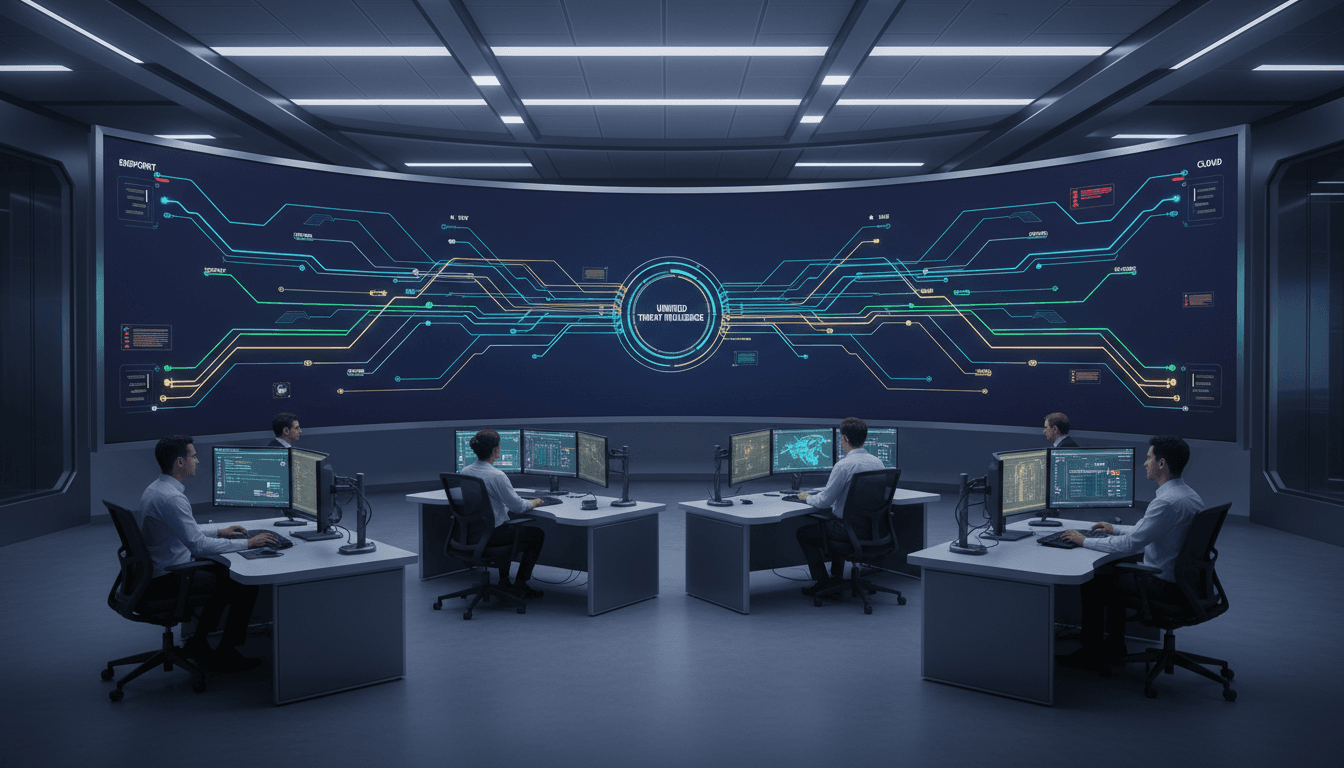
AI Security Benchmark: 100% Detection, Zero Noise
A lot of security teams have accepted a depressing trade: you can get strong detection, or you can keep alert volume sane—but you can’t have both. The 2025 MITRE ATT&CK Enterprise Evaluations challenged that assumption in a very public way.
CrowdStrike reported 100% detection, 100% protection, and zero false positives across an expanded, cross-domain evaluation that now covers endpoint, identity, and cloud activity in hybrid environments. Whether you’re running a SOC in a global enterprise or supporting government systems with strict operational constraints, this result matters for one simple reason: it’s the clearest benchmark we’ve seen lately for what AI in cybersecurity should be delivering—precision at scale, not more noise.
This post is part of our AI in Cybersecurity series, and I’m going to use these results as a lens—not to rehash a scorecard, but to pull out what’s actually useful for buyers and operators: how to interpret MITRE, what “zero false positives” really means, and what you should demand from AI-driven detection and response in 2026 planning.
What the 2025 MITRE ATT&CK evaluation actually tested
The headline numbers are interesting, but the scope change is the real story. MITRE expanded this year’s Enterprise Evaluation to better reflect how breaches happen now: attackers don’t “live” in one control plane. They move.
Cross-domain was the point, not a feature
This year’s evaluation emphasized attack chains that traverse:
- Endpoint (living-off-the-land, malware-free intrusion steps)
- Identity (valid account abuse, MFA bypass patterns, lateral movement)
- Cloud (control plane activity, session replay, IAM manipulation)
That combination is what modern incident response looks like. A credential gets phished, an unmanaged device hits an identity provider, cloud permissions get twisted, and only then do you see endpoint payloads—if you see them at all.
If your program still evaluates tools in silos (EPP here, IAM there, CSPM somewhere else), you’re basically grading the defense differently than attackers experience it.
Reconnaissance was added for a reason
MITRE also added the Reconnaissance tactic. That’s not academic. Early-stage recon is where defenders can win cheaply—before privilege escalation, before data theft, before ransomware pressure.
A practical way to think about this: the sooner your tooling can detect intent and staging behavior, the less you rely on expensive, disruptive containment later.
Why “100% detection” isn’t the metric most teams should optimize
Detection sounds like the north star, but SOC reality is harsher: untriaged detections are just backlog. Most companies don’t lose because they “missed every signal.” They lose because signals didn’t turn into fast decisions.
Here’s the stance I’ll take: the most valuable security AI is the kind that reduces time-to-decision, not just time-to-alert.
Technique-level detail is what turns alerts into action
CrowdStrike highlighted 100% technique-level detail, meaning detections mapped to ATT&CK Techniques/Sub-Techniques with context.
That matters because it changes how work flows:
- Analysts can quickly answer: What stage of the kill chain is this?
- Triage becomes: Is this credential abuse, discovery, persistence, or exfil?
- Response becomes: Do we reset creds, isolate endpoints, lock IAM roles, or all three?
“AI threat detection” that produces generic “suspicious activity” messages doesn’t speed up decisions. It just produces more analyst chat.
Alert efficiency is the hidden KPI
MITRE measured alert volume with a metric tied to how many alerts would require SOC triage. This is where many tools quietly fail: they detect plenty, but they do it by paging humans for everything.
A solid internal KPI to borrow from this idea:
- Alerts per confirmed incident (and how that number trends over time)
If your AI-driven SOC gets “better” yet your alerts-per-incident rises, you’re paying for anxiety, not safety.
Zero false positives: why it matters more than the marketing makes it sound
Security leaders often hear “false positives” and translate it to annoyance. That’s underselling it.
False positives are budget drain, burnout fuel, and breach accelerant. They train teams to distrust their tools.
The “noise test” is closer to real life than most lab benchmarks
CrowdStrike pointed out a specific MITRE protection run described as a Noise test, where benign activity should not trigger reporting.
This kind of evaluation pressure matters because real environments are messy:
- IT admins use remote management tools
- DevOps automations look like reconnaissance
- Identity systems generate odd patterns during seasonal change freezes (hello, December change windows)
If your detection model can’t separate “unusual but normal” from “unusual and malicious,” you’ll either:
- Ignore alerts (risk), or
- Overreact and disrupt operations (risk), or
- Hire more people to stare at dashboards (cost)
The promised payoff of AI in cybersecurity is that it can make these distinctions better than brittle rules. That’s the bar.
What the two adversary scenarios teach security teams
MITRE’s emulations used tradecraft aligned to two adversary profiles:
- An eCrime actor associated with SCATTERED SPIDER behaviors
- A PRC espionage actor associated with MUSTANG PANDA behaviors
You don’t need to memorize the names. You do need to understand what these patterns represent.
Scenario 1: Identity + cloud intrusions are now the “default breach”
The SCATTERED SPIDER-style scenario emphasized:
- Social engineering and identity abuse
- MFA bypass and credential theft
- Remote access tooling used in ways that blend into business operations
- Cloud console activity and control plane manipulation
This matters because many programs still treat identity as “an IAM team problem.” Attackers don’t. They treat identity as the front door.
If you’re prioritizing 2026 investments, here’s a strong order of operations I’ve found works:
- Identity telemetry and detection (SSO, IdP events, conditional access signals)
- Cloud control plane detection and response (IAM changes, role chaining, anomalous session behavior)
- Endpoint behavior (to validate and contain when the attacker lands)
Scenario 2: Living-off-the-land is why traditional “malware thinking” breaks
The MUSTANG PANDA-style scenario included:
- Legitimate tool abuse
- Long dwell time behaviors
- Encoded shellcode and evasive execution
This is where “AI-native” claims get tested. The winning approach generally combines:
- Behavioral detection (what the system did)
- Threat intelligence correlation (how this aligns to known TTPs)
- Automation (how quickly detections become protections)
If your tooling still depends heavily on file reputation alone, you’re going to be late to incidents that don’t look like malware until the very end.
The real lesson for AI-driven security operations in 2026
A single evaluation doesn’t pick “the one tool everyone should buy.” But it does expose what modern defenses must do well.
Here are the requirements I’d put on any AI security platform (vendor-agnostic) if you want real operational lift.
1) Cross-domain correlation can’t be optional
If endpoint, identity, and cloud detections live in different consoles, correlation becomes a human task. Humans don’t scale.
A practical buyer question to ask:
- “Show me one incident timeline that includes endpoint + identity + cloud events, and show me what’s automated vs manual.”
2) Prevention has to exist in the cloud control plane
Cloud attacks often happen without “touching” a traditional endpoint first. So you need prevention and response actions that can:
- Disable risky credentials/sessions
- Contain instances created for pivoting
- Preserve evidence for forensics
If your platform only detects cloud issues and then tells someone to open a ticket, that’s not cloud defense. That’s cloud reporting.
3) AI must reduce work, not create work
The most believable definition of AI in cybersecurity is this:
Good security AI turns high-volume telemetry into low-volume decisions.
Measure it with operational numbers:
- Mean time to acknowledge (MTTA)
- Mean time to respond (MTTR)
- Alerts per incident
- Analyst hours per containment
If those don’t improve, the “AI” label is just packaging.
4) You should test for “benign weirdness” before you test for “evil genius”
Most tool bake-offs focus on exotic attacks. Real outages come from overblocking:
- Developers locked out during a release
- Admin scripts flagged as malicious
- Legitimate RMM tools disabled across fleets
So add a test category in your evaluation:
- Noise tolerance: Can the system stay quiet during known-good spikes?
That’s the path to fewer false positives and fewer self-inflicted incidents.
A practical checklist to apply these insights next week
If you’re leading security operations—or advising someone who is—here’s a short, high-signal checklist you can run without rewriting your entire program.
- Map your top 5 incident types to domains. For each (ransomware, BEC, insider, cloud key leak, vendor compromise), write: endpoint / identity / cloud. If you can’t map it, your detection strategy is too tool-centric.
- Pick one identity abuse scenario and rehearse it. Example: suspicious OAuth consent grant, impossible travel, or MFA fatigue attack. Time how long it takes to confirm and contain.
- Audit your “noise budget.” How many alerts per analyst per shift is normal? If you don’t know, you can’t manage alert fatigue.
- Demand technique-level context in your detections. Whether it’s ATT&CK mapping or an equivalent taxonomy, your SOC needs consistent classification.
- Verify your cloud response actions. If you can’t automatically contain a suspicious IAM escalation, you’re likely to be late.
Those five steps tend to surface the real gaps quickly—especially for teams juggling year-end change freezes and reduced staffing in late December.
Where this fits in the AI in Cybersecurity story
The broader theme of this series is simple: AI doesn’t “replace the SOC.” It changes what the SOC spends time on. The best outcomes happen when AI improves detection quality and reduces operational drag.
The 2025 MITRE ATT&CK Enterprise Evaluation results are a useful benchmark because they combine three things security leaders actually care about: coverage, protection, and noise control across the domains where modern attackers operate.
If you’re planning next year’s security roadmap, don’t anchor on a single score. Anchor on the capability the score represents: AI-driven threat detection and response that’s accurate enough to trust, and quiet enough to use at scale.
What would your incident response look like if “high fidelity” meant fewer tickets—not more dashboards?