AI-powered threat detection helps spot SaaS integration abuse fast. Learn what the Salesforce–Gainsight incident means and how to reduce third-party risk.
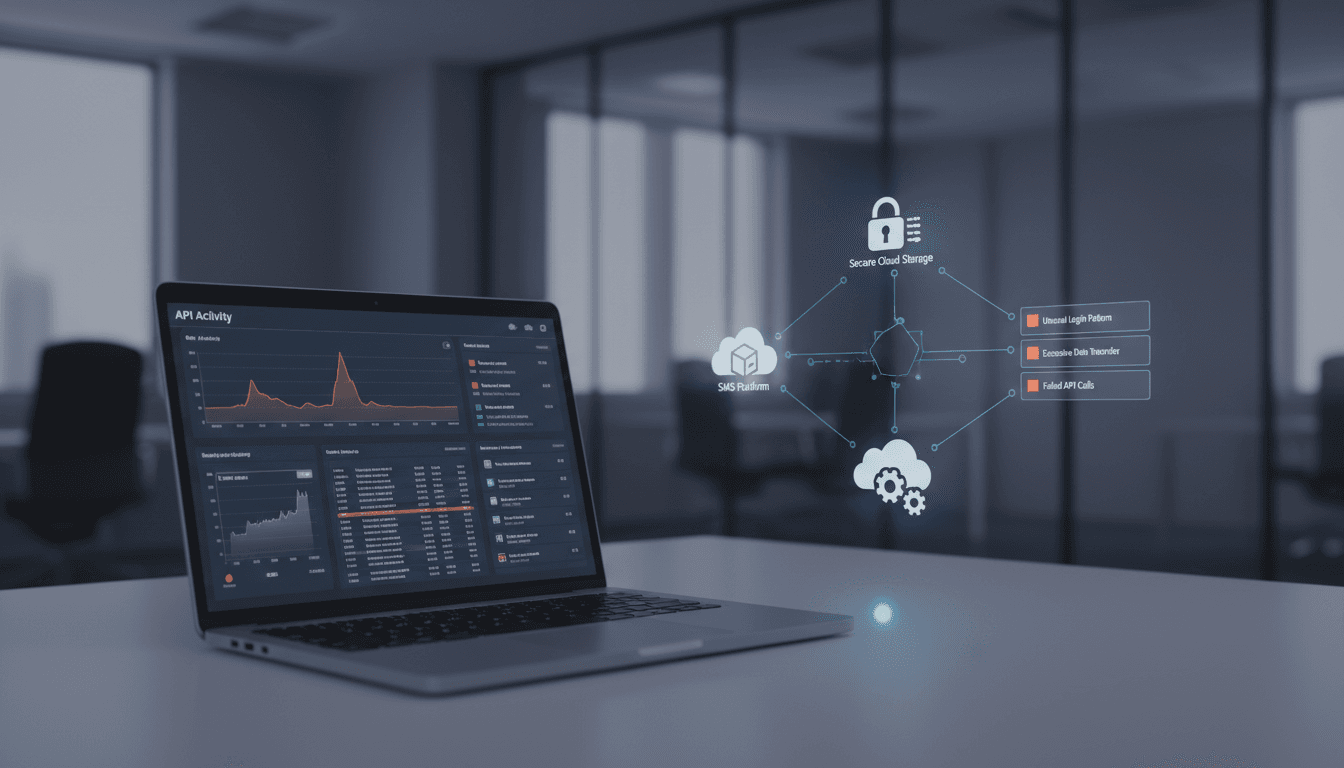
AI-Powered Defense for SaaS Integration Attacks
Salesforce caught the first real signal in the Salesforce–Gainsight incident: suspicious API calls coming from non-allowlisted IP addresses. That detail matters because it’s exactly the kind of “small” anomaly most teams miss when they’re juggling dozens of SaaS apps, each with its own OAuth tokens, service accounts, and integration quirks.
Most companies get SaaS security wrong in one specific way: they treat integrations as plumbing. Once the connector works, it’s basically forgotten. Then an incident like this shows up and everyone realizes the connector isn’t plumbing—it’s privileged access into core business data.
This post sits in our AI in Cybersecurity series for a reason. The Salesforce–Gainsight event is a clean, real-world example of where AI-powered detection and response helps: correlating weird API patterns, risky infrastructure, token behavior, and third-party integration blast radius—fast enough to matter.
What the Salesforce–Gainsight incident actually teaches
Answer first: The incident shows that trusted SaaS integrations can become a supply-chain entry point, and the first evidence may look like nothing more than odd API traffic.
Here’s what was publicly reported: Salesforce detected suspicious API activity on November 19, 2025. The calls were tied to Gainsight applications integrated with Salesforce and came from IP addresses outside customer allowlists. Salesforce responded by revoking access tokens associated with the Gainsight connected apps, restricting integration functionality, and launching an investigation. Gainsight confirmed it was investigating unusual activity involving those integrated applications.
Operationally, the disruption was broad. Several Gainsight services temporarily lost the ability to read/write Salesforce data (Customer Success, Community, Northpass, Skilljar, Staircase). And the ripple effect spread: other vendors (including Zendesk, Gong.io, and HubSpot) reportedly disabled related Customer Success connectors as a precaution.
Two practical lessons jump out:
- Detection was integration-centric. The “symptom” wasn’t malware on a laptop—it was API behavior through a trusted connector.
- Response required token control. Revoking and rotating tokens wasn’t a cleanup step; it was the main containment move.
That’s the new normal in enterprise security: more breaches start with identity and integration pathways than with obvious endpoint compromise.
Why traditional controls struggle with SaaS supply-chain compromise
Answer first: Traditional security tools are great at known bad things; SaaS integration attacks often look like valid actions in the wrong context.
If you only monitor for “failed logins” or “blocked malware,” you’ll miss the quiet failures that matter:
- OAuth tokens used from unusual IP ranges
- API calls that are syntactically valid but behaviorally strange (volume, object types, timing)
- New scopes requested by a connected app that previously needed less access
- Sudden changes in connector configuration (webhooks, callbacks, allowlist rules)
Even well-run teams hit three friction points:
1) SaaS logs aren’t unified, and context is scattered
Salesforce has logs. Gainsight has logs. Your IdP has logs. Your CASB might have partial telemetry. Pulling these together during an incident is slow, and speed is the whole game.
2) Integrations multiply faster than governance
Customer success, marketing ops, sales ops, and support teams add tools constantly—especially at year-end when renewals and Q4 pipeline pressure peak. Every connector adds another place where:
- tokens live longer than they should
- scopes are broader than they need to be
- “temporary” exceptions (like relaxed allowlists) become permanent
3) “It’s a vendor problem” thinking delays action
Supply-chain compromise through SaaS integrations is shared risk. Your vendor can harden their environment, but you still own your token hygiene, scope minimization, and detection in your tenant.
If your plan is “we’ll wait for the vendor’s final report,” you’re already behind.
Where AI helps most: detection that understands behavior, not just rules
Answer first: AI is most useful here when it builds a baseline of normal integration behavior and flags deviations with enough context to act quickly.
A rules-only approach says: “Alert on logins from Tor exit nodes.” That’s helpful, but incomplete.
An AI-powered approach says: “This Gainsight-connected app token is being used to enumerate/export objects it has never touched before, at a rate 20x higher than baseline, from infrastructure associated with prior CRM targeting, and it’s happening outside business hours.”
That difference—multi-signal correlation—is why AI belongs in SaaS and third-party risk management.
AI detection use cases mapped to this incident
Below are concrete places AI-powered threat detection can shrink the time-to-containment.
1) API anomaly detection across objects, rate, and sequence
Most data theft through CRMs isn’t one giant export button. It’s often a sequence:
- query high-value objects (Accounts, Contacts, Opportunities)
- enumerate attachments/notes
- pivot to integrations that sync data elsewhere
AI models can learn normal call sequences for each connected app and flag deviations:
- unusual object access patterns
- unusual query filters (like “lastModifiedDate” sweeps)
- bursty access that resembles scraping
2) Token behavior analytics (not just token age)
Teams often track token expiration but not token behavior.
AI can score tokens based on:
- new IP geographies / ASNs
- first-seen user agents
- scope creep
- “impossible travel” patterns between SaaS services
In incidents like this, token behavior is the story.
3) Third-party integration blast-radius mapping
When Salesforce restricted Gainsight integration access, other platforms disabled connectors too—because nobody wants to be the next domino.
AI can maintain a living map of:
- which SaaS apps share authentication pathways
- which integrations touch the same objects
- where the same service account is reused
That lets you answer fast:
- “If this connector is compromised, what else is exposed?”
- “Which business processes break if we revoke this token right now?”
4) IoC enrichment and infrastructure risk scoring
The public reporting connected some IPs in this incident to prior CRM-targeting activity, and many IPs were associated with Tor/proxy/VPN infrastructure.
AI-assisted enrichment helps analysts avoid two traps:
- treating commodity infrastructure as “too noisy to matter”
- overreacting to a single IoC without behavioral corroboration
The win is triage quality: fewer false alarms, faster containment on real ones.
A practical playbook: what to do in the first 48 hours
Answer first: Containment for SaaS integration incidents is about tokens, scopes, and monitoring—done quickly and in the right order.
If your org uses Salesforce with Gainsight (or any deep CRM integration), this is the response pattern I’ve found works best in practice.
Step 1: Freeze the integration’s trust path
Do this even if you’re not sure you’re affected.
- Revoke OAuth tokens tied to the connected app(s)
- Rotate API keys used by the integration
- Disable high-risk connector actions temporarily (write access, bulk export)
If you can’t temporarily restrict the connector without business impact, that’s a governance gap worth fixing in 2026.
Step 2: Hunt for “quiet exfiltration” signals
Look for indicators that often precede confirmed exfiltration:
- bulk reads across multiple high-value objects
- new reports/queries created by integration identities
- spikes in API usage during off-hours
- new IPs not in your allowlist
- unusual “list” and “describe” API calls (schema discovery)
AI-assisted hunting helps here because it can surface anomalies without you knowing the exact attacker playbook.
Step 3: Reauthorize with least privilege (don’t restore the old mess)
When you bring integrations back, don’t simply click “reauthorize” and move on.
- reduce scopes to the minimum required
- replace long-lived tokens with shorter lifetimes where supported
- segment connectors by function (read-only vs write)
- require stronger conditional access for integration admins
A blunt truth: most SaaS connectors are over-permissioned by default.
Step 4: Add monitoring that’s integration-aware
A lot of orgs monitor users well and monitor servers well, but treat connected apps as second-class identities.
Minimum viable monitoring:
- per-connected-app API usage baselines
- alerts on new IPs/ASNs for integration tokens
- detection for mass export patterns
- changes to connected app configuration and scopes
If your security tooling can’t model connected apps as identities, you’ll keep losing time during incidents.
Building a safer SaaS integration program in 2026
Answer first: Preventing the next Salesforce-style integration incident requires treating SaaS integrations like privileged identities and applying zero-trust principles to APIs.
As we head into 2026, SaaS ecosystems are only getting more intertwined. Customer success stacks, revenue ops stacks, and support stacks now share data by default. That’s great for productivity—and brutal for containment when something goes wrong.
Here’s the governance layer that actually reduces risk without slowing the business to a crawl.
Adopt “zero trust for APIs” as a real practice
Zero trust isn’t only for network access.
- Never assume an integration is safe because it’s approved. Continuously validate.
- Continuously score risk, don’t do annual reviews. Vendors change. Apps update. Tokens leak.
- Verify context, not just credentials. A valid token from the wrong infrastructure is still a threat.
Make third-party risk measurable (and automatable)
The gap in many third-party risk programs is they focus on questionnaires rather than runtime behavior.
A modern program tracks:
- integration inventory (what’s connected to what)
- scope and permissions drift over time
- security events tied to integration identities
- time-to-revoke and time-to-reauthorize during incident response
AI shines here because it reduces manual review and flags drift early.
Pressure-test your “business continuity vs containment” tradeoffs
This incident caused real service disruption, which is part of why it’s a useful case study.
Run a tabletop exercise with one question:
“If we revoke the top five connected apps in Salesforce right now, what breaks—and how fast can we restore safely?”
If the answer is “we don’t know,” that’s your priority.
The bottom line for security leaders
AI-powered threat detection isn’t hype in SaaS security—it’s how you keep up with the volume and subtlety of integration abuse. The Salesforce–Gainsight incident shows a predictable pattern: an attacker doesn’t need to break into Salesforce directly if they can ride a trusted integration path.
If you’re responsible for enterprise security, the next step is straightforward: treat connected apps as first-class identities, monitor their behavior continuously, and make token revocation a rehearsed muscle memory—not an emergency improvisation.
Where are your highest-privilege SaaS integrations today—and if one of them went noisy tonight, would your team know within minutes or within days?