AI-driven incident response keeps logistics moving during cyber events. Learn playbooks, simulations, backups, and continuity tactics to recover faster.
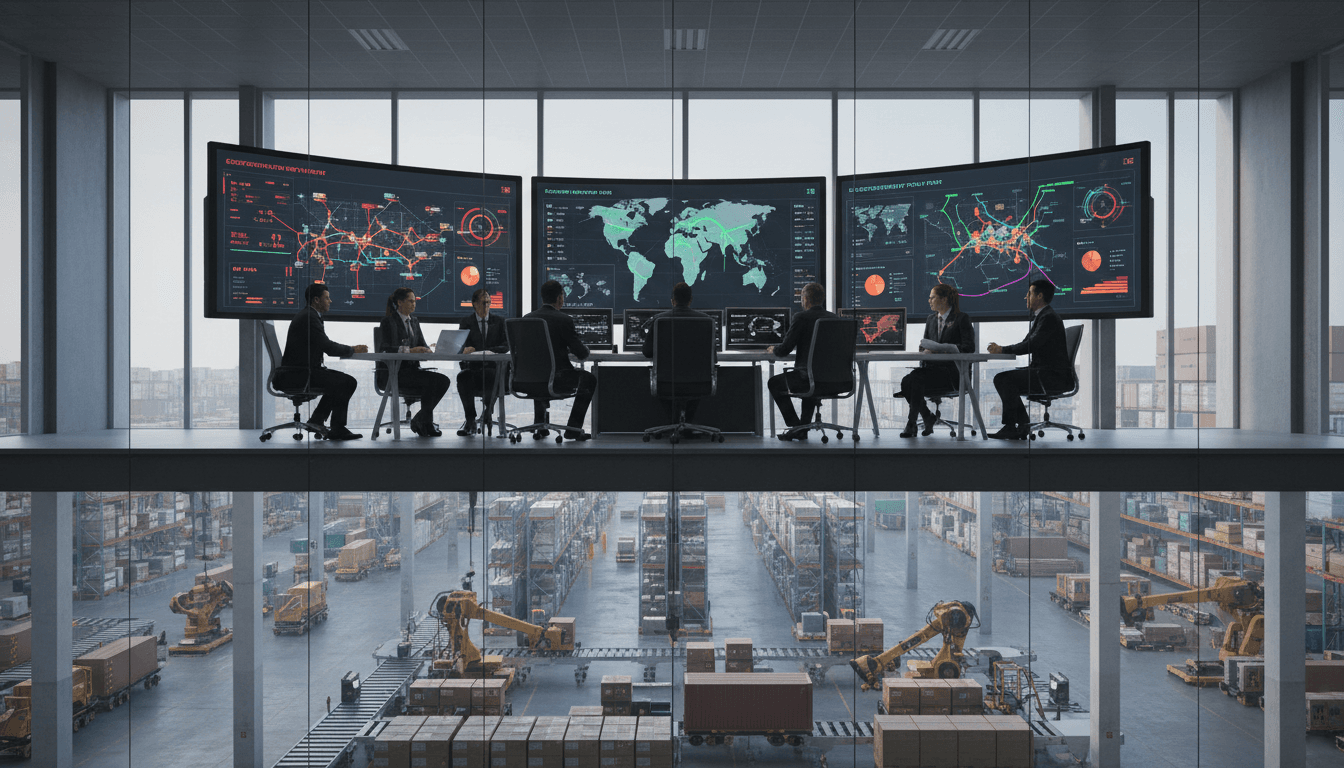
AI-Ready Incident Response for Supply Chain Continuity
A logistics network doesn’t “go down” like a normal IT system. It backs up. Yard slots fill. Trailers sit. Labor gets redeployed to the wrong work. And then the real damage starts: missed cutoffs, penalties, expediting, and churn.
That’s why incident response in transportation and logistics can’t be a binder on a shelf. It has to be an operational muscle—rehearsed, staffed, and instrumented with the same seriousness you give to peak season capacity planning. And in 2025, the teams that recover fastest are pairing solid business continuity planning with AI-driven threat detection and decision support.
This post is part of our AI in Cybersecurity series, focused on how AI helps security teams see attacks sooner, contain them faster, and keep the business moving when prevention fails. Because prevention will fail.
Incident response is operations, not IT
Incident response matters in supply chains because the blast radius isn’t limited to stolen data. When attackers touch systems like ERP, WMS, TMS, EDI gateways, or OT environments, the impact becomes physical: inventory can’t be found, loads can’t be tendered, and plants can’t sequence work.
Here’s the stance I’ll defend: a supply chain cyber incident is primarily an operations disruption with an IT cause. Treat it like an ops disruption and you’ll build better runbooks, better fallbacks, and better executive decision-making.
What’s typically at stake:
- Throughput: picking slows, wave plans fail, dock schedules collapse.
- Revenue: missed OTIF targets and chargebacks show up quickly.
- Safety: compromised OT or facility systems can create real hazards.
- Trust: customers don’t care about your root-cause analysis if you can’t ship.
AI fits here because it can connect weak signals across tools and partners, then push clear next actions to humans under pressure.
The supply chain “cascade” problem
In logistics, you rarely have a single point of failure—so you rarely have a single point of recovery.
One supplier’s compromised credentials can be used to access shared portals. One corrupted shipment manifest can misroute thousands of parcels. One ransomware event in a 3PL WMS can ripple into customer ERPs, carrier tenders, and customs documentation.
The goal isn’t perfect defense. The goal is controlled failure and rapid recovery.
The anatomy of a logistics cyber incident (and where AI helps)
Most cyber incidents in supply chain environments follow a predictable sequence. That’s good news: predictability makes response trainable.
A typical progression:
- Initial compromise (phishing, credential stuffing, exploited vulnerability, partner breach)
- Lateral movement (pivoting into ERP/WMS/TMS, directory services, integration middleware)
- Data exfiltration or manipulation (manifests, rate tables, banking info, customer PII)
- Operational disruption (ransomware, corrupted planning data, integration shutdown)
- Extortion / disclosure pressure
AI’s practical advantage is speed: it can spot patterns and anomalies faster than humans can correlate dashboards.
Detection: from “alerts” to “evidence”
Security teams don’t need more alerts. They need better evidence packaging.
AI-driven threat detection can:
- Correlate signals from SIEM, identity logs, endpoint activity, and network telemetry
- Flag “impossible travel” and unusual privilege escalation patterns
- Identify suspicious EDI/API behavior (e.g., out-of-pattern tender volumes)
- Detect anomalous warehouse device activity (rugged scanners, IoT gateways)
The outcome you want: a short list of high-confidence incidents with a probable narrative, not 4,000 low-confidence pings.
Containment: shrinking the blast radius fast
Containment is where supply chain teams usually hesitate—because isolating systems can stop shipping.
AI decision support can help you answer containment questions in minutes, not hours:
- Which integrations are feeding corrupted orders into the WMS?
- Which user accounts show behavior consistent with token theft?
- Which site (or region) is the “source” vs. a “victim” of lateral movement?
A good rule: contain at the smallest unit that breaks the attacker’s path, not the broadest unit that protects your comfort.
Build an incident response playbook that matches real logistics workflows
A usable incident response playbook is role-specific, time-boxed, and tied to business priorities.
If your playbook reads like a generic IT checklist, it won’t survive first contact with a live warehouse.
What “good” looks like (and what to insist on)
Your playbook should clearly define:
- Detection & identification: who declares an incident, using what thresholds
- Containment protocols: what can be isolated without approval vs. what needs executive signoff
- Eradication steps: credential resets, malware removal, token revocation, patch windows
- Recovery sequencing: what comes up first (identity, integrations, WMS, label printing, carrier APIs)
- Post-incident review: root cause plus operational lessons (manual workarounds, comms timing)
And it must assign owners:
- Incident commander (decision-making)
- SOC/security lead (technical triage)
- IT ops lead (systems restoration)
- Warehouse/transport ops lead (manual process control)
- Legal/compliance
- Communications/customer leadership
AI belongs in the playbook, not “future state” slides
If you’re using AI for cybersecurity, be explicit about where it plugs in:
- Automated enrichment of incidents (asset criticality, known vulnerabilities, identity context)
- Suggested containment actions with risk scoring
- Real-time timeline generation for exec updates and regulatory reporting
- Natural-language summaries for non-technical stakeholders
A simple metric I like: time-to-usable-brief (how long until leadership gets a clear, accurate story and a decision menu). AI can shrink that dramatically.
Cyber crisis simulations: the fastest way to find what’s missing
Paper plans don’t create muscle memory. Rehearsal does.
Most companies get simulations wrong by running them like an IT exercise. Logistics simulations must include operational constraints: labor planning, carrier commitments, service-level penalties, and customer communications.
Three simulation types worth running quarterly
-
Tabletop exercises
- Scenario: ransomware in a DC WMS two days before a major retail promo
- Goal: executive decisions, comms timing, operational fallback selection
-
Red-team/blue-team drills
- Scenario: compromised supplier credentials used to access a shared portal
- Goal: detection quality, containment speed, identity control validation
- Executive war games
- Scenario: multi-site incident with extortion pressure and partial data exposure
- Goal: align legal, PR, customer success, and ops leadership under time pressure
AI can enhance simulations too. You can generate branching scenarios, inject realistic log snippets, and test whether your team can interpret AI summaries correctly (critical skill).
Business continuity: define your minimum viable logistics
Business continuity planning works when it’s brutally specific about what you’ll keep running and what you’ll temporarily stop.
Two concepts should drive this:
- RTO (Recovery Time Objective): how fast a system/process must be restored
- RPO (Recovery Point Objective): how much data loss you can tolerate
In transportation and logistics, your RTO/RPO shouldn’t be set by IT tradition. They should be set by operational thresholds.
Continuity planning that actually works in a network
Start by defining your minimum viable logistics—the smallest set of capabilities you need to avoid catastrophic disruption.
For many shippers and 3PLs, that includes:
- Ability to receive orders (even if via batch/manual)
- Ability to pick/pack/ship at reduced throughput
- Label printing and carrier manifesting
- Customs clearance workflows (where applicable)
- Customer promise management (accurate ETAs and exceptions)
Then design your continuity plan around those outcomes:
- Redundant systems: failover for ERP/WMS/TMS where it’s justified
- Manual fallback processes: pre-printed forms, offline pick lists, manual appointment scheduling
- Alternate capacity: backup carriers, secondary warehouses, alternate ports, surge labor partners
AI adds value by optimizing the fallback.
If you lose a WMS at one site, AI-powered network optimization can help decide:
- Which orders to reroute to other DCs
- Which customers get partial shipments first
- Which SKUs to prioritize based on margin, penalties, and downstream risk
That’s the difference between “we’re down” and “we’re operating at 60%.”
Backups: immutable, tested, and aligned to operations
Backups are only useful if you can restore them fast enough to matter.
A practical standard for logistics environments:
- Immutable backups (resistant to ransomware tampering)
- Regular restore tests (not just “backup success” reports)
- Geographic separation (regional events happen)
- RTO/RPO alignment with peak season requirements, not average days
If your restore test takes 48 hours but your operation can’t tolerate 12 hours, you don’t have a backup strategy—you have a false sense of security.
Communication during a cyber event: speed beats perfection
Reputation damage in logistics usually comes from silence and inconsistency, not from admitting you have a problem.
Your communication plan should be pre-written and role-aligned:
- Internal: what employees do right now (don’t forward suspicious emails, stop using certain systems, use fallback channels)
- Customers/partners: what’s impacted, what isn’t, and when the next update will arrive
- Regulators: disclosure timelines and evidence requirements
- Media: one voice, factual statements, no speculation
AI can help draft updates faster, but humans must approve. The win is rhythm: predictable updates on a predictable cadence.
A realistic ransomware scenario (and the recovery choices that matter)
Consider a mid-sized logistics provider whose WMS gets encrypted during peak volume. Inbound still arrives, but the operation can’t locate inventory or release orders. Shipments pile up, customers start rebooking freight, and the help desk gets flooded.
The recovery actions that separate survivable from catastrophic:
- Restore WMS from immutable backups (and verify the restore point isn’t infected)
- Switch to manual fallbacks for the highest-priority lanes/customers
- Temporarily isolate integrations feeding orders until data integrity is confirmed
- Provide customers with accurate recovery timelines and constraints
- Run a post-incident executive exercise to harden decisions and shorten next time
Five days of disruption is still painful. But it’s survivable when you’ve rehearsed it.
Partner-integrated incident response is the next maturity step
Your security is only as strong as the connections you rely on. That’s not a slogan—it’s how supply chains work.
Build partner integration into your incident response plan:
- Shared threat intel and rapid partner alerts
- Mutual aid agreements (temporary capacity, alternate routes, overflow handling)
- Standardized playbooks and clear escalation paths
AI helps by normalizing and triaging partner signals—especially when you’re receiving alerts from dozens of vendors with different formats and maturity levels.
Resilience is strongest when partners coordinate response, not just prevention.
What to do next: a 30-day plan for AI-ready cyber resilience
If you want measurable progress in a month, do these in order:
- Map critical flows: identify the top 10 integrations and systems that keep freight and fulfillment moving.
- Define minimum viable logistics: decide what you’ll keep running during a cyber outage.
- Set RTO/RPO by operations: align recovery targets to service penalties and throughput needs.
- Run one executive tabletop: include ops, IT, legal, comms, and customer leadership.
- Pilot AI-driven triage in your SOC: focus on incident enrichment and time-to-usable-brief.
You’ll notice what’s missing quickly—and that’s the point.
Breach prevention will always be incomplete. The organizations that outperform are the ones that can detect, contain, and recover while competitors are still arguing about whether it’s “really an incident.”
If your 2026 logistics strategy includes AI optimization, don’t stop at forecasting and routing. Put AI to work in incident response and business continuity, where minutes matter and the cost of confusion is measured in missed trucks and lost customers.
What part of your network would hurt the most if it went dark for 24 hours—and do you know your first three moves if it happens tomorrow?