AI-driven threat detection can catch diplomatic-grade phishing chains—PDF lures, DLL sideloading, and stealthy C2—before they become full espionage incidents.
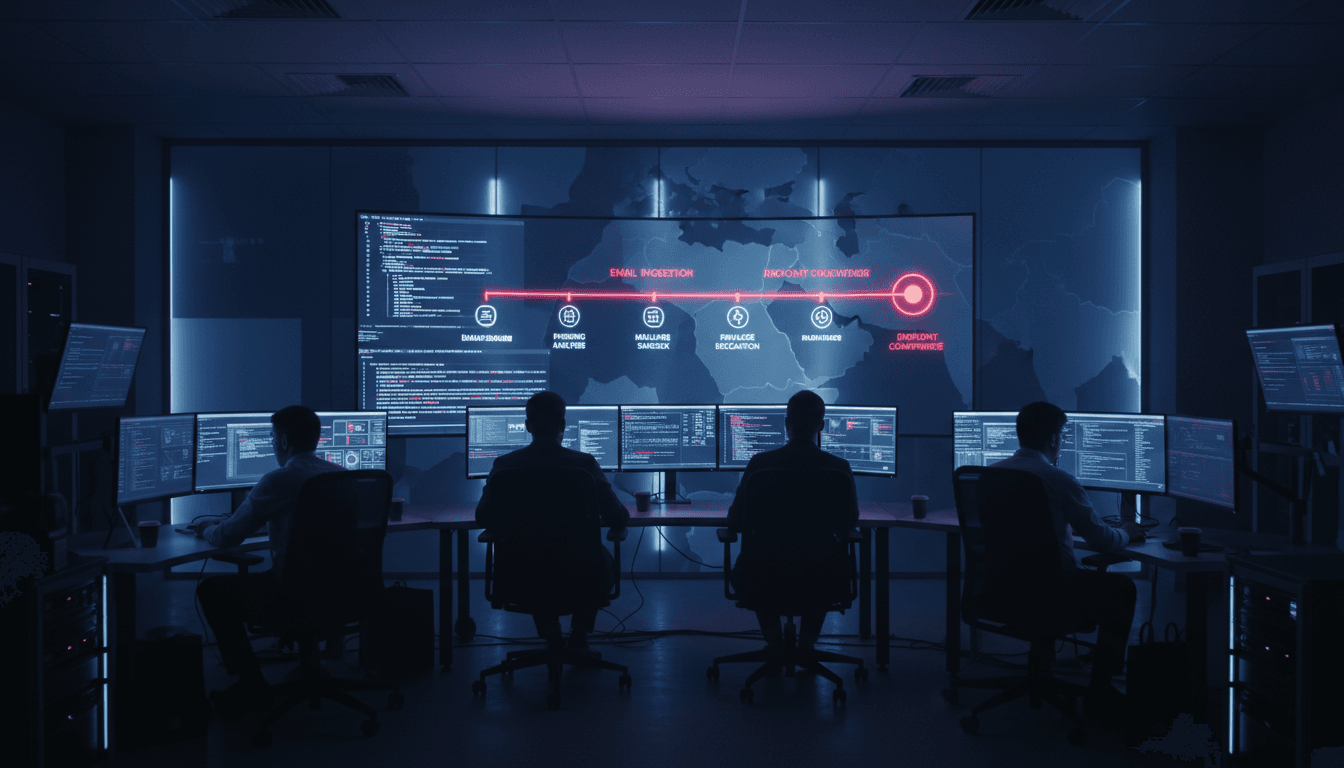
AI vs Diplomatic Phishing: Stop APT Probes Faster
Diplomatic inboxes don’t get “spray and pray” spam. They get messages designed to look routine, urgent, and credible—because the goal isn’t noise. It’s access.
That’s why the recent reporting on a Hamas-linked cyber-espionage group (tracked publicly as Ashen Lepus) matters beyond the region it targets. The group’s campaigns are a clean case study in what modern politically motivated intrusion looks like: patient phishing, staged malware, stealthy command-and-control, and “hands-on-keyboard” theft once a foothold is established.
Most companies get this wrong: they treat diplomatic-style phishing as a “government problem.” It isn’t. If you do business across borders, handle sensitive negotiations, support public-sector entities, or move money through politically exposed pathways, your environment can be a proxy target. This post breaks down the attack chain, why it’s getting harder to spot, and where AI in cybersecurity actually earns its keep—especially for real-time threat detection and response.
What this campaign shows about modern cyber espionage
Cyber espionage in 2025 looks less like a single “malware event” and more like a multi-step conversion funnel: lure, click, staging, stealthy persistence, then manual collection.
In the reported activity, victims receive phishing emails with PDFs themed around geopolitically relevant content. Following links in those PDFs leads to a file-sharing location hosting a compressed archive. If the user proceeds, the infection uses DLL sideloading—a tactic that abuses legitimate signed binaries to load a malicious library.
Here’s the part defenders should care about: these aren’t random choices. They’re deliberate moves to blend into normal enterprise telemetry.
Why the lure works (and why it’ll keep working)
The lures reference emotionally and professionally charged topics—conflict updates, policy memos, diplomatic briefings. That’s not clever. It’s practical.
Phishing resilience doesn’t fail because people are careless. It fails because:
- The content fits the recipient’s job (diplomats and government staff expect PDFs and briefings).
- The action requested is normal (open the document, download the attachment, review quickly).
- The payload path looks familiar (file-sharing services, archives, and “document viewers”).
Security awareness training helps, but it’s not enough when the attacker is writing for a specific role.
The technical shift: from “basic tools” to mature tradecraft
Researchers tracking this group have described an evolution from simple tooling to a newer malware suite with features that support stealth and evasion. In practice, that maturation usually shows up in three ways:
- Modular malware (loader → stager → backdoor → optional modules)
- Defensive evasion through living-off-the-land behavior (like DLL sideloading)
- Detection avoidance in content delivery (hiding payloads inside otherwise “normal” web artifacts)
If your detection strategy is still centered on “known bad hashes” and static signatures, this is exactly the sort of campaign that slips through.
Why defenders miss it: stealthy delivery beats signature-based controls
The reported malware delivery includes a technique that’s extremely common in modern intrusion: embedding payload data inside HTML and extracting it via code.
From a defender’s perspective, that means the network traffic can look like routine web access while the payload is effectively smuggled inside a page structure. Some campaigns go further by placing key artifacts inside commented-out sections or unusual tag structures—places many traditional tools don’t prioritize.
DLL sideloading is a reminder: “allowlisted” doesn’t mean safe
DLL sideloading works because the attacker executes a legitimate program that expects to load a DLL from a certain path. If a malicious DLL is placed there first, the legitimate binary loads it.
What changes operationally:
- Your EDR may record a trusted binary launching.
- The malicious library is not always a clean standalone executable.
- The behavior can resemble “normal application startup,” especially on endpoints with lots of line-of-business software.
That makes this a detection problem, not just a prevention problem.
The hard truth: malware families are less stable than your detections
One reason politically motivated groups get mileage out of modest tooling is that defenders often tune rules to yesterday’s attack patterns. When a group frequently tweaks encryption, delivery patterns, and C2 structures, signature-only coverage decays quickly.
AI-driven detection is valuable here precisely because it can focus on behavioral consistency even when the code changes.
Where AI in cybersecurity helps (and where it doesn’t)
AI can’t “solve” geopolitical targeting. It can, however, shorten the window between initial contact and containment.
The practical win is real-time anomaly detection across email, endpoint, identity, and network telemetry—especially when the intrusion chain uses otherwise legitimate tools.
1) AI for phishing detection: go beyond keywords and sender reputation
Most secure email gateways still overweight:
- known-bad domains
- sender reputation
- attachment scanning
That’s fine for commodity attacks. It’s weaker against spearphishing built for one ministry, one agency, or one vendor.
Modern ML-driven phishing detection adds signals such as:
- relationship anomalies (a “new” sender claiming an established internal workflow)
- content intent classification (is this email attempting to drive an external download action?)
- document and link chaining (PDF → link → archive → executable behavior)
A strong system doesn’t just flag the PDF. It flags the sequence.
2) AI for endpoint analytics: detect the sideloading pattern
For DLL sideloading, the indicator isn’t “a DLL exists.” It’s the combination:
- a signed/known binary starts from an unusual directory
- it loads a DLL from a writeable path (user profile, temp directories, downloads)
- it spawns child processes that don’t match baseline behavior
- it reaches out to a domain that’s new for that endpoint/user
AI-driven endpoint detection and response (EDR) can model these behaviors and surface them as a coherent incident rather than four disconnected alerts.
3) AI for network detection: find payload hiding and odd C2 semantics
When payloads are embedded in HTML, defenders can miss it if they only inspect:
- file downloads
- obvious binaries
- known exploit patterns
AI-based network detection can help by spotting:
- unusual entropy or encoded blobs inside web responses
- repeated access to “content pages” that don’t match user browsing profiles
- rare domain access by diplomatic units or executive support staff
This matters most for sensitive teams where browsing patterns are stable and deviations are meaningful.
4) AI for SOC automation: reduce the time-to-triage
I’ve found that the biggest advantage isn’t “AI finds everything.” It’s that AI helps analysts stop drowning.
A practical SOC workflow for this kind of intrusion uses AI to:
- cluster alerts into a single incident narrative
- summarize the kill chain (phish → archive → sideloading → C2)
- recommend containment actions (isolate host, revoke tokens, block domain)
- prioritize by asset criticality (diplomatic mailboxes and document repositories first)
If your team needs 6 hours to piece together the story, the attacker gets 6 hours of quiet access.
A defensive playbook for diplomatic-grade phishing (enterprise edition)
You don’t need a foreign ministry to justify better defenses. You need realistic assumptions: spearphishing will land, someone will click, and stealth will be used.
Start with the “blast radius” controls that actually work
These controls reduce impact even when initial prevention fails:
-
Strong identity controls
- phishing-resistant MFA for high-risk users
- conditional access policies that block risky sign-ins
- rapid token revocation workflows
-
Hardening for DLL sideloading paths
- restrict write access to directories where trusted apps load libraries
- monitor high-risk LOLBin usage and unusual module loads
-
Egress controls and DNS visibility
- block newly registered domains where appropriate
- alert on rare domain access from VIP or sensitive subnets
-
Attachment and archive policy tuning
- detonate archives from external sources (RAR/ZIP) in a sandbox
- enforce “download to open” restrictions for high-risk roles
Add AI where it improves speed and accuracy (not where it’s trendy)
If you’re planning AI security investments for 2026 budgets, prioritize use cases that map to this campaign style:
- AI-powered email security that understands link chains and impersonation patterns
- behavioral EDR tuned for module-load anomalies and signed-binary abuse
- UEBA (user and entity behavior analytics) focused on rare access to sensitive repositories
- SOAR with AI summarization to accelerate triage and reduce analyst fatigue
AI is most valuable when it’s connected to response: isolate endpoint, reset credentials, kill sessions, block C2.
“People also ask”: Could AI have stopped this before compromise?
Yes—sometimes. AI can stop it earlier if:
- it detects the phishing lure and blocks it before delivery
- it flags the external download chain as suspicious
- endpoint analytics catches sideloading at execution time
No—sometimes. If the attacker’s initial step looks indistinguishable from legitimate behavior, AI might only flag it once the backdoor begins communicating or the account starts behaving oddly.
That’s still a win if your response is fast.
“People also ask”: What’s the first telemetry source to improve?
If you can only fix one thing, fix identity telemetry and response.
Phishing is often a means to credential theft, mailbox access, document access, and session hijacking. Strong identity controls combined with rapid revocation and high-fidelity sign-in analytics consistently reduce damage.
Why this matters now: politically motivated targeting is spreading
This campaign’s reported expansion to a wider set of regional targets is the warning sign. The moment a group proves it can run stable phishing operations and maintain C2 without constant disruption, it tends to:
- broaden its victim list
- diversify lure themes
- reuse its toolchain in new contexts
That’s how “regional espionage” becomes “global risk” for multinational orgs, NGOs, think tanks, universities, and vendors supporting public-sector workflows.
For the AI in Cybersecurity series, this is the point: AI-driven threat detection isn’t a shiny add-on. It’s a scaling mechanism. Attackers scaled their operations; defenders have to scale their detection and response.
A useful rule: if an attack chain uses mostly normal enterprise behaviors, you need behavior-based detection—not just indicator-based blocking.
Next steps: turn this case study into a test you can run
If you want to make this actionable next week (not next quarter), run a tabletop or purple-team exercise based on the chain described:
- simulate a spearphishing email to a high-risk group (without real payloads)
- test whether your tooling flags PDF → link → archive behavior
- validate detections for suspicious module loads and DLL sideloading-like patterns
- measure time-to-containment: isolate host, revoke tokens, block domains
If your time-to-containment is measured in hours, you’re granting an espionage team exactly what it wants.
Politically motivated cyberattacks aren’t slowing down in 2026 planning cycles. The open question is whether your defenses can spot the quiet parts—the benign-looking pages, the signed binaries, the “normal” downloads—fast enough to matter.