Afripol’s push for cross-border cooperation shows why cyber defense needs AI. Learn practical ways to use AI for threat intel sharing and faster response.
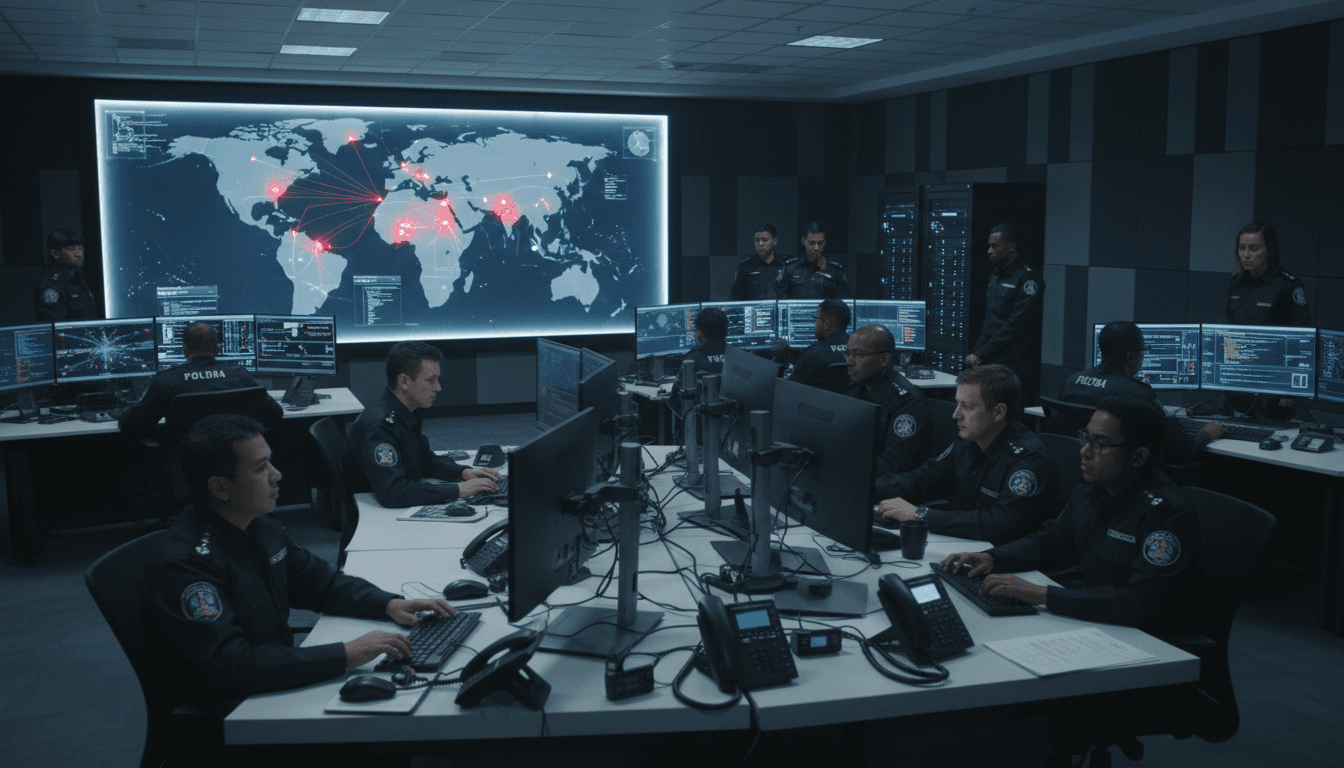
AI-Powered Cyber Cooperation: Lessons From Afripol
African law enforcement agencies reported meaningful progress this month: more than 40 countries convened to tighten cross-border coordination against cybercrime. That’s not just bureaucracy. It’s a direct response to a hard reality—the average African organization faced 3,153 cyberattacks per week in 2025, which is 61% higher than the global average.
Here’s what I like about the Afripol story: it’s a clear sign that the “every country for itself” model is finally failing fast enough to be replaced. Cybercriminal syndicates already operate like a networked business—shared tools, shared infrastructure, shared playbooks. If defenders are still stuck with fragmented evidence standards, slow mutual legal assistance, and inbox-to-inbox intel sharing, they’re going to lose.
This post sits in our AI in Cybersecurity series for a reason. The missing ingredient in most regional cooperation efforts isn’t goodwill—it’s operational speed. AI can help close that gap by triaging alerts, correlating cases across borders, spotting anomaly patterns in fraud and malware campaigns, and packaging evidence so prosecutors can actually use it.
Why regional cybercrime demands regional operations
Cross-border cybercrime is now the default, not the exception. When a phishing kit is hosted in one country, used by operators in another, and paid out through accounts in a third, treating investigations as local incidents is a guaranteed dead end.
Afripol’s recent focus—standardizing equipment and infrastructure, expanding training for cyber investigations, and improving data-informed policing—targets the biggest structural blockers that keep multi-country cases from moving.
The three gaps cybercriminals exploit
1) Legal mismatch Different definitions of cyber offenses, inconsistent evidentiary requirements, and varying retention rules make it hard to build a single narrative prosecutors can carry.
2) Technical mismatch Even when agencies want to cooperate, they may not share compatible tooling for imaging devices, preserving logs, or capturing chain-of-custody details.
3) Time mismatch Attackers move in minutes. International coordination often moves in weeks. The longer the gap, the more infrastructure disappears and the colder the trail gets.
A line from the reporting captures the shift well: five years ago, parallel investigations “went nowhere.” Now, agencies are at least talking to each other—and that’s the foundation of real operational change.
Where AI fits: turning cooperation into real-time defense
AI can’t fix jurisdictional politics. But it can make cooperation practical by reducing the cost (and time) of analysis, correlation, and evidence preparation.
The useful frame is this: regional cooperation is a coordination problem, and AI is a coordination accelerator.
AI use case #1: Cross-border case correlation (stop treating attacks as “unrelated”)
A common failure mode in cyber investigations is “incident isolation.” One country sees credential stuffing. Another sees SIM swap fraud. A third sees mule accounts. Each case gets handled separately, so nobody sees the syndicate.
AI-driven correlation helps by:
- Clustering indicators (domains, wallets, device fingerprints, malware families) across investigations
- Matching tactics and sequences (initial access → persistence → monetization)
- Flagging likely shared operators based on behavioral patterns
If you’ve ever watched analysts manually compare cases in spreadsheets, you know why this matters. AI doesn’t replace investigative judgment; it keeps teams from missing the obvious connections because they’re drowning in volume.
AI use case #2: Faster, more consistent digital evidence packaging
Afripol’s emphasis on standardizing digital evidence procedures is a big deal. A laptop seized in one country should be usable in court somewhere else—but that only works if collection, documentation, and integrity controls are consistent.
AI can strengthen that pipeline by:
- Auto-generating evidence summaries from forensic artifacts (with citations to artifact paths and timestamps)
- Extracting timelines from chat logs, email dumps, and device event histories
- Highlighting gaps in chain-of-custody documentation before the case reaches court
One practical stance: AI should be used to produce drafts and checklists, not final truth. Prosecutors and investigators still need to validate outputs, but the time saved on first-pass documentation is real.
AI use case #3: Fraud and anomaly detection tuned for mobile-first ecosystems
The article highlights Africa’s rapid digital adoption, often mobile-led. That changes the threat profile. Mobile money fraud, account takeover, synthetic identities, and social engineering thrive in ecosystems where devices, SIMs, and identity proofing can be inconsistent.
AI helps here in two ways:
- Behavioral anomaly detection: spotting “impossible travel,” device swaps, abnormal transaction graphs, and unusual session patterns
- Entity resolution: linking identities across partial data (names, phone numbers, devices, accounts) to reveal mule networks
If you want one clear objective metric for AI value in fraud prevention, use this:
Reduce time-to-detection and time-to-freeze.
Stopping a fraud ring is often less about perfect attribution and more about quickly disrupting cash-out paths.
The hard part: AI won’t fix weak sharing models
Most organizations get this wrong: they buy AI tooling before they’ve agreed on what they can share, how they’ll share it, and how fast they need to act.
Before advanced analytics, you need a baseline operating model that doesn’t collapse under real-world constraints like data sensitivity and national regulations.
What “good” intelligence sharing looks like in practice
A functional regional model usually includes:
- Tiered sharing levels (public / restricted / confidential) with clear rules
- Standard schemas for indicators, case metadata, and evidence notes
- Secure channels for operational comms (not consumer messaging apps)
- Defined SLAs for urgent requests (hours, not weeks)
- Feedback loops so shared intel is validated and improved
AI can automate parts of this—like redaction, deduplication, translation, and prioritization—but it can’t invent governance after the fact.
“People also ask”: Doesn’t AI increase risk when sharing data?
Yes—if you do it carelessly.
The safer approach is to treat AI as an analysis layer that sits behind access controls:
- Keep sensitive raw data local when possible
- Share derived signals (hashes, features, anonymized patterns) when appropriate
- Use role-based access and strict audit logging
- Separate training environments from operational casework
A good rule: don’t share what you can’t explain in court. If AI produces a lead, you need a defensible path from lead → evidence.
A practical blueprint: “AI-ready” cooperation for 2026
Afripol’s meeting agenda—training, tools, infrastructure, and data-driven policing—maps neatly to a 2026 plan that’s realistic for agencies and also relevant for enterprises supporting public-private partnerships.
Step 1: Standardize the minimum viable evidence kit
Start with a baseline that every participating agency can implement:
- Common chain-of-custody templates
- Standard device imaging and hash verification steps
- Log preservation checklists for cloud and telecom providers
- A shared glossary for offense types and investigation stages
This is boring on purpose. It’s also where cases survive or die.
Step 2: Build an AI-assisted triage workflow (not an “AI dashboard”)
If your AI program ends with a dashboard, you’re going to disappoint everyone.
Instead, implement workflows that:
- Ingest alerts and reports
- Normalize them into a shared schema
- Score urgency (impact × confidence × spread potential)
- Route tasks to investigators with context attached
The goal is fewer handoffs, faster decisions, and fewer “lost” incidents.
Step 3: Train cyber units on what AI outputs mean
Training can’t be an annual seminar. It needs repetition and practical drills.
Focus areas that consistently pay off:
- Interpreting model confidence and false positives
- Preserving explainability artifacts (why the system flagged it)
- Handling adversarial behavior (attackers trying to poison signals)
- Writing reports that translate technical findings into prosecutable narratives
I’ve found the best training format is a monthly “case lab”: one real incident, one shared playbook, one set of lessons learned.
Step 4: Measure outcomes that matter to investigators and prosecutors
AI success metrics should map to operational wins:
- Time from report → first action
- Time from first action → infrastructure disruption
- Cases correlated across borders (count and quality)
- Evidence rejection rate in court due to procedural issues
- Amount of assets seized or fraud losses prevented
If you can’t measure any of that, you don’t have an AI program—you have software spend.
What security leaders can learn from Afripol (even outside Africa)
Afripol’s progress is a mirror for enterprises and governments everywhere: cyber defense is increasingly a coalition sport. The same friction points show up in multi-subsidiary companies, cross-industry ISACs, and public-private task forces.
Three stances worth adopting:
- Cooperation beats perfection. A workable shared procedure today is better than an ideal framework next year.
- AI should compress decision cycles. If it doesn’t speed triage and response, it’s not doing the job.
- Evidence discipline matters. The ability to prosecute (or at least disrupt) depends on integrity, documentation, and repeatability.
Regional collaboration is getting stronger. Criminal groups are also getting smarter, faster, and increasingly AI-enabled. That’s the race.
If you’re planning your 2026 security operations roadmap, here’s the question I’d keep on the whiteboard: What would we be able to stop if we could share signals and act across boundaries in hours instead of weeks?