AI-driven security helps CISOs and COOs protect uptime with clearer incident decisions, automated triage, and service-level resilience playbooks.
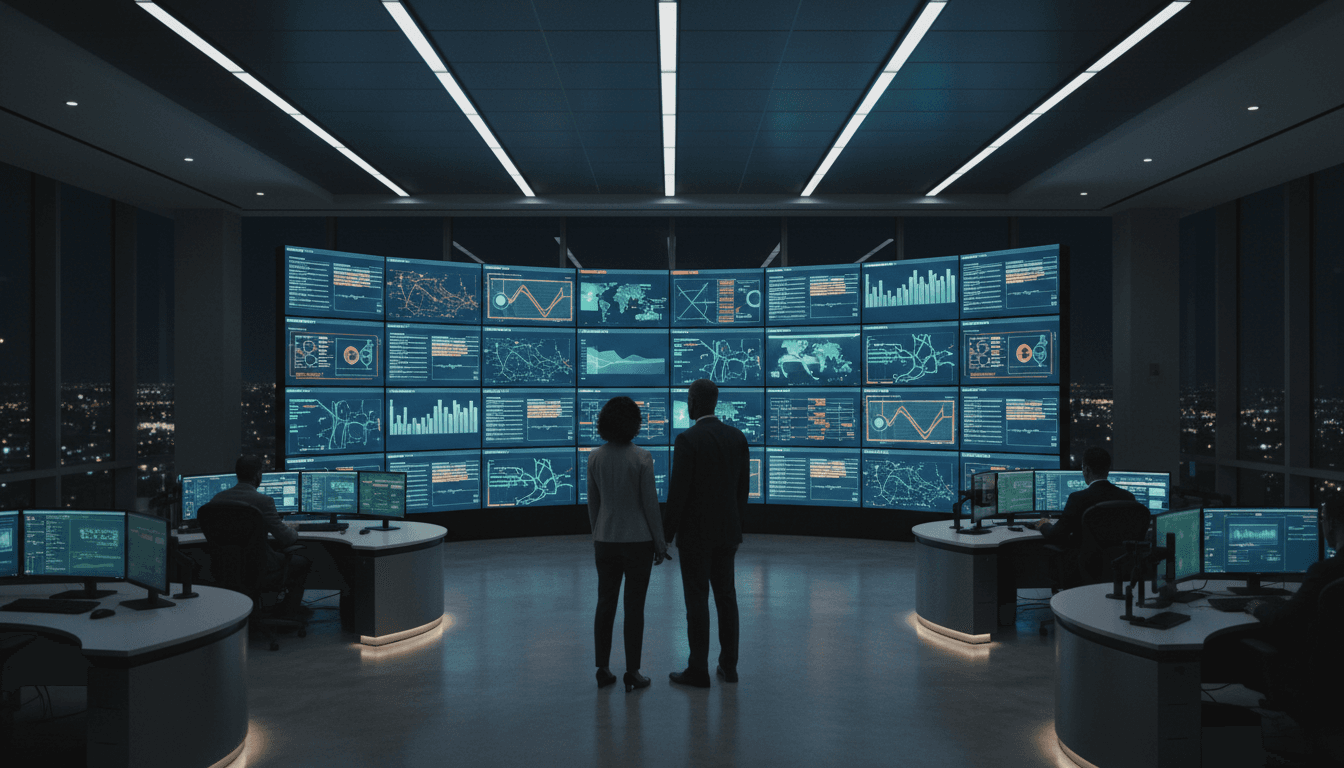
CISO-COO Alignment: AI Security for Uptime & Resilience
A ransomware event doesn’t start as a “security problem.” It starts as a production stop, a frozen order queue, a call center that can’t pull customer records, or a warehouse that can’t print labels. That’s why the CISO–COO relationship is now one of the most operationally consequential partnerships in the enterprise.
Most companies still treat it like an occasional check-in—until something breaks at 3 a.m. Then everyone discovers the same uncomfortable truth: cybersecurity and operational excellence are now the same conversation, just with different vocabulary.
This post is part of our AI in Cybersecurity series, and I’m going to take a stance: the fastest way to make the CISO–COO partnership real is to put AI-driven security telemetry in the language of operations—uptime, throughput, recovery time, and customer impact—while automating the work that burns teams out during incidents.
The CISO–COO partnership is about one thing: keeping the business running
Operational resilience isn’t a slogan; it’s a measurable capability. The COO is accountable for delivery—margins, efficiency, and uptime. The CISO is accountable for reducing the probability and blast radius of cyber events. When the business is digital (which it is), those accountability lines overlap.
Here’s the practical framing that aligns both leaders:
- COO question: “How do we maintain service levels under stress?”
- CISO question: “How do we prevent, detect, contain, and recover from attacks?”
- Shared outcome: “How do we minimize customer impact and revenue loss when something goes wrong?”
That shared outcome is why security disruption is often a top operational risk. If containment requires shutting down systems the business depends on, the company needs a pre-negotiated way to make that trade-off quickly.
Snippet worth remembering: If your incident response plan can’t answer “what keeps shipping?”, it’s not an operations plan.
Why AI makes this relationship easier (and more accountable)
AI doesn’t fix politics. It fixes friction. And friction is what kills you during a real incident: too many alerts, not enough clarity, and decisions made with partial information.
A well-designed AI security layer helps the CISO and COO agree on reality faster by:
Turning technical signals into operational impact
Security teams speak in IOCs, CVEs, and lateral movement. Operations teams speak in missed SLAs and backlog. AI-driven analytics can map threats to business services so the conversation becomes:
- “This anomaly affects the payment workflow” (not “there’s suspicious auth activity”).
- “If we isolate this segment, order processing drops by 30% for 45 minutes.”
That translation matters because the COO doesn’t need every packet detail—they need a credible impact forecast.
Compressing time-to-decision in fast incidents
In many organizations, the longest delay isn’t detection—it’s triage and alignment:
- Is this real or noise?
- How far did it spread?
- What do we shut down first?
AI helps by correlating events across endpoints, identity, network, cloud, and SaaS to produce fewer, higher-confidence incident narratives. The value isn’t “more alerts.” It’s a shorter path from signal → story → action.
Automating the repetitive work that steals attention
During disruptive events, teams lose hours on tasks that should be instant:
- collecting logs and evidence
- enriching alerts with context
- identifying impacted assets and owners
- generating executive updates
Automation and agent-assisted workflows (with human approval gates) reduce that load. For the COO, that means fewer “we’ll know in two hours.” For the CISO, it means analysts aren’t drowning.
Build the relationship before the crisis—then encode it into playbooks
A common failure pattern: the CISO and COO meet during a crisis for the first time as decision partners. That’s when you get avoidable conflict:
- “We can’t patch now; downtime risk.”
- “If we don’t patch, ransomware risk.”
The fix is not more meetings; it’s structured planning that ends in executable decisions.
A practical cadence that works
If you want this partnership to survive pressure, set it up like an operating rhythm:
-
Monthly service-risk review (45 minutes)
- Top 5 business services and their cyber dependencies
- Recent incidents and near-misses
- Changes in architecture or vendors that shift risk
-
Quarterly resilience metrics review (60 minutes)
- RTO/RPO by service (what you target vs. what you can actually achieve)
- Mean time to detect (MTTD) and mean time to respond (MTTR)
- Patch/mitigation backlog tied to critical operational systems
-
Semiannual tabletop with operations specificity (90–120 minutes)
- Not just comms and legal steps
- Actual operational decision trees and fallback workflows
The biggest improvement I’ve seen comes from one simple move: COO-led prioritization of “crown jewel processes” (not just crown jewel data). Data matters, but operations fail when processes fail.
Encode authority before you need it
One question causes more paralysis than it should:
Who has final authority to shut down systems to contain an attack?
Write it down. Make it scenario-based:
- If lateral movement is detected in a non-critical segment, CISO can isolate immediately.
- If containment impacts Tier-1 revenue services, require a joint CISO–COO decision (with a named exec delegate for after-hours).
- If safety or regulatory exposure is implicated, pre-authorize shutdown.
That isn’t bureaucracy. It’s speed.
What a “COO-ready” incident response plan looks like
Most IR plans are heavy on roles and communications and light on operational reality. A COO-ready plan is specific enough that someone can follow it at 2 a.m.
The minimum operational detail you need
For each Tier-1 business service, document:
- Failover capability: yes/no, to where, and who triggers it
- Activation time: realistic, tested time (not aspirational)
- Capacity during failover: 100%? 70%? what breaks first?
- Manual workaround: what the team does if systems are down
- Customer messaging triggers: what gets communicated at what downtime threshold
- Revenue and SLA impact timeline: what happens at 30, 60, 240 minutes
AI strengthens this plan when it’s connected to your environment and tuned to these services. Instead of “we think finance is affected,” you get service-level blast radius estimates based on dependency graphs and real telemetry.
Tabletop exercises should test trade-offs, not trivia
A good tabletop forces hard calls:
- “Do we isolate identity services if it blocks warehouse authentication?”
- “Do we keep taking orders if fulfillment is degraded?”
- “What’s the maximum tolerable downtime before we declare disaster recovery?”
If the exercise never makes leaders uncomfortable, it’s probably not realistic.
Three AI-driven moves that protect operational excellence right now
AI in cybersecurity can sprawl quickly. If you’re trying to drive executive alignment (and not just buy tools), focus on these three moves because they connect cleanly to COO outcomes.
1) Continuous anomaly detection tied to business services
Goal: Catch early-stage intrusion and fraud patterns before they become outages.
What to implement:
- behavioral baselines for identity and privileged access
- anomaly detection for service-to-service traffic
- alerts enriched with asset criticality (Tier-1 vs. Tier-3)
What the COO gets: fewer “mystery outages” and earlier warning when a critical workflow is being targeted.
2) Automated triage and incident summarization for faster decisions
Goal: Reduce MTTR by reducing cognitive overload.
What to implement:
- alert correlation across endpoint, identity, cloud, and network
- AI summaries that answer: what happened, what’s impacted, what should we do next
- human approval steps for containment actions
What the COO gets: decision-grade updates that don’t require them to translate security jargon in real time.
3) Resilience reporting that connects controls to uptime
Goal: Make cyber investment discussions operational, not abstract.
What to implement:
- dashboards that map controls to services (e.g., EDR coverage on Tier-1 hosts)
- scenario modeling (e.g., ransomware on ERP: expected downtime with/without segmentation)
- maintenance window planning tied to risk reduction
What the COO gets: a way to justify planned downtime (patching, segmentation, access changes) by showing it prevents larger unplanned outages.
“People also ask” (and the answers you can use in exec conversations)
How does AI improve operational resilience in cybersecurity?
AI improves operational resilience by detecting anomalies earlier, correlating signals into actionable incidents, and automating triage so teams can contain threats faster with less downtime.
What should CISOs and COOs measure together?
They should jointly measure service-level RTO/RPO, MTTR for Tier-1 incidents, control coverage on critical assets, and downtime avoided through planned maintenance.
Where does AI introduce risk for operations?
AI introduces risk when it’s used for fully autonomous response without guardrails, when models are trained on sensitive data without controls, or when “AI outputs” replace validated evidence. The fix is strict permissions, audit trails, and human approval for high-impact actions.
The stance I’ll leave you with
The CISO–COO partnership works when it stops being a relationship and starts being a shared operating system: clear priorities, rehearsed decisions, and metrics tied to business services.
AI makes that operating system practical. It turns scattered security signals into operational clarity, and it automates the repetitive work that slows response when minutes matter.
If you’re building your 2026 resilience plan right now (and you should be—year-end planning is where budgets and priorities get set), pick one Tier-1 service and do a joint CISO–COO sprint: map dependencies, define shutdown authority, run a tabletop, and instrument it with AI-driven monitoring that reports in uptime terms.
What would change in your incident response decisions if every alert arrived with a clear blast-radius estimate and a tested fallback plan attached?