Fix same-day delivery CX failures with AI orchestration, clear order summaries, and fewer duplicate notifications—so your contact center handles fewer WISMO tickets.
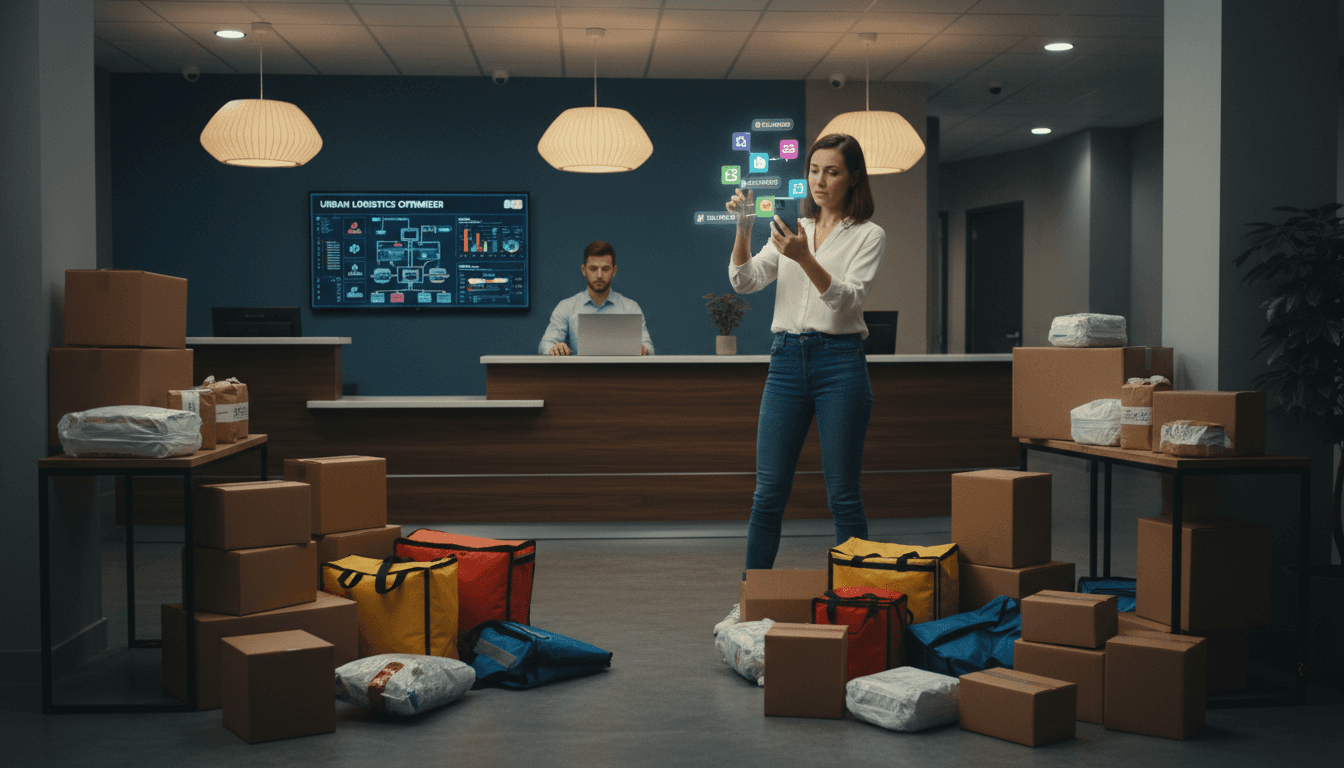
Same-Day Delivery CX: Fix Breakdowns With AI
Same-day delivery doesn’t fail quietly. When it goes wrong, it tends to go wrong loudly—in the form of frantic customers, overflowing inboxes, angry agents, and refund requests that cost more than the order itself.
A real example: a customer tries to update a payment method, can’t get any error message, finally checks out through another option… and then gets bombarded for hours with updates from multiple drivers, multiple store locations, and multiple receipts. The order technically “arrived,” but the experience felt broken.
For leaders in customer service and contact centers, this isn’t just a logistics problem. It’s an orchestration problem—across inventory, fulfillment, messaging, and support. And it’s exactly the kind of messy, real-time complexity where AI in customer service can reduce chaos: fewer contacts, fewer escalations, better containment, and more loyalty.
Why same-day delivery becomes a contact center problem
Same-day delivery is a promise with a ticking clock. The moment the promise looks shaky, customers don’t call the warehouse—they call you.
Here’s what I’ve seen across retail and delivery-heavy brands: operational issues turn into customer service volume because customers have only one place to go for clarity. Every missing error message, duplicate notification, or split shipment is another reason a customer contacts support.
The hidden cost: “Where is my order?” is only the beginning
WISMO (“Where is my order?”) isn’t one question—it’s a cluster:
- “Why am I getting four tracking links?”
- “Is this a scam?”
- “Am I being charged multiple times?”
- “Can I change the address?”
- “One item arrived… where’s the rest?”
When systems don’t explain what’s happening, the contact center becomes the interpreter. That’s expensive.
Seasonal pressure (December makes this worse)
As of mid-December 2025, customers are at peak expectations: holiday orders, gifting deadlines, weather disruptions, staffing strain, and higher anxiety. If your same-day delivery experience is confusing in April, it’s brand-damaging in December.
Step 1: Fix the “non-happy path” (and stop creating avoidable contacts)
The fastest way to reduce delivery-related tickets is to stop manufacturing them at checkout. Broken payment forms and silent errors are contact center volume generators.
When a customer can’t add a card and sees no error message, they don’t think, “Minor bug.” They think, “This company can’t be trusted with my payment.” Then they either abandon the cart or contact support.
What to implement
1) Field-level error handling that actually helps
Customers need specific guidance. “Something went wrong” is useless. Better:
- “Card number is missing a digit”
- “ZIP code doesn’t match billing address”
- “CVV must be 3 or 4 digits”
2) Mobile-first QA, not desktop-only QA
Same-day delivery orders are often placed on mobile while customers are commuting, working, or doing errands. If your forms break on mobile, you’ll feel it in your inbound queue.
3) AI-assisted defect detection (practical, not flashy)
AI can help you find these issues sooner by:
- Clustering session replays and rage-click patterns by page element
- Flagging spikes in “payment failed” events by device/OS/app version
- Summarizing customer verbatims from chat/calls into “top failure reasons”
A simple rule: if customers are repeating the same complaint, treat it like telemetry.
Step 2: Summarize the order like you respect the customer’s time
If an order is split across stores or drivers, customers can live with it—if you explain it clearly. The experience falls apart when customers have to assemble the truth from a pile of texts, emails, and receipts.
An order summary is not a “nice-to-have.” It’s the difference between calm and panic.
What customers need in one place
Create a single “source of truth” that answers:
- How many shipments are coming? (e.g., “3 deliveries”)
- Which items are in each delivery?
- What’s the ETA for each?
- What’s out of stock or substituted?
- What’s the total charge and breakdown?
Make that view available:
- In the app
- On the website account page
- In one consolidated email (not five)
Where AI fits
AI can generate dynamic order summaries that stay readable even when operations are messy:
- Natural-language explanations (“Your order is split because Item B is only available at Store 4.”)
- Auto-updates when inventory changes
- Proactive “exception banners” when something deviates (delay, partial fulfillment, cancellation)
This reduces contacts because customers stop guessing.
Step 3: Use AI orchestration to stop notification spam
Duplicate notifications are a self-inflicted wound. If a customer opts into SMS, email, and push notifications, it doesn’t mean they want the same message three times.
In fact, over-notifying creates a new kind of ticket: “Make it stop.”
A better approach: channel strategy by urgency
Treat messaging like triage:
- Push: real-time updates (driver nearby, delivery completed)
- SMS: time-sensitive exceptions (address issue, failed delivery attempt)
- Email: receipts, full order summary, post-delivery follow-up
Then add suppression rules:
- If push delivered, don’t send SMS for the same event
- If an email summary goes out, suppress item-level duplicates for X hours
- If the customer clicked the tracking link recently, reduce “approaching” pings
What AI orchestration actually does (in plain terms)
In contact center language, think of this as next-best-message plus frequency capping.
AI can:
- Predict the best channel per customer (based on open/click behavior)
- Detect message duplication across providers (brand + delivery partner)
- Adjust cadence when a customer shows frustration signals (rapid app opens, repeated tracking refreshes, negative sentiment in chat)
This is where sentiment analysis becomes practical. If a customer’s messages read like escalating anxiety, send one clear explanation—not 15 “approaching” alerts.
One-liner worth keeping: Every duplicate notification is a reminder that your systems aren’t talking to each other.
Step 4: Streamline fulfillment (or at least explain the trade-offs)
Fulfilling one order from five locations is operationally expensive and emotionally exhausting for the customer. Even when everything arrives, the customer feels like they were put in the middle of your internal complexity.
If you can’t always fulfill from one store, you still need to design for it.
Practical fulfillment improvements
1) Smarter sourcing rules
Prioritize:
- Single-store fulfillment when possible
- Two-store max before you prompt the customer
- Distance limits (don’t send one item across the city)
2) Customer-controlled choices
When inventory is fragmented, let customers decide:
- “Get everything today (3 deliveries)”
- “Get everything together tomorrow (1 delivery)”
- “Swap item X for available alternative”
Customers don’t hate trade-offs. They hate surprises.
Where predictive analytics pays for itself
Predictive analytics can reduce split shipments by forecasting:
- Which SKUs are likely to go out of stock today
- Which store will miss pick-and-pack SLAs by hour
- Which delivery zones are at risk (traffic, weather, driver supply)
Then you route orders to the store most likely to complete them on time, not merely the store that has one item on the shelf.
For the contact center, this reduces “exception volume”—the hardest, slowest tickets that blow up handle time.
What contact centers should measure (so the fixes stick)
If you only track on-time delivery, you’ll miss the customer experience breakdowns that generate contacts.
Track these operational-to-service metrics weekly:
- WISMO contact rate per 1,000 orders
- Duplicate notification rate (events sent per order, by channel)
- Split-shipment rate (deliveries per order)
- Digital containment rate for delivery issues (chatbot/self-serve success)
- Time-to-clarity: how fast the customer can understand what’s happening (proxy: tracking page exits, repeated visits, and “where is it” intents)
If you’re running a CCaaS platform, pair these with:
- Average handle time for delivery exceptions
- Escalation rate from bot to human on delivery intents
- Repeat contact within 48 hours for the same order
A practical “first 30 days” plan (that doesn’t require a full replatform)
If you want fewer delivery-driven tickets before Q1 ramps up, focus on changes that don’t require rewriting everything.
- Fix silent form failures (payment + address + promo codes). Make errors visible, specific, and test on mobile.
- Create a consolidated order status page that lists shipments, items, and ETAs in plain language.
- Add notification suppression: one channel per event, plus frequency caps.
- Stand up an AI triage layer in support:
- Detect delivery intent
- Pull real-time order status
- Present the consolidated summary
- Escalate only when an exception is real (missing item, failed delivery, fraud risk)
This is where AI-powered automation actually earns trust internally—because it reduces noise, not because it “sounds human.”
The bigger point for AI in Customer Service & Contact Centers
Same-day delivery is a stress test for customer experience. It exposes every weak handoff between systems, partners, and channels—then dumps the confusion into your support operation.
If you take one stance from this: don’t treat delivery issues as isolated logistics problems. Treat them as CX orchestration failures that your contact center ends up paying for. AI helps most when it’s used to coordinate, summarize, and predict—not just to chat.
If your delivery experience generates more customer questions than answers, what would happen to your ticket volume if customers could see one clear status, get fewer messages, and only talk to an agent when something is truly wrong?