Unify CloudWatch logs across ops, security, and compliance. Normalize data, reduce duplication, and speed investigations with flexible analytics and Iceberg access.
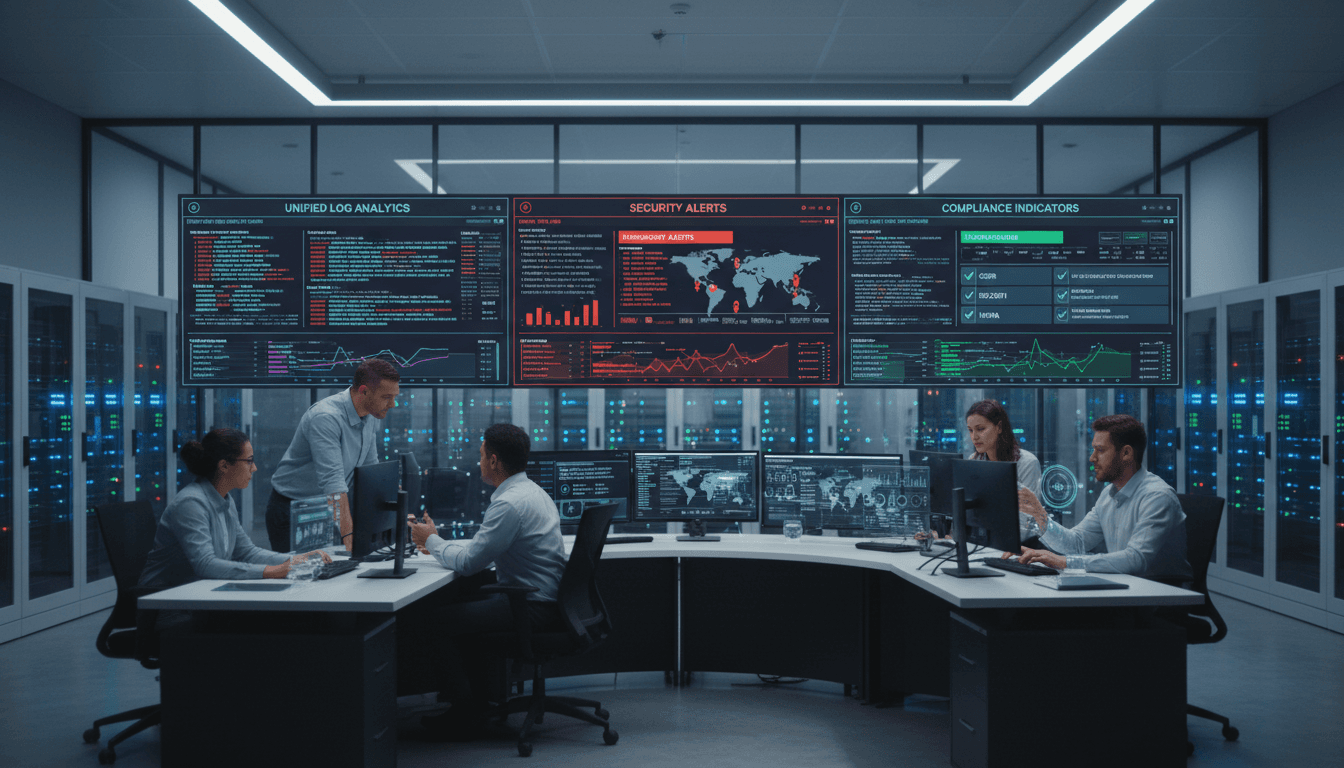
Unified CloudWatch Logs: Faster Ops, Security, Compliance
Most cloud teams aren’t short on data—they’re short on usable data.
By late 2025, a typical mid-to-large AWS environment is generating logs from everywhere: CloudTrail, VPC Flow Logs, WAF, Route 53, SaaS identity providers, endpoint tools, and a growing list of “must-have” security and observability platforms. The predictable result is log sprawl: multiple pipelines, multiple schemas, duplicate storage, and a constant fight over what’s “the source of truth.”
Amazon CloudWatch’s new unified data management and analytics features (announced December 2025) aim straight at that mess: normalize and manage log data for operations, security, and compliance in one place, then query it with flexible options—from CloudWatch’s own experience to Iceberg-compatible access via S3 Tables for downstream analytics. This is a big deal for anyone building AI-driven operations and smart data center practices because AI depends on consistent, correlated telemetry.
The real problem: logs aren’t “big,” they’re fragmented
The core issue isn’t log volume; it’s log fragmentation.
When logs live in separate tools with different schemas, teams lose time on:
- Normalization work (custom parsing rules, regex wars, and schema drift)
- Duplicate storage (the same events copied into multiple destinations)
- Correlation gaps (security sees one view, ops sees another, compliance exports yet another)
- Slow investigations (joining CloudTrail, network, identity, and endpoint signals becomes a project)
Here’s the stance I’ll take: if your organization wants to use AI for cloud operations—capacity forecasting, anomaly detection, incident summarization, blast-radius analysis—your first bottleneck is almost always inconsistent telemetry. You can’t “model” what you can’t reliably join.
CloudWatch’s update is interesting because it’s less about flashy dashboards and more about data shape and access—the boring stuff that makes AI actually work.
What AWS changed: unified ingestion, normalization, and analytics
CloudWatch is moving toward a model where logs and events across operational, security, and compliance use cases can be managed and analyzed together, with less duplication.
Three improvements matter most.
1) Built-in normalization with OCSF and OpenTelemetry
CloudWatch can automatically normalize and process log data with built-in support for Open Cybersecurity Schema Framework (OCSF) and OpenTelemetry (OTel) formats.
Why that matters:
- OCSF turns security-relevant events into a consistent schema. That means fewer one-off mappings when you’re correlating identity activity, network connections, and API calls.
- OTel standardizes telemetry across services and teams, especially useful when you’re mixing application signals with infrastructure signals.
From an AI-in-operations perspective, normalized data is the difference between:
- training/operating models on stable fields (user, action, src_ip, resource, outcome)
- constantly reworking feature extraction because every source logs differently
CloudWatch also introduces processors (including Grok and other field-level operations) to parse and transform as data is ingested. Translation: fewer external ETL steps just to make logs queryable.
2) Pipelines for routing, transforming, and standardizing
CloudWatch now supports pipelines that connect to a catalog of data sources and allow you to add processors (up to 19) to filter, transform, enrich, and standardize data.
This is more than a convenience feature. It’s a governance feature.
In mature environments, “log pipelines” are where policy gets enforced:
- Drop sensitive fields before they spread
- Tag events with account, environment, app, owner, and risk level
- Normalize timestamps and identifiers
- Route high-value security data to longer retention
If you’re working toward intelligent resource allocation in cloud environments, pipelines can also enrich events with metadata that matters for optimization—like workload identifiers, service tiers, and cost allocation tags.
3) Query flexibility: natural language + LogsQL/PPL/SQL + Iceberg access
CloudWatch’s query experience now spans:
- Natural language queries (helpful for cross-functional teams)
- Popular query languages: LogsQL, PPL, and SQL
- A single interface with a new Facets experience for interactive filtering
- Apache Iceberg-compatible access through Amazon S3 Tables, enabling analytics from services like Athena, Redshift, and other Iceberg-compatible engines
This combination matters because organizations rarely have one analytics persona.
- SREs want fast operational queries in a console.
- Security analysts want repeatable hunting queries with join-friendly schemas.
- Data teams want Iceberg tables so they can treat logs like data warehouse inputs.
When those groups can query the same underlying data without copying it into three places, you get faster answers and lower bills.
Why this is an AI-and-data-center story (not just a logging story)
Unified log analytics is a prerequisite for AI in cloud computing and data centers because AI systems need three things: consistent inputs, correlation across domains, and cheap enough storage/query to scale.
CloudWatch’s update touches all three.
Consistent inputs enable better detection and automation
Most “AI ops” initiatives stumble on one reality: models and automation routines hate messy data.
If CloudTrail calls it sourceIPAddress, a firewall calls it src_ip, and a SaaS identity provider calls it ipAddress, the burden shifts to engineers to normalize everything before any meaningful automation can happen.
By adopting schemas like OCSF and enabling managed conversions, CloudWatch reduces the manual work required to build:
- anomaly detection that isn’t source-specific
- incident timelines that automatically stitch events together
- automated compliance evidence collection
Cross-domain correlation is how you reduce MTTR
The fastest investigations correlate across domains:
- Network activity (who connected?)
- Identity (who authenticated?)
- API actions (what changed?)
- Workload behavior (what did the app do next?)
CloudWatch’s push toward unified management and Iceberg-compatible access encourages a single analytical path rather than a “pivot between tools” workflow.
A practical example straight from how teams actually work:
- You spot suspicious outbound connections in VPC Flow Logs.
- You immediately want to know whether the same source IP is also executing sensitive AWS API calls in CloudTrail.
- Joining those datasets quickly is the difference between a contained incident and a long night.
When that join requires exporting, transforming, and loading into a separate store first, you’ve already lost the time advantage.
Lower duplication is how you keep telemetry sustainable
Telemetry strategies collapse when costs become politically unacceptable.
Many orgs store the same data multiple times: once for observability, once for security, once for compliance retention, and sometimes again for ML feature stores. CloudWatch’s unified approach aims to reduce that duplication with built-in governance and a centralized data store.
That’s important for smart data center goals. If you want to apply AI to infrastructure optimization—capacity planning, workload placement, energy efficiency—you need to keep telemetry on. The easiest way telemetry gets turned off is cost blow-ups.
What to do first: a practical adoption plan
If you’re considering these CloudWatch features, the best approach is incremental. Don’t try to unify everything in one month.
Step 1: Pick one “high-correlation” investigation path
Choose a scenario you regularly repeat. Two strong starters:
- Suspicious IP investigation: VPC Flow Logs + CloudTrail
- Account takeover investigation: identity provider logs + CloudTrail + WAF
You’ll learn quickly whether your team’s biggest blocker is missing sources, inconsistent schemas, or slow query workflows.
Step 2: Standardize schemas where it pays off
Normalize the data that drives frequent decisions. For many teams, that’s:
- CloudTrail management events
- VPC Flow Logs
- WAF access logs
- Identity provider authentication logs
If you do security analytics, I’d prioritize OCSF alignment early. It makes correlation and detection logic far more portable across sources.
Step 3: Use pipelines to enforce hygiene and governance
Treat pipelines like policy-as-code for telemetry.
Good pipeline “hygiene rules”:
- Remove or hash sensitive fields that don’t belong in broad analytics
- Add consistent tags:
env,account_id,region,app,owner,data_classification - Normalize time fields and user identifiers
- Filter noisy debug logs before they inflate storage and query costs
Step 4: Decide where you want analytics to live
CloudWatch can be the primary analytics surface for many use cases, but some teams will want deeper exploration in warehouse-style tools.
A simple decision rule:
- Use CloudWatch Log Insights + Facets for fast operational and security questions.
- Use Iceberg/S3 Tables + Athena/other engines when you need large joins, long time windows, or integration with business datasets.
This hybrid model is where a lot of “AI in cloud operations” programs end up—fast triage locally, deeper learning and reporting in broader analytics.
Common questions teams ask (and direct answers)
“Will this replace our SIEM or observability stack?”
For some teams, it will reduce how much they rely on separate stacks for day-to-day querying. But replacement isn’t the main win. The win is one normalized, governable log foundation that multiple tools can query without maintaining duplicate copies.
“Does this help compliance reporting?”
Yes, because compliance is mostly about repeatability: consistent data sources, consistent retention, and evidence you can re-run. Unified log management makes it easier to standardize what’s collected and how it’s queried.
“Where’s the AI part?”
AI shows up in two places: the natural language query experience and, more importantly, the ability to build reliable AI workflows on top of consistent, correlated telemetry. AI ops doesn’t start with a model; it starts with data you can trust.
What this signals for 2026: unified telemetry becomes the control plane
Cloud providers are steadily turning observability and security telemetry into something closer to a control plane for operations—not just monitoring.
Once logs are normalized, queryable across domains, and accessible through open table formats, teams can:
- automate incident triage
- measure operational risk in near real time
- feed optimization systems that tune scaling policies and resource allocation
- build AI assistants that answer “what changed?” with evidence, not guesses
If you’re building toward AI-driven cloud operations and smarter data centers in 2026, unified log analytics isn’t a nice-to-have. It’s the substrate.
If you were to standardize just one investigation path this quarter—network-to-API, identity-to-API, or endpoint-to-cloud—which one would reduce your incident response time the fastest?