Pegasus 1.2 video AI is now available across more AWS Regions via cross-Region inference. Build lower-latency, compliant video intelligence with simpler architecture.
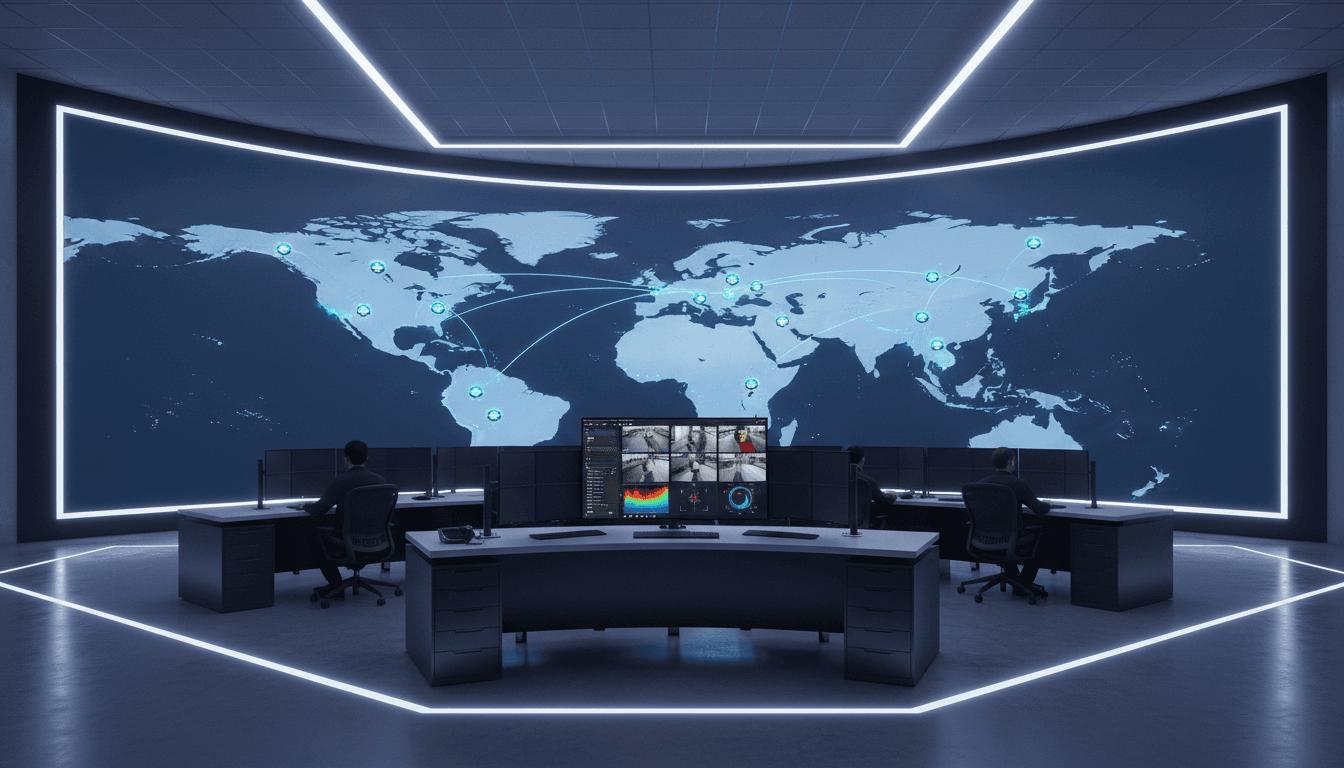
Pegasus 1.2 on Amazon Bedrock: Video AI, Globally
A 30-minute product demo video can be more “data-dense” than a 30-page spec doc. It also tends to be trapped in the least searchable place in your stack: a media library, a DAM, or a shared drive with inconsistent naming. That’s why video-first language models are getting real attention in enterprise AI programs—because they turn the most under-used content format into something you can query, summarize, and operationalize.
AWS just made that story more practical at scale. TwelveLabs’ Pegasus 1.2—a video-first language model available through Amazon Bedrock—can now be accessed in 23 additional AWS Regions using Global cross-Region inference, on top of the seven Regions where it was already available. AWS also expanded access across all EU Regions using Geographic cross-Region inference, which is specifically designed to fit data residency boundaries.
For our “AI in Cloud Computing & Data Centers” series, this announcement matters for one reason: it shows how AI is increasingly delivered as a distributed infrastructure feature, not a single endpoint. When inference can follow your users (or your data), you can stop designing brittle, one-off architectures and start building video intelligence that behaves like the rest of your cloud platform—regional, resilient, and performance-aware.
What Pegasus 1.2 adds to the “video intelligence” toolbox
Pegasus 1.2 is built for video-to-text and temporal understanding, which is a fancy way of saying it can extract meaning from the sequence of events in a video, not just isolated frames.
That’s a big deal because most real business questions are temporal:
- “What happened right before the machine fault alarm?”
- “When did the speaker switch from roadmap to pricing?”
- “Show me the moment the safety procedure wasn’t followed.”
Traditional approaches usually stitch together multiple components: speech-to-text, OCR, shot detection, then a general-purpose LLM to summarize. It works, but it’s often fragile. You end up with multiple models, multiple failure modes, and a lot of glue code.
Pegasus 1.2 being video-first changes the workflow. Instead of bolting language onto video after the fact, you treat the video as the primary input and generate structured text outputs (summaries, tags, chapters, highlights, “moments that matter”) in a more unified way.
Practical outputs that teams actually use
If you’re trying to justify video AI internally, focus on outputs that slot into existing systems:
- Searchable transcripts and scene-aware summaries for knowledge management
- Chapters and timestamps for training, enablement, and compliance review
- Entity and topic extraction for cataloging (products, people, locations, events)
- Highlight generation for marketing and social teams
- “What changed?” comparisons between versions of walkthroughs or demos
The pattern is consistent: convert video into text and metadata, then treat it like any other data product.
Why “cross-Region inference” is the real headline
Cross-Region inference is an infrastructure capability that routes model inference requests across Regions to balance availability, performance, and (in some cases) compliance boundaries.
This is the part many teams underestimate. Model quality matters, but so does where inference happens.
Global vs. Geographic cross-Region inference (and when each wins)
AWS is offering two flavors for Pegasus 1.2 access in Bedrock:
- Global cross-Region inference: best when you want availability and performance across multiple geographies. If a Region is saturated or an endpoint is under pressure, routing can keep your app responsive.
- Geographic cross-Region inference: best when you need to keep inference within a defined geographic boundary (for example, within the EU).
A clean way to choose:
- If your primary risk is latency or regional capacity constraints, pick Global.
- If your primary risk is data residency and compliance, pick Geographic.
And yes, many enterprises will use both—Global for customer-facing experiences where responsiveness is the product, and Geographic for regulated workflows.
This is what “AI at scale” looks like in cloud infrastructure
When a model is only practical in a few Regions, teams compensate by centralizing workloads—often by shipping data to the model. That creates three predictable problems:
- Latency spikes for users far from the inference Region.
- Architectural complexity grows (more queues, more retries, more special cases).
- Governance friction increases (data residency, cross-border transfer review, vendor risk reviews).
Expanding Pegasus 1.2 to 23 more Regions changes the default design posture. You can put video intelligence closer to the data and end users, then scale outward. That’s exactly the same playbook cloud providers use for databases, CDNs, and analytics.
What this means for data centers and cloud ops teams
Distributed inference isn’t just a developer convenience; it’s a workload-management strategy. The more AI moves into core applications, the more inference behaves like any other high-demand service: it needs routing, capacity planning, resiliency patterns, and cost controls.
Here’s the stance I’ll take: most organizations will waste money on AI until they treat inference like a first-class production workload. Cross-Region inference pushes teams in the right direction.
Availability and performance: reducing “AI brownouts”
A common failure mode in early AI rollouts is what I call an AI brownout: the app technically works, but the AI feature becomes sluggish, times out, or quietly degrades. Users stop trusting it.
Cross-Region inference is one way to reduce brownouts because it gives you a path to:
- Route around localized capacity issues
- Keep p95 latency stable during demand spikes
- Design multi-Region fallbacks without building a custom broker layer
The win isn’t theoretical—video workloads are naturally bursty. A media team can upload 200 videos after an event. A security team can export hours of footage after an incident. A customer support org can bulk-process call recordings at quarter-end.
Cost and efficiency: the part nobody wants to talk about
Video is heavy. Not just in storage, but in processing time and throughput. If you centralize everything, you tend to pay in one of two ways:
- Higher egress/transfer and pipeline overhead (because you moved the data)
- Higher latency and failed jobs (because you didn’t)
Putting inference nearer to where video already lives often means fewer moving parts. Fewer moving parts usually means fewer retries, fewer failed runs, and fewer “mystery bills.”
From a cloud and data center perspective, that’s infrastructure optimization in plain language: reduce unnecessary movement, keep utilization predictable, and allocate compute intelligently across geography.
Real-world architectures: how to use Pegasus 1.2 without creating a mess
The best architecture is the one your team can operate at 2 a.m. For video AI, that means being disciplined about where data lands, how jobs are triggered, and how outputs are stored.
Pattern 1: Asynchronous video processing pipeline (recommended)
Use this when you’re indexing libraries, processing long videos, or generating compliance artifacts.
- Store video in object storage.
- Trigger jobs via events (upload complete, new asset, new case).
- Send inference requests to Bedrock (Pegasus 1.2) using the appropriate cross-Region inference profile.
- Store outputs as versioned JSON (transcript, timestamps, topics, chapters).
- Index text outputs into your search/analytics system.
Why it works: it’s resilient, cost-aware, and easy to audit.
Pattern 2: Low-latency “clip Q&A” for product and support
Use this when the user is interacting with video in real time (or near real time):
- A support rep asks, “Where does the video show the reset sequence?”
- A field tech wants “the moment the indicator light turns amber.”
Design notes:
- Keep clips short and bound requests by duration.
- Cache outputs aggressively (chapters and timestamps don’t change often).
- Track latency and timeouts like you would for any API your product depends on.
Pattern 3: EU-residency compliant workflows
If you operate in regulated contexts, you want fewer debates with auditors and legal teams.
- Use Geographic cross-Region inference for EU-bound workloads.
- Keep derived artifacts (transcripts, summaries) in-region as well.
- Separate IAM roles and logging for regulated vs. general workloads.
This isn’t about being paranoid. It’s about building a platform that doesn’t create exceptions every time a new team wants video AI.
Operational checklist: what to decide before you ship
A cross-Region inference feature can’t fix unclear requirements. If you want Pegasus 1.2 to be a dependable part of your stack, make these decisions upfront.
- Latency target: What’s acceptable for your experience (p95 and p99)?
- Residency boundary: Global, geographic (EU), or explicit Region pinning?
- Failure behavior: Retry? fallback Region? degrade features?
- Output spec: What JSON schema do you store, and how do you version it?
- Human review points: Which outputs require approval (compliance, safety, legal)?
- Cost guardrails: Quotas, batching rules, max video length, and caching strategy.
Snippet-worthy truth: If you don’t define failure behavior for AI features, your users will define it for you—by abandoning them.
Where this fits in the bigger “AI in cloud infrastructure” trend
This Pegasus 1.2 expansion is part of a broader pattern we’re tracking in this series: AI is becoming a regional cloud primitive. It’s being packaged with routing, governance boundaries, and operational profiles—because that’s what makes AI usable in production.
Over the next year, expect more AI services to look like this:
- More Region coverage and more granular inference controls
- More routing profiles (performance vs. residency vs. cost)
- More platform-level reliability features (fallbacks, quotas, monitoring hooks)
That’s good news. It means AI teams can spend less time fighting infrastructure constraints and more time building workflows that actually improve operations.
Next steps: turn one video workflow into a repeatable platform
If you’re considering Pegasus 1.2 on Amazon Bedrock, start with one workflow where video is already a bottleneck—incident review, training content, call center QA, or product demo libraries. Build the pipeline once, store clean outputs, and make the results searchable. That’s the moment video stops being “content” and starts being operational data.
If you want help pressure-testing your architecture—especially around cross-Region inference choices, residency boundaries, and cost controls—map your top two video use cases and the Regions your users and data live in. The fastest path to production is usually the one with the fewest exceptions.
What’s your next constraint: latency, residency, or operational overhead? Your answer should decide whether you go Global, Geographic, or both.