Hydrogen can firm data center power, but AI-driven energy management makes it scalable. See what the Vema–Verne deal means for 2028 planning.
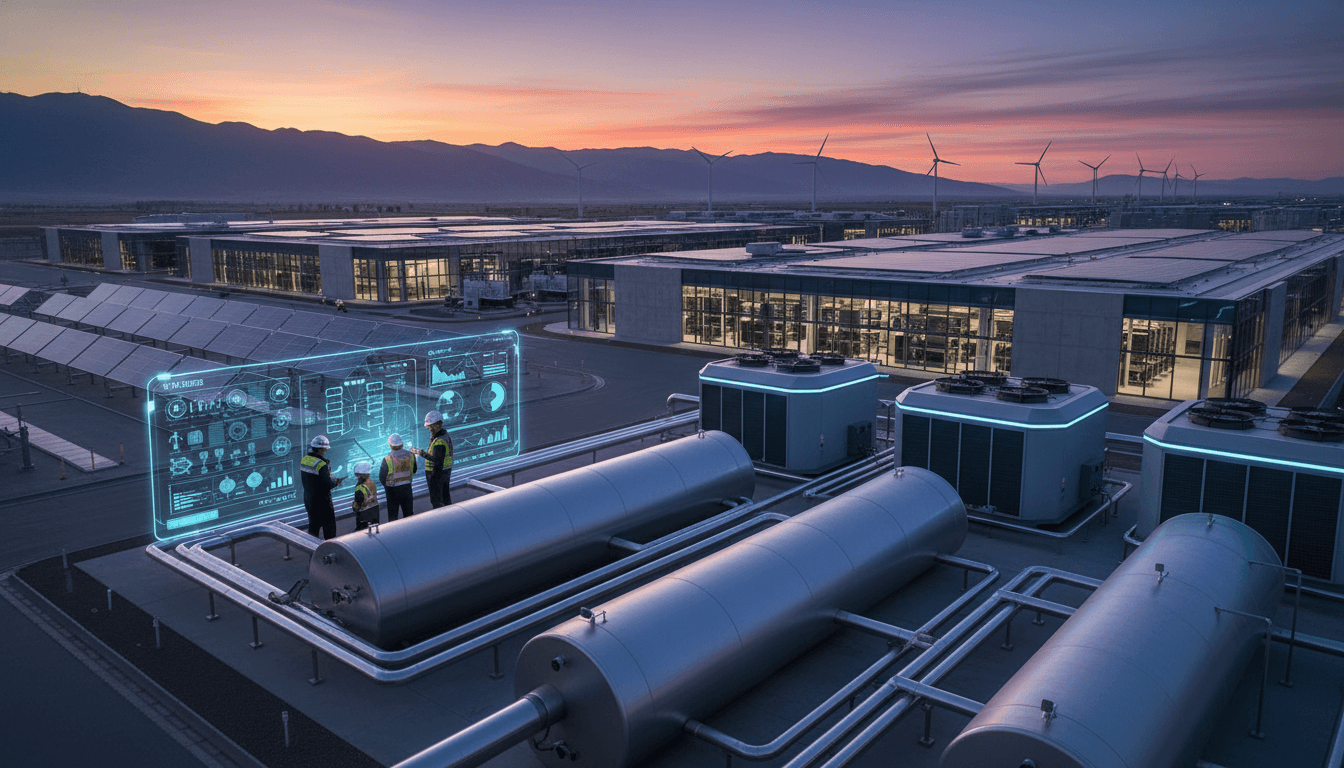
Hydrogen-Powered Data Centers Need AI to Scale
Data centers don’t have a “power problem.” They have a power volatility problem—and AI workloads make it worse.
When a large model training run kicks off, the load profile can jump fast and stay high for hours or days. Multiply that across regions, add tight interconnection queues, and you get a simple reality: grid power alone isn’t keeping up with the pace of AI-driven compute growth, especially in constrained markets like California.
That’s why the recent agreement between Vema Hydrogen and Verne is worth paying attention to. Vema will supply Verne with Engineered Mineral Hydrogen (EMH) to support low-emission on-site power for data center customers, with operations potentially starting around 2028 and a target ramp to 36,000 metric tons per year over a 10-year term. The headline isn’t just “hydrogen for data centers.” The real story is this: hydrogen only becomes a practical data center power pathway when AI is running the show—forecasting loads, optimizing dispatch, and coordinating a hybrid stack of generation, storage, and cooling.
Why hydrogen is showing up in data center power plans
Hydrogen is attractive to data centers for one reason: it can act like fuel. That sounds obvious, but it’s a big deal in an industry that’s gotten used to buying electricity as a service.
With hydrogen, you’re effectively separating energy production from energy use:
- You can produce hydrogen on a schedule (or buy it via contract).
- You can store it on-site.
- You can convert it to power when compute demand peaks.
For data center operators, that creates a path to firm power without waiting years for transmission upgrades.
The practical use case: firming power for AI workloads
AI clusters push data centers toward higher, steadier baseload—and they still need headroom for spikes. Hydrogen fits best when the goal is dispatchable low-emission power, not “occasional backup.”
The agreement described in the RSS source explicitly frames hydrogen as a route to reliable, affordable clean power for data center customers, with market demand driven by expectations that data center energy consumption could double by 2030. That’s the context: the grid is strained, interconnection is slow, and operators want options.
Why California makes this even more urgent
California combines three things that amplify the challenge:
- Aggressive decarbonization expectations from customers, boards, and regulators.
- High demand growth from digital infrastructure.
- Limited “easy” new generation that can be added quickly in the right places.
So when a supplier says it can provide hydrogen that supports baseload power and isn’t dependent on incentives, the data center industry listens.
What’s different about Engineered Mineral Hydrogen (EMH)
EMH, as described by Vema, is produced by harnessing naturally occurring chemical reactions below the Earth’s surface using geoscience to increase predictability and purity. Whether you call it engineered, mineral, or geologically sourced hydrogen, the important operational claim is this:
Predictable, scalable hydrogen production is what turns hydrogen from a science project into infrastructure.
Many hydrogen conversations stall out on cost and supply reliability. A purchase and sale agreement like this one matters because it signals intent to move from pilots to contracted volumes—in this case, scaling production toward 36,000 metric tons per year.
Converting “metric tons of hydrogen” into data center thinking
Data center teams don’t plan in tons. They plan in MW, uptime, and capex/opex.
Hydrogen becomes legible when you express it as:
- MW of on-site generation supported (continuous and peak)
- runtime at N+1 or 2N (hours/days)
- fuel logistics and storage constraints (site footprint, permitting)
That translation layer—turning fuel contracts into power availability—is exactly where AI-driven energy management earns its keep.
The hidden challenge: hydrogen doesn’t run itself
Here’s what most companies get wrong: they treat hydrogen like a drop-in replacement for diesel backup. It isn’t.
A hydrogen-powered data center (or hydrogen-firmed campus) is a systems integration problem:
- Variable compute demand
- Multiple generation assets (grid + on-site)
- Power quality requirements
- Cooling demand that tracks IT load
- Emissions accounting
- Fuel supply risk
If you manage that with spreadsheets and manual setpoints, you’ll either overspend or miss reliability targets.
Where AI actually helps (and where it doesn’t)
AI adds value when it reduces uncertainty and automates decisions at high frequency. For hydrogen + data centers, that means:
-
Load forecasting for AI workloads
- Predict training/inference demand by cluster, tenant, and time window.
- Translate workload schedules into power and cooling profiles.
-
Optimal dispatch across assets
- Decide when to draw from grid, when to run hydrogen generation, and when to charge/discharge batteries.
- Minimize cost while meeting reliability and emissions constraints.
-
Hydrogen inventory optimization
- Maintain minimum reserve margins (like fuel “state of charge”).
- Plan refueling based on expected compute ramps and supplier delivery windows.
- Cooling co-optimization
- Coordinate generation heat rejection, chiller operation, and thermal storage.
- Avoid creating a new bottleneck where power is fine but cooling caps the IT load.
AI does not magically fix poor instrumentation, missing telemetry, or unclear operating objectives. If your campus can’t measure real-time IT load and cooling power accurately, AI will just automate your blind spots.
A realistic reference architecture for hydrogen-enabled campuses
Hydrogen fits best as part of a hybrid stack. A practical architecture for many AI-oriented campuses looks like this:
- Grid interconnection for bulk energy (and market participation where allowed)
- Battery energy storage for fast response and short-duration ride-through
- Hydrogen-to-power (fuel cells or hydrogen-capable turbines/engines) for longer-duration firming
- Advanced cooling controls (AI-driven setpoints, economization, thermal storage)
- Energy management system (EMS) that acts like an air traffic controller
Control objectives you should define upfront
If you’re evaluating hydrogen for data centers, force clarity early. Pick your top two objectives and rank them.
Common objectives:
- Reliability: keep IT online through grid events and curtailments
- Cost: reduce peak demand charges and hedge power price volatility
- Carbon: lower operational emissions with auditable accounting
- Speed to power: energize new capacity before full utility upgrades land
When objectives conflict (they will), AI optimization works only if leadership agrees on how tradeoffs are made.
What to ask before you sign a hydrogen supply deal
A hydrogen purchase agreement can look great on paper and still fail operationally. Use these questions to pressure-test feasibility.
1) What’s the “firm power” you’re actually buying?
Ask for a clear mapping from fuel volume to power availability:
- Expected conversion technology (fuel cell vs turbine/engine)
- Electrical efficiency assumptions
- Operating constraints (ramp rate, minimum load, maintenance cycles)
- Guaranteed availability and penalties
2) How will you manage permitting and safety at a data center site?
Hydrogen changes your risk profile:
- On-site storage and setback requirements
- Leak detection and ventilation
- Emergency response procedures
- Training and compliance
This is manageable, but it’s not a side quest. It’s core to deployment timelines.
3) How will you prove emissions performance?
Data center customers increasingly want audit-friendly sustainability claims. That requires:
- Clear boundaries (Scope 1/2 treatment depending on configuration)
- Method for carbon intensity of hydrogen supply
- Hourly or sub-hourly matching approaches where relevant
If the accounting is fuzzy, the reputational risk lands on the data center brand, not the hydrogen supplier.
4) What’s the operational plan for 2028 and beyond?
The RSS source notes operations could begin as soon as 2028. That’s close enough to matter, far enough away for plans to drift.
What I’ve found works: build a phased roadmap that includes controls and data maturity, not just physical assets.
A sensible phased approach:
- Now–12 months: telemetry, baseline load modeling, EMS selection
- 12–24 months: battery optimization + cooling AI (quick wins)
- 24–36 months: hydrogen-ready generation integration + safety program
- 36+ months: full closed-loop dispatch with hydrogen inventory optimization
Why this matters for the “AI in Cloud Computing & Data Centers” series
This series focuses on how AI improves infrastructure efficiency and reliability. Hydrogen-powered data centers are a perfect stress test of that idea.
A standard data center energy program is already complex. Add hydrogen, and you’re effectively operating a small utility:
- forecasting
- dispatch
- fuel management
- power quality control
- emissions reporting
That’s not a job for a weekly operations meeting. It’s a job for software and automation—specifically AI-driven optimization paired with rigorous engineering controls.
The Vema–Verne agreement is a signal that the market is moving toward contracted clean fuels for high-demand compute. The winners won’t be the teams with the flashiest announcement. They’ll be the ones who can operate the stack day after day, hit uptime targets, and show real emissions progress.
Next steps: how to evaluate AI + hydrogen for your data center
If you’re building or expanding a campus (especially in a constrained grid region), here are three actions that pay off quickly:
- Model your AI workload growth with power and cooling attached. Treat “MW per rack” and utilization curves as first-class planning inputs.
- Invest in an EMS that can optimize a hybrid system. Manual control won’t scale when you add hydrogen, batteries, and dynamic pricing.
- Run a tabletop exercise for a grid event plus a compute surge. If your team can’t explain what happens minute-by-minute, you’re not ready for fuel-based firming.
Hydrogen can absolutely support low-emission, high-uptime compute. The catch is non-negotiable: AI-driven energy management is what makes it operable at scale.
Where do you see the bigger bottleneck over the next three years—fuel supply, interconnection, or the control systems needed to run hybrid power campuses?