Hydrogen power is emerging as clean firm energy for AI data centers. See what the Vema–Verne deal signals and how AI optimizes hydrogen and grid use.
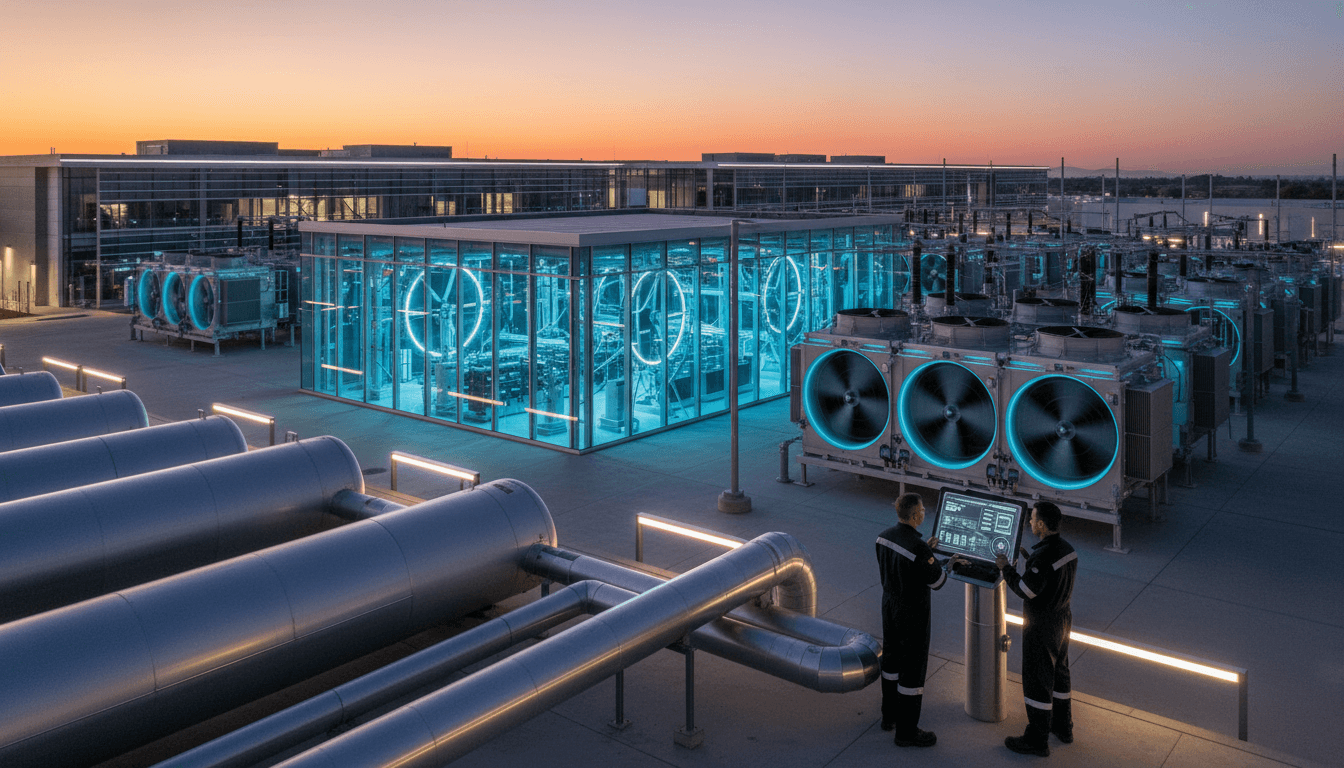
Hydrogen Power for AI Data Centers: What Changes Now
California data centers are running into a constraint that’s not about GPUs, real estate, or fiber. It’s firm power—the kind you can count on 24/7, not just when the sun’s out or the wind’s strong.
A new development agreement highlights where the market is heading: Vema Hydrogen signed a hydrogen purchase and sale agreement with Verne, which builds on-site power and cooling for data center customers. The plan is to supply Verne with Vema’s Engineered Mineral Hydrogen (EMH), with operations potentially starting as soon as 2028 and scaling to more than 36,000 metric tons per year over a 10-year agreement.
This isn’t “hydrogen hype” for its own sake. It’s a practical response to a very real trend: data center energy consumption is expected to double by 2030, with the industry pointing to roughly 945 TWh of demand. If you’re responsible for data center capacity planning or utility interconnection strategy, the question isn’t whether the grid will get stressed—it’s where, when, and how badly. Hydrogen is showing up as one of the few options that can realistically provide dispatchable, low-emission power at scale.
Why hydrogen is suddenly on the data center shortlist
Answer first: Hydrogen is on the shortlist because it can provide on-site, dispatchable power that reduces dependence on congested interconnections and helps meet emissions goals without betting everything on multi-hour batteries.
Data centers have always cared about reliability. What’s changed is the shape of load driven by AI training and inference. AI clusters can look like industrial facilities: high load factors, rapid growth, and minimal tolerance for curtailment.
The grid bottleneck is now a schedule problem
If you’ve tried to add meaningful capacity in major California markets, you’ve probably lived some version of this:
- Interconnection studies take longer than expected
- Upgrade requirements expand (and costs follow)
- Timelines collide with product roadmaps and customer commitments
That’s why “behind-the-meter” and “adjacent-to-meter” strategies are gaining traction. Hydrogen fits because it’s transportable energy that can be stored in bulk and converted to power when needed.
Hydrogen’s real value: firm power without pretending the grid is fine
A lot of corporate sustainability strategies still rely on annual matching and certificates. That’s not enough when the grid is constrained and your facility load is climbing.
Hydrogen, when used for power generation (often via fuel cells or hydrogen-capable turbines/engines), offers:
- Firm capacity for peak days and contingency events
- Long-duration energy storage characteristics (days, not hours)
- A path to lower local emissions compared to diesel backup
The truth: for many campuses, hydrogen won’t replace the grid. It will change your negotiating position with the grid.
What the Vema–Verne agreement signals for California
Answer first: The deal signals that hydrogen suppliers and on-site power providers are moving from demos to commercial scaling, and they’re aiming directly at the fastest-growing load: AI-heavy data centers.
From the RSS item, three details matter operationally:
- Start window: as soon as 2028
- Scale target: >36,000 metric tons/year of EMH during the agreement
- Market positioning: “affordable, clean power” not dependent on incentives
That last point is a stance, and it’s an important one. Many clean energy projects pencil out only with layered credits, grants, and favorable accounting. For data center operators, that can translate into contract complexity and risk.
Engineered Mineral Hydrogen (EMH) is a different production story
Vema describes EMH as hydrogen produced from naturally occurring reactions below the Earth’s surface, using geoscience to create high-purity, sustainable hydrogen.
Whether you’re bullish or skeptical on any particular production pathway, what you should take from this is simpler: the hydrogen market is diversifying. Electrolyzers powered by renewables aren’t the only narrative anymore, and supply diversity matters if you’re trying to contract for firm energy with predictable costs.
California policy and market structure make “clean firm” unusually valuable
California’s combination of ambitious emissions goals, constrained transmission in key load pockets, and community sensitivity to local pollution makes diesel backup politically and operationally harder over time.
Hydrogen-based on-site generation doesn’t erase those issues, but it can move you toward:
- fewer diesel runtime hours
- cleaner contingency power
- better alignment with local air-quality expectations
And if Vema is already recognized as a qualified supplier by a statewide hydrogen authority network (as the RSS content notes), that’s a hint that infrastructure coordination is accelerating.
Where AI fits: hydrogen only works if it’s orchestrated well
Answer first: Hydrogen becomes economically and operationally credible for data centers when AI-based forecasting and control orchestrate when to draw from the grid, when to run on-site generation, and how to manage cooling and load.
Most teams talk about hydrogen as “a fuel.” For operators, it’s better to treat it as a controllable resource inside a larger energy system.
AI-based load management is the missing layer
Data center power demand isn’t a single flat line anymore. The fastest-growing operators are already using AI for:
- workload placement (which cluster runs where)
- predictive thermal management
- capacity planning
Add energy to that list. The best energy outcomes come from co-optimizing:
- IT load scheduling
- cooling setpoints and heat rejection timing
- utility tariff windows and demand charges
- on-site generation dispatch
- hydrogen storage state-of-charge and delivery cadence
A practical example I’ve seen work: if you can shift a portion of non-urgent training jobs away from the 4–9 p.m. window (or away from a local feeder peak), you reduce peak demand. That can shrink upgrade requirements and improve resilience. Hydrogen generation then becomes a targeted tool—used when it saves real money or protects uptime, not as an always-on expensive badge.
Demand forecasting changes how much hydrogen you actually need
Hydrogen supply contracts and storage sizing live or die on forecasting quality. Under-forecast and you risk downtime. Over-forecast and you pay for infrastructure you don’t use.
AI-driven demand forecasting helps by:
- predicting load ramps from new customer onboarding
- estimating seasonal cooling impacts
- detecting anomalous consumption early (before it becomes a peak demand problem)
If your forecasting error drops, your hydrogen storage requirement usually drops too. That’s the quiet ROI nobody advertises.
Grid optimization isn’t just utility-side anymore
Utilities use AI for distribution planning and outage prediction. Data centers should do the same on their side of the meter.
An effective energy management stack for hydrogen-enabled campuses typically includes:
- real-time telemetry from UPS, chillers, switchgear, and generators
- a digital twin of the campus power train
- optimization routines that balance cost, carbon, and risk
- automated reporting for sustainability and operations teams
This is where “AI in cloud computing & data centers” stops being a marketing phrase and becomes an engineering advantage.
Operational reality check: what you need to validate before betting on hydrogen
Answer first: The hydrogen plan succeeds only if you validate delivery logistics, permitting, safety systems, power conversion tech, and a control strategy that’s integrated with your data center operations.
Hydrogen projects can fail in mundane ways—siting constraints, safety reviews, vendor misalignment, or controls that don’t match how the campus actually runs.
A decision checklist for data center operators
If you’re evaluating hydrogen for on-site power, pressure-test these areas early:
- Power conversion choice
- Fuel cells vs. engines vs. turbines (tradeoffs in efficiency, ramp rate, maintenance, and emissions)
- Hydrogen storage and delivery model
- On-site storage volume, refill cadence, and contingency stock for outages
- Permitting and safety
- Hazardous area classification, separation distances, ventilation, detection, and emergency response alignment
- Reliability architecture
- How hydrogen generation integrates with UPS, existing gensets, and automatic transfer schemes
- Controls and telemetry
- Can you dispatch hydrogen generation based on tariff signals, carbon signals, or grid events without destabilizing operations?
If your hydrogen vendor can’t talk concretely about these topics, you’re not in a real project yet.
Don’t ignore cooling: power and cooling are one system
Verne positions itself as on-site power and cooling. That pairing is smart.
AI workloads are pushing higher rack densities, which raises cooling energy and changes heat rejection behavior. When you add on-site generation, you also add new thermal considerations:
- waste heat utilization options (or penalties)
- added equipment footprint affecting airflow and serviceability
- backup scenarios where cooling must persist through grid events
Treat “hydrogen for data centers” as an integrated energy and thermal program, not a fuel procurement exercise.
What this means for utilities and energy partners
Answer first: Hydrogen-enabled data centers will push utilities toward new partnership models: flexible interconnections, grid services, and shared forecasting.
Data centers aren’t just large loads anymore—they’re becoming active grid participants.
Here’s the opportunity: with AI-based load management and dispatchable on-site resources, data centers can provide:
- peak shaving and load shaping
- demand response with higher confidence
- improved outage resilience that reduces restoration pressure
But this requires better coordination than most interconnection processes support today. The utilities that win will be the ones that treat data centers as co-optimized assets, with shared models and clearer operational envelopes.
What to do next if you’re planning capacity for 2028–2030
Data center roadmaps don’t wait for energy markets to mature. If your growth window is 2028–2030, you should be making foundational decisions now.
Start with three practical moves:
- Build an energy scenario model for each campus
- Include grid constraints, upgrade timelines, tariff exposure, and emissions requirements.
- Pilot AI-based energy optimization before you add hydrogen
- If you can’t measure and forecast your load well, hydrogen sizing and contracting will be guesswork.
- Run a hydrogen feasibility study that includes controls, not just fuel
- The controls layer determines whether hydrogen is a cost sink or a strategic asset.
Hydrogen power for AI data centers is becoming a real procurement and engineering conversation in California. The operators who do well won’t be the ones with the flashiest announcements—they’ll be the ones who integrate hydrogen, grid power, and AI-driven controls into one coherent operating model.
If you were designing a new AI campus today, would you rather bet your delivery schedule on interconnection upgrades alone—or build a portfolio that includes hydrogen-ready on-site power and AI-based load management to keep options open?