What does a 10 GW OpenAI–NVIDIA buildout mean for AI data centers and SaaS? Here’s how to plan for cost, reliability, and scale.
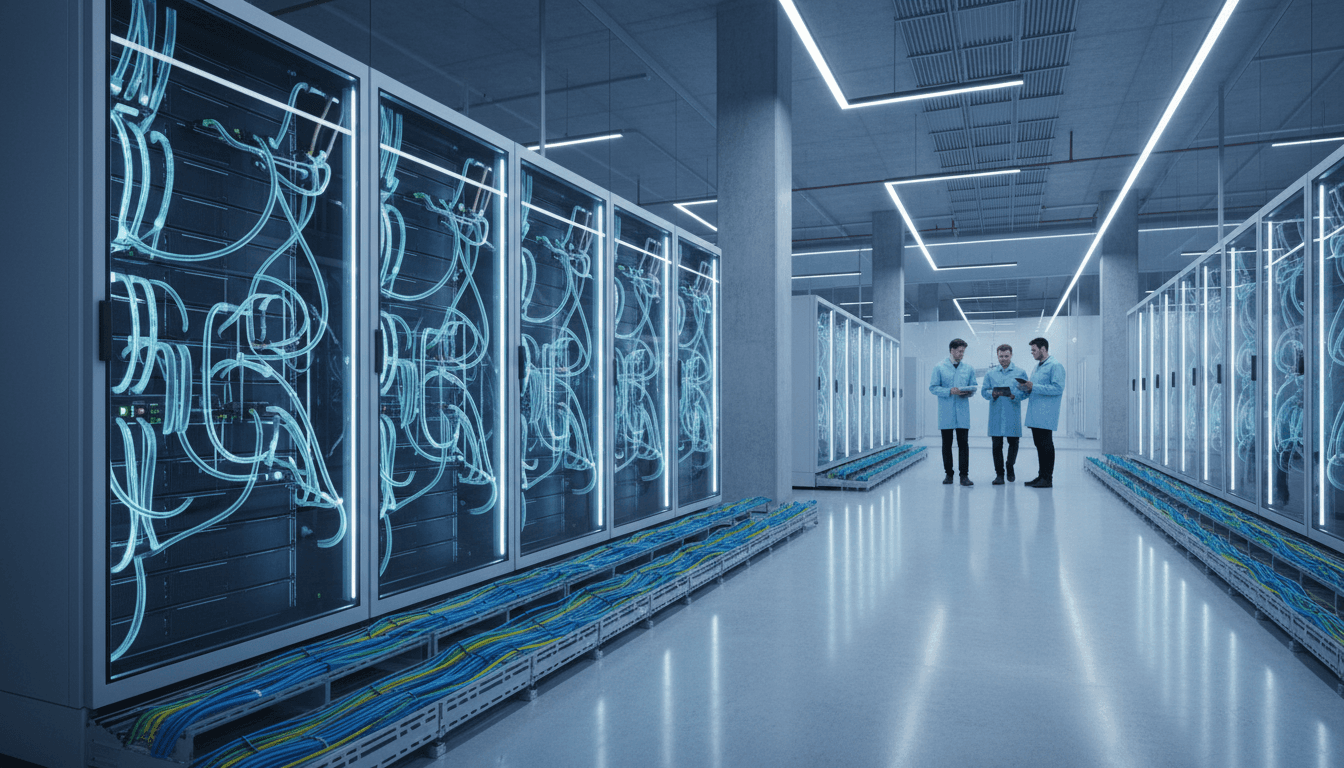
AI Data Center Scale: What 10 GW Really Means
A “10 gigawatt” AI infrastructure announcement sounds abstract until you translate it into what your product team feels: more available GPU capacity, bigger model options, and shorter wait times to ship AI features—assuming you plan for it.
The OpenAI–NVIDIA partnership headline (deploying 10 gigawatts of NVIDIA systems) is fundamentally a cloud computing and data center story. It signals that AI is no longer constrained by clever prompts or model selection; it’s constrained by power, cooling, grid access, and supply chains. And that’s exactly where the next wave of U.S. digital services will be won.
I’ve found that most companies misread infrastructure news like this as “good for the big guys.” The more practical read: this is a market signal. When hyperscale AI capacity expands, it changes pricing dynamics, availability, reliability expectations, and what customers will tolerate in AI-powered apps.
10 gigawatts is a capacity story, not a press-release number
10 gigawatts (GW) matters because AI at scale is energy-bound. Training and running frontier models requires dense GPU clusters, and dense clusters require electricity and cooling on a level traditional enterprise data centers weren’t built to handle.
A useful way to think about it: AI data centers are power plants wearing server racks. When a partnership emphasizes gigawatts, it’s telling you the bottleneck has moved from “can we get enough GPUs?” to “can we power and operate enough GPUs reliably?”
What “10 GW of NVIDIA systems” implies for AI infrastructure
Even without the full source article text, the partnership framing points to a few concrete infrastructure implications you can plan around:
- Larger GPU deployments: NVIDIA systems at this scale typically mean standardized, repeatable pods—faster to deploy, easier to operate.
- More predictable capacity roadmaps: Strategic partnerships are often about securing supply and coordinating build-outs.
- Better utilization expectations: At gigawatt scale, idle GPUs are a financial problem. Operators push harder on scheduling, multi-tenancy, and workload management.
Snippet-worthy takeaway: In 2025, AI performance is constrained as much by megawatts and cooling loops as by model architecture.
Why this matters specifically in the United States
The campaign angle here is real: U.S. tech companies win when AI capacity is domestic, reliable, and scalable. More AI data center capacity supports more AI-powered digital services—customer support automation, document intelligence, agentic workflows, personalization, and analytics—without every team fighting for scarce compute.
And it’s not just big tech. If the ecosystem gets more capacity, SaaS providers and startups get a more stable foundation to build on.
Cloud computing is being reshaped around GPUs, not CPUs
Cloud computing is undergoing a quiet architectural flip: GPUs are becoming the primary planning unit. For 15 years, cloud cost and capacity planning was mostly about CPU cores, RAM, and storage tiers. Now it’s about GPU availability, interconnect bandwidth, and data center power density.
That shift changes how digital services get built and sold.
AI workloads behave differently than classic cloud workloads
Here’s the operational reality teams run into:
- Spiky inference demand (product launches, seasonal shopping, end-of-quarter reporting)
- Long-running training or fine-tuning jobs that compete with real-time inference
- Data gravity (moving large datasets is slow and expensive)
- Network sensitivity (distributed training needs fast interconnects)
So when you hear “10 GW,” you should also hear: more AI workload scheduling sophistication. The winners won’t just buy compute—they’ll run it efficiently.
The new competitive edge: AI infrastructure optimization
As part of the AI in Cloud Computing & Data Centers series, this is the through-line: AI-powered infrastructure optimization is becoming non-optional. Operators and platforms will use AI to:
- predict demand and pre-warm capacity
- bin-pack workloads to reduce idle GPU time
- tune power and thermal envelopes dynamically
- detect hardware degradation before failure
Opinion: If your AI roadmap doesn’t include how you’ll control inference costs, you don’t have a roadmap—you have a demo plan.
What this partnership signals for SaaS and startups
This partnership signals that the next two years will reward teams that productize AI features quickly and responsibly. More capacity reduces one barrier, but it also raises user expectations.
When AI becomes more available, customers stop being impressed by “we added a chatbot” and start demanding:
- lower latency (responses that feel instant)
- higher reliability (no “try again later”)
- better accuracy and grounding (fewer confident mistakes)
- clear value (time saved, tickets reduced, revenue increased)
Practical implications for product teams
If you’re building AI-powered digital services, treat expanded infrastructure as permission to do the basics well:
-
Design for multiple model tiers
- Use a smaller/cheaper model by default.
- Escalate to a larger model only when confidence is low or the request is complex.
-
Plan for inference cost as a product metric
- Track cost per resolved ticket, cost per document processed, cost per generated report.
- Set budgets and enforce them with routing and caching.
-
Bake in fallbacks
- Timeouts, retries, and “safe mode” answers keep your UX stable.
- If the AI system is slow, return partial progress or structured summaries.
-
Use retrieval and caching aggressively
- Retrieval-augmented generation reduces hallucinations and repeat compute.
- Semantic caches can cut costs when users ask the same questions.
What founders should do in Q1 2026
Late December is planning season. If you’re scoping next quarter’s AI work, three moves pay off:
- Lock your “unit economics” model now: define margin targets for AI features before usage scales.
- Choose an observability baseline: measure token usage, latency percentiles, error rates, and drift.
- Negotiate for flexibility: capacity gets easier to access at scale, but contracts can still trap you.
Snippet-worthy takeaway: GPU abundance doesn’t make AI cheap; it makes AI common. Cost control becomes the differentiator.
The hidden constraint: energy, cooling, and data center geography
The biggest limiter on AI growth is power delivery and heat removal. That’s why gigawatt-scale announcements are also about utilities, permitting, and construction.
This is where the “AI in cloud computing & data centers” topic gets real: infrastructure optimization isn’t only software. It’s site selection, cooling design, and energy strategy.
Why power density changes everything
AI racks can draw far more power per rack than traditional enterprise deployments. Higher density forces:
- liquid cooling adoption (direct-to-chip, immersion in some cases)
- electrical upgrades (switchgear, transformers, redundancy)
- facility redesigns (hot aisle containment is not enough at extreme densities)
If you run a digital service, you don’t need to build data centers to benefit from this—but you do need to understand why AI capacity can’t be spun up like classic virtual machines.
Reliability becomes a product feature
More AI infrastructure should improve reliability, but only if operators manage:
- supply chain consistency for GPUs and networking
- firmware and driver standardization
- predictive maintenance at fleet scale
- workload isolation for multi-tenant environments
For U.S. businesses buying AI services, the practical ask is simple: demand clear SLAs for latency and availability, not just “model access.”
People also ask: what does 10 GW change for customers?
It changes timelines, prices, and what’s feasible to run in production. Here are direct answers you can share internally.
Will AI get cheaper?
Some workloads will get cheaper, but not automatically. More supply can reduce scarcity premiums, yet total demand is rising fast. The teams that see real cost drops are the ones that:
- route requests to the smallest acceptable model
- cache frequent outputs
- reduce token bloat with better prompts and structured outputs
Does this help inference more than training?
It helps both, but inference is where most businesses feel it first. Training frontier models is concentrated among a few players. Inference capacity affects every SaaS product adding AI features.
What should I change in my cloud architecture?
Adopt an “AI workload management” mindset. Concretely:
- separate real-time inference from batch jobs
- implement queueing and backpressure
- store prompts and completions for audit and debugging
- build model abstraction layers so you can swap providers/models
Where this fits in the AI in Cloud Computing & Data Centers series
This partnership is another signal that AI infrastructure is becoming standardized industrial capacity—like cloud storage did a decade ago, but with power and thermal constraints that shape everything.
If you’re building AI-powered digital services in the U.S., the opportunity is straightforward: as capacity scales, the teams that win are the ones that turn compute into reliable features customers pay for. That means disciplined workload management, cost governance, and operational maturity—not just model experimentation.
If you’re planning your 2026 roadmap right now, ask your team one forward-looking question: when AI capacity stops being scarce, what will make customers choose your product anyway—speed, trust, workflow fit, or price?