Key Google Cloud December updates for AI infrastructure, agents, and security—what to prioritize now for smarter resource management and efficiency.
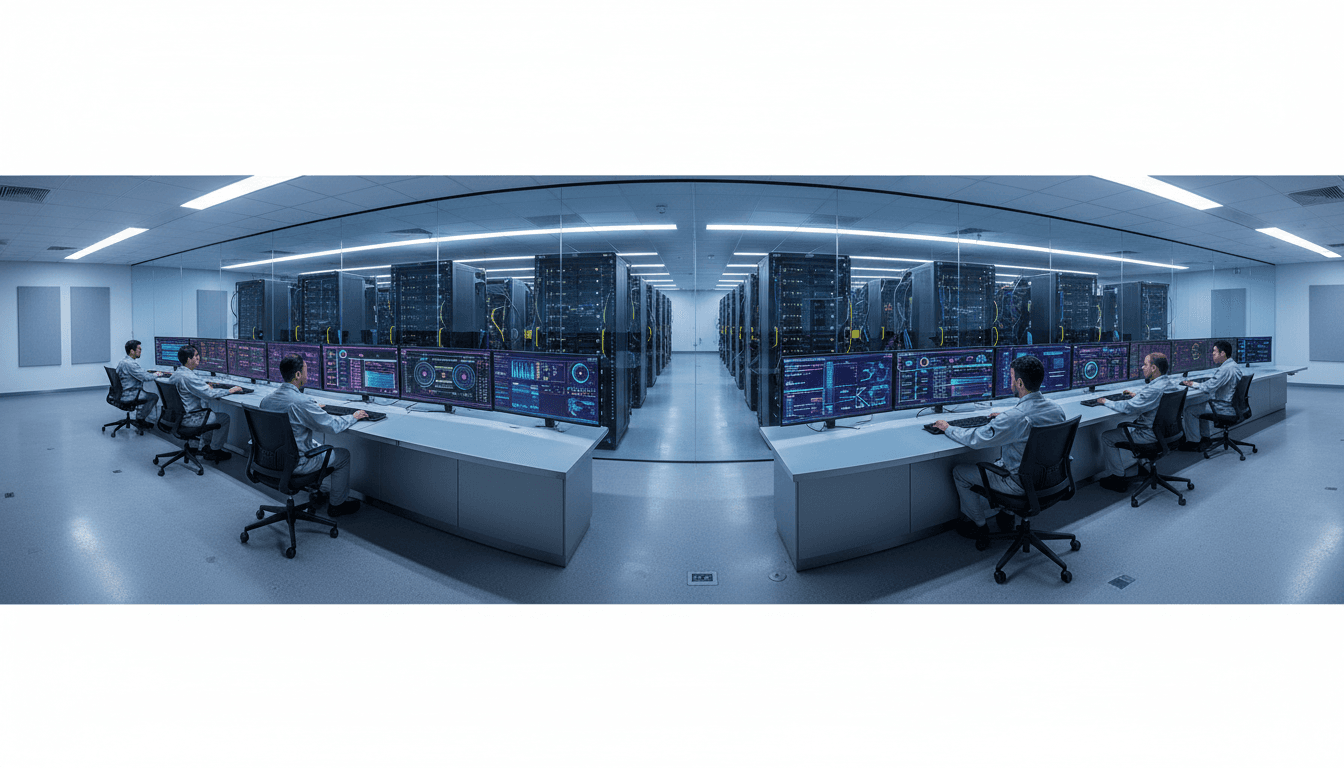
AI-Driven Google Cloud Updates: What to Prioritize
A lot of cloud roadmaps still treat AI as “something we run on the cloud.” Google Cloud’s December release notes tell a different story: AI is increasingly being built into the cloud fabric—into databases, orchestration, security controls, and even capacity planning.
That shift matters because the hardest part of modern cloud operations isn’t spinning up resources. It’s allocating scarce compute intelligently, keeping latency stable as workloads spike, and protecting data flows while AI agents start touching everything. If you’re working in cloud infrastructure, platform engineering, or data centers, the practical question isn’t “what’s new?” It’s: which updates change your operating model in 2026—and what do you need to do before they bite you?
Below is how I’d triage the most important updates from the latest Google Cloud release notes for teams building in the AI in Cloud Computing & Data Centers series theme: intelligent resource management, energy efficiency, and real-world operational control.
1) Agentic workloads are moving into the data layer
The clearest signal in this release cycle: Google Cloud is pushing AI “closer to the data,” especially inside managed databases. That reduces data movement (cost + latency) and makes it easier to operationalize AI features where people already work.
Data agents in managed databases (Preview)
Google Cloud introduced data agents for multiple database products:
- AlloyDB for PostgreSQL
- Cloud SQL for MySQL
- Cloud SQL for PostgreSQL
- Spanner
The pitch is straightforward: conversational access to data—agents that can interact with your database using natural language and act as tools inside applications.
What’s new isn’t the chatbot angle. It’s the architectural implication:
- If agents run near the database, you can keep sensitive data inside controlled perimeters.
- You can design “query-intent APIs” for internal tools without building a full semantic layer first.
- You reduce the temptation to dump operational data into a separate vector store just to do retrieval.
Operational stance: Don’t let teams ship this as “a neat demo.” Treat database agents as a new integration surface.
Practical controls to put in place:
- Principle of least privilege for agent identities (service accounts, roles, EUC policies).
- Prompt and response sanitization (see Apigee AI policies below).
- Logging and audit expectations: who asked what, what was executed, and what data was returned.
Gemini 3 Flash lands across the stack (Preview)
Gemini 3 Flash appears in multiple places:
- Vertex AI Generative AI models: Gemini 3 Flash is in public preview.
- Gemini Enterprise: admins can enable Gemini 3 Flash (Preview).
- AlloyDB generative SQL functions: model name
gemini-3-flash-preview.
This isn’t just “a new model.” It’s a sign that fast, agent-oriented models are becoming first-class in cloud workflows.
Why it matters for data centers: faster models typically reduce time-per-task, but they can also increase request volume. If you roll these out internally, you’re likely to see:
- higher concurrency
- more frequent tool calls
- more background “agent loops”
So the efficiency win comes from intelligent throttling, caching, and routing, not only from model speed.
2) AI infrastructure is getting more schedulable (and that’s where efficiency comes from)
Most organizations waste money on AI not because GPUs are expensive, but because they’re idle, blocked, or acquired too late. This month includes several updates aimed at predictable AI capacity—which is exactly how you reduce waste and improve utilization.
Calendar-mode future reservations for GPU/TPU/H4D (GA)
Compute Engine now supports future reservation requests in calendar mode to reserve GPU, TPU, or H4D resources for up to 90 days.
If you’ve ever tried to secure capacity for a training run, you know why this matters. The outcome isn’t just fewer procurement fires. It’s better data center efficiency:
- Fewer “panic scale-ups” that force suboptimal placement
- More predictable scheduling windows
- Less overprovisioning “just in case”
What to do now:
- Identify your top 3 workloads that repeatedly suffer from capacity scarcity (training, fine-tuning, batch inference, HPC).
- Decide which ones should move from “best effort” to “reserved window.”
- Build a lightweight internal process for requesting reservations with a clear owner and budget.
Sole-tenancy for GPU machine types
Compute Engine added sole-tenancy support for multiple GPU machine types (A2 Ultra/Mega/High and A3 Mega/High). That’s relevant if you have hard isolation requirements (regulated data, strict neighbor risk policies).
Tradeoff stance: Sole tenancy can be the right security move, but it’s easy to accidentally lock in poor utilization.
To avoid that:
- consolidate workloads into fewer predictable windows
- pair sole tenancy with scheduling discipline (reservations, job queues)
- measure GPU utilization weekly, not quarterly
AI Hypercomputer: node health prediction (GA)
AI-optimized GKE clusters can now use node health prediction to avoid scheduling on nodes likely to degrade within the next five hours.
This is a subtle but important “data center intelligence” feature: fewer restarts and fewer failed training steps translate into less wasted compute and energy.
Practical use case: large training jobs that are interruption-sensitive. If a node is about to flake, it’s cheaper to avoid it than to recover mid-run.
3) The API layer is becoming the control plane for AI safety
As agents start calling tools, your API gateway stops being just traffic management. It becomes policy enforcement for AI behavior.
Apigee Risk Assessment v2 (GA) + AI policies
Apigee Advanced API Security Risk Assessment v2 is generally available, and it now supports assessments using:
- VerifyIAM policy
- AI policies: SanitizeUserPrompt, SanitizeModelResponse, SemanticCacheLookup
That’s a big deal because it turns “prompt security” into something you can govern at the API edge.
Opinionated take: If you’re exposing internal tools to agents, you should assume prompts and tool outputs will eventually contain sensitive data. Sanitization at the gateway is a strong default.
What changes operationally:
- Security teams can define organization-wide profiles, not one-off app rules.
- Platform teams can standardize AI request/response handling.
- You can centralize risk scoring across environments.
Multi-gateway security governance (Preview)
Apigee Advanced API Security can now centrally manage security posture across multiple gateways via API hub. That’s governance catching up to reality: most enterprises have more than one gateway environment.
Heads-up: There’s limited support for VPC Service Controls in this feature today, and Google explicitly recommends enabling it for API hub instances not using VPC-SC to avoid limitations.
4) Reliability and compliance updates you shouldn’t ignore
Not every release note is glamorous, but several items here are “quietly important.”
Single-tenant Cloud HSM (GA)
Cloud KMS now offers single-tenant Cloud HSM generally available in:
us-central1,us-east4,europe-west1,europe-west4
This is a serious option for organizations that need dedicated HSM partitions with strong administrative controls (including quorum approval with 2FA using keys you manage outside Google Cloud).
Why it connects to AI + data centers: as AI expands access paths, cryptographic boundary decisions matter more. If you’re protecting model artifacts, signing pipelines, or regulated data access, single-tenant HSM can be a foundational control.
Cloud SQL enhanced backups (GA) + PITR after deletion
Cloud SQL enhanced backups are GA, managed via Backup and DR service, with longer retention, granular scheduling, enforced retention, and point-in-time recovery even after instance deletion.
This is one of those features that changes your disaster recovery posture immediately.
Action: validate whether your current backup approach covers accidental deletion scenarios. Many don’t.
Load balancer RFC enforcement change (now)
Starting December 17, 2025, non-compliant HTTP request methods (RFC 9110) are rejected by a first-layer Google Front End before reaching your load balancer or backends.
It’s not glamorous, but it can change:
- what error codes clients see
- where you observe failures
- how you debug edge behavior
If you have legacy clients or unusual proxies, watch your logs.
5) What to prioritize in the next 30 days
Release notes are easy to skim and forget. Here’s a pragmatic 30-day plan that aligns with AI-driven infrastructure optimization.
Week 1: Decide where agents are allowed to touch production
- Pick one “safe” domain (analytics, read-only operational reporting, internal knowledge base).
- Set a rule: agents don’t get write permissions by default.
- Establish logging expectations for prompts, tool calls, and outputs.
Week 2: Put governance at the API edge
- Define a minimal “agent gateway profile” (authn/authz + sanitization).
- Standardize model request/response logging for incident response.
- If you use Apigee, test Risk Assessment v2 policies in one environment.
Week 3: Fix capacity uncertainty for AI workloads
- Identify workloads suitable for calendar-mode reservations.
- Build a reservation request template: timeframe, region, GPU/TPU type, duration, budget owner.
- Add utilization reporting (even a simple dashboard) to prevent “reserved but idle.”
Week 4: Strengthen recovery and keys
- Enable Cloud SQL enhanced backups where it fits your retention/compliance needs.
- For high assurance systems, evaluate whether single-tenant Cloud HSM changes your threat model.
A useful rule: if an AI system can access customer data, your keys, backups, and API policies need to be production-grade—not “we’ll harden it later.”
Where this is going next
Google Cloud’s December updates show a clear direction: AI is becoming part of the operational control plane—in databases, gateways, identity workflows, and infrastructure scheduling. That’s how cloud providers make data centers smarter without only making them bigger.
If you’re building for 2026, the winning pattern is consistent: keep data close, govern tool access centrally, and schedule scarce compute with intent. The teams that do this early will spend less, recover faster, and ship AI features without turning their cloud into a mess.
If you had to pick just one initiative to start this quarter: where would you enforce policy for agent behavior—inside each app, or at the platform edge?