OpenAI DevDay signaled faster AI tools for U.S. software. Here’s what that means for veterinary clinics, from scheduling to client messaging.
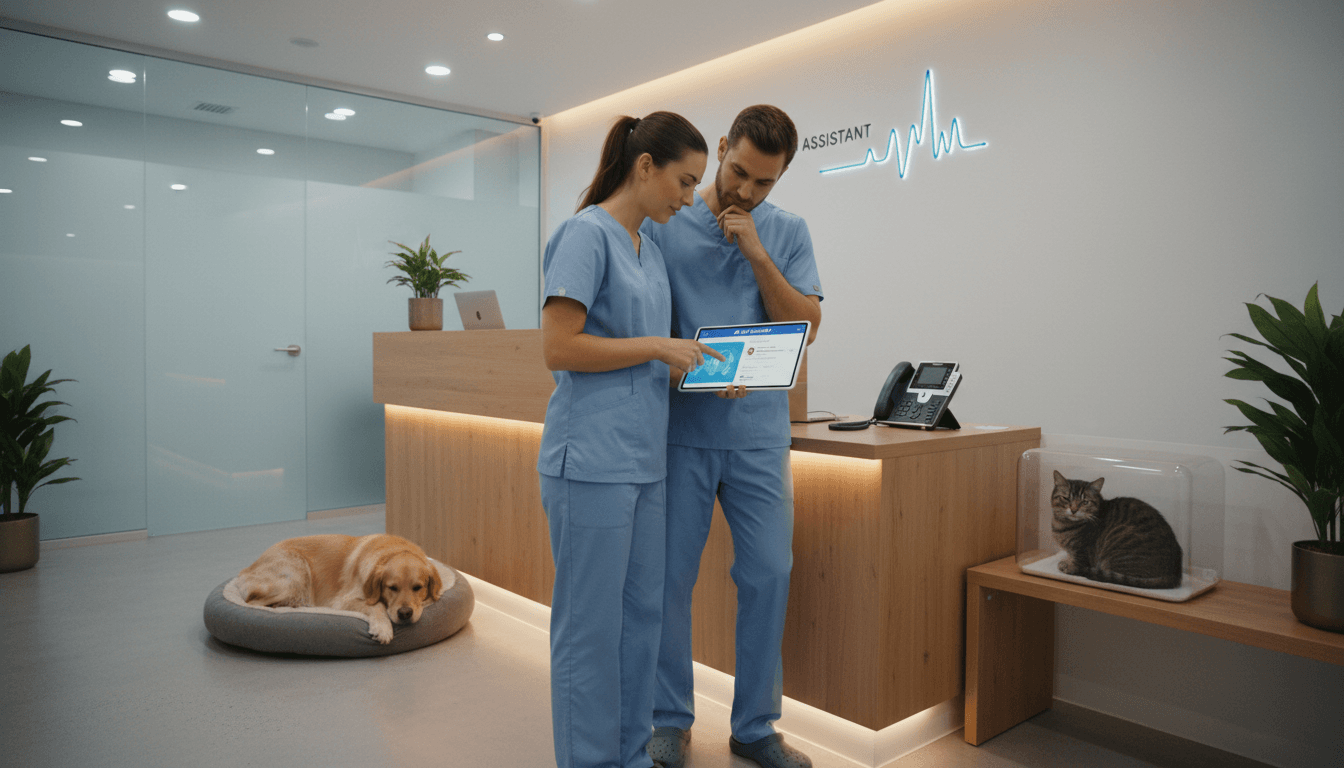
What OpenAI DevDay Means for Vet Clinic AI Tools
OpenAI’s first developer conference (DevDay) wasn’t just another tech event in San Francisco—it was a signal flare for where U.S. software is headed. When a platform says “over 2 million developers are building with our models”, you’re not looking at a niche tool anymore. You’re looking at the plumbing that’s starting to run underneath everyday digital services.
For veterinary clinics, that matters more than most people realize. Vet medicine is full of high-trust conversations (diagnoses, costs, treatment decisions), high-volume admin work (calls, reminders, refills), and messy real-world data (notes, lab PDFs, images). AI doesn’t fix all of that, but it can remove a lot of friction—especially when it’s packaged into tools your practice already uses.
DevDay’s core message to developers was simple: build real products with AI, not demos. In this post—part of our “AI for Veterinary Clinics: Animal Care Innovation” series—I’ll translate what a developer conference like DevDay means for your clinic, your software vendors, and the near-future of AI-powered practice management.
DevDay signaled a platform shift in U.S. digital services
DevDay mattered because it reinforced that AI in the U.S. isn’t “a feature” anymore—it’s becoming a platform layer. Developer conferences accelerate that shift by putting tools, documentation, and roadmaps in front of the people who actually ship software.
OpenAI positioned DevDay as a one-day event bringing hundreds of developers together for:
- Keynote previews of new tools
- Breakout sessions led by technical staff
- Community knowledge-sharing on building with AI APIs
That structure is familiar in the U.S. tech ecosystem: conferences compress learning cycles. A product manager sees what’s possible, an engineer gets implementation details, and a startup founder leaves with a clearer “we can build this next quarter” plan.
Why veterinary clinics should care about a developer conference
Most veterinary teams won’t watch a keynote livestream, and that’s fine. The impact reaches you through your software stack:
- Your practice management system (PMS)
- Online booking and reminders
- Phone answering services
- Chat widgets and texting platforms
- Inventory and pharmacy workflows
- Billing and financing tools
When the AI platform layer improves, vendors update products faster, and new niche vendors appear. That’s how AI spreads through U.S. digital services: not by every clinic hiring machine learning engineers, but by clinics buying tools built by the developer community.
The clinics that benefit first aren’t the “most technical.” They’re the ones with clean workflows and the willingness to pilot.
The practical AI building blocks DevDay highlighted
The original DevDay announcement emphasized how OpenAI’s API has evolved since 2020, making it easier for developers to integrate advanced models “with a simple API call.” That developer-centric detail has a clinic-centric translation: AI capabilities are getting easier to embed into the software you already use.
OpenAI also highlighted real usage: developers building everything from smart assistants to entirely new services that weren’t feasible before. For veterinary medicine, the most relevant building blocks typically fall into four buckets.
1) Conversational AI for customer communication
Veterinary clinics live and die by communication throughput. The phone rings. Texts pile up. Front-desk staff bounce between check-ins, estimates, callbacks, and follow-ups.
AI-powered customer communication can help with:
- After-hours triage routing (not diagnosing)
- Appointment scheduling and rescheduling
- Pre-visit history intake
- Vaccine and wellness reminders
- Post-op instructions and FAQs
- Payment and estimate explanations in plain language
The best implementations don’t pretend the AI is a vet. They treat it like a strong assistant that gathers structured information, answers routine questions, and escalates correctly.
2) Speech-to-text and call summaries for training and compliance
The RSS source references Whisper, a speech recognition model used widely by developers. In clinics, speech-to-text isn’t about novelty; it’s about reducing documentation burden.
Common, high-ROI uses include:
- Call summaries for missed calls and voicemails
- Converting phone conversations into task lists
- Drafting SOAP note starters from dictated audio
- Quality review: identifying where calls drop or owners get confused
If you’re running multi-location operations, this becomes a leadership tool: you can standardize how follow-ups and estimates are explained without listening to hundreds of full calls.
3) Image and document understanding (with realistic expectations)
Diagnostic imaging is an obvious AI target, but it’s also where clinics can get burned by hype. Here’s the stance I take: use AI to support workflows, not replace clinical judgment.
Near-term wins are often “unsexy” but powerful:
- Extracting data from lab PDFs into structured fields
- Summarizing referral records into a timeline
- Finding prior relevant history in long medical notes
- Flagging missing documentation before a case transfer
For imaging specifically, AI can help triage and prioritization, but your legal and ethical responsibility still sits with the clinician.
4) Developer-friendly APIs mean faster niche tools
When an AI platform is easy to integrate, small U.S. startups can build vertical software quickly. That’s important for veterinary medicine because it’s a specialized workflow environment:
- Species differences
- Medication and dosage variability
- Owner decision dynamics
- High emotional context
- Time pressure + staffing constraints
Generic healthcare tools rarely fit perfectly. DevDay-style momentum often produces more vet-specific AI assistants, integrations, and automations—especially around practice management and customer experience.
What U.S. SaaS vendors are building for clinics right now
The announcement notes that developers use models for “integrating smart assistants into existing applications” and building entirely new services. In practice, that’s exactly what veterinary SaaS companies are doing across the U.S.: adding AI layers on top of scheduling, messaging, and documentation.
Here’s what I’m seeing work best in real deployments.
AI appointment scheduling that doesn’t create chaos
AI scheduling only helps if it respects your constraints. The right solution:
- Understands appointment types and durations
- Applies provider rules (DVM vs tech vs assistant)
- Captures reason-for-visit in structured form
- Flags urgent symptoms for staff review
- Sends confirmations and prep instructions
If your “AI scheduling” books an ear infection into a surgery block, you’ll lose trust instantly. The bar is higher than “it can chat.”
AI practice management that reduces clicks (not adds them)
AI in veterinary practice management should remove friction:
- Auto-drafting replies to common owner questions
- Suggesting follow-up tasks based on case type
- Summarizing long patient histories before an appointment
- Generating estimate explanations at the right reading level
The metric that matters isn’t “AI usage.” It’s minutes saved per day per employee.
Marketing automation that still feels human
The campaign angle here is real: AI is powering customer communication and marketing automation across U.S. digital services. Clinics can benefit without turning into a spam machine.
Good AI-driven marketing automation looks like:
- Personalized wellness outreach based on last visit + pet age
- Targeted dental month reminders (timely, seasonal, and relevant)
- Re-engagement messages for lapsed clients with gentle language
- Post-visit review requests timed to the right moment
Bad automation is generic, constant, and tone-deaf—especially around end-of-life care. Your vendor should offer controls and exclusions.
A clinic-ready checklist for evaluating AI tools (before you buy)
Most companies get this wrong: they evaluate AI tools by features instead of by risk and workflow fit. Here’s a tighter way to assess AI for veterinary clinics.
Start with the workflow you’re fixing
Pick one of these concrete targets:
- Reduce missed calls and after-hours message backlog
- Cut appointment booking time
- Improve estimate acceptance through clearer explanations
- Speed up record review for referrals and transfers
- Reduce time spent on post-op follow-ups
If the vendor can’t show how the tool improves one of these, you’re buying novelty.
Ask the questions vendors hope you won’t
You don’t need to be technical to ask hard questions:
- Where does the AI get its information? (Your knowledge base, your website, your PMS?)
- How does it handle uncertainty? (Does it escalate, or does it guess?)
- What’s the human override path? (Can staff take over instantly?)
- How are errors detected and corrected? (Feedback loop, logs, reviews)
- What data is stored, and for how long? (Retention, access controls)
If answers are vague, pause the deal.
Pilot like you mean it
A two-week pilot with no measurement is just busywork. Set a baseline first:
- Average response time to messages
- Number of missed calls per day
- Appointment fill rate and no-show rate
- Front-desk overtime hours
- Client satisfaction signals (complaints, reviews)
Then track the delta. AI should show measurable impact quickly if it’s actually aligned to your workflow.
Where this goes next for “AI for Veterinary Clinics” in 2026
Developer conferences like DevDay speed up the supply side of AI: more tools, more integrations, more competition. For clinics, the demand side is about choosing wisely.
Over the next year, expect AI features to become standard in U.S. clinic software—especially around AI appointment scheduling, AI customer communication, and AI practice management. The winners won’t be the clinics that “use the most AI.” They’ll be the clinics that use AI to protect staff focus and improve the client experience without compromising clinical standards.
If you’re planning your 2026 operational improvements, now is a smart time to inventory where your team is drowning in repetitive communication, where handoffs fail, and where documentation slows care.
DevDay was a reminder that the builders are moving fast. The real question for veterinary leaders is simple: which parts of your clinic should stay human-only, and which parts are ready for an assistant that never gets tired?