GenAI at ITC Vegas shows how conference intelligence and personalization turn booth chats into qualified pipeline for insurance teams.
GenAI at ITC Vegas: Smarter Insurance Engagement
Event teams and insurance leaders tend to treat conferences like expensive brand billboards. Show up, scan badges, grab a few meetings, post a recap… and hope something turns into pipeline.
Most companies get this wrong. The highest-ROI conferences in insurance aren’t “about being there.” They’re about using conference intelligence—the data and workflows that turn a noisy floor into a tight set of qualified conversations, plus a measurable post-event follow-up motion.
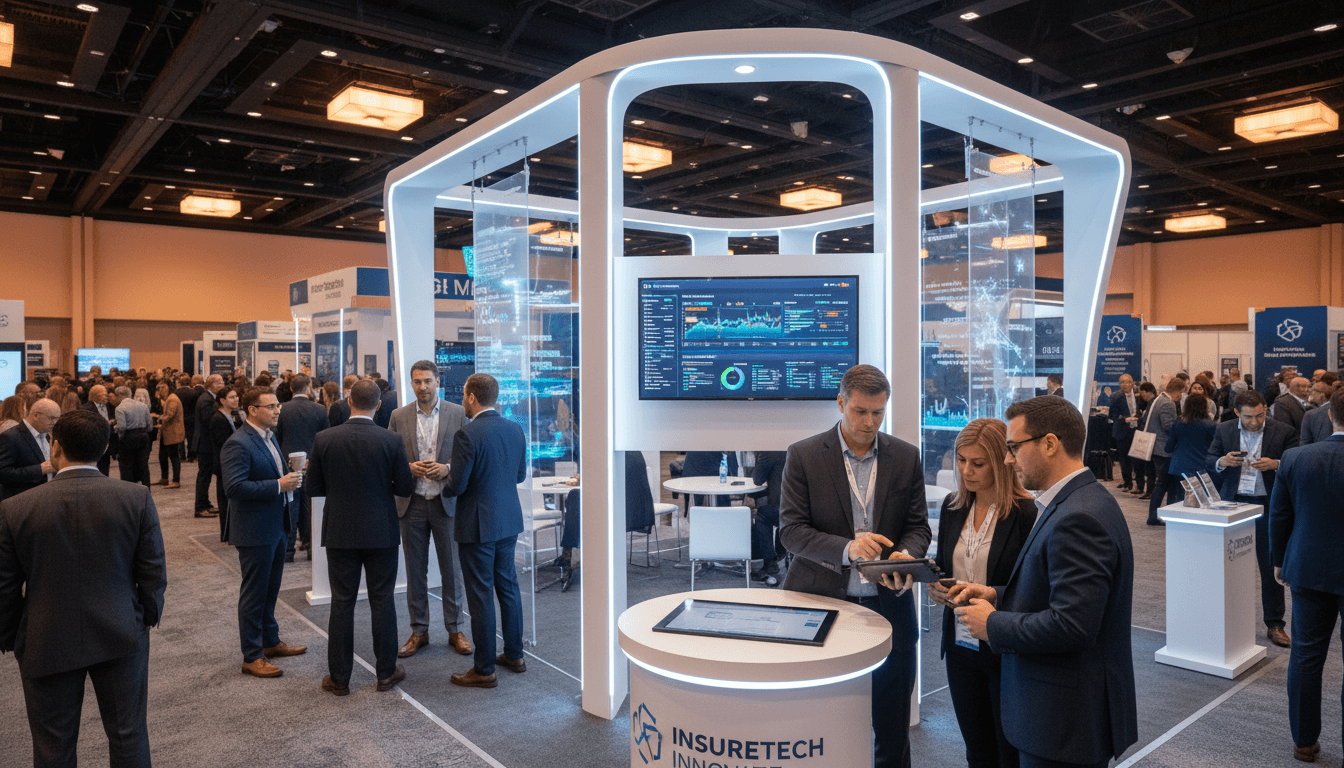
InsurTech Connect (ITC) Vegas is a perfect example. When Zelros exhibited at ITC Vegas (booth 3445, alongside partners at the Remark booth), the headline wasn’t the booth number—it was the message behind it: GenAI-powered personalization for carriers, brokers, and embedded insurance. For anyone running events, marketing ops, or distribution strategy, that’s also a practical lens for doing conferences better.
Why ITC Vegas is a “conference intelligence” test
Answer first: ITC Vegas rewards teams that treat the event as a data problem, not a travel plan.
ITC is where distribution, underwriting, claims, and customer experience collide in the same hall. That’s why it’s so useful—and so easy to waste.
In the “AI in Insurance” world, the most common failure pattern I see is this:
- The booth team meets lots of people
- Notes are inconsistent (or missing)
- Follow-up is generic (“great meeting you at ITC”)
- Sales cycles don’t accelerate because the next step isn’t personalized
Conference intelligence flips the model. You’re not just collecting leads—you’re collecting decision context:
- What line of business they care about (personal lines vs. SMB)
- Where they are stuck (quote-to-bind, renewal retention, cross-sell, call center capacity)
- What their risk posture is (compliance, data residency, model governance)
- What systems they run (CRM, policy admin, contact center tools)
If you’re serious about leads, your event strategy should be able to answer one simple question within 72 hours:
“Which 25 accounts should we pursue next week, and what exact problem are we solving for each?”
What GenAI personalization actually changes for insurance teams
Answer first: GenAI personalization changes the economics of distribution by making recommendations scalable, consistent, and measurable across channels.
Zelros positions its recommendation engine as a SaaS personalization tool for insurance products, designed to automate tailored recommendations for personal and SMB insurance. That idea matters because insurance conversations are text-heavy and nuance-heavy: needs, exclusions, endorsements, risk appetite, and coverage gaps don’t fit neatly into a dropdown.
From “product pitch” to “coverage fit”
Old-school distribution often sounds like: Here are the products we sell.
Personalized distribution should sound like: Here’s the coverage that matches your risk and your situation.
That’s the difference between:
- Pushing SKUs (hard to scale, low trust)
- Recommending coverage (higher trust, higher conversion)
Zelros highlights two technical pillars worth paying attention to:
- Secured text-based Generative AI for understanding intent in natural language
- Reinforcement learning to improve recommendations based on outcomes
Even if you’re not buying a recommender system tomorrow, the operating lesson is clear: recommendations should get better over time, and the “training signal” should be business outcomes (bind, retention, NPS, cross-sell), not vanity metrics.
Where personalization hits hardest: three workflows
Answer first: The fastest wins show up in quote-to-bind, cross-sell at service moments, and embedded journeys.
-
Agent or advisor conversations
- GenAI helps interpret a prospect’s situation (life changes, assets, business operations)
- The recommender suggests the next-best coverage options and explains why
-
Digital acquisition and embedded insurance
- Personalization reduces drop-off by aligning coverage options with intent
- Recommendation logic can adapt to partner context (e-commerce, travel, auto retail)
-
Service-to-sales (and renewals)
- Customers contact support at moments of high relevance (claims, billing changes, address changes)
- A recommendation engine can suggest coverage adjustments that fit the new risk profile
If you want a practical benchmark for 2026 planning: every insurance organization should have a measurable personalization strategy—not a “we use AI” slide.
Using AI to plan your ITC Vegas meetings like a pro
Answer first: AI improves event ROI by prioritizing meetings, improving matching, and generating consistent follow-up—before you ever scan a badge.
This post sits in our “AI for Event Management: Conference Intelligence” series, so let’s get tactical. Here’s how to apply the same personalization mindset to ITC (or any major insurance conference).
1) Build an “event ICP” that’s narrower than your normal ICP
Your year-round ideal customer profile is usually too broad for a three-day conference.
For ITC-style events, define an Event ICP with hard filters:
- Line(s) of business: personal auto/home, SMB commercial, specialty, embedded
- Distribution motion: captive, independent, digital direct, partner/embedded
- Trigger: migration, call center backlog, cross-sell initiative, new product launch
- Buying roles you can realistically meet onsite (not “everyone”)
Then rank targets into A/B/C tiers. Your team’s calendar should reflect that ranking.
2) Use “conversation prompts” as your matching engine
Networking fails when everyone asks the same lazy opener. Instead, prep a short set of prompts that pull out real intent.
Examples that map well to GenAI personalization:
- “What’s your biggest drop-off point in quote-to-bind?”
- “Where does underwriting guidance break down in agent conversations?”
- “How are you handling coverage education in embedded journeys?”
- “What’s the one metric your leadership cares about for retention this year?”
These questions are also perfect inputs for AI-assisted note-taking and follow-up.
3) Standardize meeting notes so your CRM doesn’t become a graveyard
Answer first: Post-event follow-up fails because notes are unstructured.
Adopt a simple template for every meeting (even a 6-minute booth chat):
- Persona + role
- Line of business
- Current workflow (what happens today)
- Pain (specific friction)
- Stakes (what it costs)
- Data/constraints (security, model governance, compliance)
- Next step + date
If you do nothing else, do this. A recommendation engine is only as good as its inputs; event follow-up is the same.
4) Automate personalized follow-up (but don’t send AI-sounding emails)
AI should draft the first version. A human should make it sound human.
A solid follow-up sequence after ITC looks like:
- Day 1–2: Tight recap + one relevant asset + calendar CTA
- Day 7: Specific use case mapping (their workflow → your solution)
- Day 14: Social proof (similar segment) + ROI framing
Personalization here isn’t adding their first name. It’s referencing their workflow.
What insurers should look for when evaluating GenAI vendors at conferences
Answer first: The best GenAI vendors can explain how they prevent hallucinations, protect customer data, and prove lift in a controlled test.
ITC booths are full of bold claims. Use a simple evaluation checklist to separate substance from noise.
Governance and security questions that matter
- Where does the model run (and where does data live)?
- What data is used for training, and what is excluded?
- How do you reduce hallucinations in coverage recommendations?
- Can you provide auditable reasoning or traceability?
- How do you handle PII in transcripts, chats, and notes?
Proving value: demand a pilot design, not a promise
Ask for a pilot that is measurable in 30–60 days. For personalization and recommendation engines, good pilot metrics include:
- Quote-to-bind conversion lift by segment
- Cross-sell/upsell acceptance rate
- Reduction in handle time for agent quoting support
- Increase in correct coverage selection (fewer post-bind adjustments)
Also ask for a baseline and a control group. If they can’t describe the experiment design, you’re buying hope.
Turning the “booth moment” into thought leadership
Answer first: Conferences create authority when you show your point of view and back it with repeatable methods.
Zelros didn’t just show up to ITC Vegas; they framed their presence around GenAI for insurance personalization and created additional value through community content (like a podcast format featuring industry executives).
You can copy the underlying strategy even if you’re not running a podcast:
- Host short, scheduled “micro-sessions” at your booth (10 minutes)
- Capture one usable insight per conversation (with consent)
- Publish a post-event trend brief that’s specific (not generic “top 5 trends”)
Thought leadership isn’t volume. It’s specificity.
A practical next step for your next insurance conference
Answer first: Pick one workflow to personalize, and one post-event metric to own.
If you’re heading into 2026 planning, treat conferences like ITC Vegas as a proving ground for your AI maturity. Choose one area—agent enablement, digital conversion, embedded recommendations, claims triage—and build an event plan around learning what’s real and what’s hype.
My favorite way to keep teams honest is to commit to a single number before you arrive:
- “We will book 15 qualified follow-up meetings within 10 business days.”
- “We will produce 25 account briefs with next-step proposals.”
- “We will identify three pilot opportunities tied to measurable conversion lift.”
If your current event process can’t support that, you don’t have a conference problem—you have an operating system problem.
Where do you want AI to create the first measurable lift in your insurance operation: distribution, underwriting, claims, or customer engagement?