Turn ITC Vegas GenAI hype into a repeatable playbook. Learn how to evaluate insurance AI demos and use conference intelligence to drive real pipeline.
GenAI at Insurance Conferences: What Actually Works
A lot of insurance events now advertise “GenAI everywhere.” The awkward part: most teams still leave the conference with a stack of badges, a few vendor one-pagers, and no clear plan for what to implement Monday morning.
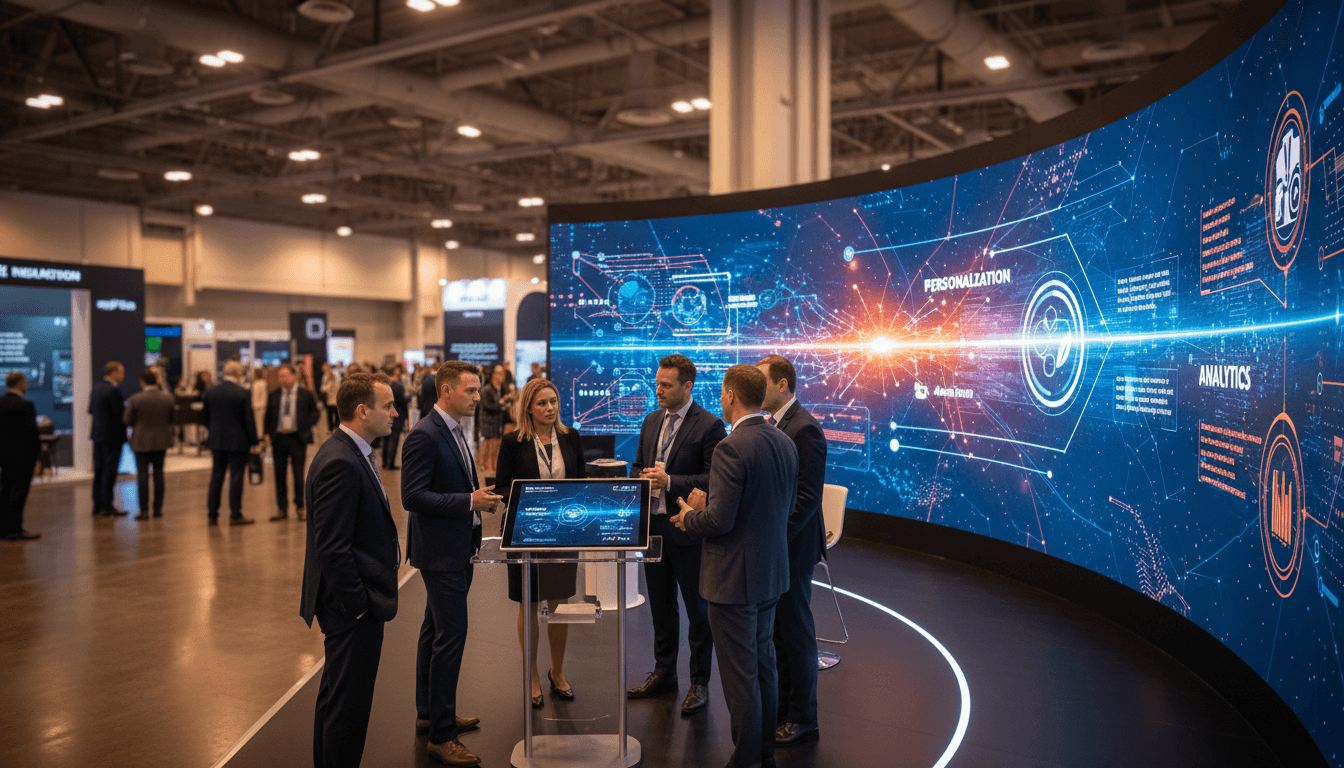
ITC Vegas is a perfect example. When Zelros showed its insurance recommendation engine at booth 3445 (inside the Remark booth), it wasn’t just a product demo—it was a snapshot of where the market is heading: GenAI that’s operational, secure, and measurable, not a science project.
This post is part of our “AI for Event Management: Conference Intelligence” series. The focus here isn’t only what happened at an InsurTech conference—it’s how event teams and insurance leaders can use conference intelligence to identify real AI use cases (underwriting, claims automation, customer engagement), run better meetings, and generate higher-quality leads.
Why ITC Vegas-style events are the new GenAI test lab
Insurance conferences have become the fastest way to validate whether an AI idea is real. The reason is simple: the conference floor compresses an entire year of vendor claims into three days of live proof.
If you’re responsible for innovation, distribution, operations, or even event planning, ITC Vegas is effectively a high-signal environment for answering three questions:
- Is the AI use case specific to insurance workflows—or generic “chat” repackaging?
- Can it integrate into your distribution stack (CRM, policy admin, call center tools) without months of custom work?
- Will your compliance and security teams tolerate it?
Zelros’ positioning at ITC Vegas 2023 is a good case study because it’s grounded in a workflow insurers actually pay for: personalized product and coverage recommendations for carriers, brokers, and embedded insurance.
Conference intelligence tip: score vendors like an underwriter
Here’s a practical method I’ve found works well for evaluating AI vendors at conferences (and it’s useful for event teams trying to systematize attendee matching and meeting prioritization): create a simple scorecard before you arrive.
Use a 0–3 rating per category:
- Use-case clarity (Is it built for underwriting/claims/distribution, or vague?)
- Data realism (What data do they require? Can you actually provide it?)
- Security posture (SSO, audit logs, data retention, model isolation)
- Time-to-value (What can be live in 60–90 days?)
- Measurement (What KPI improves, and how is it measured?)
That scorecard becomes your post-event analytics foundation: you’re not just collecting leads—you’re collecting decision-ready evidence.
What “GenAI for insurance recommendations” should mean in practice
A recommendation engine in insurance lives or dies on one thing: does it increase bind rate without increasing risk or compliance exposure? That’s the standard. Everything else is noise.
Zelros describes its solution as a SaaS personalization tool tailored for insurance products, using secured text-based Generative AI and reinforcement learning to automate customized recommendations for personal and SMB lines.
Translated into operational language, that implies the engine is aiming to:
- Understand intent from text (emails, chat, call notes, form inputs)
- Map intent to coverage gaps and product fit
- Recommend next-best actions for agents, marketers, or embedded flows
- Improve over time using feedback signals (accepted recommendations, conversions, declines)
Where this connects to underwriting and claims (even if the tool is “distribution”)
It’s easy to pigeonhole recommendation engines as “marketing tech.” That’s a mistake.
Personalization in distribution becomes underwriting intelligence when it changes the quality of submissions. For example:
- Fewer incomplete submissions because the system prompts for missing risk data at the right time
- Cleaner risk segmentation because the recommended coverage aligns with risk profile, not generic bundles
- Lower downstream friction (fewer endorsements and corrections) because policies start out closer to the customer’s real needs
On the claims side, recommendation logic can show up as:
- Suggested coverage explanations during FNOL
- Next-best guidance for claimants (documents, timelines)
- Triage recommendations for adjusters based on claim narrative signals
You don’t need the same platform to do all of that—but you should evaluate conference demos with these adjacent workflows in mind.
The 5 conference questions that expose “demo-only” AI
Most AI demos look good under perfect conditions. At ITC Vegas (or any major insurance conference), you can separate signal from showmanship by asking the same five questions every time.
1) “What’s the input you need on day one?”
If the answer is “a full data lake,” the timeline is already slipping.
Strong insurance AI products start with data you already have:
- product catalogs and rules
- historical quotes and bind outcomes
- basic customer and policy attributes
- agent interactions (notes, emails, transcripts)
2) “What’s the feedback loop?”
A recommender that doesn’t learn is just a rules engine with better UX.
Ask what signals improve the system:
- agent acceptance vs override
- customer clicks and conversions
- quote-to-bind ratios by segment
- complaint or compliance flags
3) “How do you control hallucinations and coverage risk?”
For GenAI in insurance, the real risk isn’t that the model is wrong in a general sense. The risk is that it’s confidently wrong in a regulated environment.
Look for concrete controls:
- retrieval from approved product/coverage sources
- guardrails that restrict outputs to allowed recommendations
- explainability: why this recommendation in insurer language
- audit trails for compliance reviews
4) “What changes in the agent workflow?”
If the answer is “nothing, it’s fully automatic,” be suspicious.
The best tools reduce cognitive load without removing agent accountability. In practice, that looks like:
- pre-filled recommendation rationales
- suggested questions for fact-finding
- prompts that reduce omissions and errors
5) “What KPI do you guarantee you can move?”
No vendor should promise miracles. But they should be able to name a measurable target:
- higher quote-to-bind
- increased cross-sell/upsell acceptance
- reduced handle time in contact centers
- improved consistency in coverage advice
If you can’t tie the demo to a KPI, it’s not conference intelligence—it’s conference entertainment.
How event planners can use AI to make insurance conferences more productive
Conference intelligence isn’t just for attendees. Event organizers and marketing teams can apply the same AI concepts to reduce waste and improve outcomes.
Here are practical AI for event management applications that map directly to what insurance professionals want at ITC-style events.
Attendee matching that prioritizes real buying signals
A basic “recommended connections” feature is easy. The useful version predicts who should meet based on:
- role + current initiatives (e.g., claims automation, GenAI in distribution)
- buying stage signals (sessions saved, booths visited, downloads)
- firmographic fit (LOB, size, geography, tech stack)
This is where reinforcement learning-style feedback loops matter: did the meeting happen, and did it lead to a next step?
Schedule optimization that reduces the “meeting Tetris” problem
Insurance conferences create a constraint nightmare: limited booth time, offsite dinners, session attendance, and stakeholder calendars.
AI schedule optimization can:
- cluster meetings by venue proximity
- reserve buffer time for walk-ups and follow-ups n- prioritize high-fit meetings when calendars collide
The goal is simple: fewer missed meetings and more meaningful conversations.
Post-event analytics that connects sessions to pipeline
Most teams still measure conferences like it’s 2015: leads collected, meetings booked, maybe cost per lead.
Conference intelligence should track:
- meeting-to-opportunity conversion rate within 30–60 days
- time-to-first-follow-up (same day beats next week)
- content engagement by persona (what claims leaders consumed vs distribution leaders)
- drop-off analysis (where interest dies in the funnel)
If you’re running events for lead generation, this is where budget decisions become defensible.
What to take from Zelros’ ITC Vegas presence (and apply to your 2026 plan)
The headline isn’t “Zelros had a booth.” The useful takeaway is what that booth signaled about insurer priorities:
- Personalization is now a core insurance capability, not a nice-to-have. If recommendations improve conversion while keeping coverage aligned to risk, insurers will fund it.
- GenAI needs to be secured and constrained. Text-based GenAI is powerful in insurance because so much context is unstructured—but it must operate within compliance guardrails.
- Reinforcement learning thinking is spreading. More insurance AI tools are being evaluated on their ability to improve with feedback, not just generate outputs.
And there’s an event-level lesson too: if your team attends ITC Vegas (or any major insurance conference) without a structured evaluation plan, you’re relying on memory and vibes. That’s not strategy.
A simple 72-hour post-event playbook (that actually converts)
If your goal is leads—not just exposure—use this:
- Within 24 hours: send a two-line follow-up referencing the exact use case discussed (not “great meeting you”).
- Within 48 hours: propose a specific next step: a 30-minute working session with your data/ops stakeholders.
- Within 72 hours: document the “minimum viable pilot” scope: data inputs, workflow touchpoints, success KPI.
This is where conference intelligence becomes revenue intelligence.
Next step: treat conferences like an AI deployment, not a field trip
Insurance leaders are past the phase of debating whether GenAI matters. The real work is choosing where it fits—distribution, underwriting, claims, contact centers—and implementing it without triggering security, compliance, or customer trust problems.
If you’re planning your 2026 event calendar or prepping for the next ITC-style conference, build your approach around conference intelligence: better attendee matching, tighter meeting qualification, and post-event analytics that prove ROI.
Most teams get this wrong by treating the conference as the finish line. It’s the intake form. What changes when you start treating every booth conversation as the beginning of a measurable AI pilot?