AI-optimized minigrids boost reliability, cut diesel use, and improve resilience. Learn where AI fits—forecasting, dispatch, maintenance, and load control.
AI-Optimized Minigrids for Resilient Clean Power
More than 1 billion people still lack reliable electricity, and even “fully electrified” regions are getting a new crash course in outages as storms, heat, and wildfires stress aging grids. Minigrids (often called microgrids) are already filling the gap with solar, wind, batteries, and sometimes generators—keeping clinics running, schools open, and businesses productive.
Most people stop the story there: panels + batteries = resilience. But the results we’re seeing in the field—communities going from 4 hours of power to 16–20 hours a day, islands covering 93% of demand with a hurricane-hardened solar microgrid, remote Alaskan towns cutting 350,000–400,000 gallons of diesel per year—all point to a second truth: minigrids perform best when they’re operated like modern grids, with modern intelligence. That’s where AI fits squarely into the “AI for Energy & Utilities: Grid Modernization” narrative.
If you work at a utility, develop distributed energy projects, or support critical facilities (hospitals, bases, schools), the practical question isn’t “Are minigrids good?” It’s: How do we make minigrids cheaper to run, easier to scale, and more resilient under real-world conditions? Increasingly, the answer is AI-driven optimization.
What renewably powered minigrids are (and why they’re scaling)
Minigrids are local power systems that combine renewable generation, battery storage, and controls to supply electricity to a defined area—either stand-alone or connected to a larger grid. They’re gaining momentum because they solve three problems at once: energy access, reliability, and resilience.
A typical renewably powered minigrid includes:
- Generation: usually solar PV, sometimes wind
- Storage: batteries sized for evening peaks and outages
- Controls: the brain that balances supply, demand, and reliability
- Backup (optional): a diesel generator for long cloudy stretches or emergencies
Minigrids come in a few common forms:
Isolated minigrids
Best for places with no grid. These are stand-alone systems in rural and remote regions, often pairing solar + batteries with diesel backup. The operational challenge is simple: you must keep frequency and voltage stable with limited resources.
Undergrid minigrids
Best for places with grid wires but bad service. These systems use existing distribution lines but don’t exchange power with the main grid. They’re designed for areas where the distribution network exists, yet supply is weak or intermittent.
Interconnected minigrids
Best for “grid-present but grid-stressed” environments. These systems can buy from the main grid when it’s cheap or necessary, and use local solar/batteries when that’s better. This configuration has a huge upside: it can reduce the battery capacity needed for reliability by using the grid strategically.
Here’s the key stance I’ll take: the configuration is only half the battle. The other half is the operating strategy—when to charge, when to discharge, when to island, when to shed load, and how to keep costs predictable. That’s an AI problem as much as an electrical one.
The real value: resilience, reliability, and affordability in practice
Minigrids work because they localize control and generation, so one failure doesn’t cascade into a regional blackout. They also reduce reliance on expensive fuels and long supply chains.
Three examples make the value concrete:
- Nigeria (Toto): an interconnected minigrid with 352 kW solar PV and 972 kWh of battery storage powers about 2,000 households and 141 commercial users.
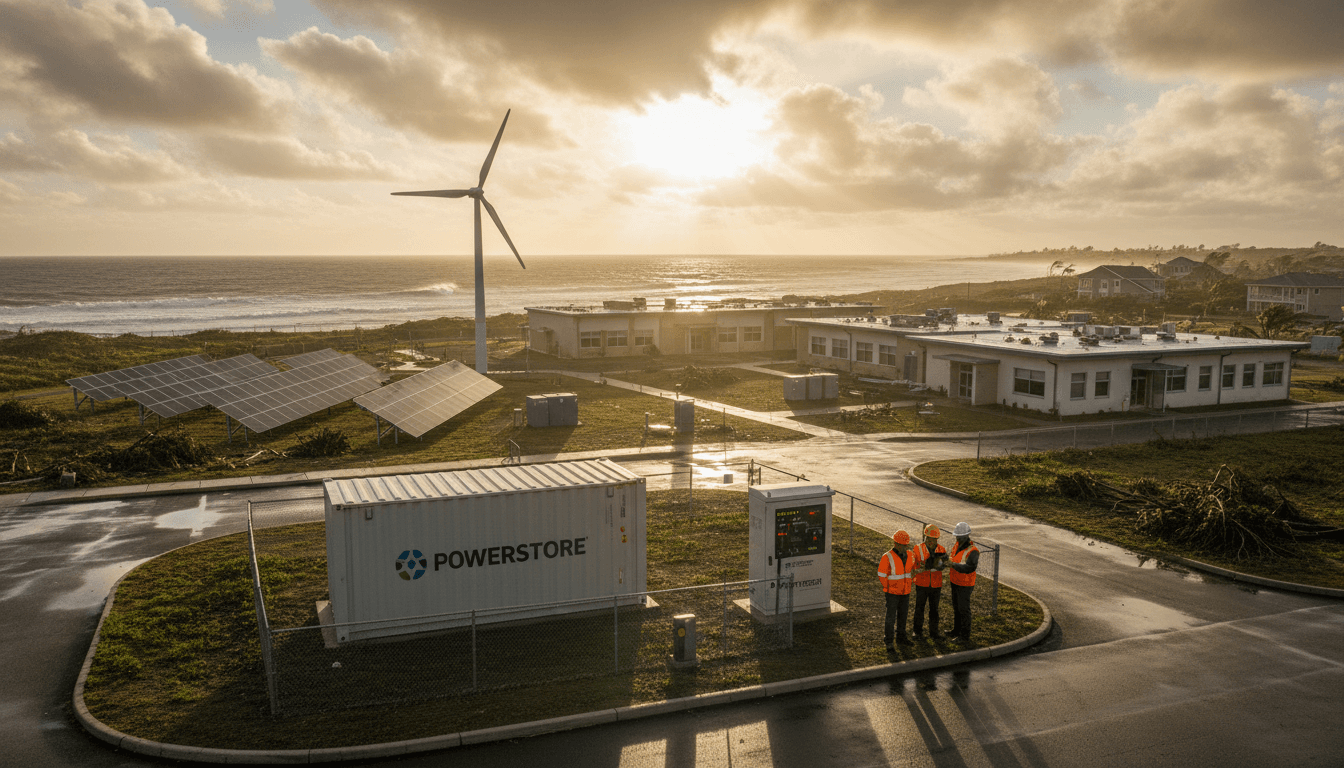
- Bahamas (Ragged Island): after Hurricane Irma destroyed infrastructure, a 390 kW solar microgrid was designed to withstand Category 5 conditions and now supplies 93% of the island’s energy needs.
- Alaska (Kotzebue): a remote Arctic community installed a renewably powered microgrid with 2 MW wind, 1 MW solar, and 1.2 MW storage, displacing 350,000–400,000 gallons of diesel annually.
These aren’t “nice-to-have” outcomes. They’re operationally measurable: fewer outage hours, lower fuel purchases, reduced logistics risk, improved public safety.
The hidden constraint: operations and maintenance
As minigrids scale, O&M becomes the cost center that decides whether projects thrive or stall. Battery health, inverter failures, communications dropouts, and protection settings can quietly erode performance.
This matters for leads and decision-makers because many minigrids fail for unglamorous reasons:
- The battery is cycled too aggressively and degrades early
- Solar output is poorly forecasted, leading to diesel “just in case” running
- Operators lack visibility into loads and losses
- Interconnection rules force conservative settings that waste renewable energy
AI doesn’t replace sound engineering, but it does turn operations from reactive to predictive.
Where AI fits: the “autopilot” layer for modern minigrids
AI improves minigrids by predicting what will happen next (load, weather, failures) and optimizing decisions (dispatch, charging, islanding) in real time. In grid modernization terms, it’s the shift from static rules to adaptive control.
AI use case 1: Solar + load forecasting that actually improves uptime
Short-term forecasting (15 minutes to 48 hours) can directly reduce fuel burn and outages.
- If you can predict the evening peak, you can pre-charge batteries without overcharging early.
- If you can predict a cloudy afternoon, you can schedule discretionary loads (water pumping, ice making, milling) at better times.
In undergrid and interconnected setups, forecasting also enables smarter grid imports—buying energy when it’s cheaper or cleaner, and conserving the battery for moments when it’s truly needed.
AI use case 2: Optimal dispatch to extend battery life (and cut lifecycle cost)
Batteries are often the most expensive component over the full project life. AI-enabled dispatch can reduce degradation by:
- Avoiding high-depth cycles when unnecessary
- Limiting time spent at extreme states of charge
- Coordinating multiple battery strings to balance wear
A simple, snippet-worthy truth: If you run a battery “hard” to save diesel today, you may pay for it twice in early replacement costs. AI helps quantify and manage that trade-off.
AI use case 3: Predictive maintenance for inverters, breakers, and gensets
Predictive maintenance is a natural fit for minigrids because the asset set is repeatable and sensor-friendly.
Common signals AI models can learn from include:
- Inverter temperature and harmonic distortion trends
- Battery internal resistance and cell imbalance
- Generator run-hours, vibration signatures, and start failure patterns
- Feeder-level voltage excursions that hint at failing connections
For critical facilities—schools used as hurricane shelters, clinics, military bases—this is not “optimization.” It’s risk management.
AI use case 4: Smarter load management without upsetting customers
A lot of minigrids still treat demand response as blunt-force load shedding. A better approach is tiered reliability and priority-based control.
AI can help segment loads into tiers:
- Life safety and mission critical (clinic refrigeration, communications)
- Community resilience (school shelter lighting, water purification)
- Commercial continuity (cold drinks, metalworks, bakeries)
- Deferrable (ice making, pumping, some industrial processes)
Then it can automate decisions like: reduce tier-4 loads during a cloudy stretch rather than shutting off whole feeders.
“Resilience isn’t just keeping the lights on. It’s keeping the right lights on.”
Designing minigrids for climate resilience: what changes in 2026 planning
Climate volatility is now a design input. That’s especially relevant in December 2025, when many utilities are finalizing 2026 capital plans while also responding to escalating storm hardening and reliability mandates.
Interconnected minigrids: from pilots to portfolios
Interconnected minigrids are often the easiest way for utilities to scale because they can use the grid as a supplemental resource. But they demand better controls.
A practical portfolio approach looks like this:
- Standardize a few reference architectures (school, clinic, town center)
- Adopt a common telemetry and data model
- Use AI to benchmark performance across sites (energy yield, outage response, battery health)
When organizations treat each microgrid as a one-off, costs stay high and learning stays local. Portfolios make learning compound.
Hurricanes, heat, and wildfire smoke: operational playbooks matter
Hardware hardening (Category 5-rated installations, elevated equipment, flood protection) is only step one. Step two is a playbook, ideally automated:
- Pre-storm battery charge targets
- Islanding criteria and protection settings
- Post-event black start sequence
- Fuel conservation rules for backup generators
AI can encode these playbooks so execution doesn’t rely on one heroic operator being awake at 3 a.m.
Implementation checklist: what utilities and developers should do next
If you’re considering AI-enabled minigrids, start with data discipline and operational clarity—not a flashy model. Here’s what works in practice.
1) Decide what you’re optimizing (and what you’re not)
Pick two or three primary objectives for the first phase:
- Minimize diesel fuel consumption
- Maximize uptime for priority loads
- Extend battery life (reduce degradation)
- Reduce outage restoration time
Trying to optimize everything at once usually produces a control system nobody trusts.
2) Build the minimum viable telemetry stack
You don’t need thousands of sensors, but you do need consistent ones:
- PV output, inverter status, battery SOC/SOH
- Feeder-level voltage and current
- Generator fuel use and run state (if present)
- Customer load at least at the transformer/feeder level
3) Start with “human-in-the-loop” AI
For operational trust, I prefer a staged rollout:
- AI provides recommendations (charge now, shed tier-4 loads)
- Operators approve actions
- Automation increases as accuracy and trust build
4) Measure results like a utility, not a lab
Track metrics that finance and operations teams will actually defend:
- SAIDI/SAIFI improvements for served customers
- Fuel consumption per kWh served
- Battery degradation rate (capacity fade per month)
- Cost to serve (including O&M) versus baseline
5) Plan cybersecurity from day one
More connectivity is good for insight, but it expands the attack surface. Segment networks, enforce access control, and treat remote control as a privileged function.
The question utilities should ask before scaling
Renewably powered minigrids already prove they can deliver reliable electricity—from Nigerian communities improving from 4 hours to 16–20 hours daily, to Caribbean schools acting as emergency shelters, to Arctic towns cutting hundreds of thousands of gallons of diesel.
The next step in grid modernization is making those minigrids smarter, cheaper to operate, and easier to replicate. AI is the enabling layer that turns “a microgrid that works” into “a microgrid fleet you can manage.”
If you’re building a 2026 roadmap, here’s the question that separates experimentation from impact: Are your minigrids designed as isolated projects—or as an AI-managed portfolio with shared data, shared playbooks, and measurable performance targets?