Hitachi Energy’s $30M CAD Ontario expansion highlights a core truth: grid modernization depends on service capacity—and AI makes that capacity far more effective.
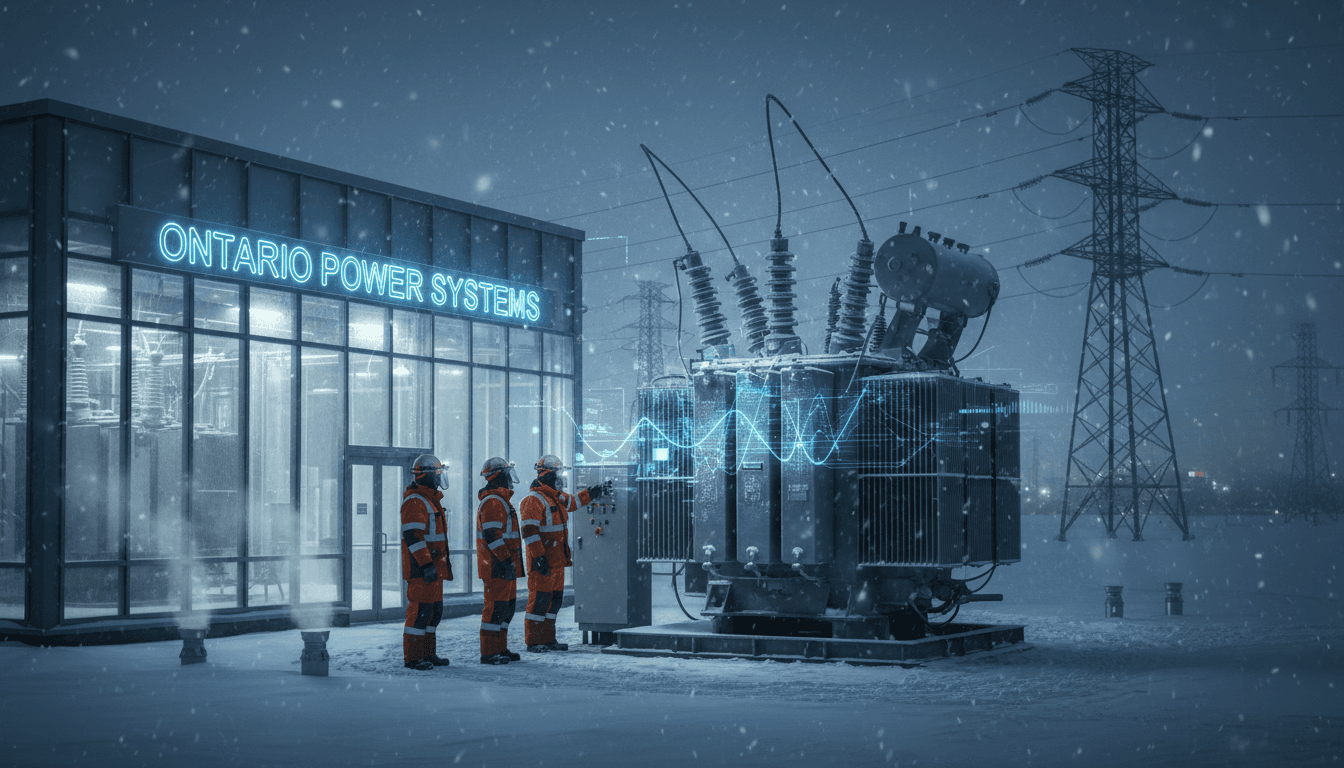
AI-Ready Grid Modernization Starts With Service Capacity
$30 million CAD isn’t a flashy number in the world of transmission buildouts, but it’s the kind of investment that quietly decides whether the grid keeps up—or falls behind. Hitachi Energy’s plan to expand and modernize its service operations in Ontario (Stoney Creek and a new field service hub in Cambridge) is a practical response to a problem utilities feel every day: electricity demand is rising, equipment is aging, and lead times don’t care about your decarbonization targets.
Here’s the stance I’ll take: grid modernization isn’t bottlenecked by ambition—it’s bottlenecked by service capacity. If you can’t refurbish, maintain, and rapidly return critical assets like large power transformers to service, then AI pilots, renewable integration plans, and electrification roadmaps all get stuck in the same place: the interconnection queue and the outage schedule.
This post is part of our “AI for Energy & Utilities: Grid Modernization” series, so we’ll connect the dots between this expansion and what it unlocks for AI-driven grid optimization, predictive maintenance, and planning.
Why transformer service capacity is now a grid constraint
Large power transformers have become a gating factor for reliability and growth. They’re expensive, difficult to move, slow to replace, and essential to high-voltage transmission. When one is out, the grid doesn’t just “run a little less efficiently”—it can lose redundancy, increase congestion, and push operators into uncomfortable operating envelopes.
Canada’s load growth drivers—population growth, electrification of industry, EV adoption, data center expansion, and clean energy buildout—create a double bind:
- Demand rises quickly, which pushes the network harder.
- Replacement cycles are slow, because new equipment manufacturing and delivery can take years.
That’s why Hitachi Energy’s Ontario investment is meaningful: it targets the “keep it running” layer of modernization. The Stoney Creek facility is positioned as Canada’s only site dedicated to upgrading and extending the life of medium- and large-power transformers up to 765 kV, and the plan includes upgrades intended to shorten turnaround times so critical assets return to service faster.
And there’s a climate angle that’s more concrete than most sustainability claims: refurbishing transformers can cut emissions by up to 70% versus manufacturing new equipment, by reusing major components. That’s decarbonization through operations—not just procurement.
The overlooked connection: service operations are where AI pays off fastest
AI value in utilities often shows up first in maintenance and service workflows. Not because it’s the most glamorous use case, but because the inputs are already there (work orders, inspection notes, test results, outage logs), and the outcomes are measurable (truck rolls, mean time to repair, forced outages, safety incidents).
Hitachi Energy’s expansion signals a broader pattern: OEMs and service providers are building the physical capacity to do more lifecycle work. AI is what turns that additional capacity into a reliability multiplier.
Predictive maintenance that’s actually deployable
A predictive maintenance model is only useful if it changes decisions. More service capacity makes it possible to act on predictions—schedule proactive interventions, prioritize refurbishments, and stage parts.
Where AI fits in the transformer lifecycle:
- Condition assessment triage: rank assets by failure risk using dissolved gas analysis (DGA), partial discharge patterns, oil quality trends, thermal history, and loading.
- Remaining useful life (RUL) estimation: forecast degradation trajectories to plan refurbishments before risk spikes.
- Failure mode classification: distinguish “watch and wait” issues from those that demand immediate intervention.
A practical point: utilities don’t need perfect models; they need models that are directionally right and operationally integrated. The goal is fewer surprises, not a PhD thesis.
Faster turnaround depends on better planning—not just more bays
Hitachi Energy’s planned upgrades at Stoney Creek aim to shorten refurbishment turnaround times. That’s where AI-driven planning becomes surprisingly powerful.
Examples that tend to work well:
- Job duration prediction: estimate refurbishment time based on equipment type, condition indicators, and past work history.
- Parts and tooling forecasting: predict what will be needed before teardown reveals it.
- Bottleneck detection: identify which steps (testing, drying, winding work, logistics) consistently create schedule slip.
This matters because transformer outages are expensive in ways that don’t show up neatly on one ledger line: congestion costs, deferred load connections, increased risk exposure, and operational complexity.
Field service hubs + AI = better restoration performance
The new Cambridge field service center is described as a hub for on-site maintenance and rapid response. Rapid response improves when you can predict what’s about to happen and pre-position the response.
AI can support:
- Storm and extreme weather readiness: align crew staging with asset vulnerability and feeder criticality.
- Dynamic dispatch: prioritize tickets based on customer impact, safety risk, and restoration time.
- Knowledge capture: turn technician notes into reusable troubleshooting playbooks via natural language processing.
Most utilities already have some version of these processes. AI’s role is to reduce the guesswork and speed up the loop from “signal” → “decision” → “action.”
What this means for Canadian grid modernization in 2026 planning cycles
This investment aligns with a simple reality: you can’t modernize the grid by replacing everything. You modernize by extending what still has value, upgrading what’s stressed, and building new where growth demands it.
Ontario’s own messaging around transmission and generation buildout underscores that the province is in a major expansion cycle. Service infrastructure inside the province also supports a strategic goal that utilities and governments are increasingly explicit about: resilience and supply chain self-reliance.
For utilities and large C&I energy users, there are three implications worth acting on now.
1) Treat refurbishment capacity as part of resource adequacy
Most resource adequacy conversations focus on generation and capacity markets. That misses a core fact: a forced transformer outage can “remove” capacity just as surely as a generator trip, by constraining transfer capability.
A more modern planning approach:
- include refurbishment lead times and service availability in reliability studies
- model transformer outage scenarios alongside generation outages
- quantify the congestion and curtailment exposure of transformer constraints
This is where AI-driven grid planning and probabilistic risk models can support better decisions.
2) Build an “asset data spine” before you buy more AI tools
If you’re trying to operationalize predictive maintenance, the biggest barrier usually isn’t the model. It’s data fragmentation.
What works in practice is creating a minimum viable asset data spine that ties together:
- asset registry and hierarchy
- inspection and test results (including lab data)
- outage and fault history
- work orders and maintenance actions
- loading and operational telemetry (where available)
Once that exists, you can layer AI applications on top without rebuilding integrations for every new use case.
3) Write service readiness into contracts and KPIs
If you’re partnering with OEM service providers (or running internal service teams), AI-enabled operations should show up in the expectations.
Examples of KPIs that push the right behavior:
- reduction in forced transformer outages (rate and severity)
- mean time to diagnose (MTTD) and mean time to restore (MTTR)
- refurbishment cycle time variance (not just average)
- “first-visit fix” rate for field service
- critical spares availability and staging accuracy
The message is simple: don’t measure activity; measure resilience outcomes.
A practical playbook: 6 AI use cases that match service expansions
Service expansions create the perfect environment for AI because the workflows are repeatable, measurable, and high-impact. If you’re mapping your 2026 digital roadmap, these six use cases pair well with transformer lifecycle services and field response.
- Transformer health scoring using DGA, oil tests, and historical maintenance
- RUL forecasting to plan refurbishments and reduce catastrophic failures
- Work order intelligence that flags likely parts/tools and expected job duration
- Inventory optimization for critical spares based on failure probabilities
- Dispatch prioritization for field service based on impact and restoration time
- Technician copilot that retrieves procedures and past fixes from unstructured notes
A strong first implementation target is often #1 + #3: health scoring connected to work order planning. It’s easier to deploy, and teams feel the benefit quickly.
What to do next if you’re responsible for reliability or modernization
Hitachi Energy’s $30M CAD investment is a reminder that grid modernization is a mix of new build and better care of what we already rely on. More refurbishment bays and a dedicated field service hub help. But the biggest payoff comes when service capacity is guided by better prediction, better prioritization, and better planning.
If you’re leading grid modernization, here are next steps I’d put on your January list:
- identify your top 20 “system-critical” transformers and verify the data you actually have on them
- quantify the cost of one major transformer outage (congestion + reliability + customer impact)
- pick one AI use case that directly reduces forced outages, and tie it to a service workflow that can act on the output
The next 12 months will reward utilities that treat AI as an operations discipline, not an innovation lab project. When service capacity grows, the question becomes: will your organization make smarter decisions with it?