Mobile digital IDs combine biometrics and device trust to reduce payments fraud. See where AI models benefit most and how to implement safely.
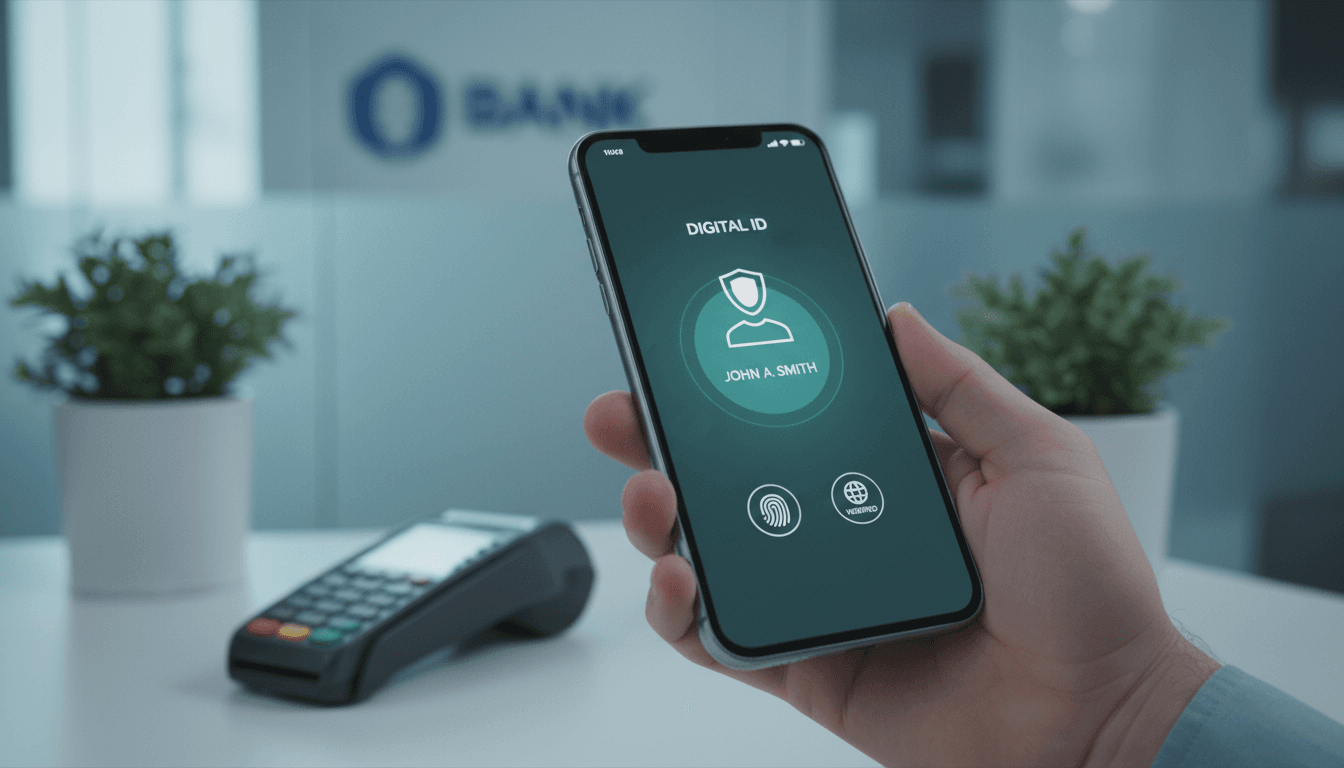
Mobile Digital IDs: A Smarter Layer for Fraud Defense
Fraud teams are fighting a weird battle in late 2025: payments are getting faster, but identity is still often verified with slow, guessable trivia. Meanwhile, most customers already carry trusted hardware + biometrics in their pocket—hardware that can prove “this is the same device” and “this is the real person” far better than a mother’s maiden name.
That’s why the recent push from U.S. lawmakers to pair digital IDs (think passport or Real ID credentials) with smartphone biometrics matters. Not because it’s shiny. Because it’s one of the few approaches that can raise fraud resistance without adding more friction. And when you connect that to AI, mobile IDs become more than an authentication step—they become a reliable signal for real-time fraud detection.
This matters most in December. Holiday volume spikes, account takeover attempts surge, and customer support queues get ugly. If you’re building or operating payments infrastructure, you don’t need another bolt-on rule. You need an identity layer that’s trustworthy enough for automation.
Why mobile digital IDs are showing up in fraud strategy now
Answer first: Mobile digital IDs are rising because they combine three things fraud programs need—high assurance, low friction, and machine-verifiable signals that work in real time.
Two practical shifts are driving momentum:
-
Device security is finally “good enough” at scale. Modern iOS and Android devices use secure enclaves / trusted execution environments to protect biometric keys and signing operations. Fraudsters can steal passwords in bulk; they can’t easily steal and operate millions of secured devices with successful biometric unlock.
-
Digital identity documents are becoming available on consumer devices. Apple’s recently introduced Digital ID capability and TSA pilots across participating states are a proof point that mobile presentation of ID is moving from theory to rollout. Adoption will be uneven, but the direction is clear: identity credentials are moving closer to where transactions happen.
The political debate around anything that resembles a national ID is real. But from a payments risk standpoint, the core idea is straightforward: bind a credential to a device, and confirm the human with biometrics.
A fraud stack that can’t reliably answer “is this the right person on the right device?” will keep bleeding money as payment speed increases.
What “mobile phone ID” really means in a payments context
Answer first: In payments, mobile phone IDs aren’t a single identifier—they’re a bundle of signals that can support strong customer authentication, device reputation, and identity proofing.
When people hear “phone ID,” they often imagine a static device identifier you can track forever. That’s not how modern privacy and platform design works (and it shouldn’t be). In practice, you’re dealing with:
Device-bound cryptographic keys (the signal you actually want)
A high-assurance design uses public/private keys generated and stored on-device. The device can then sign a challenge to prove possession of the private key without exposing it. This gives you a strong “same device” and “device is uncompromised” signal, especially when the signing operation requires biometric unlock.
Mobile ID credential presentation
A digital driver’s license, Real ID credential, or passport-derived credential presented from a wallet can provide a verified identity claim (for example, name, DOB, address, or “over 21” proofs). The best implementations support selective disclosure so the merchant or fintech doesn’t receive more data than needed.
Biometric match as a step-up trigger
Face/fingerprint unlock is not a magic shield by itself. But as a step-up for risky moments—new payee, new device, unusual amount, address change—it’s one of the few controls customers will actually tolerate.
Put together, the goal isn’t “track the phone.” The goal is cryptographic device binding + user presence.
Where AI fits: turning mobile IDs into a fraud signal, not just an extra step
Answer first: AI makes mobile digital IDs valuable at scale by using them as high-quality features in risk models—improving fraud catch rates while reducing false declines.
A common mistake is treating digital ID as a one-time KYC event. In payments, the bigger win is continuous risk evaluation. Here’s how AI and mobile IDs reinforce each other:
1) Better features for account takeover (ATO) detection
ATO often looks “legit” at the surface: correct password, known email, even familiar IP ranges through residential proxies. What breaks the illusion is device continuity.
AI models get sharper when you add signals like:
- Has this device previously authenticated this account using a device-bound key?
- How stable is the device’s relationship to the account over time?
- Did biometric-gated signing occur for this session or transaction?
- Is the device’s integrity posture consistent with prior sessions?
When the model sees a password login from a “new but plausible” environment, device-bound proof becomes a deciding factor.
2) Faster, safer approvals in real-time payments
Instant payments (and faster card decisioning) reduce the time you have for manual review. You need automated trust. A mobile digital ID-backed authentication can become an approval accelerant:
- Low-risk transactions: frictionless pass
- Medium-risk: step-up with biometric + device signing
- High-risk: block or route to manual review
The AI angle is crucial: step-up should be selective, driven by risk scoring, not applied to everyone.
3) Lower false positives through “high-assurance context”
False declines are expensive—lost revenue, support costs, churn. A mobile ID event is a strong contextual anchor. If a customer suddenly purchases from a new location while traveling for the holidays, a model that sees a valid device-bound identity proof can approve confidently.
Here’s the stance I’ll take: fraud teams should chase fewer signals, but higher-quality ones. Mobile digital IDs are exactly that.
Real-world use cases that benefit first (and why)
Answer first: The best early wins are workflows where fraud losses are high and customers accept authentication—onboarding, payout changes, and high-risk payments.
Onboarding: stop synthetic identity at the door
Digital ID + device binding can raise the cost of synthetic identity fraud by forcing a stronger link between a real-world credential and a secured device.
Practical pattern:
- User scans/loads a mobile ID credential
- Device generates a key pair and registers the public key to the account
- AI model scores identity risk using document + device + behavioral signals
- If risk is acceptable, approve and establish device trust
Account changes: protect the moments that actually matter
Most ATO losses happen after a change: new email, new phone, new payee, new bank account. These are the moments to require biometric-gated device proof.
Controls that tend to perform well:
- Step-up required for changing payout destination
- Step-up required for adding a new payee
- Cooling-off period if no trusted device is present
Government and enterprise disbursements: reduce “benefits fraud” leakage
The RSS story referenced pandemic-era benefits fraud on a massive scale, with criminals intercepting large amounts of aid. The specific number is debated across reports, but the lesson is consistent: weak identity proofing + high-volume payouts = a fraud magnet.
A mobile digital ID approach can force the attacker to defeat a much harder target: possession of secured hardware + biometric user presence.
Implementation reality: what to design (and what to avoid)
Answer first: To make mobile digital IDs work, you need privacy-aware device binding, fallback paths, and a plan for interoperability.
Design for privacy and auditability at the same time
The system should minimize data sharing while still enabling investigation when fraud occurs.
Good design choices:
- Use device-bound keys and signed challenges instead of static IDs
- Store the minimum identity attributes needed for your use case
- Log consented authentication events (time, method, assurance level)
Expect fragmentation across states, apps, and platforms
Digital ID programs vary. Some states require their own apps; recognition differs across relying parties. Build your architecture so you can support multiple credential providers without rewriting core risk logic.
A practical approach is a normalized internal schema:
credential_type(passport-derived, mDL, Real ID)assurance_level(your internal scoring)device_binding_status(bound, unbound, unknown)user_presence(biometric-gated, passcode-only, none)
Don’t make biometrics your single point of failure
Biometrics help, but fraudsters also use coercion, deepfakes, and social engineering. Pair biometrics with:
- Transaction context (amount, velocity, payee history)
- Behavioral signals (typing cadence, navigation patterns)
- Network and device posture signals
AI is the orchestration layer that decides which control to apply.
“People also ask”: the questions buyers raise in procurement
Answer first: Most objections are valid. You can address them with clear architecture and policy choices.
Will mobile IDs increase conversion friction?
They can, if you force them too early. Use AI risk scoring to reserve step-up for high-risk events. For low-risk users, keep flows light.
What about users without compatible phones?
You need graceful fallbacks: traditional document verification, knowledge checks as a last resort, or in-branch verification for high-value accounts. The goal is to raise the ceiling on assurance, not exclude customers.
Is this basically a national ID debate?
Politically, it can become one. Operationally for payments, the question is narrower: can you accept a verified credential and bind it to trusted hardware with user presence? That can work with multiple credential issuers and privacy constraints.
How does this help if a phone is stolen?
A stolen phone without biometric unlock is far less useful. Also, device binding lets you quickly revoke trust for that device and require re-verification. You’re shifting the attacker from “steal a password” to “steal the phone and defeat biometrics,” which is a materially harder problem.
A practical next step: treat mobile ID as an “assurance upgrade”
Mobile digital IDs aren’t a silver bullet. They’re better than what most organizations are using now, and they fit the direction payments are heading: faster settlement, more automation, and less tolerance for manual review.
If you’re prioritizing for 2026 planning, here’s what works:
- Pick one high-loss workflow (payout change, new payee, high-risk onboarding)
- Introduce device binding with cryptographic keys and a biometric-gated step-up
- Feed those events into your AI fraud models as first-class signals
- Measure two numbers weekly: fraud loss rate and false decline rate
Fraud prevention is ultimately an identity problem. Mobile phone IDs—done right—give you a trustworthy identity signal that AI can actually use. The question worth debating internally isn’t whether digital IDs are “the future.” It’s whether you want to keep betting your fraud program on trivia questions while criminals automate everything else.