Prepare for the DoD 2027 Chinese parts ban with an AI-driven compliance plan that improves supply chain visibility, cybersecurity posture, and contract readiness.
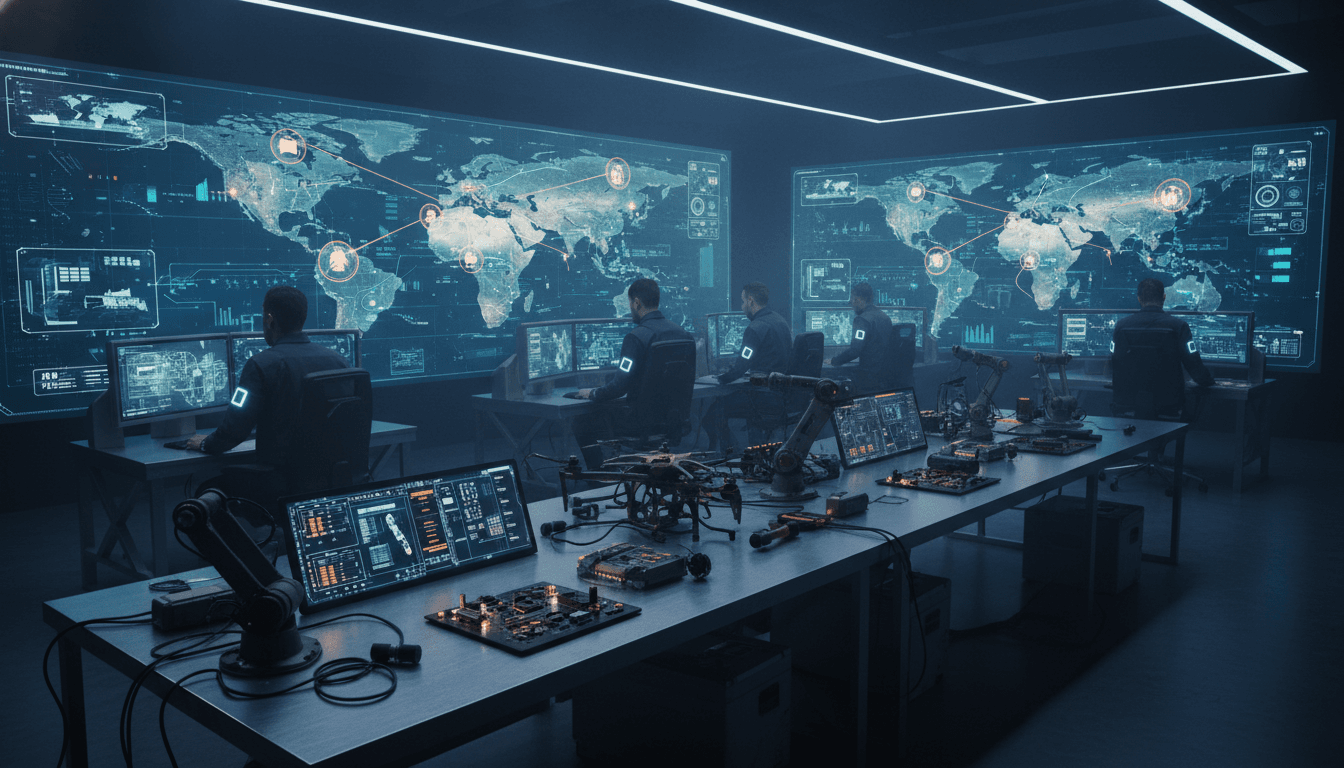
DoD’s 2027 Chinese Parts Ban: AI Compliance Playbook
A two-year runway sounds generous—until you’re trying to prove a complex defense system has zero prohibited Chinese components buried in its subtiers. That’s the reality behind the DoD’s mid-2027 enforcement deadline tied to NDAA restrictions on Chinese military-company parts. And the Pentagon’s message to industry is blunt: start now, because waiver requests that begin in 2027 are going to be miserable.
Here’s the part many teams still underestimate: this isn’t just a procurement problem. It’s a cybersecurity and national security problem. If you can’t see deep enough into your supply chain to confirm what’s inside, you can’t credibly manage tamper risk, spyware exposure, counterfeit parts, or subtle dependency traps. For AI-enabled defense systems—where compute modules, radios, sensors, and firmware updates come from sprawling ecosystems—supply chain visibility is quickly becoming the price of admission.
I’ve found that organizations who treat this as a “compliance checkbox” end up paying for it twice: once in scramble costs, and again in schedule slips, requalification cycles, and contract friction. The better approach is to treat 2027 as a forcing function to modernize supply chain security using AI-driven supplier intelligence and automated compliance controls.
What the 2027 ban really changes (and why waivers won’t save you)
The practical shift is simple: if your product includes covered parts from banned Chinese military companies, DoD can’t sign new contracts or extend existing ones once enforcement begins. That means the risk isn’t theoretical; it lands directly in revenue continuity, award eligibility, and program execution.
A waiver might sound like a pressure valve, but it’s not a strategy. The Pentagon is already signaling that waiver demand arriving at the deadline will create a bottleneck. Even if you qualify, waivers create second-order effects: additional reporting, heightened scrutiny, and a perception that your supply chain is fragile.
The hidden difficulty: subtiers and “unknown unknowns”
Most defense organizations can name Tier 1 suppliers. Many struggle at Tier 2. By Tier 3, it’s often guesswork—especially for:
- Printed circuit board assemblies with multiple component brokers
- Radio modules and embedded compute (where part substitutions are common)
- COTS components shipped with opaque firmware or silicon provenance
- Battery and power subsystems where raw material sourcing is hard to validate
The DoD official’s call to “illuminate those connections” is really a warning: ignorance won’t be treated as innocence. If your compliance posture is “we didn’t know,” you’re already behind.
Why the Chinese parts ban is a cybersecurity deadline, not just a sourcing deadline
The fastest way to explain the urgency is this: components are code now. Even “boring” hardware is shipped with embedded firmware, debug interfaces, update mechanisms, and supply chain touchpoints that can introduce risk.
When prohibited parts enter defense systems, the risk categories compound:
- Integrity risk: tampered components, hardware Trojans, or compromised firmware
- Confidentiality risk: telemetry exfiltration, spyware pathways, insecure OTA updates
- Availability risk: geopolitical disruption, embargo exposure, single-country dependencies
- Safety risk: counterfeit components that fail under stress, heat, or vibration
This matters acutely for autonomy and networked warfare systems. A small unmanned aircraft system, for example, isn’t “a drone.” It’s a flying computer attached to sensors, radios, and batteries. If any of those subcomponents is prohibited—or simply unverifiable—you’re staring at redesign and recertification.
The compliance bar is moving toward “prove it,” not “promise it”
The most important mindset shift: you’ll increasingly need evidence-backed provenance.
Evidence includes things like:
- Part-level bills of materials (BOMs) that are actually maintained
- Manufacturer and country-of-origin attestations with traceability
- Change-control history when alternates/substitutions occur
- Receiving inspection outcomes and anomaly rates by supplier
Teams that can’t produce this quickly won’t just lose time—they’ll lose negotiating power when contracting officers ask hard questions.
Where AI fits: turning supply chain chaos into a controllable system
AI can’t magically “fix” a risky supply chain. What it does well is shrink the time between risk emergence → detection → action, especially across massive supplier graphs.
A practical, high-impact AI approach is to combine three capabilities:
- Entity resolution to match suppliers across messy data (aliases, parent/subsidiary structures)
- Document intelligence to extract part, origin, and compliance signals from PDFs, emails, and certs
- Graph analytics to map dependencies across Tier 2/3 networks and identify choke points
If you’re thinking, “We already have ERP and a supplier portal,” I’ll be direct: most companies do, and it still isn’t enough. ERP stores transactions. Compliance requires interpretation, cross-referencing, and continuous monitoring—which is where AI is strongest.
AI-driven supply chain audits that don’t collapse under scale
Manual audits don’t scale when you’re managing thousands of parts and dozens of programs. AI-assisted audits can:
- Flag prohibited manufacturer names (including variants) against restricted lists
- Detect suspicious substitutions (same form/fit/function claims, different provenance)
- Identify documentation gaps (missing certs, stale attestations, inconsistent COOs)
- Prioritize suppliers based on risk scoring rather than equal treatment
One snippet-worthy truth: If you treat every supplier like a high-risk supplier, you’ll burn out. If you treat every supplier like low-risk, you’ll get burned. AI helps you do the third option—focus attention where it’s justified.
Continuous monitoring beats one-time “BOM scrubs”
A one-time cleanup in 2026 won’t hold through 2027 if you don’t control changes. The enemy of compliance is the quiet engineering change:
- A component goes end-of-life
- A buyer sources an “equivalent” from a broker
- A subcontractor changes a subassembly due to lead times
AI can monitor for drift by watching:
- Purchase orders vs. approved manufacturer lists
- Incoming inspection anomalies and counterfeit indicators
- Supplier news/ownership changes that alter restriction exposure
That “mechanism” DoD hinted at for tracking lower tiers is basically an acknowledgement: industry needs better tooling to see deeper. You don’t have to wait for a government platform to start building that internal muscle.
A 2026 action plan: what to do now to avoid a 2027 fire drill
If you’re a prime, a major subcontractor, or a high-growth dual-use company selling into defense, 2026 is your make-or-break year. Here’s an approach that works in the real world.
1) Build a part-level compliance baseline (not a supplier-level guess)
Start with the programs that will be under contract renewal or recompete near 2027. For each:
- Produce a current, part-level BOM (not last quarter’s)
- Identify components with the highest substitution rates (radios, compute, power)
- Tag parts that lack clean provenance data
Your goal is simple: know what you don’t know.
2) Map Tier 2/3 dependencies using a supplier graph
A spreadsheet list of suppliers won’t reveal concentration risk. Build a graph view that answers:
- Which subtiers appear across multiple programs?
- Which suppliers are single points of failure?
- Where do we rely on brokers or gray-market channels?
AI helps by resolving entity names and filling gaps from unstructured documents.
3) Put change control where it hurts: alternates and substitutions
Most compliance breakdowns happen after the “initial cleanup.” Create guardrails:
- Approved manufacturer lists tied to engineering authority
- Automated checks on POs for blocked entities
- Required documentation packages for substitutes
- Red-team procurement scenarios (what happens when lead times spike?)
If you only do one thing: control substitutions. That’s where prohibited parts sneak in.
4) Pre-stage waiver packages only when truly necessary
If a waiver is unavoidable, treat it like a program deliverable. Build the package in 2026, not 2027:
- Document why the part is unavoidable
- Show the mitigation plan and timeline to remove it
- Demonstrate you’ve searched for compliant alternatives
The real benefit is not the waiver itself—it’s the disciplined analysis that forces the organization to confront reality early.
5) Treat compliance as an engineering metric
This is where most teams get this wrong. They park the problem in procurement or legal, and engineers only hear about it when requalification is required.
Better: track metrics that engineering leaders can act on:
- % of BOM with verified provenance
-
of blocked-entity flags per 1,000 line items
- Time-to-remediate a supplier risk event
- Substitution rate by commodity category
Once engineering leadership sees these numbers, behavior changes.
Common questions program teams are asking right now
“Does this affect COTS and commercial software-heavy systems?”
Yes. If the system includes hardware components from covered entities, “commercial” doesn’t exempt you. Software-heavy systems are often hardware-dependent in ways teams ignore until late.
“We don’t buy directly from China—are we safe?”
Not necessarily. The exposure often comes through distributors, contract manufacturers, and subassemblies sourced globally. Direct spend is not the same as dependency.
“Can AI actually verify provenance?”
AI won’t replace formal traceability, but it can:
- Detect inconsistencies across certifications
- Highlight gaps and suspicious patterns
- Automate cross-checks against restricted entity lists
- Keep monitoring active as suppliers and parts change
Think of AI as the control tower that tells you where to look—and when.
The bigger stake: eligibility, trust, and operational resilience
The 2027 Chinese parts ban is forcing the defense industrial base to confront an uncomfortable truth: modern systems are only as trustworthy as their least-visible supplier. If you can’t map your subtiers, you’re operating on faith.
The organizations that win the next cycle of defense programs will be the ones that can say, quickly and credibly, “Here’s what’s inside, here’s where it came from, and here’s how we monitor it.” That’s not marketing—it’s becoming table stakes.
If you’re staring at a sprawling supplier ecosystem and wondering how to make this real in 2026, start with one program and build a repeatable model: AI-assisted supplier graph, automated document extraction, and continuous compliance monitoring tied into procurement and engineering change control.
What would your program office do tomorrow if a single banned subcomponent showed up in receiving on a critical path build—and you had 30 days to prove containment?