Asia defense deals now hinge on AI-ready data, not optics. See how submarines, alliances, and trade policy converge into operational speed.
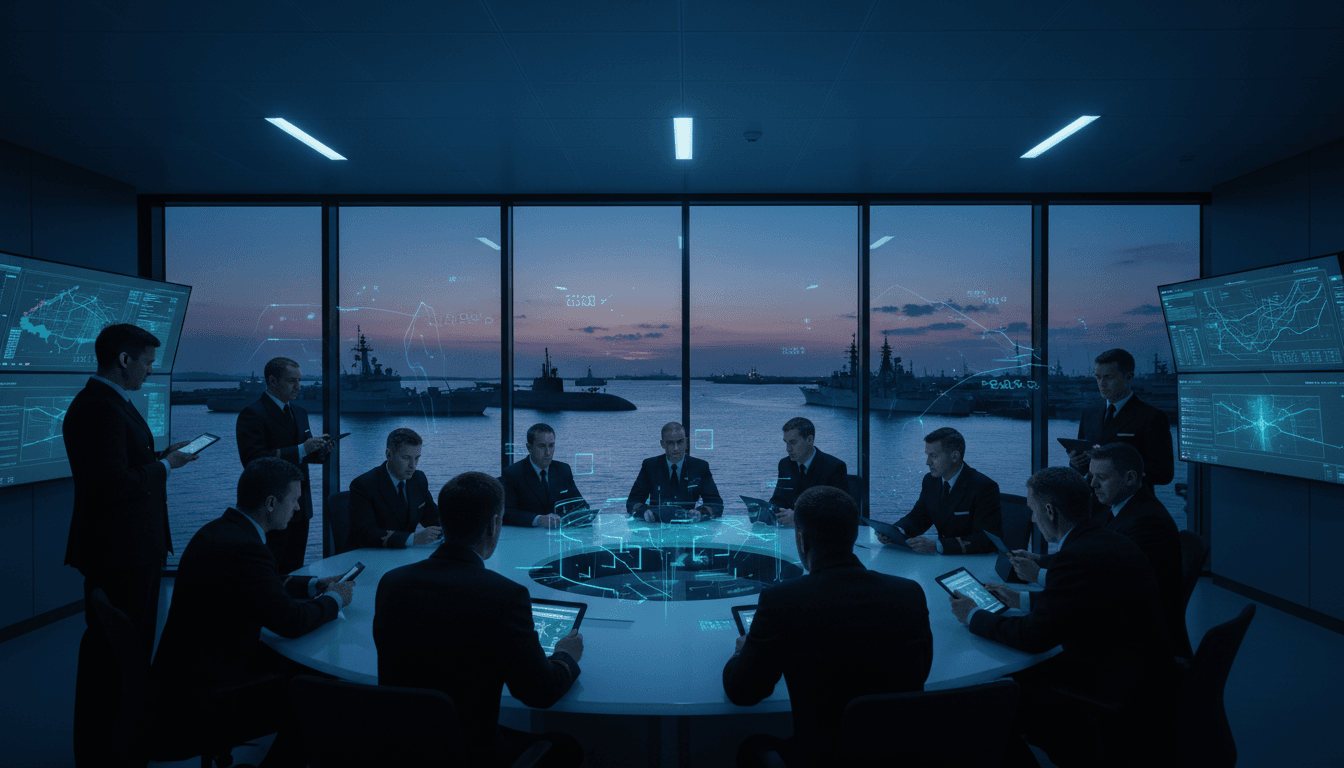
Asia Defense Deals Now Run on Data, Not Handshakes
A week of presidential meetings can produce headlines about gifts, deals, and submarines. But the quieter story underneath Donald Trump’s late-October 2025 swing through Southeast and Northeast Asia is more consequential for defense planners: alliance management is turning into data management.
From ASEAN’s preference for stability, to Japan’s push for deterrence credibility, to South Korea’s balancing act during APEC (including a high-profile Xi meeting), the trip highlighted a reality I’ve seen again and again in national security programs: hardware still matters, but decision advantage increasingly comes from software, data rights, and AI-enabled operations.
This matters because the Indo-Pacific is where the hardest military problem sits: long distances, contested logistics, dense sensors, and adversaries that can adapt quickly. Submarines and trade packages can shift the balance at the margins. Shared AI-ready data, combined operational concepts, and resilient digital infrastructure can shift it at scale.
Trump’s Asia trip was about alliances—AI decides if alliances work
Answer first: Diplomatic deals create political permission; AI in defense and national security determines whether forces can coordinate fast enough to matter.
The source article frames Trump’s week as a blend of peacemaking, trade bargaining, and alliance signaling across Malaysia (ASEAN), Japan, and South Korea (APEC), with China present in the background and, at moments, across the table. That’s the classic toolkit: summits, statements, bilateral meetings, and—when you want to show seriousness—big-ticket defense cooperation.
But the Indo-Pacific operating environment is increasingly shaped by:
- Sensor saturation: More ISR platforms, commercial imagery, signals collection, and maritime tracking than commanders can manually fuse.
- Compressed timelines: Long-range missiles and drone swarms shrink the window for human-only decision cycles.
- Coalition complexity: Allies have different rules, networks, classification practices, and procurement timelines.
If you’re building deterrence, your alliance isn’t “strong” because leaders smiled for cameras. It’s strong because targeting data can be shared legally, networks can interoperate under attack, and commanders can trust the same operational picture.
The new deliverable: an “AI-ready coalition”
A practical way to think about modern defense diplomacy is this: every handshake should produce at least one of three outcomes.
- Common data standards (formats, metadata, labeling, retention)
- Permissioning and legal pathways (who can share what, when, and with which audit trail)
- Operational integration (joint playbooks, exercises, and mission threads that generate training data)
Without those, even expensive platforms—submarines included—operate like independent assets rather than a coordinated force.
Submarines still matter—but the decisive edge is the data around them
Answer first: Submarines are strategic assets in the Indo-Pacific, but their deterrent value increasingly depends on AI-enabled sensing, maintenance, and mission planning.
The article’s “submarines” framing fits the region’s reality: undersea warfare is a centerpiece of maritime deterrence, especially where surface ships and fixed bases are increasingly exposed. Submarines complicate an adversary’s planning because they’re hard to find and can hold high-value targets at risk.
Here’s the part many policymakers underweight: a submarine is not just a platform—it’s a node in an undersea-and-above-sea data ecosystem. The key questions are no longer only “How many hulls?” but:
- How quickly can undersea detections be fused with surface, air, and space tracks?
- Can allies share contact data with the right classification controls and provenance?
- How reliably can you keep boats available, supplied, and repaired across dispersed bases?
Three AI use cases that make undersea forces more credible
1) Predictive maintenance for fleet availability
Readiness wins wars, and it’s not glamorous. AI-enabled maintenance forecasting can reduce unscheduled downtime by identifying patterns across vibration data, temperature logs, parts replacements, and operator notes. The strategic payoff is simple: more days at sea, fewer surprise failures, better surge capacity.
2) Undersea signal processing and anomaly detection
Modern undersea environments are noisy—biologics, shipping, weather, and adversary countermeasures. Machine learning can help classify contacts faster, surface fewer false alarms, and highlight “unknown unknowns.” The win isn’t magic accuracy; it’s operator workload reduction and faster cueing.
3) Mission planning and deception awareness
AI can assist route planning, risk estimation, and red-teaming assumptions—especially when adversaries use decoys, spoofed AIS patterns, and multi-domain feints. Credible deterrence depends on avoiding predictable patterns.
Submarine diplomacy is increasingly “data diplomacy”: agreements about interoperability, data rights, and training pipelines.
ASEAN, Japan, and South Korea want stability—AI can either support it or break it
Answer first: Asian partners want U.S. engagement that’s predictable; AI systems that are opaque, non-interoperable, or legally constrained can create friction that diplomacy can’t paper over.
Trump’s first stop in Malaysia for the ASEAN summit underscores a regional constant: Southeast Asian governments often prioritize stability, de-escalation, and economic continuity. The source notes that leaders welcomed the visit even amid resentment over tariffs and concerns about U.S. policies elsewhere, because the U.S. still plays a unique balancing role.
Japan and South Korea have different strategic postures—more formal alliance expectations, higher operational integration, and sharper threat perceptions. Yet the shared need across the region is predictable U.S. presence and reliable coordination mechanisms.
AI will be part of that coordination mechanism whether leaders like it or not. The risk is that AI introduces new fault lines:
- Different risk tolerance: One ally may accept AI-assisted targeting; another may require human-only confirmation.
- Different data rules: National laws and classification barriers can prevent training or sharing models.
- Different cyber postures: A coalition is only as strong as its weakest network segment.
What “AI-enabled burden sharing” should actually mean
Most burden-sharing debates get stuck on spending percentages. That’s a dead end. A more operational definition is:
- Who provides which data streams (maritime domain awareness, cyber indicators, logistics status)
- Who hosts which compute and storage (so you’re not dependent on a single hub)
- Who owns which mission threads in exercises (air defense, ASW, contested refueling, base defense)
If allies agree on that, money follows a plan instead of a political argument.
Trade deals and security deals are converging in the AI supply chain
Answer first: Modern defense cooperation in Asia is inseparable from semiconductors, cloud infrastructure, export controls, and dual-use AI talent.
Trump’s trip was heavily shaped by trade. That’s not a side issue. For AI-driven defense strategy, trade policy determines:
- Whether allies can access advanced chips and secure manufacturing capacity
- Whether model training and inference can be done with sovereign controls
- Whether dual-use components (sensors, compute, comms) can move fast enough in crisis
The most practical insight for defense leaders is blunt: every defense plan now has a supply chain plan inside it.
A concrete planning checklist for AI-driven coalition readiness
If you’re responsible for strategy, procurement, or operational integration, here are questions worth forcing into the room early:
- Data access: Do we have the legal authority to share the data needed for joint AI systems before a crisis?
- Data quality: Are we labeling and storing data in a way that supports training and auditing?
- Model governance: Who can update models, approve changes, and roll back versions during operations?
- Cyber resilience: Can we operate if coalition networks degrade or fragment?
- Compute continuity: Where does inference run if a main base goes down—shipboard, edge, allied sites?
- Interoperability: Can we exchange tracks, tasking, and confidence scores across different national systems?
- Human decision design: Where is human judgment mandatory, and how do we prevent “automation bias” under stress?
This is where many organizations get it wrong: they treat AI as a lab project. In defense, AI is a logistics-and-governance project first.
The real metric after a summit: did it create operational speed?
Answer first: The value of high-level visits is measurable: faster joint decisions, more shared situational awareness, and greater readiness under contested conditions.
Diplomatic travel often gets judged by optics—who met whom, what was signed, what was promised. For Indo-Pacific deterrence, the measurable outcomes are different:
- Time to share: How long does it take to move a critical intelligence item from one ally to another, with approvals?
- Time to task: How quickly can a coalition re-task ISR after a surprise event?
- Time to sustain: How fast can parts, fuel, and munitions flow when shipping and air routes are threatened?
AI can compress these timelines, but only if the coalition has done the unglamorous work: data agreements, system interfaces, and rehearsed playbooks.
“People also ask” on AI and Indo-Pacific alliances
Is AI replacing traditional defense platforms like submarines? No. Platforms create physical effects. AI creates decision advantage. The winning approach is integrating them so platforms operate with better targeting, readiness, and coordination.
Why does intelligence sharing matter more with AI? AI systems improve when they see more representative data. Coalitions that can share data safely train better models and build a more consistent operational picture.
What’s the biggest AI risk in coalition operations? Misalignment—different rules, different assumptions, and different thresholds for action. The fix is governance: shared standards, audit trails, and clear human decision points.
Where defense leaders should push next
Trump’s week in Asia highlighted what still drives regional security: reassurance, bargaining, and visible commitments. The next step is making those commitments executable under pressure. That requires AI-ready interoperability, not just additional platforms.
If you’re leading a defense program, a national security tech team, or an industry partnership effort, focus on one concrete outcome per engagement: a shared data pipeline, a joint operational “mission thread” exercise, or a governance agreement that allows AI systems to be used responsibly across allies.
The forward-looking question isn’t whether diplomacy can produce another deal. It’s whether the region’s partners can agree on something harder: shared data rules and shared operational speed—before the next crisis forces improvisation.