AI-driven intelligence can detect proxy-war signals earlier—before attacks trigger India–Pakistan escalation. See the blueprint for prevention.
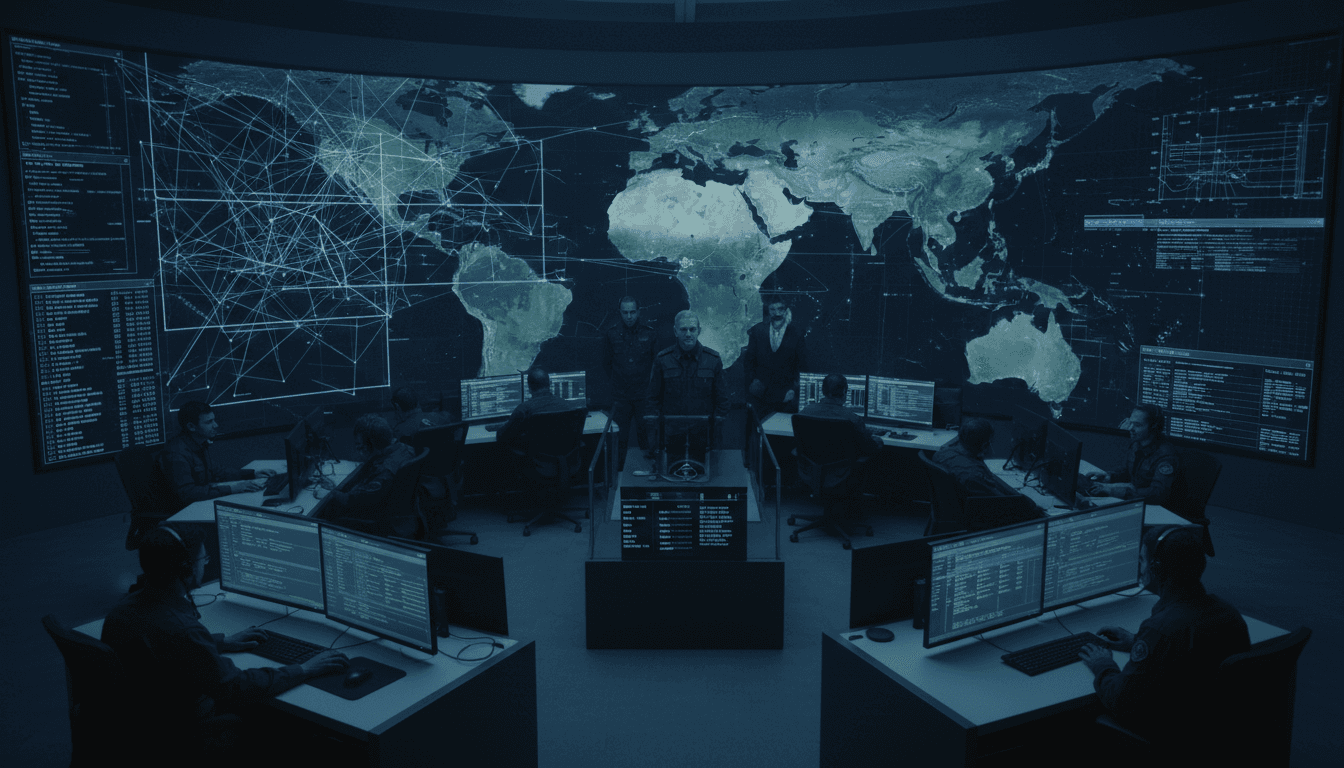
AI Signals That Can Prevent India–Pakistan Escalation
Thirteen people killed near Delhi’s Red Fort. Nearly 2,900 kilograms of explosives seized in the days around it. And a recruitment pipeline that reportedly moved through Telegram, overseas meetups, and modern digital payments.
The Delhi blast (November 10, 2025) isn’t only a terrorism story. It’s a case study in how proxy warfare is evolving—and why AI in defense and national security is no longer optional if the goal is prevention rather than response. When militant networks shift toward “white-collar” operatives, fintech rails, and cross-border enabling, the signal is still there. It’s just buried in more data than human teams can reliably connect in time.
Here’s the stance I’ll take: the next India–Pakistan crisis won’t be prevented by better speeches or bigger walls—it’ll be prevented by faster, more credible attribution and earlier disruption. AI can help, but only if it’s deployed with the right constraints, the right data strategy, and the right escalation framework.
Why the Delhi blast changes the proxy-war playbook
The core shift is simple: proxy warfare is becoming more technical, more distributed, and harder to spot with legacy methods.
In the reported Delhi case, investigators described a network spanning multiple Indian provinces, with educated professionals (including doctors) allegedly tied into logistics and communications. Whether every operational detail holds up over time, the pattern matches what many security services have watched for years: militant groups adapt when their traditional pipelines get hit.
“White-collar” operatives create fewer obvious tripwires
Recruiting educated professionals changes the threat surface:
- They often have cleaner travel histories and fewer prior flags.
- They can access regulated chemicals, medical supplies, or technical spaces with less scrutiny.
- They’re better positioned to follow tradecraft: compartmentation, burner devices, low-profile financial behavior.
That doesn’t make them invisible. It means your detection can’t rely primarily on the old heuristics (known associates, prior detentions, obvious propaganda consumption, or simple cash movement).
Fintech rails compress time-to-attack
The RSS source highlights a reported shift toward mobile wallets, fintech platforms, and decentralized payment methods. The operational advantage is speed and deniability.
When funding can be moved in minutes across a web of intermediaries, the window for interdiction shrinks. If your compliance and intelligence workflows take days, you’re not late—you’re irrelevant.
AI’s value here isn’t “finding terrorists.” It’s reducing the time between weak signals and confident action.
The escalation risk: why another India–Pakistan clash looks likely
The strategic picture is equally direct: terror incidents that can be plausibly tied to Pakistan-based groups create immediate pressure on India to respond, while Pakistan’s internal security stress and civil–military politics create incentives to redirect attention outward.
From the source article’s details:
- The Delhi attack was described as the first major incident in India’s capital in over a decade.
- Pakistan also suffered a major suicide attack outside Islamabad’s District Court the next day, amid competing narratives about attribution.
- Pakistan reportedly experienced 4,700+ terrorist incidents in 2025, with 1,000+ deaths, despite 62,000 counterterror operations.
That combination—high violence, contested narratives, weak counterterror outcomes—drives miscalculation.
When attribution is slow, crisis management gets reckless
Here’s the operational truth: governments escalate fastest when they feel blind.
If leadership believes an adversary is orchestrating attacks but can’t prove it quickly, they’ll rely on:
- punitive signaling
- domestic political optics
- legacy playbooks (airstrikes, artillery, raids)
That’s when you get the spiral: retaliation, denials, counter-retaliation, then nuclear signaling to force outside mediation.
AI can interrupt this cycle by improving two things that matter more than rhetoric:
- Timely attribution confidence (what happened, who enabled it, how strong is the evidence)
- Disruption lead time (how early you can stop the next cell)
Where AI actually helps: a practical blueprint for preempting proxy attacks
AI contributes most when it’s used as an analysis multiplier across fragmented datasets—communications, finance, travel, procurement, and human reporting.
Below is a concrete model I’ve found useful for thinking about AI-driven intelligence for proxy warfare. It’s not sci‑fi. It’s a disciplined pipeline.
1) Pattern detection across “boring” data
Most proxy operations leave traces in ordinary systems:
- prepaid SIM purchase patterns
- device churn and account creation bursts
- ride-hailing and short-term rentals
- procurement of dual-use items and precursor chemicals
- travel itineraries with unusual “meeting geometry” (timing + location + companions)
AI models can learn baseline behavior and flag anomalies that cluster, not just single events.
A good heuristic: single anomalies are noise; correlated anomalies are a lead.
2) Entity resolution and network mapping (the hard part)
The biggest technical bottleneck in counterterror analytics isn’t a fancy model. It’s identity.
You need systems that can answer:
- Is “U. Nabi” the same person as “Umar N.” across datasets?
- Are two phones used by the same operator?
- Do these wallet transactions connect to the same real-world node?
AI-assisted entity resolution and graph analytics can surface the networks that humans struggle to see quickly—especially when adversaries use fragmentation as a defense.
3) Risk scoring that’s designed for operations, not dashboards
Risk scoring fails when it’s built to impress executives. It works when it’s built to help investigators decide what to do next.
Operationally useful risk scoring should:
- show why a score is high (top contributing signals)
- display confidence intervals and data gaps
- support case management workflows (handoff, notes, warrants, audit trail)
If the model can’t explain itself to a field team under time pressure, it won’t get used—or worse, it’ll be misused.
4) OSINT + SIGINT fusion without analyst overload
The reported use of Telegram-style communications and overseas handlers is exactly where fusion matters.
AI can triage public and semi-public information streams:
- propaganda repost networks
- recruitment funnel indicators (account lifecycles, cross-posting behavior)
- geospatial cues (imagery, metadata, repeated meeting locations)
But fusion only works if it reduces workload. The goal is fewer, better alerts.
A useful standard: if your system generates more leads than your teams can clear in 24–48 hours, you don’t have an intelligence advantage—you have an alerting problem.
Monitoring proxy warfare without breaking trust or law
“Use AI for surveillance” is the fastest way to trigger backlash—and it should. Proxy war prevention can’t be built on a blank check.
The practical path is constrained AI:
Build guardrails into the technical design
- Data minimization: collect only what’s necessary for defined missions.
- Tiered access: analysts don’t see raw personal data until legal thresholds are met.
- Auditability: every query, join, and export is logged and reviewable.
- Model governance: red-team for bias, adversarial manipulation, and drift.
Plan for adversarial adaptation (because it’s guaranteed)
Once militants learn what triggers flags, they adjust. Your AI must be tested against:
- synthetic identities and account farms
- transaction laundering through many micro-payments
- “innocent-looking” travel patterns that still enable meetings
- false-flag information operations meant to misdirect attribution
If you don’t adversarially test your detection models, you’re training them for the last attack.
What security leaders should do in the next 90 days
This is where many teams stall: they agree AI could help, then immediately jump to procurement. Don’t.
A better sequence is mission-first.
-
Define the prevention use case
- Example: “Detect cross-border facilitation of urban attacks within 14 days of cell formation.”
-
Inventory the data you already have
- Finance, travel, procurement, watchlists, case notes, border crossings, tips.
-
Pick one fusion workflow and make it real
- Start with entity resolution + graph view + case management.
-
Set measurable outcomes
- Median time from lead creation to disposition
- % of high-risk alerts with actionable rationale
- Reduction in duplicate investigations (a hidden productivity killer)
-
Write the escalation and oversight playbook now
- Who can task the system?
- What triggers human review?
- What thresholds are required for intrusive collection?
This matters because the next crisis won’t wait for your governance committee to meet.
The bigger point: AI can reduce escalation by making attribution credible
India–Pakistan crises are dangerous because they compress decision time under political pressure. Proxy attacks amplify that pressure.
AI’s strategic value in South Asia isn’t just stopping bombs. It’s stabilizing deterrence by improving three things:
- Early warning: spotting networks before they act
- Disruption: targeting enablers and logistics, not just triggermen
- Attribution confidence: producing evidence that supports calibrated response instead of emotional overreaction
If you’re building AI capabilities for national security, the Delhi blast is the kind of case you should be training on—not as a headline, but as a dataset: recruitment indicators, travel patterns, encrypted-channel behaviors, and fintech movement.
Prevention is a race between adaptation and detection. Right now, the adaptation side is moving faster.
If your team is evaluating AI-driven intelligence analysis for counterterrorism and proxy war prevention, the question to ask isn’t “Can AI find threats?” It’s: “Can our organization act on weak signals quickly, lawfully, and consistently—before the next crisis forces a decision?”