Two Singapore teen barbers show how TikTok, Telegram, and clear pricing turn a traditional trade into a modern SME growth engine.
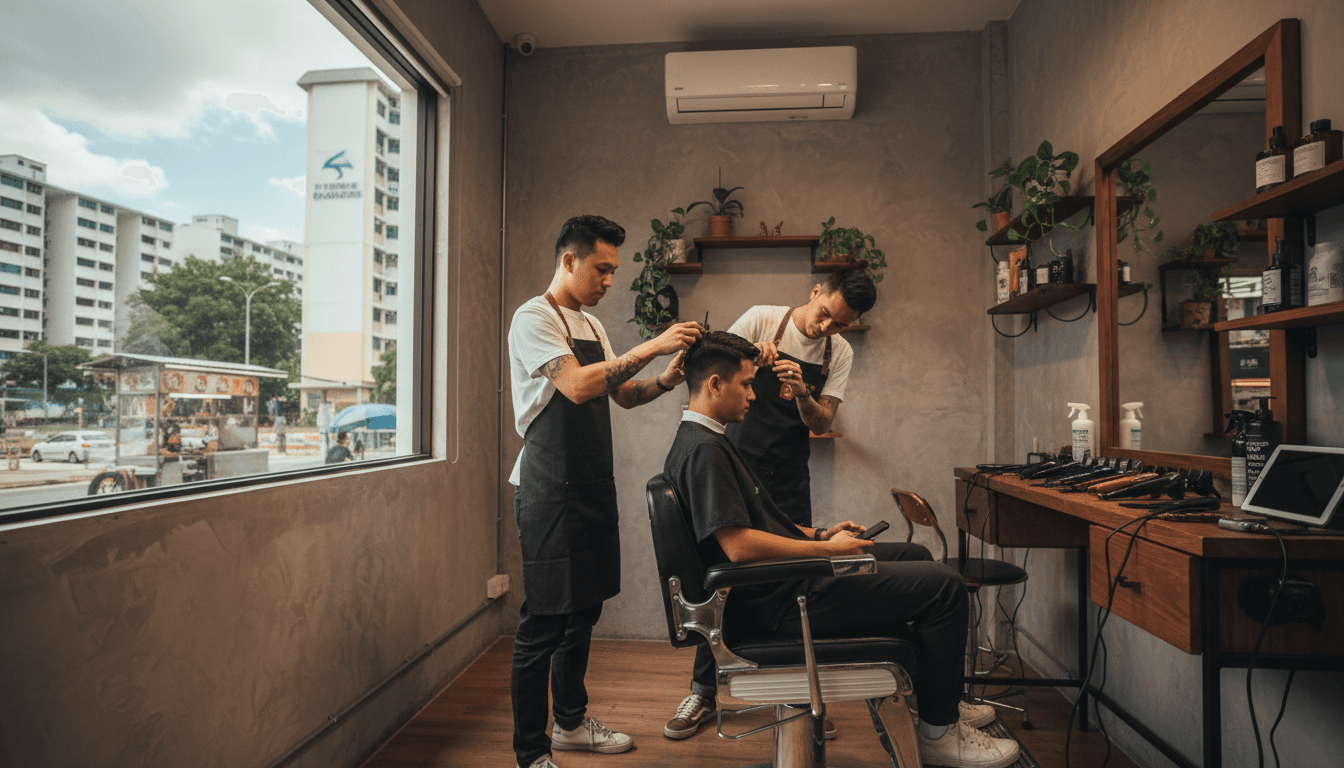
Teen Barbers’ Playbook for SME Social Media Growth
S$195 in a day. That’s what a Singapore teen barber showed publicly in a single TikTok—then watched the video snowball into mainstream media coverage and a bigger booking pipeline.
Most SMEs think growth comes from “better marketing”. These two young barbers prove something more specific: growth comes from making your work easy to discover, easy to trust, and easy to book. The craft matters, but the distribution matters just as much.
This story (two students—19-year-old Sujaish Kumar and 14-year-old Keanu Akbar—building real barbering businesses from HDB corridors and staircases) fits perfectly in our Singapore Startup Marketing series because it shows how a traditional service can scale using the same playbook startups use: content, community, and conversion.
What these teen barbers understood that many SMEs miss
Answer first: They treated barbering like a product and TikTok/Telegram like their growth stack—while many SMEs still treat social media as a poster wall.
Sujaish started because “good” cuts were S$30—too expensive for him and his friends—while budget cuts often came out uneven. He bought clippers with about S$50, practised on friends, and went from free cuts to S$5, then S$8, and later premium pricing.
Keanu began at 12 with tools from his brother, practised for a year, then charged S$3 per cut. He worked out of an HDB staircase in Clementi, then used social proof (a media interview) to push his bookings.
Here’s the SME lesson: they didn’t wait to look “established” before marketing. They marketed early, improved fast, and used the internet to shorten the trust cycle.
A practical definition for SMEs
Digital marketing for local services is the process of turning attention into booked appointments—without relying on walk-ins.
If your shop depends on foot traffic alone, you’re one mall renovation, one new competitor, or one bad month away from stress.
The modern “barber funnel”: TikTok → Telegram → Bookings
Answer first: Their funnel worked because each platform did one job well: TikTok created demand; Telegram organised demand; pricing and policies protected time.
A lot of Singapore SMEs try to do everything on one channel (usually Instagram). The barbers used a cleaner approach:
- TikTok as top-of-funnel: reach strangers cheaply with proof of skill
- Telegram as mid-funnel: a subscriber list you can message, manage slots, and confirm appointments
- Offline fulfilment: the actual haircut experience creates retention and referrals
Keanu shared that after media coverage, his Telegram subscribers doubled from ~150 to 350, while his TikTok following tripled from ~400–500 to 1,200. Those numbers aren’t “vanity” when they translate into filled slots.
What to copy (even if you’re not on TikTok)
If you run a service SME—barber, nails, tuition, fitness, home cleaning, aircon, detailing—use the same structure:
- One discovery channel (TikTok, IG Reels, YouTube Shorts)
- One booking channel (WhatsApp Business, Telegram, a simple booking form)
- One retention channel (broadcast list + reminders + loyalty offers)
The point isn’t TikTok. The point is: build a system where every post has a next step.
Content that actually sells: “Proof, process, price”
Answer first: Their content worked because it reduced uncertainty—viewers could see the result, understand the process, and feel the pricing was fair.
Sujaish’s viral format—“How much I make as a 17-year-old barber in Singapore”—did two things most SMEs avoid:
- Pricing transparency (people instantly know if they can afford you)
- Demand signalling (busy day = other customers trust him)
For local service businesses, you don’t need fancy campaigns. You need repeatable content pillars that make people say: “Okay, I get it. This person is legit.”
A 3-pillar content plan SMEs can run weekly
1) Proof (Results)
- Before/after transformations
- Client reactions (short and genuine)
- “What I did differently for this hair type / face shape”
2) Process (Competence)
- Tools you use and why
- Step-by-step snippets (10–20 seconds)
- Hygiene, setup, and customer experience
3) Price (Decision)
- Price ranges and what affects them
- Packages (student price, premium cut, house call)
- Availability drops (“3 slots this weekend”)
One opinion I’ll stand by: hiding your prices is usually a conversion killer for SMEs. People in Singapore price-check fast. If they can’t get clarity, they bounce.
Scaling a home-based service without getting burned
Answer first: Growth creates operational friction—space, neighbours, scheduling, and burnout—so you need rules, not just more posts.
Viral success came with constraints. Sujaish was told he couldn’t operate out of the HDB corridor due to potential disturbance. He moved inside his home, kept building online, reinvested in tools, and later opened a small studio in Potong Pasir—about 100 sqft. He also moved upmarket:
- Starting price increased to S$30 per haircut
- House calls at around S$50
Keanu moved indoors for a different reason: customer comfort and weather reliability (“when it rains… I have to cancel”). That’s ops thinking—protecting consistency.
The SME “capacity checklist” before you scale
If demand spikes (a viral post, a feature, a seasonal rush like pre-CNY), check these quickly:
- Booking rules: deposit? reschedule window? late/no-show policy?
- Time blocks: fixed slots reduce back-and-forth
- Space constraints: noise, privacy, comfort (especially for home-based)
- Customer comms: one template for pricing, location, aftercare
- Unit economics: do you still earn enough per hour after travel and setup?
For Singapore SMEs, this matters because rental and labour costs punish sloppy scaling. If you’re fully booked but undercharging, you’re not winning—you’re just tired.
Why this story matters for Singapore SME digital marketing
Answer first: It shows that “traditional” businesses can grow like startups when they treat marketing as a daily habit, not an occasional campaign.
Barbering is often seen as an “old man’s trade”. These teens reframed it as:
- a brand (names, style, vibe)
- a content engine (short-form video)
- a community (subscribers)
- a service with clear tiers (budget → premium → house calls)
That’s straight out of the Singapore startup marketing playbook: build in public, show traction, and compound trust.
People also ask: “Do I need to go viral to grow?”
No. Viral is a bonus, not a strategy.
What works consistently is posting proof-based content weekly and making booking frictionless. A steady 3,000–10,000 local views per month that convert into appointments beats 200,000 views that don’t.
People also ask: “What if my industry isn’t ‘visual’?”
Make it visual.
- Tuition: whiteboard snippets, parent testimonials, student progress dashboards
- Aircon servicing: before/after coils, checklist walkthroughs
- B2B services: quick audits, mini case studies, “mistakes we fixed this week”
If prospects can’t see outcomes, they’ll default to price.
A 30-day action plan for service SMEs (Singapore-focused)
Answer first: In 30 days, you can set up a simple growth system—content, booking, and reviews—without hiring a full team.
Week 1: Foundations
- Pick one primary channel (TikTok or IG Reels)
- Set up WhatsApp Business quick replies or a Telegram booking format
- Write your “service menu”: 3 tiers, clear inclusions, clear starting price
Week 2: Publish proof
- Post 3 short videos:
- Before/after
- Your process (tools + steps)
- Price + availability
Week 3: Convert attention
- Add a consistent CTA: “DM ‘SLOT’ for availability” or “WhatsApp for booking”
- Create templates for:
- pricing
- location
- reschedule policy
Week 4: Build trust that compounds
- Ask every happy customer for:
- a 10-second reaction clip (optional)
- a review/testimonial
- Create a monthly “regulars” offer (weekday slots, student rates, add-ons)
If you do just this, you’ll already be ahead of many SMEs who post sporadically and hope it works.
Where the teen barbers go next (and where SMEs should aim)
Answer first: The next level is turning a personal brand into a business asset—systems, repeat customers, and potentially products.
Sujaish talked about long-term goals: a full-fledged barbershop and even a haircare brand. That’s the natural progression for service startups:
- Skill → content → bookings
- Bookings → premium pricing → studio
- Studio → hiring → multi-chair shop
- Shop → products → regional distribution
For readers following our Singapore Startup Marketing series, this is the bridge: the same mechanics that help a teen barber get clients can later help a growing SME expand across neighbourhoods—or across borders.
You don’t need a massive budget. You need a repeatable way to earn trust online and fulfil consistently offline.
What would happen to your business if 30% of your bookings came from content you posted this month—and kept working for you next month too?