Practical ways Singapore SMEs can measure sustainability impact and turn it into trust-building content that generates better leads in 2026.
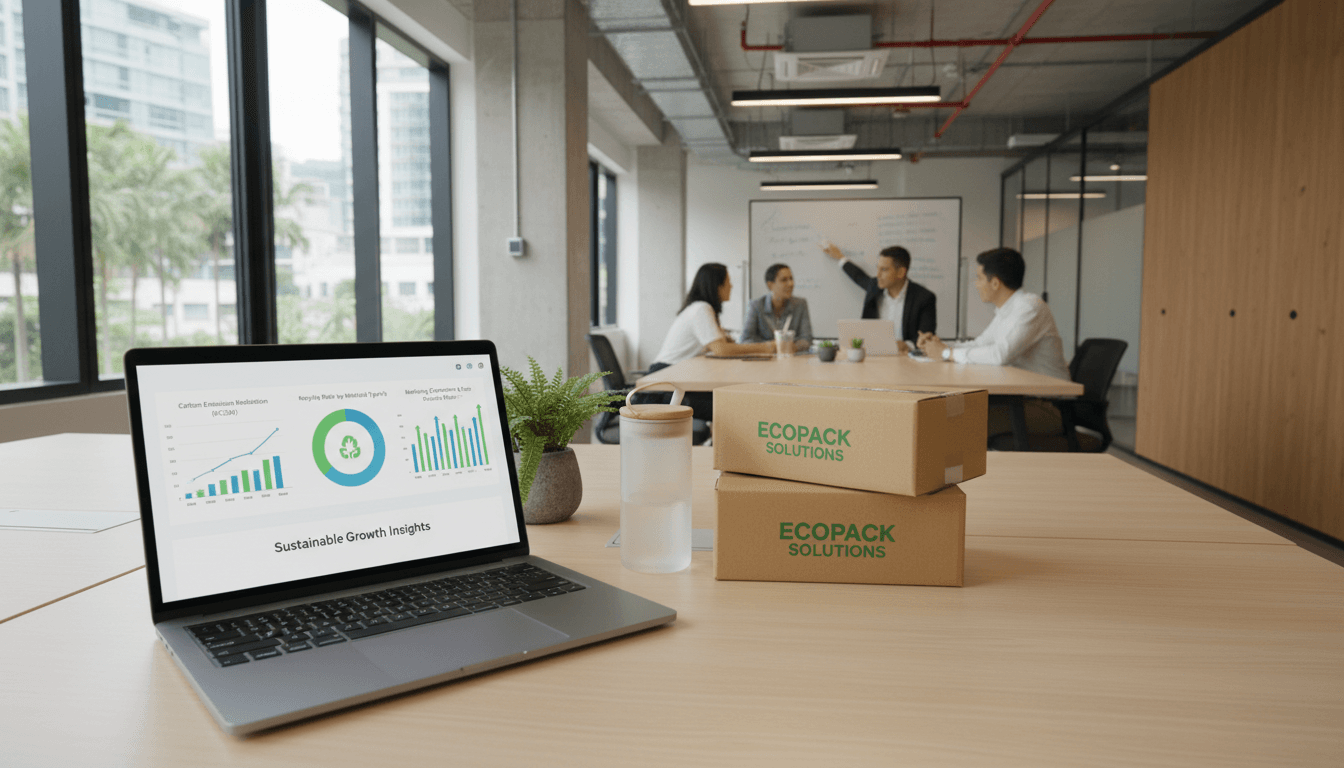
Most SMEs don’t have a sustainability problem—they have a proof problem.
In 2026, customers, enterprise buyers, and even job candidates are quicker to trust brands that can show numbers, not just intentions. The same is true for partners in the climate tech ecosystem. If your business is selling to, partnering with, or marketing alongside climate-focused startups, you’ll notice one pattern: the serious ones obsess over measurement.
A recent e27 feature gathered climate tech leaders across Asia Pacific to explain exactly how they measure impact—from carbon accounting platforms to biodiversity tracking via environmental DNA. What I like about these examples is how practical they are: each company picks a few metrics, builds a system to collect them, and then uses that data to win adoption.
This post translates those climate tech measurement habits into a Singapore SME digital marketing playbook: how to measure sustainability impact, how to communicate it credibly, and how to connect the dots between your sustainability work and lead generation.
Why “impact measurement” is now a marketing advantage
Impact measurement isn’t a feel-good exercise. It’s a commercial tool.
When you can quantify outcomes (emissions reduced, waste avoided, cost saved, beneficiaries reached), three things happen:
- Sales cycles shorten. Procurement teams can compare you against alternatives.
- Content performs better. Proof-based stories earn saves, shares, and backlinks.
- You avoid greenwashing traps. Clear definitions and boundaries reduce risk.
For SMEs in Singapore marketing regionally, this matters even more. APAC buyers are increasingly exposed to sustainability claims—and increasingly sceptical. Your marketing doesn’t need bigger promises. It needs auditable, repeatable metrics.
Here’s a sentence worth stealing for your internal team:
If we can’t measure it quarterly, we can’t market it confidently.
What Asia’s climate tech startups track (and why it works)
The climate tech companies featured by e27 aren’t all doing the same thing. That’s the point. They measure what matches their business model.
Carbon accounting as a product: MVGX
MVGX’s approach is straightforward: carbon footprint measurement plus directional insights, reported on a quarterly cadence. They also measure their own footprint and build a reduction roadmap.
What’s notable for marketers:
- Quarterly reporting creates a rhythm for content, PR, and stakeholder updates.
- “Granular directional data” gives customers a next action, not just a number.
- Linking impact measurement to finance (green loans, bonds) raises the stakes on accuracy.
SME translation: If you sell B2B services (logistics, manufacturing support, SaaS, retail supply), don’t just publish an annual ESG page. Create a simple quarterly update that shows progress and what changed.
Behaviour change + economics: IVITECH (e-bikes)
IVITECH measures impact across adoption and outcomes:
- Number of e-bikes distributed and drivers switching from petrol
- Estimated GHG emissions reduction
- Cost savings for drivers (they cite up to 80% savings)
- Public awareness via surveys and media tracking
This is smart because it covers leading indicators (adoption) and lagging indicators (emissions, cost). It also acknowledges that awareness is part of impact.
SME translation: When your sustainability efforts depend on customer behaviour (reusables, refill models, delivery optimisation), measure:
- Adoption rate
- Repeat usage
- Savings (time, cost, energy)
- Awareness (search volume, survey recall, content engagement)
Credibility in carbon markets: GAIT Global (dMRV)
GAIT Global focuses on MRV (Monitoring, Reporting, Verification) for nature-based climate action. Their impact model isn’t “trust us.” It’s “verify it.” They use machine learning, sensors, and spatial data, and talk openly about the hard part: validation.
What’s useful here is the mindset: impact isn’t only carbon removals; it’s also social and economic outcomes (their “triple bottom line”).
SME translation: If you want sustainability marketing that holds up under scrutiny, build your claims around:
- A defined methodology
- Clear project boundaries
- A verification plan (even if lightweight)
And yes, it’s fine to say what you can’t measure yet—if you also state what you’re doing next.
Circular economy metrics: Kita (secondhand fashion)
Kita measures impact with two clean metrics:
- Number of clothing items kept out of landfills
- Number of “thrifters” using the platform
They also cite a commonly referenced figure: extending the life of clothing by nine months can reduce its carbon, waste, and water footprint by 20–30%.
SME translation: Circular economy stories perform well on social—if you quantify them. Track:
- Items recirculated / repaired / resold
- Estimated waste avoided
- Active users participating
Then publish these as cumulative totals and monthly movement.
Biodiversity proof: Archireef (reef restoration)
Archireef’s impact measurement is my favourite example because it’s specific: they track biodiversity using environmental DNA (eDNA) from water/sediment samples.
They also point out a shift in standards: beyond net zero, there’s more attention on nature positivity—measuring positive impacts, not only reduced harm.
SME translation: If you’re in sectors like construction, tourism, marine services, landscaping, or food supply, you can create a “nature positive” narrative—if you use credible proxies:
- Habitat area restored/protected
- Species counts (where applicable)
- Water quality indicators
- Supplier compliance rates
A simple framework for SMEs: Impact Metrics × Marketing Metrics
Here’s the mistake I keep seeing: SMEs measure sustainability in one spreadsheet and marketing in another, and the two never meet.
A better approach is to pair each sustainability claim with a marketing measurement plan.
Step 1: Pick 3 impact metrics you can defend
Start with three. Not ten.
Good SME-ready impact metrics:
kg CO2e reduced(with a clear baseline)kWh savedorlitres of fuel avoidedkg of waste diverted/number of reusesnumber of beneficiaries trained(for social impact)items recirculated(circular economy)
Define each metric in one sentence: what counts, what doesn’t, and the time period.
Step 2: Decide your evidence level (Bronze/Silver/Gold)
You don’t need enterprise-grade audits on day one, but you do need to be honest.
- Bronze: internal logs, invoices, basic calculations
- Silver: third-party tools (carbon calculators, MRV platforms), spot checks
- Gold: independent verification / certification / audited methodology
If you’re selling into enterprise procurement, aim for Silver quickly.
Step 3: Attach marketing KPIs that indicate trust and intent
Vanity metrics won’t help here. Sustainability content is about credibility and lead quality.
Match your impact metrics to marketing KPIs like:
- Lead quality: % of MQLs mentioning sustainability in discovery calls
- Sales enablement: proposal win-rate when impact proof is included
- Content trust: time on page for impact reports, PDF downloads
- Audience intent: branded search uplift for “your brand + sustainable”
- Partnership growth: inbound partner enquiries from climate tech ecosystem
A practical one-liner for your dashboard:
Sustainability proof should increase conversion rate, not just likes.
How to turn measurement into lead-generating content (without sounding preachy)
Once you have metrics, your content strategy gets easier. You’re no longer trying to “sound sustainable.” You’re reporting progress.
Build a quarterly “Impact Update” that’s easy to ship
Borrow MVGX’s cadence. Publish a short quarterly page or LinkedIn article:
- What changed this quarter (3 bullets)
- Current totals (cumulative)
- One customer story (specific outcome)
- What you’re improving next quarter
This format supports SEO and gives your sales team something current to share.
Use case-study math, not generic claims
IVITECH’s “up to 80% cost savings” is persuasive because it’s concrete.
For SMEs, a strong case study includes:
- Baseline (before)
- Intervention (what you changed)
- Outcome (numbers)
- Time period
- Assumptions (brief, plain English)
Make your website measurable like a product
If your sustainability story lives on a static “About” page, you’re wasting it.
Treat it like a product funnel:
- Add event tracking on impact pages
- Tag sustainability leads in your CRM
- Create a short “Impact proof pack” download for enterprise buyers
- Retarget visitors who viewed impact pages with a credibility-focused ad
This is where Singapore SME digital marketing gets practical: measurement isn’t only environmental—it’s also engagement tracking.
FAQs SMEs ask (and the answers that hold up)
“Do we need a full ESG report to start?”
No. Start with a one-page methodology and three defensible metrics. Publish quarterly.
“What if our numbers aren’t impressive yet?”
Then lead with trajectory and systems. GAIT Global’s point about validation is relevant: buyers trust teams that are building a repeatable measurement process.
“Will sustainability content actually drive leads?”
Yes—when it’s tied to buyer risk reduction. Proof reduces perceived risk, especially in B2B procurement.
Where this fits in the Singapore Startup Marketing series
This series is about how Singapore startups and SMEs market regionally in APAC. The sustainability angle is no longer niche—climate tech, green finance, circular commerce, and nature-based projects are all growing categories.
If you want to sell into that ecosystem (or simply compete in a higher-trust market), impact measurement is part of your go-to-market. Not a side project.
Pick three metrics. Ship your first quarterly update. Track how it changes lead quality.
The next question worth asking isn’t “Should we talk about sustainability?” It’s: what would we be comfortable defending if a customer asked for proof on a call tomorrow?