Ento Industries shows how circular economy stories can win trust. Here’s how Singapore SMEs can turn measurable sustainability into SEO traffic and leads.
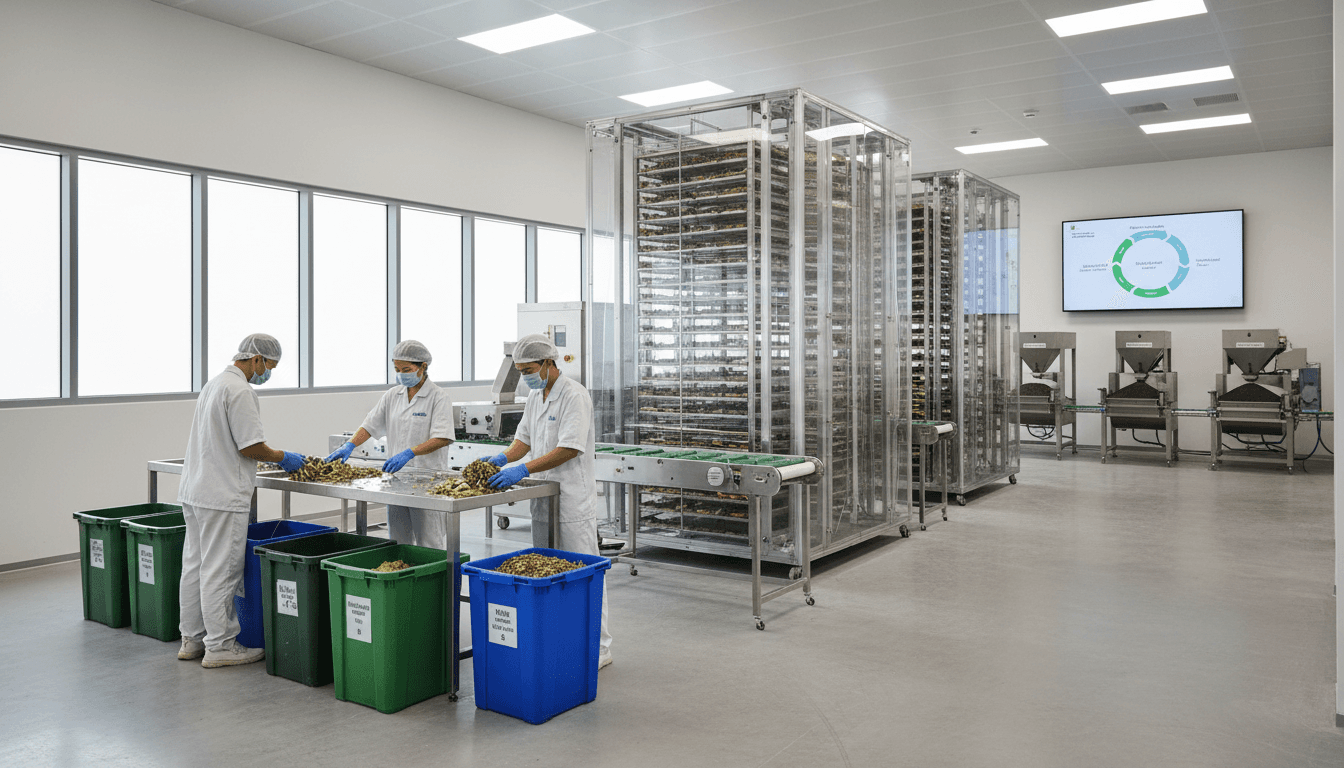
Food Waste Marketing Lessons for Singapore SMEs
Singapore threw away 813,000 tonnes of food waste in a recent reported year—about 12% of total waste—while importing more than 90% of our food. Those two numbers should change how local SMEs think about sustainability marketing: it’s not a “nice-to-have” CSR page anymore. It’s a business story customers, partners, and even future hires expect you to tell with specifics.
Ento Industries is a strong example. They’re using black soldier flies to turn food waste into animal feed ingredients and liquid fertiliser, and they’ve upcycled 500+ tonnes of food waste since starting in 2020. But here’s the part most founders miss: even the best sustainability innovation doesn’t create leads on its own. The leads come when you translate impact into clear, repeatable messages across your website, search, social, and sales enablement.
This post sits within our Singapore Startup Marketing series, focused on how local startups and SMEs market regionally. The angle here is simple: circular economy stories can outperform generic brand messaging, if you package them in a way that’s credible, searchable, and easy to understand.
Why food waste is a marketing opportunity (not just ops)
Food waste is already a cost line item for many SMEs—especially in F&B, hospitality, retail, and food manufacturing. But the same problem can become a differentiator when you communicate it properly.
The UNEP has highlighted that global food systems consume 70% of Earth’s water and contribute up to one-third of human-caused greenhouse gas emissions. When you connect your SME’s day-to-day decisions (procurement, packaging, waste handling, local sourcing) to those macro realities, you stop sounding like “another brand with a green tagline” and start sounding like a business with a point of view.
The myth: sustainability marketing is “telling people you’re good”
Most companies get this wrong. They lead with slogans—eco-friendly, green, sustainable—and avoid numbers because numbers feel risky.
The reality? Numbers are what make sustainability believable. Ento’s story works because it’s measurable:
- A known national pain point: 813,000 tonnes of food waste
- A local resilience context: Singapore’s “30 by 30” food goal
- A tangible output: waste converted into feed and fertiliser
- A progress marker: 500+ tonnes upcycled
If you’re an SME, your version might be smaller, but it still matters. “We reduced kitchen waste by 18% over 8 weeks” beats “we care about the environment” every day.
Ento Industries as a case study in circular economy storytelling
Ento Industries positions food waste as an input, not a liability. That single framing is marketing gold because it turns an uncomfortable topic (waste) into a constructive narrative (resource).
What they actually do (in plain language)
Black soldier fly larvae can consume large volumes of organic material—reported as up to four times their body weight per day—without the same harmful emissions profile you’d associate with some traditional waste handling methods.
Ento’s process (simplified) is:
- Collect food waste from sources like restaurants and supermarkets
- Treat and formulate it into optimal feed for larvae
- Feed larvae in batches
- Produce nutrient-rich liquid fertiliser (from the process output)
- Harvest larvae as a high-protein feed ingredient
That closes a loop: food waste → insect protein + fertiliser → supports farming/aquaculture → improves local resilience.
The marketing lesson: make your “mechanism” visual
If your sustainability story has a process, you need at least one strong visual:
- A simple flow diagram (input → transformation → output)
- A short 20–30 second reel showing the steps
- A before/after photo series
People don’t share sustainability claims. They share mechanisms.
How Singapore SMEs can turn sustainability into leads
If your goal is leads (not just awareness), your sustainability content needs to map to buyer intent. That means answering what prospects are already searching for and what procurement teams ask in calls.
1) Build one “proof page” on your website
A dedicated sustainability page often becomes fluffy. Instead, build a proof page that’s structured like a sales asset.
Include:
- Your baseline (what you measured, when you started)
- Your current numbers (monthly/quarterly)
- What changed operationally (so it doesn’t look like marketing)
- Who validated it (internal logs, partner reports, third-party tools)
- FAQs (for procurement and compliance teams)
Snippet-worthy line you can borrow as a format:
“Sustainability claims without a baseline are just branding.”
2) Use local search intent: “Singapore + waste + solution” keywords
For Singapore SME digital marketing, organic search still wins when the service is high-consideration.
If you’re in F&B, cleaning, logistics, packaging, waste management, or B2B supply, you can target long-tail keywords like:
- “food waste management Singapore”
- “circular economy solutions Singapore”
- “sustainable packaging supplier Singapore”
- “ESG reporting for SMEs Singapore”
The goal isn’t to rank for a single broad term. It’s to publish clusters that signal expertise.
3) Turn impact into a repeatable content system
Ento didn’t just create a solution; they created a story that can be told repeatedly: waste collected, converted, outputs produced, partners supported.
Here’s what I’ve found works for SMEs: pick one impact metric and build a simple monthly rhythm.
A practical system:
- Monthly post: “This month we diverted X kg of waste / saved Y cartons / reduced Z% rejects.”
- Quarterly case study: one customer, one problem, one measurable outcome
- Biannual ‘behind the scenes’: show the process and team
The consistency is the strategy. It also makes your brand easier to trust.
4) Use partnerships as credibility multipliers
Ento’s recognition includes support from investors and grants such as:
- DBS Foundation Social Enterprise Grant (2020)
- EnterpriseSG Enterprise Development Grant (2021)
Even if you’re not receiving grants, you can borrow the principle: borrow trust from credible partners.
Ways SMEs can do this without big budgets:
- Publish a joint post with a supplier or customer
- Co-host a small webinar with an industry association
- Run a pilot with a local institution (polytechnic, IHL, trade group)
For regional expansion (a core theme of this series), partnerships also help you cross borders faster—your partner’s reputation travels with you.
What to copy from Ento’s founder playbook (beyond sustainability)
This wasn’t just a tech story—it was an execution story.
Focus beats “more ideas”
Phua shared that early on, the team chased multiple projects and started losing capital. That’s familiar to any startup. Marketing has the same trap: too many channels, too many campaigns, not enough repetition.
A stance I’ll defend: your marketing should feel “boring” internally before it works externally. If you’re constantly reinventing your message, customers don’t learn it.
Reduce the manpower crunch with automation (then market that capability)
Ento used project management and business automation tools (HR/finance software) to streamline operations. SMEs often treat operational automation as separate from marketing, but they shouldn’t.
Operational discipline becomes a selling point when you phrase it in customer outcomes:
- Faster response times
- Clearer reporting
- More reliable fulfilment
- Better traceability (important for ESG and procurement)
In B2B, “we can report it” is frequently as valuable as “we can do it.”
“People also ask” questions SMEs should answer in content
These are the questions that convert curious readers into leads when you answer them clearly.
Is insect-based waste conversion safe and scalable?
It can be scalable because the inputs (food waste streams) are continuous and the outputs (feed and fertiliser) can plug into existing agriculture and aquaculture supply chains. Safety and compliance depend on regulated handling, consistent processing, and end-use standards.
How does food waste tie into Singapore’s food security goals?
Singapore’s “30 by 30” target aims to produce 30% of local nutritional needs by 2030, despite limited farmland (less than 1% of land). Reducing waste and creating local inputs like feed and fertiliser supports that resilience.
What’s the easiest sustainability story for an SME to start with?
Start where measurement is easiest:
- Waste volume (kg/week)
- Packaging reduction (units/month)
- Delivery optimisation (routes, fuel use proxy)
- Supplier consolidation (fewer shipments)
Then publish one clear baseline and update it consistently.
A practical next step: turn your sustainability into a campaign
If you’re a Singapore SME trying to win customers in 2026, don’t treat sustainability as a side note. Treat it like a positioning strategy.
Pick one circular-economy angle you can prove—waste reduced, materials reused, byproducts repurposed, energy saved—and build your content around it for 90 days. One landing page. Four short posts. One case study. One email follow-up sequence for leads.
Ento Industries shows what happens when a local problem is solved with a clear mechanism and measurable outcomes. The open question for most SMEs isn’t whether sustainability matters. It’s whether you’re willing to communicate it with enough clarity that the market can reward you for it.