A2A payments are reshaping fintech globally. See how Kenya can combine A2A, AI, and mobile money to cut fraud, reduce costs, and grow inclusion.
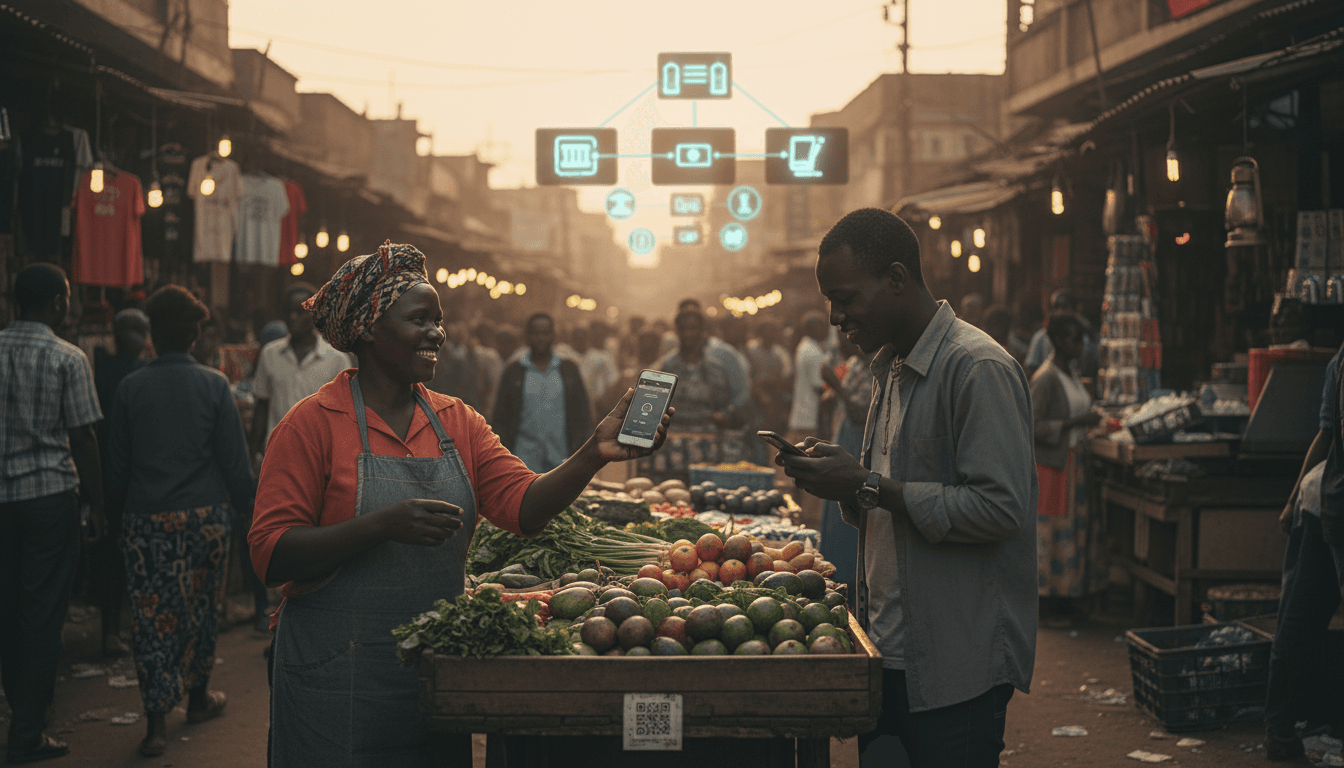
A2A Payments Kenya: AI + Mobile Money Next Step
A2A payments (account-to-account) are quietly becoming the “default rail” for digital money movement globally—because they cut card fees, settle faster, and give fintechs more control over the customer experience. Kenya already lives in an A2A-first culture through mobile money, bank transfers, and wallet ecosystems. The real question for 2026 is simpler: how do Kenyan fintechs combine A2A payments with AI so payments get cheaper, safer, and more inclusive—without adding friction?
Here’s my stance: Kenya shouldn’t copy the US A2A playbook. The US is using A2A to escape card dominance and modernize bank transfers. Kenya’s opportunity is different: we can use A2A thinking to connect mobile money, bank accounts, merchant wallets, and cross-border corridors into one reliable fabric—then use AI to run the fabric intelligently.
This post is part of the “Jinsi Akili Bandia Inavyoendesha Sekta ya Fintech na Malipo ya Simu Nchini Kenya” series, so we’ll keep the focus practical: where A2A fits in the Kenyan payment stack, what global markets are getting right, and what to build next if you want leads, adoption, and trust.
A2A payments: the part most teams misunderstand
A2A isn’t a single product—it’s a design choice: money moves from one account (or wallet) to another without card networks sitting in the middle.
Internationally, A2A is often discussed in the context of instant payment networks and open banking. In the US, the story is heavily shaped by bank-to-bank transfer modernization and efforts to reduce reliance on cards for everyday payments. In many other markets, A2A rides on national real-time rails and open API standards.
Kenya’s “A2A reality” looks like this:
- Wallet-to-wallet transfers at massive scale (people know the workflow already)
- Wallet-to-bank and bank-to-wallet transfers (common, but not always consistent in speed/cost)
- Merchant collections through paybill/till and app-based checkout
- Growing demand for cross-border A2A for trade, remittances, and regional travel
A2A payments win when they feel like cash: immediate, predictable, and low-cost.
Why global A2A trends matter to Kenya
Global markets are standardizing how accounts can be accessed and paid from. That matters because Kenyan fintechs increasingly serve customers who are multi-homed: they have a wallet, a bank account, a savings app, and sometimes a second wallet.
If Kenya gets A2A interoperability right, we reduce the “multiple balances” problem that frustrates users and increases support costs. If we don’t, we keep building one-off integrations that break during peak traffic.
Kenya already has A2A—so where’s the gap?
The gap isn’t the ability to move money. It’s the ability to move money across ecosystems with consistent rules, strong trust signals, and low dispute pain.
Kenyan customers are comfortable with mobile payments, but they still face issues that A2A + AI can fix:
- Wrong recipient risk (fat-fingered numbers, similar names)
- Merchant reconciliation headaches (payments received, but hard to match to invoices)
- Fraud and social engineering (customers tricked into authorizing transfers)
- Failed or delayed transfers during spikes, plus unclear resolution timelines
- Fragmented user education (customers don’t always understand charges, reversals, limits)
Here’s what works: treat A2A as a trust and routing problem, not just a transfer feature.
A practical model: “Routing + Risk + Receipts”
When a customer hits “Pay,” three things should happen fast:
- Routing: pick the best rail (wallet, bank transfer, merchant QR, internal ledger) by cost, speed, and availability.
- Risk: assess whether this payment looks normal for this user and this merchant.
- Receipts: generate an unambiguous proof of payment and match it to an invoice or order.
AI improves all three.
Where AI changes A2A payments in Kenya (and what to build)
AI makes A2A usable at scale by reducing mistakes, preventing fraud, and automating operations. If you’re a fintech, a PSP, a sacco platform, or a merchant aggregator, these are the highest ROI areas.
1) AI-driven fraud detection built for mobile money behavior
Card fraud models don’t fully map to Kenya’s reality. Kenya’s fraud is often SIM swap-driven, social engineering-driven, or mule-account-driven. AI is most valuable when it learns patterns across:
- Device fingerprint + SIM tenure + location consistency
- Transaction velocity (sudden spikes) and new beneficiary behavior
- Merchant risk tiers (new tills, suspicious categories)
- Customer communication signals (e.g., repeated failed PIN attempts)
Actionable build:
- Score transactions in real time and apply step-up verification only when risk is high (don’t punish good users).
- Introduce cool-down rules for first-time beneficiaries above certain thresholds.
- Flag “coaching patterns” common in scams (multiple small transfers, urgent timing, unusual recipient).
Snippet-worthy line: Good fraud AI doesn’t block payments; it blocks the bad moments inside payments.
2) “Confirm the recipient” to reduce wrong-send losses
Wrong recipient is a solvable problem. The main blocker is inconsistent identifiers across wallets and banks.
What to implement:
- Name/alias confirmation before sending (display verified name/merchant entity)
- Risk warnings when a recipient is new or looks similar to a recent contact
- Human-friendly identifiers (aliases, QR, invoice links) so users stop typing numbers
Even partial implementation reduces support tickets and customer anger. And it improves trust—critical when you’re trying to pull users from cash.
3) Smart routing to cut cost per payment
A2A is often cheaper than cards, but Kenya’s ecosystem still has variable fees depending on channel, amount, time, and partner.
AI can decide, in milliseconds, the best route:
- Wallet rail vs bank rail vs internal ledger transfer
- Real-time vs batch settlement where appropriate
- Preferred partners during downtime or congestion
If you operate at scale, routing optimizations can reduce payment costs without changing pricing for the customer—meaning better margins or room for promotions.
4) AI for merchant reconciliation (where payments often break)
Merchants don’t just want payment received. They want it matched.
Common pain in Kenya:
- Paybill/till reference mismatch
- Customer pays the right amount but wrong reference
- Partial payments across multiple transfers
AI and automation help by:
- Suggesting matches between transactions and invoices using amount, time, phone, and basket info
- Detecting duplicates and chargeback-like reversal patterns
- Auto-generating customer notifications: “We received your payment and matched it to Invoice #123”
This matters because reconciliation is where many SMEs decide whether “digital payments are worth it.”
5) Customer communication that actually reduces churn
In this topic series we’ve discussed how AI supports maudhui ya kidijitali, elimu ya mtumiaji, na huduma kwa wateja. Payments are the perfect place to apply that.
Do this well and you’ll see fewer reversals, fewer tickets, and higher repeat usage:
- Proactive alerts: “You’re sending to a new recipient—double-check the name.”
- Clear fee disclosure before confirm
- Instant receipts with plain language and a simple “Report a problem” flow
- Personalized micro-education in Swahili/English based on user behavior (not generic tips)
Opinion: Most fintechs overinvest in acquisition and underinvest in payment clarity. Clarity wins long-term.
What Kenya can learn from US + international A2A—without copying them
The lesson isn’t “build open banking because the US did.” The lesson is “standardize access, identity, and dispute handling so A2A feels safe.”
Here are global patterns worth localizing:
Standardized consent and access
International A2A growth is often tied to clear rules for accessing accounts via APIs.
Kenya-focused adaptation:
- Make customer consent flows consistent across partners
- Log consent in auditable ways (good for compliance and customer trust)
- Provide simple permission dashboards: “What apps can debit my account/wallet?”
Real-time payments need real-time support
Instant rails create a new expectation: if money moves instantly, resolution should be fast too.
Kenya-focused adaptation:
- Build fast dispute triage: categorize “wrong recipient,” “merchant mismatch,” “suspected scam,” “system delay”
- Use AI to pre-fill case details and suggest the likely resolution path
- Set customer-facing SLAs you can keep during holidays and end-month peaks
Interoperability is a competitive advantage (not a threat)
Kenya is positioning itself as a regional fintech hub. Interoperability helps local players scale to Uganda, Tanzania, Rwanda, and beyond.
The business point: interoperable A2A expands your addressable market faster than a single closed loop.
A2A payments + AI roadmap for Kenyan fintech teams (next 90 days)
If you want progress quickly, start where friction and fraud are already costing you money. Here’s a grounded plan.
-
Instrument your payment funnel
- Track drop-offs at confirm step, PIN step, and timeout step
- Tag failure reasons (network, insufficient funds, wrong reference)
-
Deploy a lightweight risk engine
- Start with rules + basic anomaly detection
- Add step-up verification only on risky flows
-
Implement recipient confirmation
- Verified names for merchants
- Warnings for new beneficiaries and high-risk patterns
-
Fix receipts and reconciliation
- Standardize receipt IDs
- Build auto-match suggestions for merchants
-
Upgrade customer messaging (Swahili + English)
- Pre-transaction fee clarity
- Post-transaction “what happens next” guidance
This matters for leads because better payment reliability becomes your best marketing. Customers refer products that don’t embarrass them at checkout.
A fintech that reduces payment anxiety will outgrow a fintech that only reduces payment time.
People also ask: quick answers
Is A2A the same as mobile money? Not exactly. Mobile money is an ecosystem; A2A is the payment pattern. Many mobile money transfers are A2A because they move value between accounts/wallets.
Will A2A reduce transaction fees in Kenya? It can—especially for merchant payments—when routing is optimized and middle layers are reduced. But savings depend on partner pricing and operational efficiency.
Where does AI add the most value in mobile payments? Fraud prevention, recipient confirmation, smart routing, merchant reconciliation, and customer support automation.
What to do next if you’re building in Kenya
A2A payments are becoming the global default because they’re efficient. Kenya’s edge is that the user behavior is already there—people trust phone-based money movement. The next phase is trust-by-design: AI that prevents mistakes, explains fees clearly, and makes payments feel predictable even during peak seasons (end-month, school fees periods, and December travel spikes).
If you’re running a fintech, PSP, or merchant platform, focus on one promise and deliver it: “Your money reaches the right place, every time, with proof you can use.” That promise generates leads more reliably than any flashy campaign.
As we continue this Jinsi Akili Bandia Inavyoendesha Sekta ya Fintech na Malipo ya Simu Nchini Kenya series, the big question to sit with is this: when A2A becomes the norm across East Africa, will your product be the trusted bridge—or another disconnected wallet?