Learn how SASSA banking detail updates work—and what Ghana’s fintech and mobile money systems can copy, improve, and secure with AI.
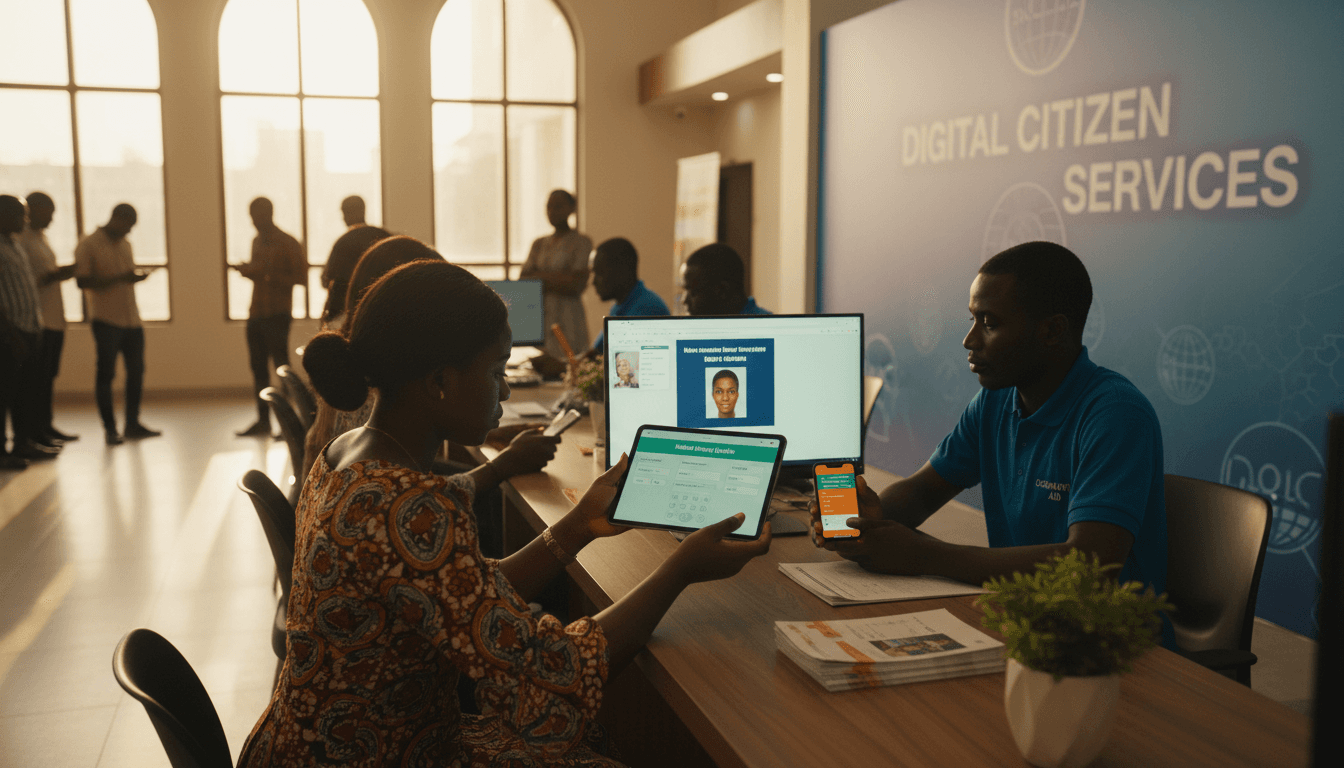
SASSA Banking Details Update: Lessons for Ghana Fintech
A single wrong digit in your bank account number can delay a government payment by weeks. That’s not a “tech problem” in the abstract—it’s food money, transport money, school money. And when millions of people depend on that payment arriving on time, the boring-sounding task of updating banking details and a phone number becomes a national fintech reliability test.
South Africa’s SASSA process is a useful case study for Ghana’s own push to make akɔntabuo, mobile money, and government disbursements more secure and less stressful. In this post—part of our “AI ne Fintech: Sɛnea Akɔntabuo ne Mobile Money Rehyɛ Ghana den” series—I’ll break down what the SASSA update steps teach us about verification, fraud prevention, and user experience, then show exactly where AI in fintech can reduce queues, errors, and payment interruptions in Ghana.
How SASSA updates work (and why the rules are strict)
SASSA’s approach is simple: payments must go to the verified beneficiary, through a verified channel, with a verified contact number. The rules feel tough because they’re designed to stop common fraud patterns—account takeovers, SIM swaps, and payments redirected to third parties.
There are two different experiences, depending on the grant type:
- Permanent grants (old age, disability, child support, etc.) often require in-person changes for banking details and sometimes for contact updates.
- SRD grant (Social Relief of Distress) is designed to be digital-first, with online changes and SMS-based verification.
That split is already a big lesson for Ghana: the risk model should determine the channel. High-impact or high-fraud changes (like payment destination) deserve stronger verification than low-risk changes.
Permanent grants: banking changes happen in person
For permanent SASSA beneficiaries, changing banking details typically means going to a SASSA office and completing a payment method change form. The key requirements are straightforward and strict:
- You must visit a SASSA office to change payment methods for most permanent grants.
- You complete the “Payment Method Change Form” (often called a consent form for bank payment).
- You bring verification documents:
- Valid South African ID (original and copy)
- Proof of the new bank account (official bank letter or a stamped statement, usually not older than three months)
- The bank account must be in the beneficiary’s name (no third-party or joint accounts).
- The change is processed and sent for verification, which can take up to 21 working days.
- If you want the change to apply to the next payment cycle, you typically need to submit before a mid-month cutoff (often the 15th).
This is manual, yes. But it’s also a clear policy stance: SASSA prioritizes payment integrity over convenience.
Permanent grants: cellphone number updates are treated as security updates
A phone number isn’t just “contact info” anymore. It’s often the key to receiving codes, links, or alerts. That’s why SASSA encourages beneficiaries to update cellphone details formally—typically at a local office, or via the toll-free helpline for guidance.
From a fintech perspective, this is the correct instinct: changing a phone number should trigger stronger verification than changing an email address, because phone numbers often control OTPs.
SRD grant: online banking updates with SMS links
For the SRD grant, SASSA uses a more scalable digital process:
- You enter your ID number on the SRD portal.
- SASSA sends a secure link via SMS to the phone number already registered.
- You open that link and submit your new bank details.
- The bank account must still be in your own name.
- The details go through bank verification and apply only after approval.
The design logic is solid: prove you control the registered phone number, then allow the banking change.
SRD grant: changing a phone number uses OTP confirmation
SRD phone number changes run through a dedicated contact details portal. The process typically requires:
- Your ID number and application identifiers
- A reason for change (lost phone, stolen SIM, used someone else’s number, etc.)
- An OTP sent to the new number
SASSA also warns about fake websites pretending to offer grant updates. That warning matters for Ghana too, because fraudsters go where trust is high and processes are confusing.
A helpful rule for any government payment system: if the process is hard to understand, scammers will “explain it” for a fee.
What Ghana can learn: payment reliability is a product feature
If you work in Ghana’s fintech space—mobile money, agent networks, digital banking, or government disbursement programs—SASSA’s process is basically a mirror. The same issues show up:
- Phone numbers double as identity and authentication.
- People change SIMs and devices often.
- Names on accounts don’t always match perfectly due to spelling variations.
- Fraud attempts spike around high-volume payment seasons.
And December makes all of this louder. Holiday spending pressure increases scams, SIM swap attempts, and “quick fix” middlemen. Systems must be designed for that reality, not for an ideal user journey.
The big trade-off: fewer queues vs fewer fraud losses
Most teams frame the problem as “offline is slow, online is fast.” The real framing should be:
- Offline is expensive but controlled (biometrics, face-to-face verification, document checks).
- Online is scalable but attackable (phishing, SIM swaps, social engineering).
Ghana doesn’t need to copy South Africa’s exact steps. But Ghana does need the same clarity: which changes require strong verification, and which can be self-served safely?
Where AI fits: make verification stronger without making life harder
AI isn’t magic. But used properly, it does one thing exceptionally well: reduce the burden of verification while improving fraud detection.
Here are practical AI-driven upgrades that would help any Ghanaian system that resembles SASSA-style payments.
AI can reduce “document ping-pong” in banking detail changes
Many banking changes fail for basic reasons: wrong format, mismatch between ID name and bank name, expired proof, unclear scans.
AI-based document processing can catch these problems before submission:
- OCR and field extraction: automatically read account numbers and names from bank letters/statements.
- Name matching with tolerance: flag likely matches (e.g., missing middle name) while still rejecting suspicious mismatches.
- Quality checks: detect blurry images, cropped documents, or altered PDFs.
Result: fewer rejections, fewer repeat visits, and fewer “come back next week” instructions.
AI can treat phone number changes like high-risk events (because they are)
The fastest way to hijack a user’s payments is to hijack their phone number. That’s why phone number change workflows should include risk scoring.
An AI risk engine can weigh signals such as:
- recent change attempts
- device change patterns
- location anomalies (e.g., different region than usual)
- unusual timing (late-night changes, repeated failures)
- agent-assisted vs self-service requests
Low-risk requests flow quickly. High-risk requests are stepped up to stronger checks (biometrics, in-person verification, or a cool-off period).
AI can help government disbursements work with both banks and mobile money
Ghana’s ecosystem is heavily mobile-money-led, which is a strength. But it creates a systems challenge: users may receive funds via bank, wallet, or cash-out channels depending on what’s available.
A practical design is a verified payout routing layer:
- One verified identity
- Multiple verified payout options (bank account, wallet, approved cash-out method)
- Clear rules on when each option is allowed
AI can support this by continuously checking for anomalies in routing changes and detecting “payment diversion” patterns.
A safer, more user-friendly process (a blueprint Ghana teams can copy)
If you’re building a government-linked payment product—or advising one—this is a strong baseline flow for “change my banking details” and “change my phone number,” adapted from lessons in the SASSA process.
Step-by-step: safer banking detail change flow
- User starts request in app/portal or via assisted agent.
- System performs instant validation (account number length, bank code, format).
- User uploads proof (or bank verification happens through an integrated check).
- AI runs document and name match checks and returns clear feedback.
- System sends request to bank/wallet provider for verification.
- User receives status updates (pending, verified, rejected with reason).
- If request is high-risk, require step-up verification.
Step-by-step: safer phone number change flow
- User requests phone number change.
- System requires:
- OTP to old number if possible
- OTP to new number
- optional biometric or PIN confirmation
- Apply a cool-off period for payout changes if risk is elevated.
- Notify user across channels (SMS + in-app + email if available).
- Provide an escalation path (hotline or office) for lost-phone cases.
This design doesn’t remove human support. It makes human support the exception, not the default.
Practical tips for beneficiaries (and for product teams)
Answer first: the fastest way to avoid payment disruption is to treat your phone number and payout account like security assets.
If you’re a beneficiary updating details
- Use an account or wallet that’s registered in your own name.
- Keep a recent, official proof of account (statement or bank letter) ready.
- Don’t wait until the last minute—many systems have mid-month cutoffs for next-cycle changes.
- Avoid third parties who promise to “do it for you.” Those offers are usually how account takeovers start.
If you’re building Ghana fintech systems
- Make “change payout destination” a high-friction, high-security flow.
- Treat phone number updates as security events, not profile edits.
- Add plain-language rejection reasons (users fix problems faster when they understand them).
- Instrument everything: measure how many requests fail due to formatting vs identity mismatch vs fraud flags.
What this means for “AI ne Fintech” in Ghana
Government payments aren’t just about sending money. They’re about building trust that the system won’t break when people change phones, switch banks, lose SIM cards, or move regions. The SASSA banking details update process shows a mature stance: verification first, then convenience—especially for high-risk changes.
For Ghana, the opportunity is to keep that security posture while reducing friction using AI: smarter document checks, better name matching, risk-based authentication, and clearer user guidance. That’s how akɔntabuo ne mobile money can scale without turning help desks and offices into permanent bottlenecks.
If you’re working on government disbursements, wallet products, or mobile money integration in Ghana, where are users getting stuck today—bank detail changes, phone number updates, or fraud disputes? That “stuck point” is usually the best place to apply AI first.