OpenAI’s Roi acqui-hire signals a shift to personalized AI in consumer finance. Here’s how Ghana’s mobile money can apply it for trust, support, and inclusion.
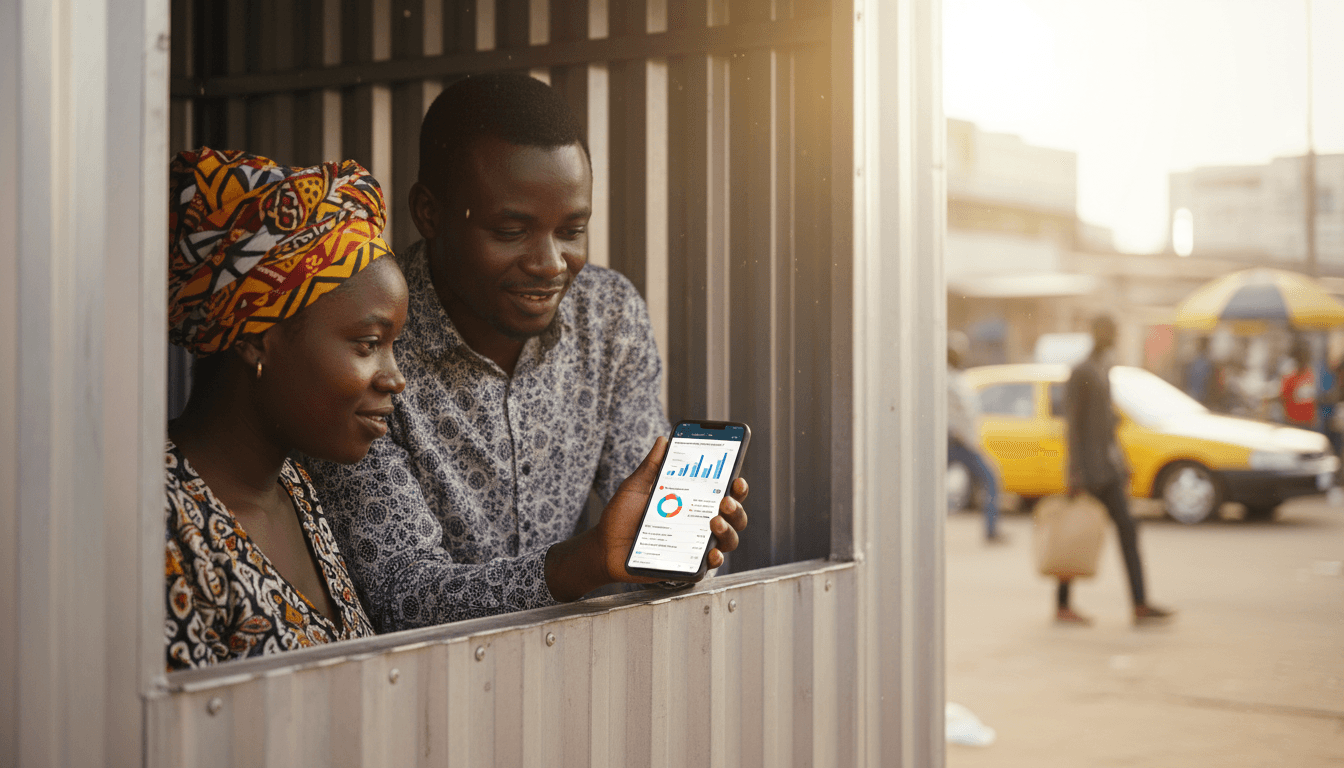
Personalized AI for Mobile Money: Ghana’s Next Move
OpenAI didn’t buy a bank. It did something more telling: it acqui-hired the CEO of Roi, an “AI financial companion,” and Roi is shutting down as its talent joins OpenAI to push personalized consumer AI and—by the sound of it—grow revenue inside consumer apps.
That’s not Silicon Valley gossip. It’s a signal. The consumer AI race is shifting from “cool chatbots” to AI that understands your money habits and can guide everyday decisions. For Ghana—where mobile money is already the default financial rail for millions—this matters because the next competitive edge won’t be another wallet. It’ll be personalized intelligence inside the wallet.
This post is part of our series “AI ne Fintech: Sɛnea Akɔntabuo ne Mobile Money Rehyɛ Ghana den”—how AI is strengthening Ghana’s fintech and mobile money ecosystem through automation, trust, and better customer experience. Here’s what OpenAI’s move implies, and how Ghanaian fintech teams can apply the lesson without copying the West blindly.
Why OpenAI’s acqui-hire matters for consumer finance
Answer first: OpenAI is betting that the next wave of consumer AI revenue will come from personalized, high-frequency use cases—and personal finance is one of the stickiest daily needs.
Roi positioned itself as an AI financial companion. Even from the short RSS summary, two things are clear:
- Personal finance is becoming a “default” AI use case. People check balances, plan expenses, worry about bills, and make small decisions daily. AI that can reduce that stress earns loyalty.
- OpenAI wants talent that understands financial behavior, not just models. The hard part isn’t generating text. It’s building product flows that handle sensitive financial context, user trust, and safe recommendations.
Here’s my stance: most fintech apps still treat “personalization” as cosmetics—rearranging menus or pushing generic offers. Real personalization is when the app knows the user’s patterns, predicts friction, and explains decisions clearly.
For Ghanaian fintech and mobile money operators, this is a wake-up call: if global AI players are building consumer finance companions, local platforms need to decide whether they’ll be the interface customers trust—or just the pipe money passes through.
What “personalized AI” looks like inside Ghana mobile money
Answer first: In Ghana, personalized AI in mobile money should focus on three practical jobs: cashflow coaching, safer transactions, and faster support—in plain language, across languages.
Personal finance in Ghana has unique rhythms: irregular income, family obligations, rotating savings groups, school-fee seasons, church contributions, and heavy reliance on mobile money. Personalized AI should map to that reality.
1) Cashflow coaching that respects irregular income
A lot of people don’t live on a monthly salary. So “budgeting” features often fail because they assume predictability.
A better AI approach:
- Detect income patterns (daily/weekly top-ups, salary bursts, business sales)
- Suggest micro-budgets (“For the next 7 days, keep spend under GHS X to cover Y”)
- Flag high-risk weeks (rent due, school fees, loan repayment)
Snippet-worthy line: Personalized AI isn’t a spreadsheet. It’s a coach that understands your cash comes in waves.
2) Smart, explainable fraud prevention for mobile money
Fraud controls often feel like punishment: blocked transactions, vague error messages, endless queues.
AI can reduce fraud and reduce customer rage if it’s explainable:
- Real-time scam pattern detection on suspicious P2P behavior
- “Confirm your intent” prompts written in simple English/Twi/Ga/Ewe
- Risk scoring that escalates only when needed (step-up verification)
The win is not just stopping fraud. It’s keeping trust high while doing it.
3) Customer support that actually resolves issues
Most mobile money “support” is a dead end when customers need help with failed transactions, reversals, charge disputes, or merchant issues.
Personalized AI support should:
- Pull transaction context instantly (amount, time, recipient, status)
- Ask fewer questions because it already sees the basics
- Provide a clear resolution path (“This is pending; here’s the SLA” vs “Try again later”)
If you run a fintech in Ghana, this is one of the quickest places to see ROI: fewer tickets, faster resolution, higher retention.
Lessons from OpenAI for Ghana’s fintech builders
Answer first: OpenAI’s move teaches four product lessons: hire for behavior + trust, design for daily use, treat safety as product, and make personalization measurable.
You don’t need OpenAI’s budget to apply the logic.
Hire for financial product instincts, not only AI skills
An AI engineer can build a model. A finance-product builder knows what can go wrong when the model is wrong.
If you’re building an AI assistant for mobile money, you need people who understand:
- Dispute processes and SLAs
- Consumer protection expectations
- How users interpret advice as “authority”
- The reputational cost of one bad recommendation
Acqui-hires happen when the team has product instincts that are rare. Ghanaian startups can’t always acqui-hire, but you can still recruit for these instincts intentionally.
Design for frequency: daily micro-actions beat “big finance” features
Most finance apps chase big moments: loans, investments, insurance. Those matter—but daily usefulness wins loyalty.
Personalized AI should be embedded in micro-moments:
- “You’re about to send money to a new number—want to verify the name?”
- “Your data bundle spend is up 28% this week—pause auto-renew?”
- “Three merchant payments failed in a row—switch to USSD flow?”
Daily micro-actions build habit. Habit builds retention. Retention builds revenue.
Safety isn’t compliance—it’s user experience
Financial AI must be conservative. Not boring—just careful.
Practical safety design choices:
- Advice boundaries: the assistant can explain options, but it shouldn’t pretend to be a licensed advisor.
- Uncertainty language: “Based on your last 30 days…” is better than “You should…”
- Human escalation: one-tap handoff to an agent for disputes, suspected fraud, or emotional distress.
Make personalization measurable (or it becomes vibes)
Personalization isn’t “users liked it.” Measure it.
Metrics Ghanaian teams can track:
- Ticket deflection rate (support)
- Fraud loss rate + false-positive block rate
- 30/60/90-day retention changes after AI rollout
- “Time to resolution” for failed transactions
- Opt-in rate for AI coaching + weekly active usage
If you can’t measure it, don’t ship it.
The Ghana playbook: 6 AI features worth piloting in 2026
Answer first: The fastest path is pilots that sit on top of existing mobile money rails—starting with support, fraud, and cashflow insights.
Given today’s date (late December 2025), this is planning season. Teams are setting 2026 roadmaps and budgets. If you’re choosing what to build, I’d prioritize these six pilots because they’re practical and revenue-linked:
- Failed-transaction assistant that reads transaction status and guides reversals
- Scam-warning prompts for risky patterns (new recipients, rapid-fire sends)
- Personalized fee explainer (“Why was I charged?”) for MoMo charges and merchant fees
- Bill reminder + micro-saving nudges tied to school fees, rent, utilities
- Merchant insights for small businesses (daily sales summaries, peak hours, refund alerts)
- Credit readiness snapshot (not a loan promise) showing what data improves eligibility
Notice what’s missing: flashy AI for “investing.” For Ghana’s mass market, the first win is reducing friction and anxiety in everyday payments.
A practical rule: if the feature can’t help a user within 30 seconds, it’s probably not your first AI feature.
“People also ask” (quick answers your team will need)
Will personalized AI replace human agents in fintech support?
No. It reduces repetitive tickets and speeds up triage. Humans still handle disputes, exceptions, and high-risk cases.
Is it safe to let an AI assistant give financial advice?
It’s safe only with tight boundaries: explain options, show assumptions, avoid guarantees, and escalate sensitive cases.
What data is needed for a mobile money AI companion?
Transaction history, balances, bill patterns, device and session signals (for fraud), and user preferences. Start with the minimum viable data and expand with explicit user consent.
How do you build trust for AI in Ghana’s mobile money?
Use clear language, local context, transparent explanations (“because X happened”), and consistent resolution when things go wrong.
What to do next (if you want leads, not hype)
OpenAI’s acqui-hire tells us the market is moving toward consumer finance companions—AI that sits beside the user, not just behind the scenes. Ghana’s mobile money ecosystem is perfectly positioned to benefit because the rails are already there and usage is already daily.
If you’re building in Ghana fintech, pick one high-frequency problem—failed transactions, scam friction, or cashflow stress—and pilot a personalized AI layer with measurable outcomes. That’s how you move from “AI feature” to AI-driven automation in financial services that customers actually feel.
Where should Ghana’s mobile money platforms draw the line between “helpful coaching” and “too much control”—and who gets to decide that line?