Bolt’s one-click crypto + payments bet offers lessons for Ghana fintech. See how AI, akɔntabuo automation, and fraud controls enable faster mobile money.
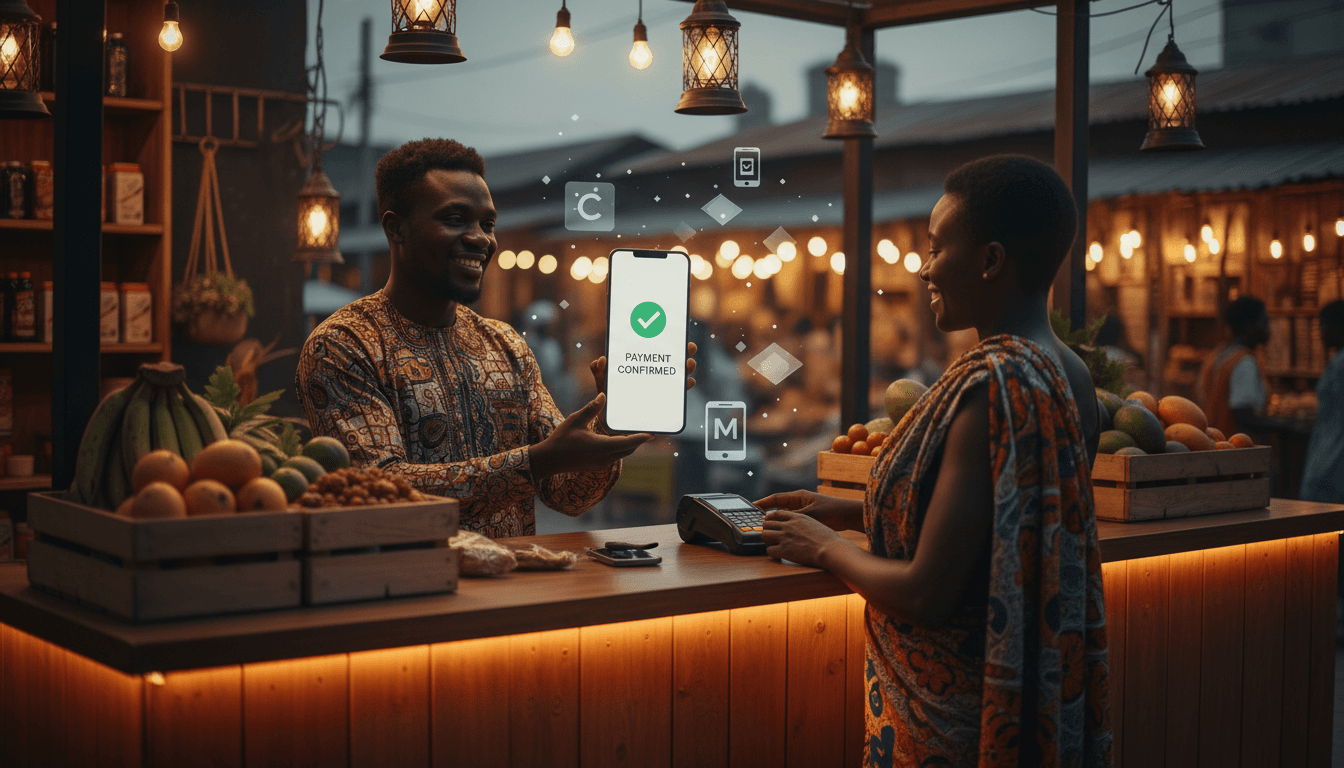
One-Click Crypto & Payments: Lessons for Ghana Fintech
Ryan Breslow’s return to Bolt comes with a very specific bet: people don’t want more finance apps—they want fewer taps. Bolt built its name on one-click checkout, and now Breslow is pushing a “superapp” idea that combines one-click crypto with everyday payments, taking aim at giants like Coinbase, Zelle, and PayPal.
For Ghana, this story isn’t celebrity startup drama. It’s a practical case study for our ongoing series “AI ne Fintech: Sɛnea Akɔntabuo ne Mobile Money Rehyɛ Ghana den”—because Ghana already lives in a mobile-first reality. We’ve normalized quick transfers, merchant payments, and agent networks. The next competitive edge is not “going digital.” It’s going smarter: AI-assisted risk checks, automated reconciliation (akɔntabuo), personalization, and fraud prevention—without slowing the user down.
The real question isn’t whether a superapp can exist. Ghana has versions of it already in mobile money ecosystems. The question is: what does “one-click” really require under the hood, and what can Ghana’s fintech builders learn from Bolt’s new direction?
Why Bolt’s “one-click superapp” idea is a big deal
The key point: one-click isn’t a UI trick; it’s an operational promise. If an app claims you can move money (or buy crypto) instantly with minimal friction, it must quietly solve identity, risk, fraud, and settlement complexity behind the scenes.
Bolt’s positioning—crypto plus everyday payments—signals a bigger industry trend: payments and “value storage” (including crypto) are converging into one consumer experience. In the US, apps are fighting to become the default place you keep and move money. Coinbase started with crypto. PayPal started with online payments. Zelle sits on bank rails. Bolt is trying to compress multiple money behaviors into one habit.
For Ghana, the analogy is direct. Mobile money started as transfers and cash-out. Then it expanded into bill pay, merchant QR, savings, lending, and cross-network interoperability. The opportunity now is to make all of it feel like a single simple action—while AI handles the messy parts.
The hidden work behind “one-click”
If you’ve ever built or scaled a fintech product, you know the truth: every “simple” payment experience is supported by complex systems.
“One-click” typically requires:
- Strong identity and KYC that doesn’t annoy users
- Risk scoring in milliseconds (not minutes)
- Fraud detection that adapts to new patterns
- Reliable settlement and reconciliation so books match reality
- Dispute handling that doesn’t destroy trust
This is where AI becomes practical, not hype. AI in fintech isn’t just chatbots. It’s the engine that makes speed possible without accepting reckless risk.
Coinbase vs PayPal vs Zelle vs Bolt: what’s the real competition?
The key point: these companies aren’t only competing on features—they’re competing on trust + habit.
- Coinbase is primarily a crypto trust brand: custody, compliance posture, trading UX.
- PayPal is a global checkout and consumer payments habit: online acceptance, buyer protections.
- Zelle is bank-native P2P: fast transfers, but limited ecosystem creativity.
- Bolt has checkout DNA: conversion optimization, one-click flows, merchant relationships.
Breslow’s “one-click crypto and everyday payments” framing is basically saying: “Why should people treat crypto as a separate behavior?” That’s a bold stance, and it mirrors how some consumers already think: money is money; I want to pay, save, and move it without switching contexts.
In Ghana, the equivalent tension is between:
- Mobile money wallets vs bank apps
- Interoperable transfers vs closed loops
- Cash-in/cash-out habits vs digital-first merchant acceptance
If a Ghana fintech wants to win, it must do what the best payment products do: reduce cognitive load. Users don’t want to “manage finance.” They want to finish a task.
Myth-busting: superapps aren’t only for Asia
The common myth is that superapps only work in Asia because of unique market conditions. I don’t buy that as a blanket statement.
The reality: superapps work where there’s a strong daily-use trigger (payments, transport, messaging, shopping) and where integration reduces friction. Ghana already has daily-use triggers—transfers, merchant payments, airtime/data, bills. The remaining job is to integrate services in a way that doesn’t feel like a cluttered menu.
A “superapp” that feels heavy will lose to a smaller app that feels instant.
What Ghana can copy—and what Ghana should avoid
The key point: copy the “one-click principle,” not the Silicon Valley label. “Superapp” can be a trap if it becomes a feature dump.
Here’s what’s worth copying from the Bolt direction.
1) Design around one primary action
One-click products obsess over the main job to be done. For Bolt historically: complete checkout fast. For a Ghana fintech: it could be “send money,” “pay merchant,” or “collect payments.”
Practical approach:
- Pick one hero workflow (e.g., send money)
- Make it 2–3 steps max for returning users
- Put everything else behind smart defaults
AI can help by predicting:
- Most likely recipient
- Most likely amount range
- Most likely funding source
- Whether this transaction looks risky
2) Make “akɔntabuo” (reconciliation) a product feature, not back-office pain
Ghana’s SMEs often run on a mix of MoMo messages, notebooks, and mental math. That’s not a morality issue—it’s a tooling issue.
If your fintech serves merchants, automated reconciliation is a lead magnet.
Concrete features that win:
- Auto-match incoming payments to invoices
- Daily sales summaries by channel (cash, MoMo, bank)
- Refund and chargeback tracking
- Exportable statements for tax and audit readiness
AI boosts this by classifying transactions and detecting anomalies:
- Duplicate payments
- Suspicious reversal patterns
- “Money in” that doesn’t match delivery records
3) Treat fraud as a UX problem
If fraud controls are heavy-handed, legit users suffer. If they’re too loose, you lose trust.
AI-driven fraud systems can reduce friction by using risk-based step-up checks:
- Low-risk transfers: instant
- Medium-risk: confirm with PIN/biometric
- High-risk: hold, require additional verification, or manual review
This is how you keep “one-click” while still protecting the ecosystem.
4) Build for interoperability (because Ghana isn’t one network)
One-click experiences break when users hit network walls.
If the goal is to strengthen Ghana’s financial ecosystem through AI-enhanced fintech tools, interoperability isn’t optional:
- Cross-wallet and bank transfers
- Merchant acceptance across providers
- Clear fees and timing expectations
Users forgive small fees; they don’t forgive surprises.
What to avoid
- Crypto-first positioning for mass market without clear everyday value. In Ghana, many users will try crypto for cross-border value storage or speculation, but everyday payments still need stability and trust.
- Overstuffed home screens that bury the main action.
- Growth-at-all-costs incentives that attract fraud rings.
Where AI fits in Ghana’s mobile money future (practical, not abstract)
The key point: AI should make decisions faster and safer—then get out of the way.
If you’re building within the “AI ne Fintech” theme, here are AI use cases that actually move metrics.
AI for smarter onboarding (without dropping conversions)
Onboarding is where many apps lose users. The best pattern is “progressive trust”:
- Start with minimal info for low limits
- Increase limits as the user proves legitimacy
AI can:
- Detect document fraud
- Match selfie-liveness checks
- Flag high-risk devices or IP patterns
AI for credit and savings personalization
Many Ghanaian users don’t want “loans.” They want breathing room.
AI can personalize:
- Micro-savings prompts timed around salary days
- Short-term credit that aligns with cash-flow cycles (market days, school fees)
- Risk pricing based on transaction behavior (with fairness constraints)
A stance: don’t ship AI credit models without transparency. If a user’s limit drops, give a human explanation, not a black box.
AI for customer support that resolves, not replies
Support is where trust dies. AI should reduce resolution time, not just answer FAQs.
Useful capabilities:
- Auto-triage disputes (failed transfer vs wrong recipient vs reversal)
- Pull transaction context instantly
- Suggest next steps with certainty levels
When money is stuck, “we’re looking into it” isn’t support—it’s stress.
A Ghana-focused blueprint: “one-click” without losing control
The key point: speed is earned through governance, not wishes. If Bolt is betting on one-click crypto + payments, Ghana fintechs must bet on one-click with guardrails.
Here’s a practical blueprint teams can implement:
- Define your one-click action (send, pay, collect, withdraw, buy)
- Instrument it end-to-end (time to complete, failure reasons, dropout points)
- Automate reconciliation for merchants as a first-class feature
- Deploy risk-based authentication (step-up only when needed)
- Use AI for anomaly detection (fraud, reversals, agent abuse, mule accounts)
- Design for interoperability and honest fee/timing communication
- Write policies like product: clear limits, clear reversals, clear dispute timelines
“One-click is what users feel. AI + controls are what operators build.”
What this means for 2026 planning (and why December is the right time)
The key point: end-of-year is when finance pain becomes visible—fees, school bills, inventory restocks, and remittances spike.
December in Ghana comes with real-world pressures: higher transaction volumes, more informal commerce, more gifting, more travel, and often more fraud attempts riding on the noise. If you’re planning Q1–Q2 initiatives, this is the season to analyze where users struggled:
- Did merchant settlements delay?
- Did customers flood support about failed transfers?
- Did fraud spike on specific transaction types?
Use those insights to decide where AI automation will pay off fastest: reconciliation, fraud detection, or support triage.
What to do next
Bolt’s new app story is a reminder that fintech winners don’t win by adding buttons. They win by making money movement feel effortless—while the system stays accountable.
If you’re building or managing a fintech product in Ghana, start with one question: Which single flow, if made “one-click,” would remove the most daily friction for your users—without raising your risk beyond what you can manage?
That’s the next chapter of AI ne Fintech: Sɛnea Akɔntabuo ne Mobile Money Rehyɛ Ghana den—not just faster payments, but smarter operations that let trust scale with speed.