Vodacom’s M-Pesa now supports global merchant payments. Here’s what Ghana’s MoMo ecosystem can learn—and how AI can make cross-border payments safer and easier.
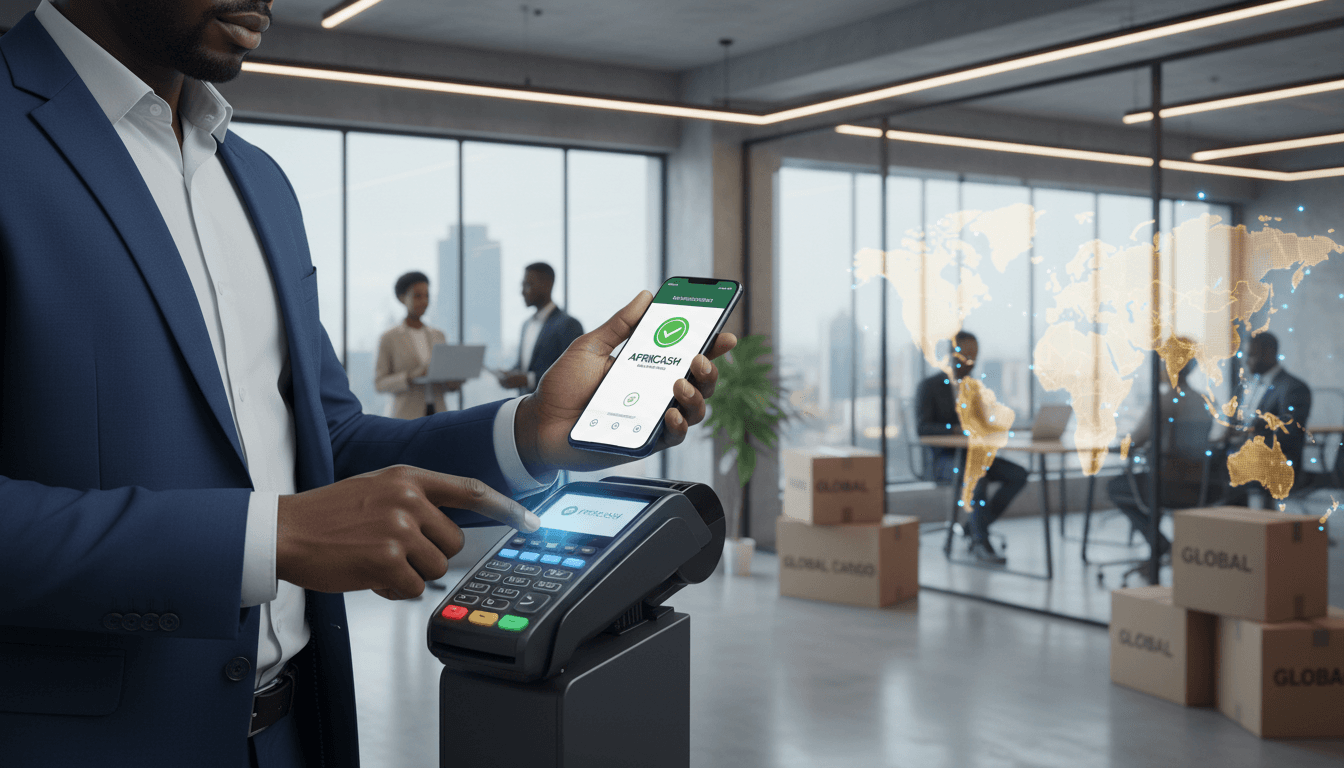
M-Pesa Global Payments: Lessons for Ghana’s MoMo + AI
Vodacom Tanzania just did something many African fintech teams have talked about for years: it turned mobile money into a “pay anywhere” tool. With its new M-Pesa Global Payment suite, Tanzanians can pay merchants in markets like China and Dubai, pay across East Africa (including to MTN Uganda MoMo wallets), and even pay anywhere Visa is accepted—directly from a phone.
One detail should jump out if you follow the “AI ne Fintech: Sɛnea Akɔntabuo ne Mobile Money Rehyɛ Ghana den” series: Vodacom isn’t only adding corridors. It’s upgrading the rails—using partnerships (Visa, Alipay, TerraPay, Thunes, Network International, Magnati) and modern payment capabilities like tokenisation.
For Ghana, this matters because mobile money is already the country’s everyday financial layer, but cross-border payments still feel like a patchwork. The real opportunity isn’t copying Tanzania’s partners one-for-one. It’s using AI to automate the messy middle—risk checks, compliance, FX pricing, reconciliation, dispute handling—so Ghanaian fintechs and mobile money operators can scale cross-border payments without scaling chaos.
What Vodacom Tanzania actually launched—and why it’s a big deal
Answer first: Vodacom is turning M-Pesa from a domestic wallet into a global merchant payment tool, combining card-network acceptance (Visa) with regional and corridor-specific networks (Alipay, MTN Uganda, Dubai merchant networks).
Vodacom Tanzania’s launch introduces multiple capabilities under “M-Pesa Global Payment,” including:
- Pay merchants globally via Visa acceptance: users can transact at any Visa-enabled merchant.
- Pay Chinese merchants via Alipay: a targeted corridor for importers who source goods from China.
- Pay merchants in Uganda directly into MTN MoMo wallets: a practical settlement path for regional traders.
- Pay selected Dubai merchants via TerraPay’s merchant network: another corridor aimed at real trade behavior.
The “Tap & Pay” detail is the signal
Answer first: Tokenisation is how you make contactless payments safer without handing out real card details.
Vodacom’s M-Pesa Tap & Pay is powered by Visa’s tokenisation technology. Translation: instead of exposing sensitive credentials, the system uses a token (a secure stand-in) for transactions. Users generate a virtual Visa card inside the M-Pesa app and tap their phone like a physical card.
This is bigger than convenience. Tokenisation reduces fraud surfaces and makes “wallet-to-merchant” payments easier to scale.
Why this is happening now (and why it’s seasonal)
Answer first: End-of-year commerce pressure exposes payment friction.
It’s late December 2025. Cross-border buying spikes around this time—inventory restocks, holiday demand, diaspora spending, and travel. Payment systems that are “fine” in quieter months start breaking under:
- higher transaction volumes
- more fraud attempts
- more disputes (“I didn’t receive the item,” “wrong FX rate,” “duplicate debit”)
So when a mobile money operator builds international merchant payments now, it’s not a vanity feature. It’s preparation for higher-stress real-world usage.
The problem Vodacom is solving: cross-border payments are still too manual
Answer first: African cross-border payments fail because the workflow is fragmented—networks, FX, settlement, compliance, and customer support often don’t share a single operating picture.
In the RSS story, Vodacom directly points to the old reality for East African SMEs: corridors can be slow, expensive, and fragmented, pushing traders into cash workarounds or high-fee intermediaries.
If you’ve worked with merchants, you’ve seen the pain points up close:
- Unclear fees and FX rates until after the transaction
- Settlement delays that disrupt inventory cycles
- Proof-of-payment headaches when suppliers want confirmation
- Disputes that take days because evidence sits in screenshots, WhatsApp chats, and bank statements
Vodacom’s bet is straightforward: because M-Pesa is already embedded in the domestic financial system, it can provide a regulated, familiar route for international payments.
For Ghana, the takeaway is blunt: cross-border doesn’t fail because people don’t want it. It fails because operations can’t keep up.
Where AI fits in Ghana: make cross-border MoMo “boring” to operate
Answer first: AI’s best role in mobile money isn’t hype—it’s reducing human workload while improving security and reliability.
Ghana doesn’t need magic. It needs repeatable processes that handle high volume without surprises. Here are the AI layers that make international payments scale responsibly.
1) AI for fraud prevention that doesn’t block real customers
Answer first: The goal is fewer false declines and faster detection of real fraud.
Cross-border fraud patterns are different from local transfers: device changes, unusual merchant categories, rapid-fire attempts, and social engineering (especially during holidays).
A practical AI approach combines:
- behavioral models (your typical time, amount, merchant type)
- device intelligence (SIM swap risk, emulator detection, unusual location jumps)
- merchant risk scoring (new merchant, dispute history, category anomalies)
This matters because the worst customer experience is “my money is stuck and nobody can explain why.” AI can help operators be stricter where needed and flexible where it’s safe.
2) AI for compliance: faster KYB/KYC and smarter monitoring
Answer first: Compliance is the bottleneck that gets worse as corridors increase.
Every new corridor adds more rules, more screening, more reporting obligations. AI can support—not replace—compliance teams by:
- triaging alerts so investigators start with the highest-risk cases
- flagging unusual flows (e.g., structured transactions split to avoid thresholds)
- auto-generating case narratives from transaction history and customer profile
If Ghanaian fintechs want regional merchant payments, compliance automation becomes a competitive advantage.
3) AI for pricing: fairer FX and predictable fees
Answer first: People don’t hate fees; they hate surprises.
Cross-border payments carry FX spreads, network fees, and settlement costs. AI can help operators set pricing that’s consistent and defensible by:
- forecasting corridor liquidity needs
- detecting when FX quotes drift away from market conditions
- recommending fee bands by customer segment and merchant category
In practice, this reduces complaints, reversals, and call-center pressure.
4) AI for reconciliation and dispute handling (the unsexy win)
Answer first: Reconciliation is where scale quietly dies.
Once you integrate multiple partners—card network acceptance, regional wallets, corridor providers—you inherit multiple ledgers and reporting formats. AI-assisted reconciliation can:
- match transactions across systems even when references don’t line up
- detect duplicates, partial settlements, and timing gaps
- generate daily exception reports that ops teams can actually clear
Disputes also become faster when AI extracts evidence: receipts, device data, merchant response, delivery confirmations, and chat logs—organized into a single case file.
What Ghana’s fintech ecosystem should learn from Tanzania’s play
Answer first: The winning strategy is building corridors around real trade behavior, then making the experience consistent across networks.
Vodacom didn’t announce “we support cross-border.” It announced specific corridors aligned with how people transact: China sourcing, Dubai merchants, Uganda trade links, and global card acceptance.
Here are practical lessons Ghana can use immediately.
Build corridors around use-cases, not press releases
If you’re a Ghanaian fintech, start by choosing one corridor and one merchant persona:
- Importers buying goods from a known market
- SMEs restocking inventory monthly
- Diaspora families paying schools, clinics, or utilities
- Travelers needing predictable tap-to-pay abroad
Then design a product around:
- clear FX quote + fees shown upfront
- instant proof-of-payment
- predictable settlement timeline
- a human support path when something breaks
Don’t treat Visa-style acceptance and wallet-to-wallet as competitors
Answer first: They solve different problems.
- Card network acceptance (via tokenised virtual credentials) helps users pay at many merchants without custom integrations.
- Wallet-to-wallet settlement is ideal when both sides are within mobile money ecosystems.
The smart approach is a blended strategy: use broad acceptance where it’s efficient, and wallet rails where it’s cheaper and faster.
Prioritize “trust design” as much as product design
Cross-border payments live or die on trust:
- transparent pricing
- clear reversal policies
- real-time notifications
- consistent customer education (especially for first-time users)
AI helps here too: proactive alerts (“this looks like a risky merchant”), coaching prompts, and smarter customer support scripts.
A simple blueprint: how to build AI-ready cross-border MoMo in Ghana
Answer first: Start with the operating model, then add corridors. Most teams do it backward.
Here’s a blueprint I’ve found works for teams trying to scale responsibly:
- Unify transaction observability: one dashboard for payments, settlement status, and partner responses.
- Design the risk engine early: rules + ML scoring + human review for edge cases.
- Implement tokenisation where possible: reduce sensitive data exposure.
- Automate reconciliation from day one: build exception handling as a product feature.
- Pilot one corridor with tight feedback loops: measure disputes, declines, and settlement time.
- Expand only when operations are stable: corridors multiply complexity.
If you’re measuring success, don’t obsess only over volume. Track:
- decline rate (and false decline rate)
- dispute rate per 1,000 transactions
- average resolution time
- settlement time distribution (not just the average)
What this means for the “AI ne Fintech” story in Ghana
Vodacom’s M-Pesa Global Payment launch is a clear validation of a bigger thesis: mobile money isn’t limited to domestic transfers anymore. It’s becoming a front door to the global economy.
Ghana’s next step is making cross-border mobile money reliable at scale. AI is the tool that turns “we can offer it” into “we can run it daily without drama.” That means fewer failed payments, clearer compliance, better pricing, and faster dispute resolution.
If you’re building in Ghana’s fintech space—operator, aggregator, bank, or startup—this is the question worth sitting with in 2026 planning: when cross-border demand spikes, will your system scale with automation, or will it scale with overtime?