Venmo’s debit cash back shows how rewards win Gen Z. See how Ghana’s mobile money can use AI to personalize incentives, cut fraud, and boost inclusion.
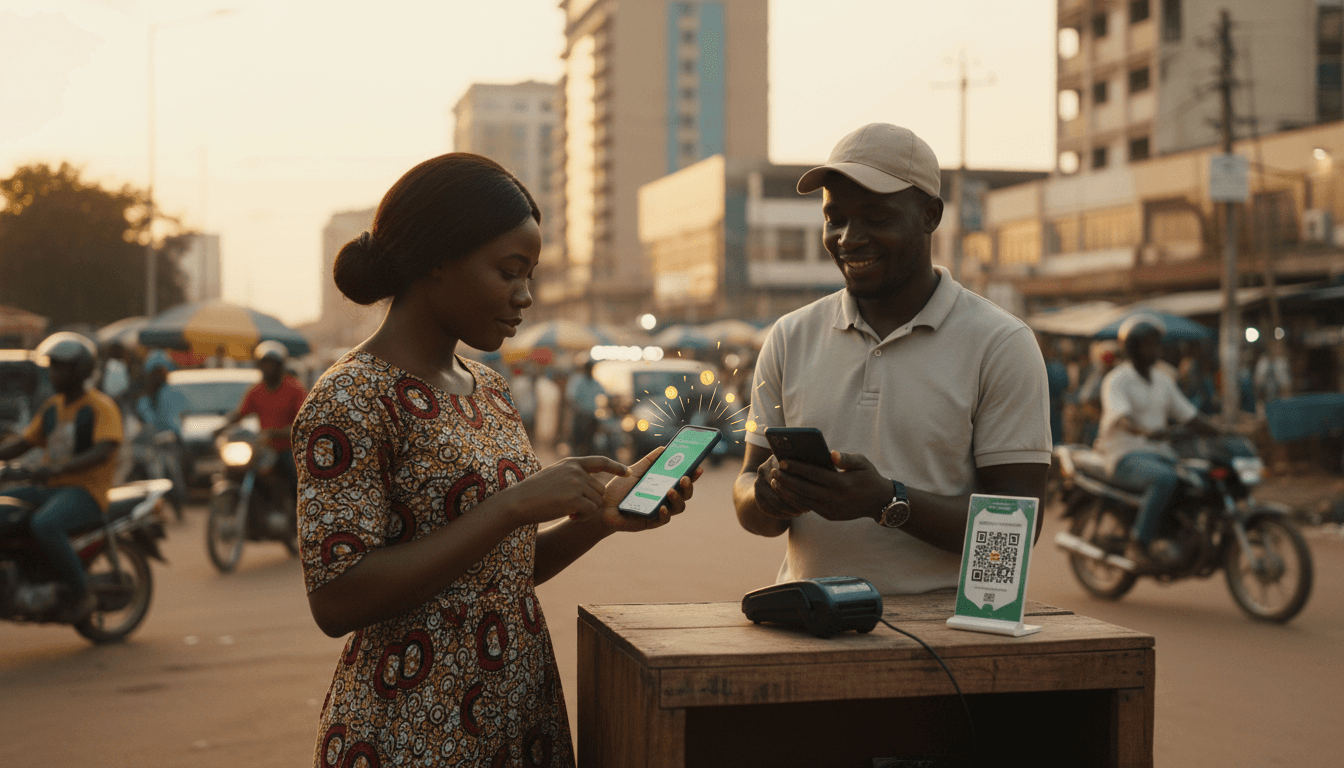
Mobile Money Rewards: Lessons from Venmo for Ghana
Gen Z in the US is quietly walking away from credit cards—and fintech apps are adjusting fast. Venmo’s new cash back rewards program for debit card users is one of the clearest signals: if young customers don’t want debt, you win them with utility, trust, and small daily benefits.
That single product move should matter to anyone building in Ghana’s payments space. Ghana already runs on mobile money more than cards in everyday life, and that’s exactly why rewards (done right) can accelerate adoption, retention, and even financial inclusion. The difference is that Ghana’s next leap won’t come from copying a US-style points program. It’ll come from using AI in fintech to design incentives that are affordable, targeted, and safe—especially in a market where fraud pressure and margins are real.
This post sits in our “AI ne Fintech: Sɛnea Akɔntabuo ne Mobile Money Rehyɛ Ghana den” series, where we look at how automation, smarter risk controls, and better customer experiences can strengthen Ghana’s financial ecosystem.
Why Venmo’s debit cash back move matters (even in Ghana)
Venmo’s decision is straightforward: reward behavior that’s already happening. Debit transactions are frequent, predictable, and less controversial than pushing credit to people who are debt-averse.
Here’s the strategic point: rewards are a distribution strategy, not just a marketing perk. If you give customers a reason to choose your card or wallet for the same purchase they were already going to make, you change habits. Those habits compound into:
- Higher transaction volume (more interchange/fees, where applicable)
- Lower churn (people don’t abandon “free value” easily)
- More data (which enables better personalization and risk controls)
Ghana’s parallel is obvious. People already pay school fees, utilities, groceries, fuel, and airtime via mobile money or agent networks. A smart reward layer can shift share-of-wallet from “any wallet will do” to “I prefer this wallet because it pays me back.”
Snippet-worthy truth: Rewards aren’t about generosity. They’re about habit formation.
The myth: “Rewards only work where people use credit cards”
Most companies get this wrong. Rewards work wherever payments are frequent and competitive.
In Ghana, the competition is intense: telcos, fintech apps, banks, agent networks, and QR/pay links all chasing the same cedi. A well-designed mobile money rewards program can influence:
- Which wallet becomes the default
- Whether people keep balances in-wallet
- Whether merchants promote one method over another
The real constraint isn’t “rewards don’t fit Ghana.” The constraint is unit economics—and that’s where AI helps.
The economics of rewards: what Ghanaian fintechs must get right
The fastest way to kill a rewards program is to treat it like a Christmas giveaway that never ends. (And yes, December is when many teams feel pressure to “do something big.”) Sustainable rewards need tight control over cost and abuse.
The right approach is to set clear objectives and choose a reward mechanism that matches them:
- Acquisition: get new verified users to make their first 3–5 transactions
- Activation: drive repeat use in the first 30 days
- Retention: keep customers transacting monthly
- Merchant growth: push payments to specific merchant categories
- Inclusion: encourage savings, bill payments, or micro-insurance uptake
Rewards that fit mobile money behavior
Cash back on a debit card is one model. In Ghana, practical variants often work better:
- Airtime/data cash back after spending thresholds
- Fee waivers (for selected transaction types or time windows)
- Merchant-funded discounts (merchant pays part of the reward)
- Bill-pay bonuses for on-time utility payments
- Savings nudges: small bonuses for consistent deposits
Airtime is especially powerful because it’s instantly understood, instantly delivered, and can be capped tightly.
The risk: fraud, promo abuse, and “reward chasers”
Every rewards system attracts exploitation. Ghana’s mobile money ecosystem also deals with social engineering and account takeovers. So if you run rewards blindly, you’ll pay fraudsters faster than you pay real customers.
This is where AI-driven fraud detection and behavior analytics need to be part of the rewards design—not bolted on later.
Where AI fits: optimizing rewards for growth and inclusion
AI in fintech isn’t magic. In practice, it’s a set of models and rules that help you make better decisions at scale: who to reward, how much, when, and with what limits.
1) Personalization: reward the customer, not the crowd
The strongest rewards programs don’t pay everyone equally. They pay strategically.
AI can segment customers using signals like:
- Transaction frequency and average amounts
- Category patterns (bills vs P2P vs merchant pay)
- Dormancy risk (customers likely to stop using the wallet)
- Location and agent usage patterns
Then you deliver targeted offers:
- New users: “Complete KYC + 3 merchant payments, get GHS X airtime.”
- Dormant users: “Pay one bill this week, fees waived.”
- High-frequency users: “Cash back on categories where margin supports it.”
One-liner: A blanket reward program is expensive; a targeted rewards program is profitable.
2) Budget control: keep incentives inside your unit economics
AI can help forecast reward spend by simulating campaign outcomes:
- If we offer 1% cash back on merchant pay, what’s the expected incremental volume?
- If we cap rewards per user per month, how does that impact adoption?
- Which merchant categories create the best lift per cedi spent?
This is especially relevant in Ghana where fee structures, competitive pricing, and regulatory considerations can compress margins.
3) Fraud-resistant design: detect abuse early
A practical AI approach is combining:
- Real-time rules (velocity checks, device fingerprinting, unusual patterns)
- Anomaly detection (sudden spikes in small repetitive transactions)
- Graph analysis (networks of accounts transacting in loops)
Rewards can also be structured to reduce abuse:
- Reward after verified merchant payments (not just P2P)
- Delay reward payout until transactions clear basic risk checks
- Cap rewards per device/account and enforce cooldown periods
4) Inclusion outcomes: reward “good financial behaviors”
If the goal is financial inclusion, rewards shouldn’t only push spending. They can encourage stability:
- Consistent savings deposits
- On-time repayments (for microcredit)
- Insurance premium continuity
- Formal merchant payments that build business histories
AI can help identify customers who will benefit from these nudges—without pushing credit to people who can’t afford it.
A Ghana-focused case study: translating Venmo’s idea into mobile money
Venmo’s program is debit card cash back. Ghana’s best translation is wallet-based rewards tied to merchant and bill-pay behavior.
Here’s a realistic blueprint I’d use if I were designing this for a Ghanaian mobile money or fintech product.
Step 1: Pick one behavior that grows the platform
Start narrow. For example:
- Increase merchant payments (QR, pay links, merchant till)
- Increase bill payments (utilities, TV, school)
Don’t try to reward everything at once.
Step 2: Define a simple reward mechanic
Examples that customers understand instantly:
- “Pay 5 merchant transactions this month → get GHS 5 airtime.”
- “Pay ECG/GWCL on-time → 50% fee discount (cap: GHS 2).”
- “Spend GHS 200 at partner merchants → 2% cash back (cap: GHS 10).”
Caps matter. Caps make the program survivable.
Step 3: Use AI to target and protect
Run two layers:
- Eligibility model (who gets the offer)
- Risk model (who gets blocked/delayed)
A basic first version can be rules + simple scoring, then gradually mature into more sophisticated models.
Step 4: Measure lift, not hype
If you can’t measure incremental behavior, you’re just subsidizing what would’ve happened anyway.
Track:
- Activation rate (first 30 days)
- Incremental transaction volume (A/B testing)
- Retention cohorts (month 1 to month 3)
- Fraud/abuse rate (reward paid per genuine user)
- Contribution margin after rewards
People also ask: practical questions fintech teams in Ghana raise
“Do rewards increase mobile money adoption in Ghana?”
Yes—when rewards are tied to a clear habit (merchant pay, bill pay, savings) and when redemption is instant and simple (airtime, fee waivers, wallet cash back). Poorly targeted rewards often create short-term spikes and long-term losses.
“What’s the best reward for Ghanaian customers?”
Airtime/data, fee discounts, and merchant-funded offers typically outperform complex points systems because they’re easy to understand and easy to redeem.
“How does AI improve a mobile money rewards program?”
AI improves targeting (who gets an offer), forecasting (what it will cost), and fraud control (who is abusing it). The result is higher retention with lower reward waste.
“Will rewards attract fraud?”
Yes. Plan for it from day one with caps, delayed payouts for risky patterns, and anomaly detection—especially around rapid, repetitive transactions and account networks.
What Ghana can learn from Venmo’s Gen Z signal
Venmo saw a behavioral shift—Gen Z using less credit—and built a product response around it. Ghanaian fintechs should do the same: watch what people already prefer (mobile money and low-friction payments) and build incentives that amplify that preference.
The bigger opportunity is combining mobile money rewards with AI-driven personalization and risk controls. Done well, rewards become more than customer acquisition. They become infrastructure for better financial habits, stronger merchant ecosystems, and broader inclusion.
If you’re building a wallet, a merchant payment product, or a fintech app in Ghana, a practical next step is to pilot one rewards loop for 60–90 days with strict caps and an A/B test. Keep it simple. Make it measurable. Then let the data tell you what to scale.
Where do you think rewards would have the strongest impact in Ghana right now—merchant payments, bill pay, savings, or something else entirely?